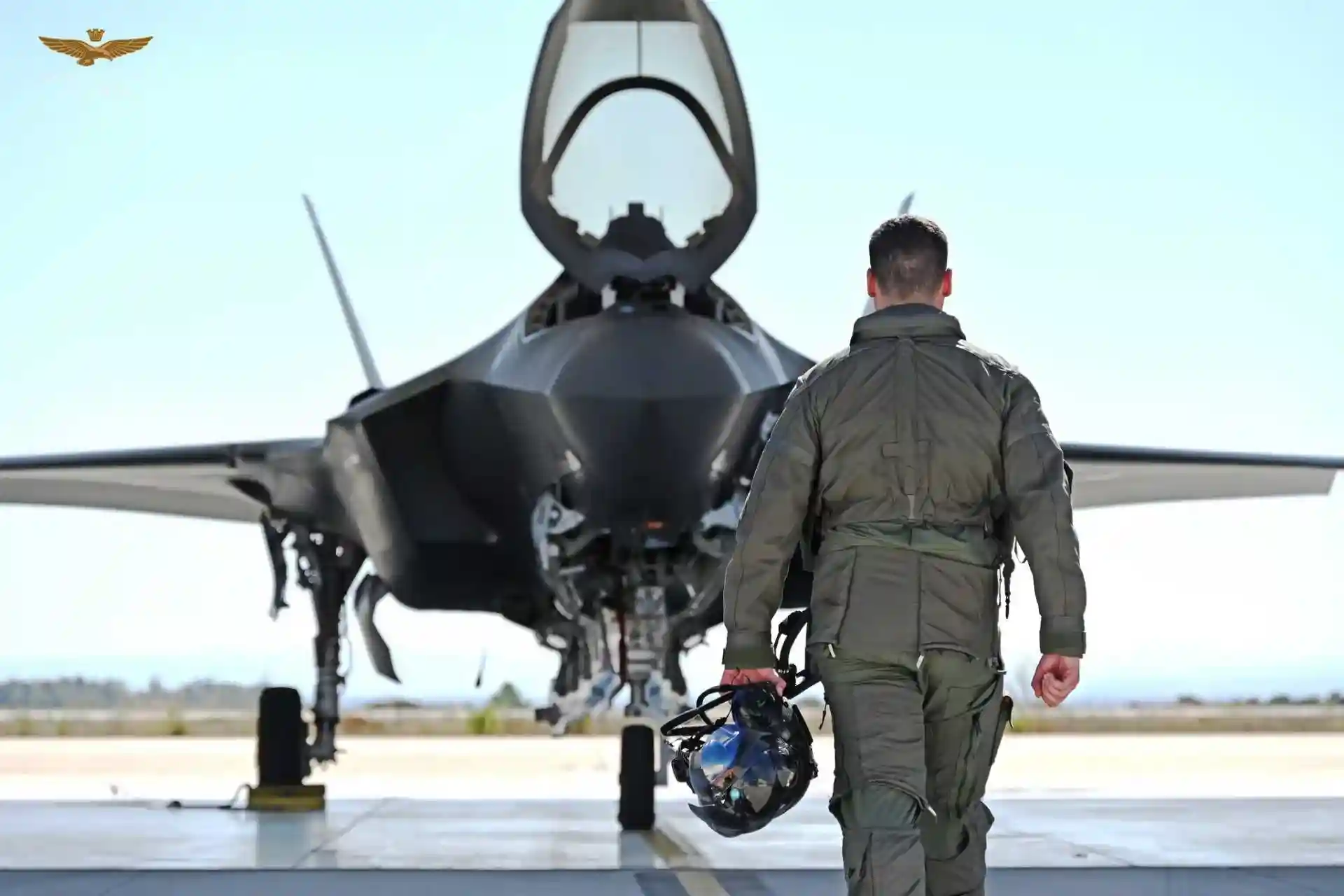
Italy is preparing to reshape the global training architecture of the F-35 Lightning II by launching construction of the world’s first dedicated F-35 pilot training center located outside the United States. With a confirmed investment of €112.6 million, the project places Italy at the center of European fifth-generation airpower development, signaling a decisive shift from U.S.-centric training toward a more distributed, alliance-driven model.
Approved by Italy’s Ministry of Defense and reported by La Sicilia in early January 2026, the new facility will rise at Trapani-Birgi Air Base in Sicily. Officially designated the Lightning Training Center, the site will serve a dual purpose: functioning as Italy’s third operational F-35 base while also hosting a multinational training mission open to NATO members and European Joint Strike Fighter partner nations. Initial training capability is planned for 2028, with full operational status targeted for 2029.
This move comes as European F-35 fleets expand at a pace that existing training infrastructure—almost entirely concentrated in the United States—can no longer comfortably support. By anchoring a high-security, high-fidelity training hub in the Mediterranean, Italy is positioning itself as a long-term pillar of allied airpower integration.
A Strategic First Beyond U.S. Borders
The significance of Trapani-Birgi goes well beyond geography. Until now, dedicated F-35 pilot training has been conducted almost exclusively at Luke Air Force Base in Arizona, which serves as the primary international training hub for the aircraft. While effective, that model requires European pilots to spend extended periods overseas, creating logistical strain, higher costs, and limited throughput as more countries induct the F-35 into service.
Italy’s Lightning Training Center breaks that bottleneck. It establishes, for the first time, a fully dedicated F-35 training facility outside the United States, designed from the outset to host multinational students, instructors, and aircraft under a single, secure framework. This is not a temporary overflow solution, but a permanent node in the global F-35 ecosystem.
By hosting the center, Italy becomes a gatekeeper of advanced fifth-generation training standards in Europe, reinforcing its credibility not just as an operator, but as a trainer, integrator, and doctrinal leader within NATO air forces.
Trapani-Birgi Becomes Italy’s Third Operational F-35 Base
With the funding approval, Trapani-Birgi officially joins Amendola Air Base in southern Italy and Ghedi Air Base in the north as Italy’s third operational F-35 location. Amendola hosts the Italian Air Force’s 32nd Wing, while Ghedi is home to the 6th Wing, both already flying operational F-35 squadrons.
Trapani’s role is deliberately hybrid. Under the approved structure, the base will host one Italian Air Force operational squadron alongside one international training squadron. Both will be supported by shared infrastructure, simulators, maintenance areas, and secure facilities. This means that routine national operations and multinational pilot training will take place side by side, turning Trapani into a living laboratory of daily fifth-generation operations.
Rather than separating training from frontline activity, the Lightning Training Center embeds students directly into an operational environment, exposing them to the tempo, procedures, and complexity of real-world F-35 operations from day one.
A Phased Timeline Toward Full Operational Capability
The Italian Ministry of Defense has defined a clear, milestone-driven timeline for the project. Construction is expected to begin in 2026, with work extending across roughly five years. The approach is deliberately phased, allowing training capability to come online before the entire complex is complete.
An initial training capability is scheduled for December 2028, enabling the first pilots to begin instruction using early-installed simulators and secure facilities. Full construction completion and full operational capability are planned for July 1, 2029, at which point the center will be able to host sustained multinational training cycles.
Spending will ramp up progressively, with the most intensive financial outlays occurring toward the end of the decade as advanced simulators, classified systems, and support infrastructure are installed. This staged approach reduces risk while ensuring that the facility evolves in step with growing European demand.
Inside the Lightning Training Center
At the heart of the project is a training ecosystem built to handle the extreme sensitivity of the F-35’s mission systems. The first phase includes construction of a dedicated training building incorporating a Special Access Program Facility (SAPF), a requirement for handling classified software, tactics, and sensor data associated with fifth-generation aircraft.
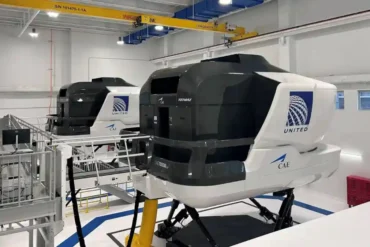
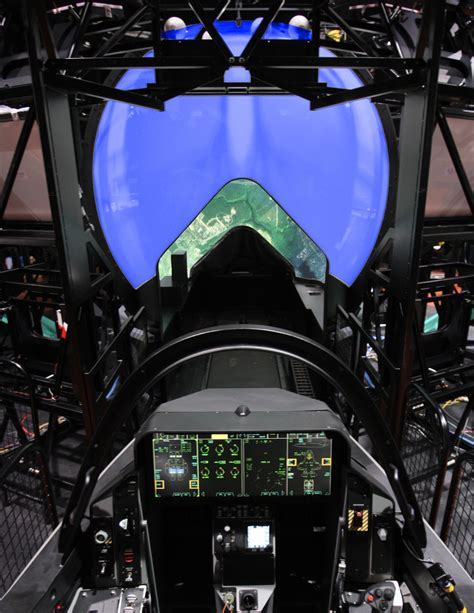
Two Full Mission Simulators will be installed initially, offering pilots an immersive replica of the F-35 cockpit and its integrated sensor suite. These simulators allow crews to practice complex missions involving electronic warfare, data fusion, and networked operations—scenarios that are either too risky or too costly to replicate in live flight.
Crucially, space has been reserved for additional simulators and training devices as demand increases. The center is designed to scale, not stagnate, reflecting the expectation that European F-35 fleets will continue expanding well into the 2030s.
Why Trapani-Birgi Was Chosen
Trapani-Birgi’s selection was driven by a combination of geography, infrastructure, and operational experience. Located in northwestern Sicily, the base occupies a strategic position in the central Mediterranean, offering proximity to southern Europe, North Africa, and key NATO operating areas.
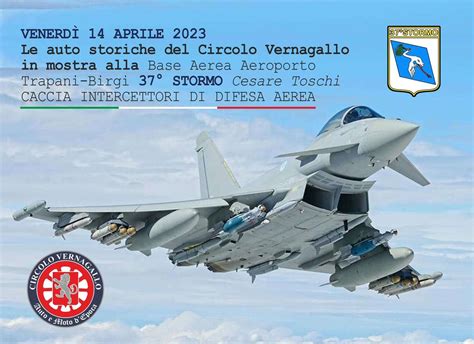
The airfield is already a joint civil-military installation and currently hosts the Italian Air Force’s 37th Wing, which flies Eurofighter Typhoon aircraft and performs quick reaction alert duties. This existing fighter mission means the base already operates under the tempo, security standards, and airspace management complexity required for advanced combat aircraft.
Equally important, Trapani’s infrastructure can be adapted to support fifth-generation requirements without the constraints faced by some older bases. Secure zones, simulator complexes, and dedicated training buildings can be integrated without disrupting ongoing operations, making it a practical and strategic choice.
Training the Fifth-Generation Way
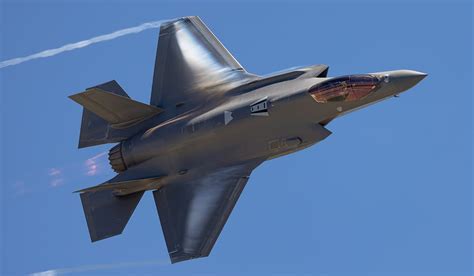
An F-35 pilot training center is fundamentally different from traditional fighter schools. The aircraft’s defining strength lies not in raw speed or maneuverability, but in its ability to collect, fuse, and share information across the battlespace. Training therefore emphasizes decision-making, data interpretation, and coordination as much as stick-and-rudder skills.
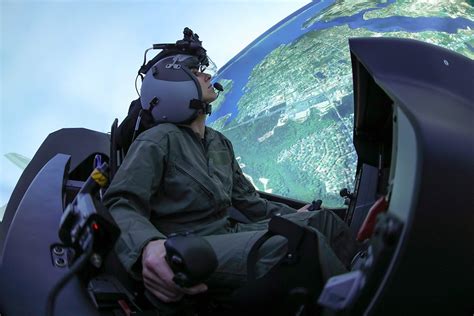
Simulators play a central role. Full Mission Simulators replicate not just the aircraft, but the entire combat environment, including friendly and adversary forces, electronic threats, and dynamic mission changes. Pilots can train for high-end conflict scenarios that would be impractical to stage with real aircraft.
Secure facilities ensure that classified tactics and mission software can be used without compromise, allowing pilots to train exactly as they would fight. This realism is essential for building trust and interoperability among allied air forces.
Multinational Interoperability as a Core Mission
One of the Lightning Training Center’s most important roles is fostering shared doctrine and procedures among allied F-35 operators. By training together, pilots from different nations learn the same planning methods, communication standards, and tactical frameworks.
This common foundation dramatically reduces friction during real-world NATO operations. Crews who have trained side by side at Trapani will already understand each other’s approaches, expectations, and limitations when deployed together.
The center also reduces Europe’s reliance on transatlantic training pipelines. Shorter travel distances, regional familiarity, and synchronized training schedules allow air forces to qualify pilots more efficiently while maintaining consistent standards with U.S.-based training.
Italy’s Expanding Role in the Global F-35 Program
The Trapani project reinforces Italy’s already substantial footprint in the F-35 program. At Cameri Air Base in northern Italy, the country hosts a key Final Assembly and Check Out (FACO) facility, responsible for assembling and maintaining F-35 aircraft for Italy and other European customers.
With Cameri handling assembly and sustainment, and Trapani poised to handle multinational training, Italy now spans operations, training, and logistics within the F-35 enterprise. Few nations outside the United States can claim such a comprehensive role.
This integrated position strengthens Italy’s influence within NATO airpower planning and ensures that it remains a central player as fifth-generation capabilities become the backbone of European air defense.
A European Hub for the Next Generation of Airpower
As European air forces transition from legacy platforms to fifth-generation systems, the demand for advanced, secure, and interoperable training will only intensify. The Lightning Training Center at Trapani-Birgi is designed to meet that demand head-on.
By the end of the decade, the base is expected to host a steady flow of pilots, instructors, and aircraft from across the alliance, transforming Sicily into a focal point of NATO airpower development. The project reflects a broader shift toward shared responsibility and regional resilience within the alliance.
Italy’s decision to invest heavily in this facility is not merely about infrastructure. It is a statement of strategic intent: a commitment to shaping how allied air forces train, operate, and fight together in an era defined by information dominance and integrated warfare.