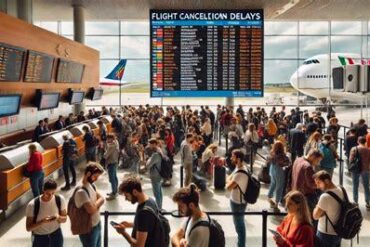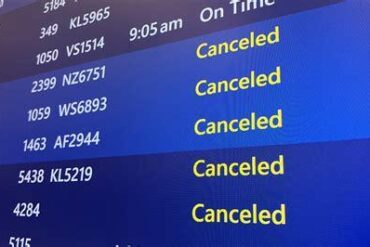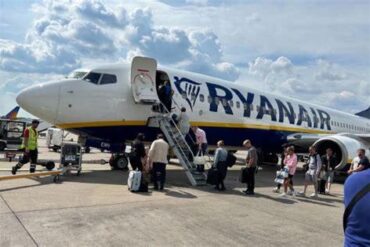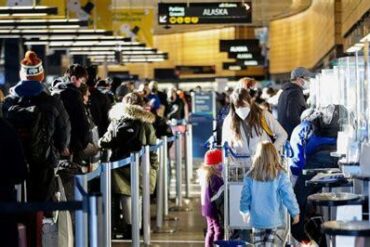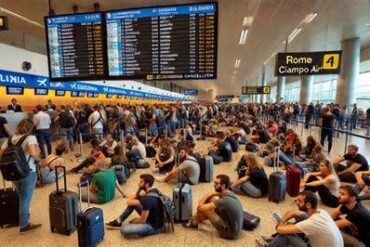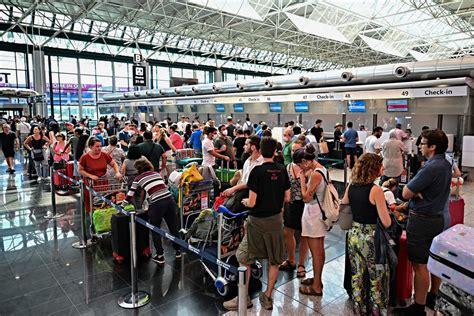
British holidaymakers are facing widespread travel disruptions this Saturday, July 26, 2025, as ground staff across multiple Italian airports prepare to strike, crippling travel between the UK and Italy. The walkout, scheduled from 1:00 PM to 5:00 PM local time, will involve baggage handlers, security agents, and other key ground operations personnel. The ripple effects of this four-hour industrial action are expected to be felt well beyond Italy, threatening hundreds of flights across Europe.
Major Airlines Affected: From Budget Giants to Flag Carriers
Six major airlines—easyJet, Ryanair, British Airways, Wizz Air, ITA Airways, and Volotea—have been identified as the most affected carriers, collectively operating a significant volume of daily flights between the UK and Italy. These airlines service popular routes including:
- London Gatwick to Rome Fiumicino
- London Stansted to Milan Malpensa
- Manchester to Venice Marco Polo
- Bristol to Naples
- Edinburgh to Florence
Disruption won’t be limited to the major cities. Regional airports in Belfast, Glasgow, Liverpool, Leeds, and Birmingham are also projected to suffer delays and cancellations. With up to 200 direct UK-to-Italy flights at risk of interruption in a single day, industry analysts at AirAdvisor estimate that as many as 36,000 British travelers could be affected.
Timing and Scope: Why a Four-Hour Strike Will Cause All-Day Chaos
Although the strike is officially set for just four hours, its operational impact will be far more extensive. Flight schedules will be affected before, during, and after the designated window due to aircraft rotation delays, crew availability issues, and airport congestion. Flights scheduled hours before the strike may face pre-emptive cancellations, while those later in the day could encounter significant knock-on delays as the backlog clears.
Airports such as Rome Fiumicino, Milan Malpensa, Venice Marco Polo, Naples Capodichino, and Florence Peretola will be at the epicenter of the chaos. These hubs are expected to see long queues at check-in desks, security bottlenecks, and baggage claim delays, further disrupting travel plans.
Wider Disruption Across Europe’s Airspace
The strike will not only cripple travel in and out of Italy—it will also cause a domino effect throughout the European aviation network. European hubs like Amsterdam Schiphol, Frankfurt International, and Paris Charles de Gaulle are bracing for turbulence as rerouted aircraft and stranded passengers flood terminals. Flight schedules in France, Germany, the Netherlands, and beyond may experience residual delays due to increased operational stress on airport systems and air traffic control.
As planes fail to arrive or depart on time from Italy, aircraft availability and scheduling across interconnected European routes will be thrown into disarray. Travelers booked on connecting flights through Europe could find themselves delayed or even rerouted through alternative, less congested hubs.
Passenger Rights Under EU Law: What Travelers Can Expect
While flight cancellations and delays due to strikes are undoubtedly frustrating, passenger rights are clearly defined under EU Regulation 261/2004. Unfortunately for many travelers, strikes by airport staff—not airline personnel—are classified as “extraordinary circumstances”. This classification exempts airlines from having to pay financial compensation for the disruption.
However, airlines must still provide care and assistance, including:
- Meals and refreshments during prolonged delays
- Accommodation if an overnight stay is required
- Transportation between the airport and hotel
Passengers are strongly advised to retain all receipts and records of additional expenses incurred. While airlines are not liable for cash compensation, they may reimburse documented costs related to care and accommodation.
Thousands of British Travelers Left in Limbo
The timing of this strike—during peak summer holiday travel—means that the disruption will hit particularly hard. Many families, couples, and solo travelers heading to Italy for vacations, weddings, and business trips will find themselves facing uncertainty at departure gates. Airport terminals are likely to be overcrowded, customer service channels overwhelmed, and rebooking options limited.
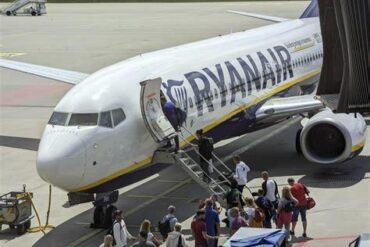
Budget carriers like Ryanair and Wizz Air, known for their high-frequency short-haul schedules, may struggle more than legacy airlines to accommodate affected passengers due to limited standby capacity. British Airways and ITA Airways may have more flexibility through alliance partners, but even they will find it challenging to handle rebookings at scale.
Expert Advice: What Travelers Should Do Now
For those with upcoming flights on or around July 26, taking proactive steps could help mitigate disruption. Travel experts recommend the following course of action:
- Monitor Flight Status: Use airline apps and official websites for real-time updates. Sign up for text/email alerts where available.
- Arrive Early: Allow for additional time at the airport to navigate long lines and unexpected delays.
- Explore Alternatives: If feasible, consider rescheduling your trip or rerouting through less affected destinations.
- Keep Documentation: Save receipts for meals, hotels, and transportation in case reimbursement is required.
- Know Your Rights: Familiarize yourself with EU 261/2004 protections so you understand what support your airline must legally provide.
Airlines Respond, But Options Are Limited
Some airlines have already begun issuing travel advisories and flexible rebooking options to help passengers deal with the strike. However, seat availability on alternative flights is shrinking fast. Travelers needing to fly urgently may need to consider premium fares or even different airlines altogether if they want to reach their destinations in time.
In an official statement, easyJet noted that it was “doing everything possible to minimize disruption”, while Ryanair warned passengers of “possible delays and schedule changes” on July 26. British Airways stated that “customer care teams are prepared to assist travelers impacted by the strike.”
Underlying Issues Fueling the Strike
This latest industrial action is rooted in ongoing disputes over pay, working conditions, and staffing levels. Italian airport ground workers are calling for higher wages, more stable contracts, and safer working environments, citing increased workloads during the busy summer travel season without corresponding compensation.
Union leaders argue that understaffing and poor labor protections are compromising the safety and efficiency of Italian airport operations. They insist that unless progress is made at the negotiation table, further strikes may follow, potentially during other critical travel weekends in August and September.
Potential for Escalation in August and Beyond
The July 26 strike may serve as a precursor to larger, more sustained industrial action if airline operators and airport management fail to address worker grievances. Italian unions have hinted at the possibility of rolling strikes through late summer, a move that could create sustained instability in European travel corridors.
Such a scenario would be especially damaging for budget carriers that depend on tight turnarounds and high-frequency schedules. The ongoing labor tensions across Europe—not just in Italy—highlight broader systemic issues within the aviation industry, including wage stagnation, employee burnout, and the struggle to recover fully post-COVID.
Conclusion: Disruption Inevitable, Preparedness Crucial
With tens of thousands of passengers affected, airline operations strained, and airport infrastructure under pressure, the July 26 strike underscores the fragility of international travel systems. While travelers cannot control labor disputes, they can take measures to minimize personal inconvenience.
By staying informed, knowing their rights, and being ready to pivot plans, passengers stand the best chance of weathering the disruption. For now, travelers between the UK and Italy, as well as anyone transiting major European hubs, should expect delays, cancellations, and operational headaches—and prepare accordingly.