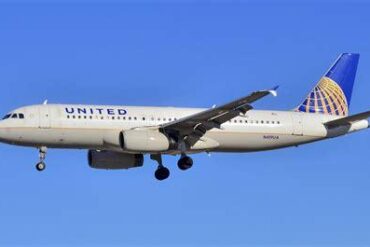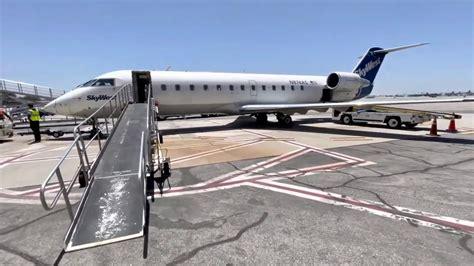
On the morning of May 13, 2025, air traffic over San Francisco International Airport (SFO) nearly became the site of a disastrous mid-air collision. A United Airlines Airbus A320, operating flight UA-1152 to Dallas/Fort Worth, crossed paths with a SkyWest Airlines Canadair CRJ-200, operating flight UA-5273 to Fresno. The incident exposed critical breakdowns in flight path execution and cockpit coordination, raising serious concerns about airspace management at one of the busiest airports in the United States.
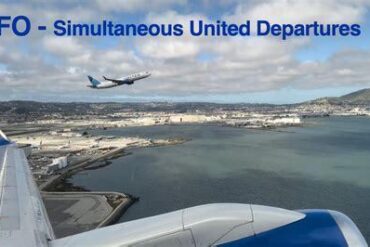
The FAA and NTSB have initiated formal inquiries after radar data from ADS-B (Automatic Dependent Surveillance–Broadcast) revealed that the two jets had closed in to within approximately 300 feet vertically during their simultaneous initial climbs. Both aircraft had departed within minutes of one another from adjacent runways at SFO—01R for the United A320 and 01L for the SkyWest CRJ-200—before the near-miss occurred.
San Francisco International Airport’s Critical Airspace Configuration
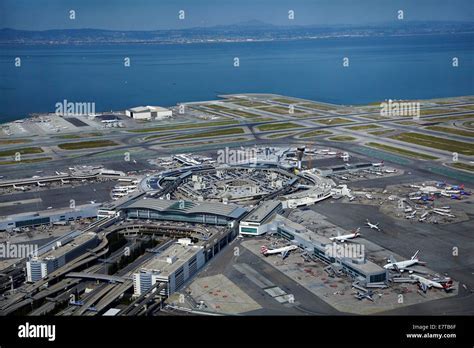
San Francisco International Airport (SFO) is renowned for its complex runway geometry and high traffic volume. The runways 01L and 01R are parallel but closely spaced, and simultaneous departures demand strict adherence to published Standard Instrument Departure (SID) procedures. Any deviation, especially during the climb phase, can place aircraft in dangerously converging trajectories.
With over 16 million passengers annually and major hubs operated by United Airlines and other carriers, the margin for error at SFO is minimal. Its proximity to coastal airspace and mountainous terrain requires precise execution of climb and turning instructions during departure.
Details of the SkyWest Flight UA-5273
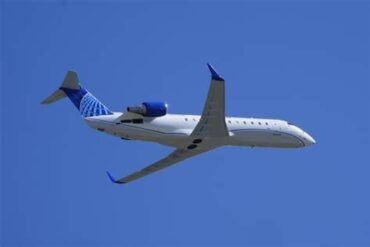
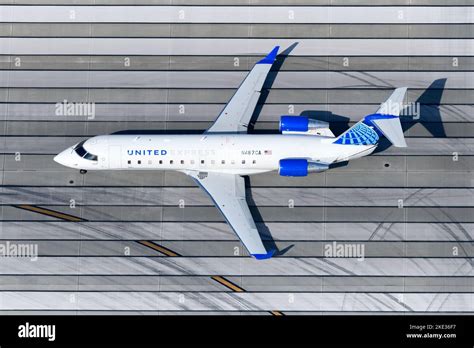
On May 13, SkyWest Airlines, flying under the United Express banner, operated flight UA-5273 using a Canadair CRJ-200 (registration N246PS). The 50-seat regional jet had been cleared for departure from Runway 01L en route to Fresno Yosemite International Airport (FAT).
Shortly after takeoff, UA-5273 began its standard climb when its flight crew noticed another aircraft intruding into their flight path. The CRJ-200 was at roughly 1,300 feet altitude when the conflicting traffic became apparent. SkyWest pilots immediately communicated with air traffic control, identifying the need for urgent heading deviation due to traffic convergence.
SkyWest, the largest operator of the CRJ-200, maintains a significant portion of United’s regional route network. The aircraft, delivered in 2004 and previously operated by PSA Airlines, had been transferred to SkyWest in November 2019.
United Airlines Flight UA-1152 and the Navigation Error
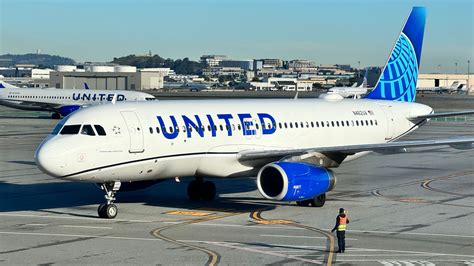
Simultaneously, United Airlines flight UA-1152, an Airbus A320-232 registered N4901U, was cleared for takeoff from Runway 01R, destined for Dallas/Fort Worth International Airport (DFW). This flight was to follow the TRUKN 2 SID departure route—a procedure designed for safe clearance from nearby traffic corridors.
However, the flight crew appeared to have loaded Runway 28R as the departure runway into the Flight Management System (FMS). This discrepancy misaligned the aircraft’s programmed climb-out heading with the actual runway used. As a result, the A320 made a left turn to 284 degrees, directly into the path of the SkyWest CRJ-200.
Reports indicate that this was the first time the First Officer had operated out of SFO, and there was confusion over the programmed heading. The FMS prompted a left turn at 500 feet—an instruction not aligned with the 01R SID. The captain, recognizing the inconsistency, attempted to manually correct the heading, but the aircraft had already encroached dangerously close to the other jet.
ATC Intervention Prevents Disaster
The situation was caught in time by vigilant Air Traffic Control (ATC), which immediately instructed the A320 to turn left to heading 280 degrees, redirecting its course away from the CRJ-200. This swift directive split the aircraft onto divergent flight paths, allowing them to continue without incident.
While this maneuver averted catastrophe, the event underscores the razor-thin margin for error in dense airspace environments. ATC’s ability to perceive and respond within seconds was critical.
Aircraft Backgrounds and Specifications
The Airbus A320 involved, serial number 2680, is a 19.4-year-old aircraft originally delivered to China Southern Airlines in 2006. It was later acquired by United Airlines in 2018 and is configured with 12 business class and 138 economy class seats.
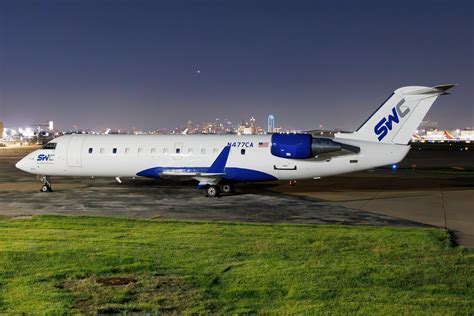
The SkyWest CRJ-200, with serial number 7920, was first flown under Canadian registration in 2004 and transitioned to SkyWest’s fleet in late 2019. The aircraft features a single-class configuration accommodating 50 passengers, typical of regional operations.
Key Questions in the Aftermath of the Near Miss
The central issue under scrutiny is why a runway-specific departure heading was not cross-verified in the FMS prior to takeoff. Several contributory factors are now being examined:
- Pilot Experience: The First Officer’s inexperience with SFO’s complex procedures likely contributed to reliance on incorrect FMS prompts.
- Cockpit Resource Management (CRM): Delayed questioning of the left-turn instruction by the captain highlights gaps in crew coordination.
- FMS Programming Protocols: The inclusion of an incorrect runway for SID initialization raises concerns about pre-departure checklist adherence.
- ATC Clearance vs. Execution: Although both flights were cleared correctly by ATC, the deviation arose entirely from cockpit-level errors.
FAA and NTSB Inquiries Underway
The Federal Aviation Administration (FAA) and National Transportation Safety Board (NTSB) have launched investigations into the event. In near-collision scenarios involving two commercial airliners, standard procedure includes:
- Retrieval of cockpit voice recordings and flight data recorders.
- Review of ATC communication tapes and radar playback.
- Analysis of pilot reports and crew debriefs.
- Re-evaluation of departure procedure clarity and runway configuration risks.
While no injuries or damage occurred, the FAA classifies such proximity events as serious operational hazards and could result in procedural amendments, pilot retraining, or even disciplinary measures depending on findings.
Historical Context: Past Incidents at SFO
This is not the first high-profile incident at San Francisco International. The airport has been the scene of several notable runway or near-air collisions, including:
- Asiana Airlines Flight 214 crash in 2013, where an approach miscalculation resulted in fatalities.
- Air Canada Flight 759 incident in 2017, where a flight nearly landed on a taxiway occupied by four jets.
These events collectively point toward the challenges of operating in dense, high-stakes airspace and the absolute necessity for procedural precision.
Industry Takeaway and Aviation Safety Implications
The near miss between the United Airlines Airbus A320 and the SkyWest CRJ-200 is a stark reminder of the layered dependencies in commercial aviation safety. It emphasizes that despite advances in automation, human vigilance remains paramount—especially during takeoff and initial climb, phases recognized as high workload periods.
Systemic safety relies not only on advanced avionics and real-time ATC oversight, but also on:
- Accurate FMS setup.
- Pilot familiarity with airport-specific SID and STAR procedures.
- Rapid CRM decision-making.
- Constant readiness for deviation mitigation.
Airlines, regulators, and controllers will likely reinforce training standards and FMS validation checks following this event. As air traffic rebounds to pre-pandemic levels, especially at major hubs like SFO, every component of the departure process must align seamlessly to ensure continued airspace safety.
The aviation industry has once again escaped tragedy through rapid human intervention. But the lessons from this incident must not be forgotten—or the next close call could become something far worse.