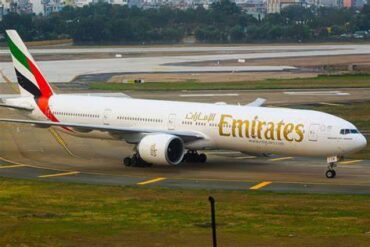
Louisville International Airport is entering a remarkable new phase. Louisville Muhammad Ali International Airport, better known by its SDF airport code, has spent decades developing an aviation infrastructure dominated by freight, with UPS transforming the airport into one of the world’s most important cargo gateways. Now, more than $1 billion in airport investment is gradually changing another side of the facility: its passenger operation. The goal is not simply a larger terminal or a more comfortable journey through security. Louisville is preparing for something it has never had for scheduled passenger operations—a true international passenger gateway capable of processing travelers arriving directly from overseas.
The scale of that ambition is easy to overlook because much of the most important work is not immediately visible to passengers. SDF is already a major aviation facility, with extensive runways, cargo ramps, maintenance infrastructure and logistics systems created around one of the largest air cargo operations in the world. The passenger terminal, however, has historically served a predominantly domestic network. That distinction matters because an airport can be physically capable of handling large aircraft while still lacking the specialized federal facilities required to process international arrivals.
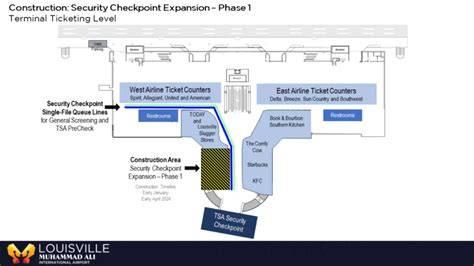
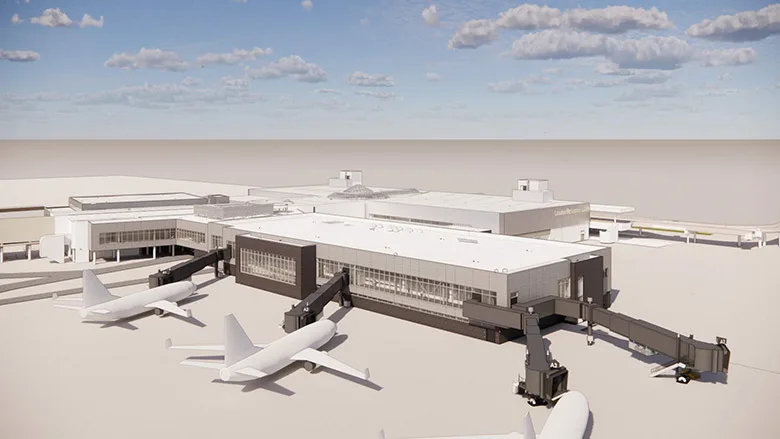
Louisville’s transformation therefore revolves around two major projects with very different purposes. A new 30,000-square-foot security checkpoint with 10 screening lanes is expected to open in early 2027, providing substantially more capacity for passengers already using SDF. More consequentially, a planned Federal Inspection Services facility, targeted for completion in 2029, could allow the airport to process scheduled international passenger arrivals locally. Together, the projects represent a shift from simply expanding Louisville’s domestic airport to creating the infrastructure necessary for a new international role.
Why Louisville Airport Is Investing More Than $1 Billion
The airport’s SDF Next program has grown dramatically since it was introduced. In 2018, the planned investment was estimated at approximately $200 million. As passenger demand and infrastructure requirements evolved, the program expanded into a capital investment exceeding $1 billion. That difference illustrates how quickly the airport’s priorities have changed. Louisville is no longer planning around a relatively modest domestic terminal operation; it is preparing infrastructure for a passenger market that has become considerably larger and more diverse.
The growth of the nonstop network provides some of the clearest evidence. In 2018, SDF offered roughly 24 nonstop destinations. By 2026, that number had climbed beyond 40. The additional markets give Louisville travelers more opportunities to begin trips locally rather than driving to another airport or accepting a connection through a larger hub. Airlines such as Breeze and Spirit have also expanded the range of destinations available from Kentucky, increasing competition and giving passengers more choices.
Passenger numbers reinforce the same trend. SDF handled a record 4.8 million passengers in 2024, followed by approximately 4.59 million in 2025. Although the latter represented a decline from the record year, the airport still processed more than 4.5 million passengers. That is a substantial local passenger market, particularly for an airport whose identity has historically been associated more strongly with cargo than with a large international passenger network.
The airport’s expansion is also connected to an important change in passenger behavior. Market leakage—the proportion of travelers leaving the local area to use another airport—has reportedly fallen from around 18% in 2018 to approximately 7% to 8% more recently. That suggests the expanding SDF network is persuading more people to begin their journeys in Louisville. Every additional nonstop route can make that decision easier, and the effect becomes increasingly important when considering potential international service.
The New Security Checkpoint Is Only Part of the Story

The planned security checkpoint is one of the most visible elements of the expansion. At approximately 30,000 square feet, with 10 screening lanes, the facility is designed to increase passenger-processing capacity when it opens in early 2027. For a growing airport, that is important because terminal congestion can eventually become a constraint even when airlines are willing to add flights.
But security screening is not the same thing as international arrival processing. A passenger departing Louisville for another country can already travel internationally by connecting through an airport equipped to handle overseas arrivals. What SDF currently lacks is the federal infrastructure required when an international passenger arrives directly from abroad and needs to enter the United States at Louisville.
That is where the Federal Inspection Services facility becomes far more significant. The planned FIS facility, targeted for 2029, would provide the infrastructure needed for federal inspection of international arrivals. Instead of every international itinerary requiring a connection through another U.S. gateway before the passenger reaches Louisville, an airline could potentially operate a direct overseas service to SDF and have passengers complete the necessary arrival procedures there.
This changes the airport’s strategic possibilities. The 2027 checkpoint primarily expands the capacity of an existing operation. The 2029 FIS project could remove a fundamental limitation on the type of passenger service SDF can support. One project makes the airport larger; the other potentially makes its network much broader.
UPS Has Already Built an Unusual Aviation Foundation
Louisville’s most interesting advantage comes from an industry that has little to do with traditional passenger travel. SDF is the principal hub of UPS Airlines, and the scale of the carrier’s operation has shaped the airport for decades. Cargo has effectively forced Louisville to develop infrastructure capable of supporting extremely large aircraft, intense flight activity and complex logistics operations.
That legacy matters as the passenger airport expands. SDF is already accustomed to aircraft such as the Boeing 747-8, an aircraft far larger than the narrowbody jets that dominate many domestic passenger networks. UPS Worldport, the carrier’s enormous sorting facility, covers approximately 5.2 million square feet, while a separate $220 million, 275,000-square-foot UPS hangar can accommodate two 747-8 freighters side by side.
The scale of the cargo operation is reflected in the airport’s freight statistics. SDF processed approximately 7.49 billion pounds of cargo in 2025, keeping it among the world’s busiest cargo airports. That volume does not automatically prove that Louisville can support international passenger routes. Cargo demand and passenger demand follow very different economic patterns. Nevertheless, the infrastructure created by the cargo industry gives SDF an aviation foundation that many similarly sized passenger airports would have to spend decades developing.
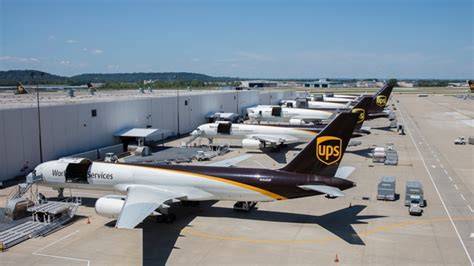
The cargo ecosystem extends beyond aircraft and sorting facilities. SDF has also invested in systems such as a large geothermal wellfield and a $32 million microgrid, reinforcing the airport’s broader infrastructure and operational resilience. These investments were not created specifically for an international passenger gateway, but they demonstrate how the airport’s unusual cargo role has generated capabilities extending far beyond the passenger terminal.
The important point is that Louisville does not need to transform itself from an ordinary regional airport into a major international aviation facility from scratch. Much of the difficult aviation foundation already exists. What is missing is the passenger-facing and federal infrastructure required to connect that foundation to international commercial service.
Can Louisville Generate Enough Demand for International Flights?
Building an FIS facility solves an infrastructure problem, but it does not solve an airline economics problem. The central question after 2029 will be whether enough passengers want to fly internationally from Louisville to support regular service throughout the year.
There are encouraging signs. The growth from roughly 24 nonstop destinations to more than 40 demonstrates that airlines see value in the Louisville market. The decline in market leakage also indicates that travelers increasingly choose SDF when suitable nonstop options are available. That creates an important foundation for international growth: passengers cannot choose a local international flight if no such flight exists, but their willingness to use SDF for domestic journeys provides airlines with evidence of local demand.
The Kentucky Derby provides another dramatic example of Louisville’s ability to attract travelers. During the annual event, airlines can add capacity to meet unusually strong demand. Yet a successful international route cannot depend on one major weekend. A long-haul service needs sufficient business, leisure and visiting-friends-and-relatives traffic across many months of the year.
That makes Louisville’s surrounding region especially important. SDF is not serving only residents within the city itself. Its passenger catchment area extends across Kentucky and neighboring states, creating a larger potential market for international travel. If airlines can persuade travelers who currently drive to Cincinnati, Nashville, Indianapolis or another major gateway to use SDF instead, the airport’s effective international market could be considerably larger than its local population alone suggests.
Louisville Does Not Need to Become Another Atlanta
SDF also does not necessarily need to imitate the largest U.S. hubs. An international airport can operate successfully without having hundreds of destinations or serving as a traditional mega-hub. Smaller gateways around the world have demonstrated that carefully selected international routes can connect regional markets directly to overseas destinations.
Airlines such as Aer Lingus have used Dublin as a bridge between North America and Europe, while Icelandair has developed Keflavik into a connecting gateway between the two continents. Louisville’s circumstances are different, but the underlying principle is relevant: international aviation does not require every airport to become a mega-hub.
For SDF, the most logical future may therefore involve a limited number of carefully selected international routes rather than an immediate explosion of overseas service. A European destination, for example, could potentially provide access to a large collection of onward markets while also serving direct Louisville travelers. The eventual choice would depend on aircraft availability, airline strategy, local demand, seasonality and the competitive landscape.
What the Federal Inspection Facility Could Change
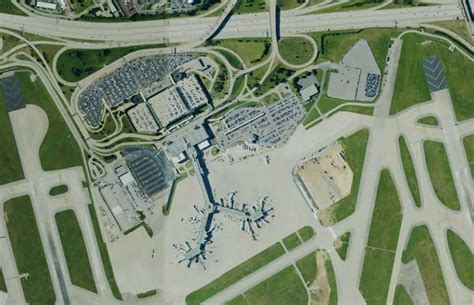
The FIS facility’s greatest impact could be the removal of a hidden barrier that most passengers rarely consider. Today, an international trip from Louisville can begin at SDF, but the passenger may have to connect at another U.S. airport before reaching an overseas destination. With local international arrival processing, SDF could potentially become the actual endpoint of an overseas flight rather than simply the first domestic airport in a connecting itinerary.
For airlines, that distinction changes the market calculation. A carrier considering international service at Louisville could evaluate local demand, corporate travel, leisure traffic, seasonal patterns, aircraft utilization and potential connections to SDF’s expanding domestic network. An international flight could also feed passengers from surrounding communities into Louisville, creating a broader catchment area for the route.
For passengers, the benefit would be more straightforward. A successful nonstop international flight could eliminate a domestic connection, reduce travel complexity and make Louisville more competitive against larger airports. The strongest impact may not come from the first route itself, but from what that route demonstrates to other airlines.
2029 Could Be the Beginning, Not the Finish Line
The most important date in Louisville’s airport expansion may ultimately be 2029, when the planned Federal Inspection Services facility is expected to be ready. By then, SDF should have a larger security checkpoint, an expanded nonstop network and an aviation ecosystem supported by decades of UPS investment.
But opening the facility will not guarantee international flights. It will simply give airlines the ability to consider them under a different set of circumstances. The real test will come through the routes carriers choose, the aircraft they deploy and their ability to sustain demand beyond Louisville’s biggest travel periods.
That is what makes the $1 billion investment so interesting. The airport is not spending that money merely to put an international label on the terminal. It is gradually removing the physical limitations that have kept Louisville primarily within the domestic passenger network while its cargo operation has already become global in scale.
SDF’s future international role will ultimately be determined by the market. Yet the airport now has several pieces that were missing only a few years ago: a growing passenger base, more than 40 nonstop destinations, lower market leakage, substantial cargo infrastructure and a planned FIS facility. If those elements align, Louisville could move from being an airport known primarily for what UPS ships through it to one increasingly recognized for where passengers can fly directly from it.
The irony is that the foundation for this transformation has been sitting in Louisville for decades. Cargo built the infrastructure, passenger growth created the demand, and the FIS facility could finally connect the two. When the international gateway opens, the biggest question will no longer be whether SDF is capable of handling international passengers. It will be which airline is willing to be first through the door.