The future of commercial aviation is moving away from a world dominated exclusively by mega-hubs and high-capacity aircraft. As passenger demand expands across emerging cities and regional economies, airlines are searching for aircraft that can open markets previously considered too small or too risky. The Airbus A220 is increasingly positioned as one of the most important tools in this transformation, offering the range, efficiency, and passenger appeal needed to make thousands of new point-to-point routes economically viable.
At the Airbus 2026 Global Market Forecast briefing in London, the manufacturer highlighted a major shift in global aviation patterns. Instead of concentrating growth only around the largest international airports, future expansion is expected to come from smaller and medium-sized cities that are developing rapidly. Airbus estimates these secondary markets will grow significantly faster than traditional megacity regions, creating demand for aircraft that can connect passengers directly without relying on crowded transfer hubs.
The projected opportunity is enormous. Airbus believes that more than 2,200 currently unserved city pairs could become viable with the A220 in the coming years. These potential routes represent a fundamental change in airline network planning, where efficiency and flexibility may become more valuable than simply operating larger aircraft on established corridors.
Airbus A220 Becomes a New Generation Network Builder
For decades, commercial aviation has largely followed a hub-and-spoke model. Airlines have traditionally focused on connecting passengers through major airports such as London Heathrow, Frankfurt, Dubai, Atlanta, and Singapore. Large aircraft operating between major cities created efficient transportation networks, while smaller markets depended heavily on connecting flights.
However, this approach is facing increasing challenges. Airport congestion, limited slots, rising operating costs, and changing passenger preferences are pushing airlines to reconsider how they build their networks. Travelers increasingly value convenience and time savings, making direct flights between smaller cities more attractive.
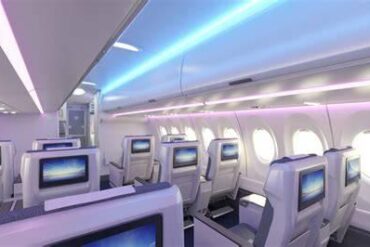
This is where the Airbus A220’s unique capabilities become particularly important. Positioned between regional jets and larger narrowbody aircraft, the A220 offers airlines a right-sized solution for routes that may not support traditional 180-seat aircraft but still require more range and comfort than smaller regional airplanes.
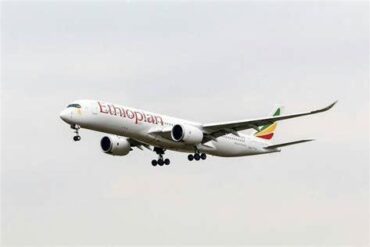
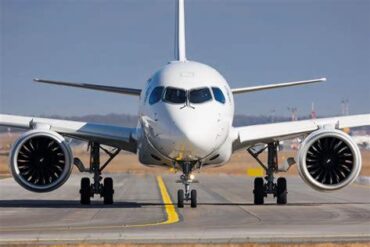
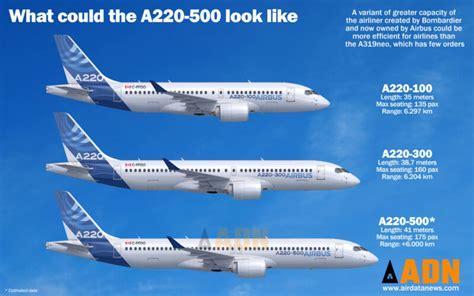
The aircraft family currently covers the A220-100 and A220-300, with seating capacity generally ranging from approximately 100 to 150 passengers depending on airline configuration. Despite its smaller size, the aircraft offers impressive range capabilities, allowing operators to serve routes previously difficult for smaller aircraft.
During the London briefing, Airbus Head of Marketing, Commercial Aircraft, Joost van der Heijden described the A220 as an “ultimate network builder,” highlighting that the aircraft has already helped create more than 400 routes that were previously unserved.
The success of these routes demonstrates an important economic principle: airlines do not always need larger aircraft to grow. Sometimes, the ability to profitably connect smaller markets creates more long-term value than adding capacity to already crowded routes.
Why the Airbus A220 Fits the Future of Point-to-Point Travel
The aviation industry is entering a period where flexibility will become increasingly important. Global passenger traffic is expected to continue rising steadily, with Airbus forecasting annual growth of around 3.9% through 2045. Over the next two decades, worldwide passenger demand is expected to more than double, reaching approximately ten billion travelers annually.
Several factors are driving this expansion. The global middle class is projected to increase by around 1.4 billion people, while international migration patterns and growing family connections across continents continue to stimulate demand for direct travel.
However, accommodating this growth entirely through existing mega-hubs would create significant operational challenges. Many major airports already face capacity limitations, while adding more connecting traffic can increase delays and reduce passenger satisfaction.
The A220 addresses this challenge by allowing airlines to create smaller-scale international and domestic networks. Its combination of fuel efficiency, long range, and lower trip costs makes it suitable for routes where larger aircraft would struggle to generate sufficient revenue.
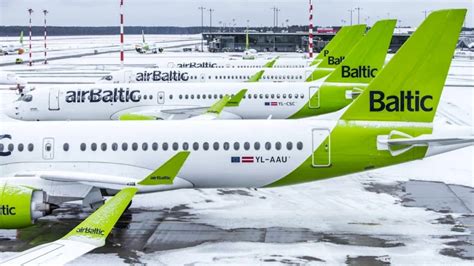
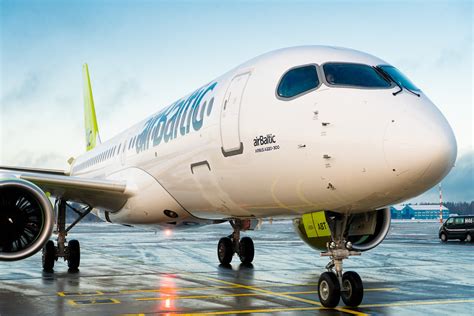
One example is airBaltic’s operation between Riga and Tenerife, where the A220 has demonstrated the ability to connect distant markets without requiring passengers to transfer through larger European hubs. Routes like this show how smaller aircraft can create new travel opportunities rather than simply replacing existing capacity.
The aircraft’s efficiency comes from its clean-sheet design, advanced aerodynamics, lightweight materials, and Pratt & Whitney geared turbofan engines. These technologies allow airlines to operate thinner routes with lower fuel consumption and reduced operating expenses.
Asia-Pacific Could Become One of the Biggest Airbus A220 Growth Markets
Among all regions, the Asia-Pacific aviation market represents one of the most promising opportunities for the A220. Economic growth across countries such as India, Vietnam, Indonesia, and Malaysia is creating new aviation demand outside traditional capital cities.
Historically, many passengers in these regions have depended on major hubs for domestic and international travel. A traveler from a smaller city often needed to connect through a major airport before reaching another regional destination.
That model is gradually changing. As secondary cities become stronger economic centers, airlines are looking for ways to connect these locations directly. The A220’s capabilities make it particularly suitable for this transition because many emerging markets require aircraft that can operate efficiently on routes with moderate passenger demand.
Airbus believes the Asia-Pacific region alone could support more than 800 new city pairs served by the A220. These routes could connect growing business centers, tourism destinations, and communities with strong family travel demand.
The opportunity is especially significant because many Asian airports are expanding rapidly. New airports and upgraded facilities are creating additional entry points for airlines, but these airports require aircraft capable of building demand gradually.
A large narrowbody aircraft may be too risky when launching a new route. A smaller aircraft like the A220 allows airlines to test markets, establish passenger loyalty, and increase frequency without immediately committing to excessive capacity.
This approach could reshape regional aviation across Asia, creating direct connections that were previously impossible because airlines lacked an economically suitable aircraft.
More Than 2,200 Unserved Routes Could Reshape Airline Networks
The potential impact of the A220 extends far beyond Asia. Airbus estimates that the aircraft could make more than 2,200 new city pairs viable worldwide, creating opportunities across North America, Europe, the Middle East, and North Africa.
North America represents one of the largest opportunities, with Airbus identifying potential for approximately 800 additional routes. Many of these opportunities involve connecting medium-sized cities directly rather than routing passengers through traditional hubs.
For example, business travelers between technology centers, manufacturing regions, and growing metropolitan areas increasingly prefer nonstop services. A direct flight can save several hours compared with connecting through a major airport, creating additional value for both airlines and passengers.
Europe and the Middle East/North Africa region could contribute another 600-plus potential routes. These markets feature many secondary cities separated by moderate distances, where direct flights could stimulate tourism and commercial activity.
The growth of low-cost and hybrid carriers has also increased demand for aircraft capable of serving niche markets. Airlines can use the A220 to explore new destinations, develop seasonal services, or strengthen regional networks without requiring massive passenger volumes.
The Rise of Secondary Cities Is Changing Aviation Demand
The growth of the A220 opportunity reflects a broader global trend: aviation is becoming less dependent on a small number of dominant cities.
According to Airbus projections, the number of small and medium-sized cities with populations above 250,000 is expected to rise from 2,251 in 2025 to 2,857 by 2045. These growing urban areas represent future aviation markets that require direct connectivity.
The transformation is already visible. Between 2005 and 2025, the number of unique city pairs worldwide increased from approximately 17,800 to 28,000. More than half of the routes operating in 2025 did not exist two decades earlier, and many of those new connections involved smaller cities.
This demonstrates a clear passenger preference for direct transportation. Modern travelers increasingly want to avoid unnecessary transfers, particularly on medium-distance journeys exceeding 2,000 miles.
The expansion of airport infrastructure is supporting this trend. Since 2005, the global aviation industry has added hundreds of new airports capable of handling modern commercial aircraft. These facilities require efficient aircraft that can establish profitable services from the beginning.
The A220 fits naturally into this environment. It is not designed to replace larger aircraft on major trunk routes. Instead, it fills the gap between regional connectivity and long-distance narrowbody operations.
Airbus A220 Benefits From the Global Fleet Replacement Cycle
The timing of the A220’s growth opportunity also aligns with a massive aircraft replacement cycle. Airlines worldwide are under pressure to modernize fleets as older aircraft become increasingly expensive to operate.
Airbus forecasts demand for approximately 42,060 new passenger aircraft deliveries between 2026 and 2045. Single-aisle aircraft are expected to represent the majority of this demand, accounting for around 33,920 deliveries.
Much of this demand comes from two sources: expanding airline networks and replacing aging fleets. Airlines need aircraft that reduce fuel consumption while providing the operational flexibility required for future markets.
Older regional jets and early-generation narrowbody aircraft often struggle to compete with modern designs. Their higher fuel burn and maintenance requirements make thin routes more difficult to operate profitably.
The A220 provides airlines with a modern alternative. Its economics allow carriers to replace inefficient aircraft while also exploring new destinations.
For airlines planning long-term growth, the aircraft represents more than a fleet addition. It is a strategic tool for creating new markets.
The Future of Aviation May Be Built Around Smaller Direct Routes
The traditional aviation model centered on massive hubs is unlikely to disappear completely. Major airports will continue playing a critical role in global connectivity. However, the next phase of aviation growth will likely depend on a more balanced network structure.
Passengers increasingly expect convenience, while airlines need efficiency. These competing demands create an opportunity for aircraft like the Airbus A220, which can provide direct connectivity without requiring enormous passenger volumes.
The possibility of more than 2,200 new A220-suitable routes highlights how dramatically airline networks could evolve over the next two decades. Instead of forcing travelers through crowded hubs, airlines may increasingly connect smaller cities directly.
As global passenger numbers continue growing and secondary markets expand, the ability to operate profitable thin routes will become a major competitive advantage.
The Airbus A220 is positioned at the center of this transformation. By combining long-range capability, lower operating costs, and right-sized capacity, the aircraft could become one of the defining platforms of the next generation of global air travel.