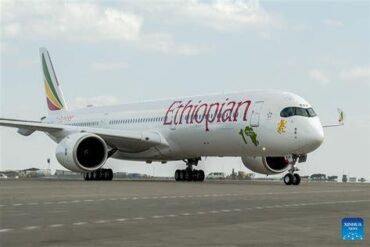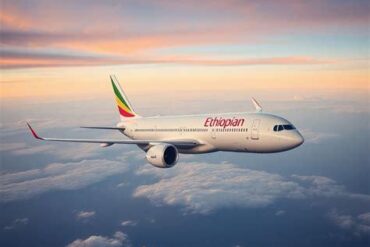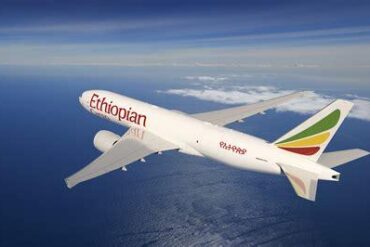
Africa’s aviation landscape is entering a new competitive phase, and Ethiopian Airlines appears determined to stay far ahead of the curve. The airline is reportedly evaluating the Airbus A220 as part of a broader fleet modernization and expansion strategy aimed at strengthening its dominance across regional African markets. If negotiations progress into a confirmed order, the move would mark a significant shift for a carrier that has historically relied heavily on Boeing narrowbody aircraft for short-haul operations.
The discussions reportedly involve up to 20 Airbus A220 aircraft, potentially giving Ethiopian Airlines an entirely new operational tool for thinner regional routes where demand remains inconsistent but long-range performance is still essential. For a carrier already operating one of the continent’s largest and most ambitious route networks, the A220 could become a highly strategic aircraft capable of reshaping how Ethiopian approaches secondary African cities and underserved markets.
Unlike many airlines that acquire regional jets strictly for replacement purposes, Ethiopian’s interest in the A220 appears closely linked to expansion and optimization. The airline is not abandoning its Boeing fleet. Instead, it is looking for ways to better match aircraft size with passenger demand while maintaining profitability on routes that are difficult to sustain using larger narrowbody jets.
After years of aggressive growth, the airline now faces a challenge shared by nearly every major global carrier: maximizing efficiency without sacrificing network reach. The Airbus A220 may offer precisely that balance.
Ethiopian Airlines’ Narrowbody Strategy Is Evolving
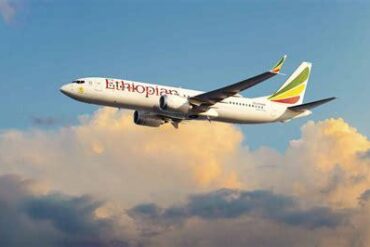
For decades, Ethiopian Airlines built much of its regional and medium-haul network around the Boeing 737 family. Its current narrowbody operations include the Boeing 737 MAX 8, Boeing 737-800, and Boeing 737-700. Alongside these aircraft, the airline also operates aging de Havilland Dash 8 Q400 turboprops on domestic and regional services.
That fleet structure has served Ethiopian well during its transformation into Africa’s largest airline group. However, changing market conditions across the continent are forcing airlines to think differently about fleet flexibility.
Many African routes do not generate enough demand to consistently fill a 160-seat Boeing 737 while still requiring substantial range due to long distances between cities and limited connecting infrastructure. Operating oversized aircraft on these routes can significantly erode profitability, particularly when fuel prices remain volatile and airport costs continue climbing.
This is where the Airbus A220 becomes especially attractive.
The A220 was designed specifically to bridge the gap between traditional regional jets and larger narrowbody aircraft. Built as a clean-sheet modern aircraft, it incorporates advanced aerodynamics, lightweight composite materials, and highly efficient Pratt & Whitney geared turbofan engines. The result is an aircraft capable of delivering impressive economics while maintaining passenger comfort levels often superior to older narrowbody designs.
For Ethiopian Airlines, that combination could open entirely new opportunities across East, Central, and West Africa.
Why The Airbus A220 Fits African Aviation So Well
Africa presents unique operational challenges for airlines. Route demand can fluctuate dramatically, infrastructure quality varies widely between airports, and many city pairs require longer flight distances than regional markets in Europe or North America.
The Airbus A220 was practically engineered for this environment.
The smaller A220-100 variant typically accommodates between 100 and 120 passengers, while the larger A220-300 seats roughly 120 to 160 travelers depending on cabin layout. Despite their smaller size, both aircraft variants offer impressive range figures exceeding 3,400 nautical miles.
That range capability allows airlines to connect distant African cities nonstop without deploying larger aircraft that may struggle to achieve sustainable load factors.
Compared with Ethiopian’s current Boeing narrowbody fleet, the A220 introduces a more flexible capacity profile while preserving long-haul regional capability. The Boeing 737 MAX 8 remains an extremely capable aircraft for higher-demand markets, but the A220 would allow Ethiopian to right-size operations on routes where passenger numbers do not justify larger jets year-round.
The aircraft could also help increase frequency on key business routes. Rather than operating one larger daily flight, Ethiopian could potentially deploy multiple A220 frequencies, offering travelers more scheduling flexibility while improving aircraft utilization.
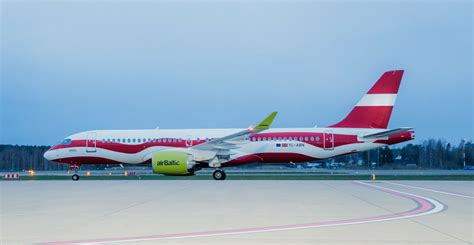
The A220 Would Complement — Not Replace — Ethiopian’s Boeing Fleet
One of the most important aspects of Ethiopian Airlines’ reported interest in the Airbus A220 is that the aircraft would likely complement existing Boeing operations rather than replace them.
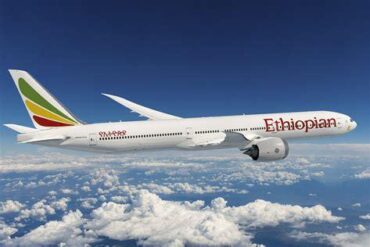
Ethiopian continues taking delivery of Boeing 737 MAX aircraft, and many of its existing 737NG jets remain relatively young. The airline has also doubled down on Boeing widebody investments by expanding its Boeing 787 Dreamliner commitments.
That makes the A220 less of a fleet replacement decision and more of a precision growth tool.
Introducing a new aircraft family naturally increases operational complexity. Pilots require additional training, maintenance infrastructure must expand, and spare parts logistics become more complicated. Airlines generally avoid adding fleet types unless the operational advantages significantly outweigh those costs.
In Ethiopian’s case, the benefits appear increasingly compelling.
The airline’s ambitions extend far beyond Addis Ababa. Ethiopian has aggressively pursued a pan-African strategy involving partnerships, investments in other African airlines, and rapid network expansion into underserved markets. The A220 could become a central pillar of that strategy by enabling profitable operations on routes previously considered too risky or too thin for larger aircraft.
This flexibility may become even more important as African aviation demand continues expanding over the next decade.
Ethiopian’s Massive Growth Vision Extends Beyond Aircraft Orders
The airline’s fleet ambitions are only one piece of a much larger transformation plan. Ethiopian Airlines is simultaneously investing heavily in infrastructure designed to support its long-term status as Africa’s leading global connector.
One of the most ambitious elements of that vision is Ethiopia’s planned mega-airport project, which aims to create the continent’s largest aviation hub. The future airport is expected to eventually handle up to 110 million passengers annually — more than four times the capacity of Addis Ababa’s current hub infrastructure.

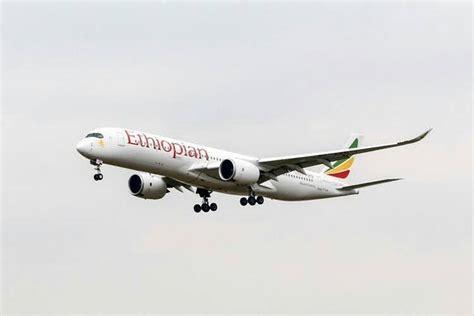
The scale of that project highlights how aggressively Ethiopian Airlines views future growth opportunities across Africa and beyond. By combining long-haul expansion through Boeing 787s and Airbus A350s with regional flexibility offered by the Airbus A220, the airline is building a fleet strategy designed for both connectivity and scalability.
If Ethiopian proceeds with the A220 order, the decision would represent far more than a simple fleet addition. It would signal a strategic evolution in how Africa’s largest airline intends to dominate regional aviation for decades ahead.