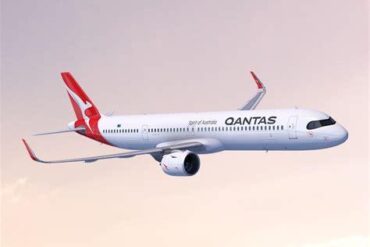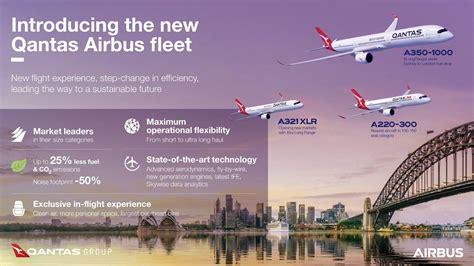
Qantas is entering a pivotal expansion phase, leveraging its A350-1000, Boeing 787 Dreamliner, and upcoming A321XLR fleets to deepen its presence in India—a market the airline increasingly views as one of the most strategically valuable in the Asia-Pacific region. As the carrier accelerates its long-term fleet renewal, executives are signalling a clear ambition: transform Australia–India connectivity with new non-stop routes, improved aircraft deployment, and a strengthened dual-brand strategy with Jetstar.
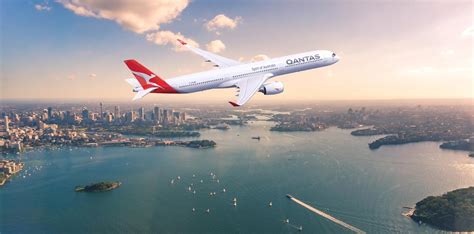
Qantas International CEO Cam Wallace has emphasized that the airline’s current operations to India—two non-stop routes using the Airbus A330—are performing well, yet the A330 is not the ideal long-term aircraft. With the arrival of the A350-1000 for Project Sunrise and new Dreamliners entering the fleet, Qantas expects to redeploy 787s into high-demand India markets, enabling longer reach, better economics, and premium-heavy configurations.
The broader strategy aligns with Qantas’ plan to retire its aging A330s, replacing them with a unified long-haul fleet of A350-1000s and 787s capable of operating extended missions without payload restrictions. This transition is already shaping route planning for India and beyond.
Opening New Non-Stop Options From Australia to India
Today, Qantas operates only two non-stop India services: Sydney–Bangalore and Melbourne–Delhi. While these routes represent robust demand, the airline’s long-term goal is far more ambitious. The introduction of the A321XLR—featuring lie-flat business class seats from 2028—marks a turning point for Western Australia.
The A321XLR’s long-range capabilities make routes such as Perth–Mumbai, Perth–Chennai, or even Perth–Colombo technically viable, enabling the airline to build Perth into a fast, convenient one-stop corridor between Australia and South Asia.
Perth’s Transformation Into a World-Class Hub
Qantas’ India ambitions are tied closely to a sweeping AU$5 billion redevelopment of the Perth Airport Central precinct, consolidating domestic and international operations under one roof. This unified terminal model supports fast connections, simplifies transfers, and positions Perth as a streamlined long-haul gateway.
The airport expansion, combined with the A321XLR’s efficiency, could shift Australia-India travel patterns, reducing reliance on Middle Eastern and Southeast Asian hubs such as Doha, Dubai, Singapore, and Kuala Lumpur, which currently dominate traffic flows.
Expanding the IndiGo Partnership for Seamless Connectivity
Qantas’ existing partnership with IndiGo—India’s largest airline—already gives Australian travellers access to 11 domestic connections from Delhi and Bangalore. With more Qantas-operated India flights on the horizon, the airline is expected to deepen codesharing and frequent flyer integration to expand domestic access even further.
This partnership provides a competitive edge against global giants like Singapore Airlines, Emirates, Qatar Airways, and Malaysia Airlines, all of whom link India and Australia with established hub-and-spoke networks.
Jetstar’s Expanding Role in Low-Cost India Travel
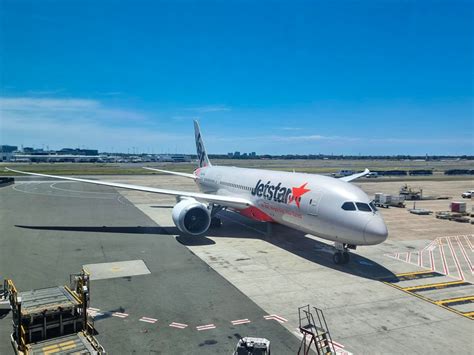
Qantas Group’s dual-brand strategy takes on new significance as Jetstar positions itself to launch ultra-long low-cost flights into India and Sri Lanka. Several Jetstar 787s are currently undergoing a major cabin retrofit that adds crew rest areas, enabling flights of up to 16 hours—a critical threshold that opens nonstop opportunities from Sydney, Melbourne, and Perth to South Asia.
Jetstar already deploys its Dreamliners across Asia, serving Singapore, Tokyo, Bangkok, Phuket, Ho Chi Minh City, and Seoul. With the addition of the A321XLR to its own fleet, Jetstar has begun operating new routes such as Perth–Manila and Brisbane–Cebu, demonstrating the versatility needed to expand into India.
Stephanie Tully, CEO of Jetstar Group, has confirmed that India and Sri Lanka are now well within feasible range, especially as demand for low-fare long-haul travel continues to surge.
A Powerful Dual-Brand Strategy for a Fast-Growing Market
By combining Qantas’ premium long-haul service with Jetstar’s aggressive low-cost expansion, the group aims to dominate both ends of the Australia–India travel spectrum. The synergy is simple: Qantas captures business and high-yield leisure travel, while Jetstar fills high-volume budget demand.
The India-Australia market remains underserved. Other than Air India and SriLankan Airlines, few carriers offer direct flights. Qantas sees this imbalance as a prime opportunity to capture market share with modern aircraft, seamless Perth connections, and increased access through IndiGo.
The Road Ahead: A New Era for Australia–India Connectivity
Qantas’ fleet upgrade is more than a renewal program—it is a strategic pivot toward one of the world’s fastest-growing travel markets. With high-performance aircraft, stronger regional partnerships, and a clear hub strategy, the airline is positioning itself for a transformative leap in India operations.
The next five years will determine how fast Qantas scales its ambitions, but the trajectory is unmistakable: India is becoming one of the central pillars of Qantas’ international future, supported by a modernized fleet and an increasingly unified network structure that bridges Australia with South Asia more efficiently than ever.