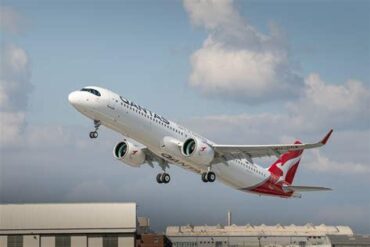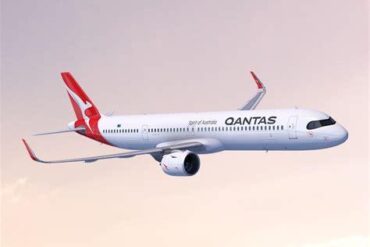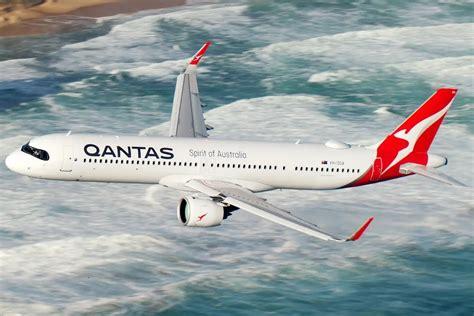
Qantas is entering a new operational era with the Airbus A321XLR, deploying the long-range narrowbody across five revealed routes that stretch up to eight hours and signal a decisive fleet transformation. From dense domestic corridors to a newly upgraded international link, the aircraft is not merely replacing aging Boeing 737-800s—it is reshaping how Australia connects to Asia and across its vast continental distances.
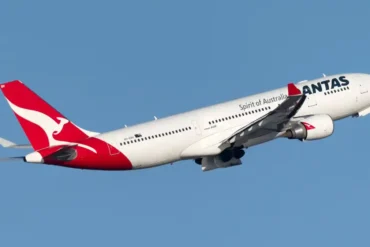
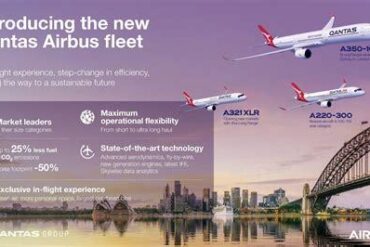
The arrival of four A321XLRs, part of a broader 48-aircraft order, marks the beginning of a calculated transition. These jets blend long-haul capability with narrowbody economics, unlocking routes that were once marginal or dependent on widebody aircraft like the Airbus A330. For Qantas, operating from one of the world’s most geographically isolated aviation markets, range is strategy.
The five confirmed routes showcase how this aircraft is already embedding itself into the airline’s network architecture. They range from high-frequency domestic shuttles to an international service that stretches nearly 3,600 miles—territory once reserved for much larger aircraft.
Brisbane to Manila: The First International A321XLR Route
The headline deployment is the daily Brisbane (BNE) to Manila (MNL) service, replacing the Airbus A330 beginning October 25. At 3,596 miles (5,787 kilometers), this becomes Qantas’ longest A321XLR route to date and demonstrates the aircraft’s true long-range capability.
The route transitions from five weekly services to a daily schedule, reflecting both confidence in demand and the efficiency of the new aircraft.
- QF97 departs Brisbane at 2:00 pm, arriving Manila at 8:05 pm (8 hours 5 minutes).
- QF98 departs Manila at 9:30 pm, arriving Brisbane at 7:25 am (7 hours 55 minutes).
This near-eight-hour mission illustrates the XLR’s defining trait: widebody range on a narrowbody footprint. By right-sizing capacity while preserving long-haul endurance, Qantas reduces operational costs without sacrificing connectivity.
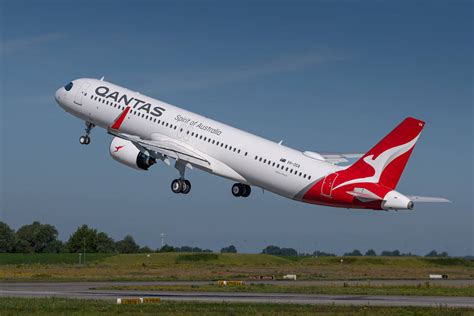
Sydney to Melbourne: High-Frequency Precision
The Sydney–Melbourne corridor remains one of the busiest domestic air routes in the world. In 2026, the A321XLR is scheduled to operate up to 32 weekly services between these cities.
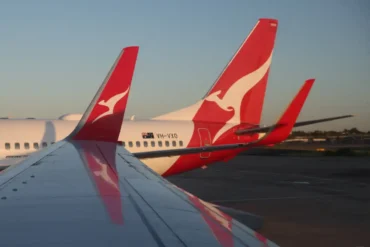
This deployment is not about range but about fleet modernization and cabin consistency. Replacing 737-800s improves fuel efficiency and increases overhead storage capacity by up to 60%, a subtle but meaningful upgrade on short, high-volume sectors. The aircraft’s larger windows, LED lighting, and higher ceiling create a noticeably more spacious feel—psychology matters when flights operate at relentless frequency.
Sydney to Brisbane: Strengthening the Eastern Triangle
With up to 16 weekly A321XLR services scheduled between Sydney and Brisbane, Qantas reinforces the eastern seaboard triangle linking Sydney, Melbourne, and Brisbane. This corridor carries immense business traffic, and aircraft reliability, turnaround speed, and passenger flow efficiency are critical.
The A321XLR’s improved cabin layout and modernized systems provide operational flexibility. Even though these sectors are shorter, deploying the XLR ensures commonality across the fleet and prepares crews and ground operations for longer international sectors.
Sydney to Perth: Narrowbody Across a Continent
At 2,041 miles (3,284 kilometers), Sydney to Perth is a serious domestic flight—longer than many international routes in Europe or Southeast Asia. In 2026, Cirium data indicates up to 27 weekly A321XLR services on this transcontinental sector.
Traditionally served by widebodies or older narrowbodies pushed to their limits, this route demonstrates the XLR’s performance sweet spot. The aircraft comfortably handles the distance while offering economics that make high frequency sustainable. For passengers, it means a modern cabin environment on a five-hour-plus journey that once felt like an endurance test on aging jets.
Brisbane to Perth: The Emerging Long Domestic Stretch
From May onward, Qantas will operate the A321XLR between Brisbane and Perth up to six times weekly, covering 2,246 miles (3,614 kilometers). This becomes the aircraft’s second-longest domestic assignment, surpassing Sydney–Perth in raw distance.
The significance lies in network flexibility. Brisbane gains a long-haul-capable narrowbody that can pivot between domestic and international missions without widebody cost structures. In strategic terms, Brisbane quietly evolves into a more versatile long-haul gateway.
Inside the Qantas A321XLR Cabin Experience
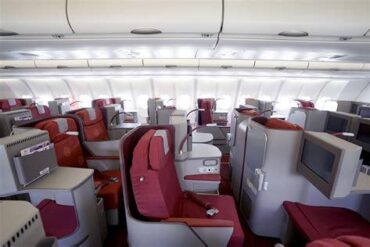
The onboard experience balances practicality and comfort. Two configurations carry 197 to 200 passengers, including 20 Business Class seats arranged in a 2-2 layout. Business passengers receive a 37-inch pitch, 25-inch seat width, and five inches of recline—solid comfort for medium-haul sectors.
Economy is configured 3-3, with a 30-inch pitch and 17.6-inch seat width. While not revolutionary, the improvements over the outgoing 737 fleet are tangible: higher ceilings, modern LED lighting, larger windows, and significantly expanded overhead bins.
Domestic aircraft lack seat-back screens, but passengers access the Qantas Entertainment app via personal devices, supported by fast, complimentary WiFi. This reflects a broader industry shift—hardware is heavy and costly; streaming is flexible and lighter.
Strategic Implications: Why the A321XLR Matters
The Airbus A321XLR is not simply a new aircraft type in Qantas’ fleet. It is a strategic instrument.
Its extended range allows Qantas to explore thin but high-potential routes across Southeast Asia and the Pacific, destinations previously uneconomical with widebodies yet too distant for conventional narrowbodies. The aircraft’s theoretical reach opens possibilities such as:
- Sydney to Hong Kong, Bangkok, or Phnom Penh
- Melbourne to Phuket or Kuala Lumpur
- Brisbane to Tokyo or Jakarta
- Perth to Colombo or Bangalore
These are not confirmed routes, but they illustrate the network logic the XLR enables. Australia’s distance from major global hubs has always shaped its aviation strategy. The A321XLR softens that isolation by extending narrowbody range deeper into Asia.
From Replacement to Reinvention
On paper, the A321XLR replaces Boeing 737-800s. In practice, it does much more. It increases range, enhances passenger comfort, reduces fuel burn, and supports higher-frequency scheduling. It allows Qantas to upgauge routes like Brisbane–Manila without overcommitting capacity.
The Manila deployment is the clearest proof point. An eight-hour international route operated daily by a narrowbody would have been operationally ambitious just a decade ago. Today, it is central to Qantas’ expansion blueprint.
The five revealed routes demonstrate a deliberate rollout: begin domestically, build operational familiarity, then extend internationally. It is incremental, controlled, and strategically sharp.
As more A321XLRs join the fleet, the aircraft will likely shift from being a replacement to becoming a growth platform. For an airline operating at the edge of global geography, that capability is transformative.
The A321XLR is not just stretching routes. It is stretching possibilities.