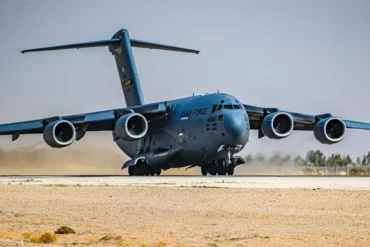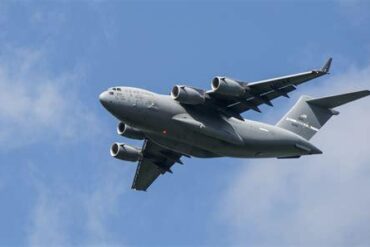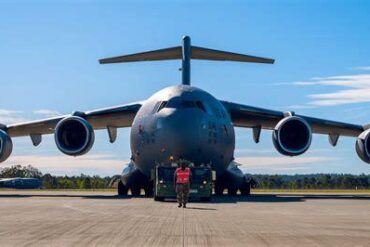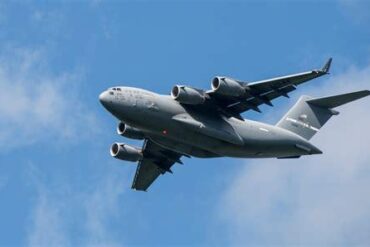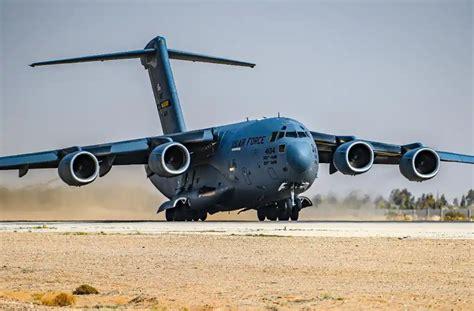
The Boeing C-17 Globemaster III has long been the backbone of American strategic airlift, carrying troops, armored vehicles, humanitarian supplies, helicopters, and oversized cargo across the globe. Although Boeing officially ended production in 2015 after delivering 279 aircraft, growing geopolitical tensions and increasing operational demands have reignited serious discussions about restarting a production line that has been dormant for more than eleven years.
The renewed interest is far more than nostalgia for one of the world’s finest military transport aircraft. Instead, it reflects changing military realities, growing concerns about force projection in the Indo-Pacific, and the realization that no direct replacement is ready for service. As Congress evaluates America’s future air mobility requirements, Boeing’s iconic transport aircraft is once again becoming a central topic in defense planning.
For the United States Air Force, the question is no longer whether the C-17 remains valuable. Instead, policymakers are asking whether America can afford not to build more.
The United States maintains military forces across Europe, the Middle East, Africa, the Pacific, and numerous other regions. While sealift remains the most economical method of transporting large quantities of equipment, strategic airlift provides the speed necessary for crisis response, humanitarian assistance, and wartime logistics.
Unlike tactical transports such as the C-130J Super Hercules, the C-17 Globemaster III was designed to move exceptionally heavy cargo over intercontinental distances while retaining the ability to operate from relatively short and austere runways. This unique combination has made it indispensable for military operations ranging from Afghanistan and Iraq to disaster relief following earthquakes, tsunamis, and hurricanes.
Without strategic airlifters, America’s global military posture would become significantly less flexible.
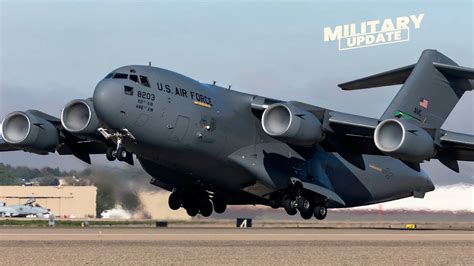
Why The C-17 Production Line Closed In The First Place
The end of production was never driven by technical shortcomings. Instead, Boeing simply reached the point where domestic and export orders had largely been fulfilled.
The U.S. Air Force ultimately purchased 223 C-17s, making it by far the largest operator. Additional aircraft were delivered to Australia, Canada, India, Qatar, Kuwait, the United Arab Emirates, the United Kingdom, and NATO’s Strategic Airlift Capability.
Once these commitments were completed, no large follow-on orders materialized. Maintaining an active assembly line for a handful of aircraft every few years was economically unsustainable. Boeing therefore delivered its final Globemaster III in 2015 and shut down the Long Beach production facility.
At the time, many analysts assumed future transport needs would eventually be met through an entirely new generation of aircraft.
Instead, demand for strategic airlift has only increased.
Operational Demands Continue To Grow
Military planners now face a dramatically different security environment than they did a decade ago.
Competition with China has become the Pentagon’s primary focus. Russia’s invasion of Ukraine reinforced the importance of rapidly transporting equipment across continents. Humanitarian missions continue to expand as climate-related disasters increase in frequency.
Every one of these missions depends heavily upon America’s fleet of strategic transport aircraft.
Recent contingency operations have also accelerated wear on the existing fleet. Aircraft that were originally expected to serve for decades are accumulating flight hours faster than originally projected.
Congress has therefore expressed concern that sustaining the current fleet until approximately 2075 may become increasingly difficult without additional aircraft or substantial modernization investments.
Rather than assuming today’s fleet is sufficient, lawmakers are asking whether restarting production would provide a more practical long-term solution.
Congress Wants Answers Before Making A Decision
Rather than immediately funding new aircraft, Congress has instructed the Air Force to examine whether reopening production is realistically achievable.
The requested assessment extends far beyond simply asking Boeing whether it can build more aircraft.
Officials must determine:
- Whether original manufacturing tooling still exists.
- Which suppliers remain capable of producing critical components.
- How quickly a skilled workforce could be reassembled.
- The estimated cost of restarting production.
- Potential delivery schedules.
- International customer interest.
- Alternative methods for increasing strategic airlift capacity.
These questions reflect the enormous complexity involved in reviving an aircraft production line after more than a decade.
Aircraft manufacturing depends on thousands of suppliers, specialized engineers, precision tooling, certification processes, and production expertise that cannot simply be recreated overnight.
Why No Aircraft Truly Replaces The C-17
Several aircraft perform portions of the C-17’s mission, but none duplicate its complete capabilities.
Europe’s Airbus A400M Atlas offers excellent tactical performance while carrying lighter payloads. Russia’s Il-76 and China’s Y-20 serve similar strategic roles but obviously are not procurement options for the United States.
Commercial freighters such as the Boeing 767, 777F, or future 777-8F provide excellent cargo capacity but cannot operate from rough military airfields or rapidly deploy armored combat vehicles under combat conditions.
The C-17 remains uniquely positioned between tactical and strategic transport.
It combines long-range intercontinental capability with remarkable short-field performance, allowing it to deliver tanks, helicopters, artillery, humanitarian supplies, and personnel directly into forward operating locations that would be inaccessible to many commercial aircraft.
The Air Force Still Depends On Two Strategic Airlifters
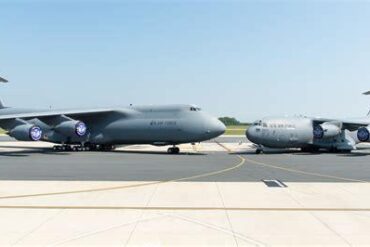
America’s heavy airlift capability currently rests on two aircraft families.
The larger C-5M Super Galaxy transports extremely heavy and oversized cargo over long distances.
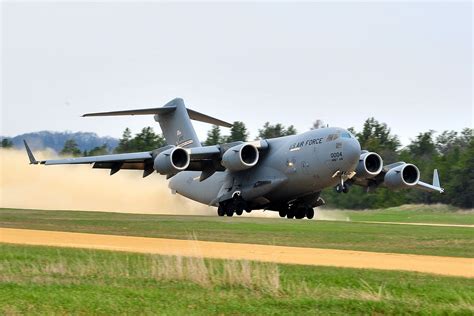
The C-17 Globemaster III handles a broader variety of missions, offering greater operational flexibility while accessing shorter runways and more remote airfields.
Together, these aircraft support nearly every major overseas deployment undertaken by the United States military.
Because both fleets are expected to remain operational for decades, sustaining sufficient aircraft numbers has become an increasingly important planning challenge.
Restarting Production Would Be Extremely Expensive
Restarting a dormant aerospace production line involves much more than reopening a factory.
Many original suppliers have disappeared, merged, or shifted to entirely different industries. Experienced engineers have retired or moved into other aerospace programs. Specialized tooling may require redesign or complete replacement.
Earlier independent studies estimated that restarting C-17 production could require several billion dollars before a single aircraft leaves the assembly line.
Inflation, evolving manufacturing techniques, digital engineering requirements, cybersecurity standards, and modern avionics would almost certainly push those costs substantially higher today.
Any newly produced aircraft would likely incorporate updated communications systems, improved defensive equipment, more capable mission computers, enhanced networking, and compliance with modern military standards.
Rather than reproducing the exact aircraft delivered in 2015, Boeing would almost certainly manufacture an updated variant.
International Customers Could Help Reduce Costs
Foreign military sales could significantly improve the economics of reopening production.
Several allied nations continue expanding their expeditionary capabilities while seeking reliable heavy airlift.
Existing C-17 operators already possess trained crews, maintenance infrastructure, spare parts inventories, and operational experience. Additional aircraft could integrate smoothly into established fleets.
Potential export interest would also help spread fixed restart costs across multiple customers, reducing the financial burden on the U.S. government.
Although no major international purchases have been officially announced, overseas demand remains an important factor in any future business case.
The Next Generation Airlifter Is Still Years Away
The Pentagon’s Next Generation Airlifter (NGAL) program represents the long-term future of American strategic air mobility.
The aircraft is expected to eventually replace both the C-17 and C-5M while introducing greater efficiency, advanced survivability, and improved operational flexibility.
However, the program remains in its early development stages.
Current planning envisions production beginning sometime in the late 2030s, with operational capability arriving in the early 2040s. Those schedules remain subject to funding stability, technical progress, and acquisition priorities.
That leaves a substantial capability gap.
If demand for strategic airlift continues increasing during the next decade, the Air Force may require additional aircraft well before NGAL becomes available.
Ironically, this creates the possibility that new C-17s and future NGAL aircraft could briefly be produced simultaneously.
Emerging Aircraft Could Complement Rather Than Replace The C-17
Several innovative transport concepts are currently attracting military interest.
Radia’s proposed WindRunner promises extraordinary cargo volume capable of transporting massive industrial components while operating from unprepared surfaces.
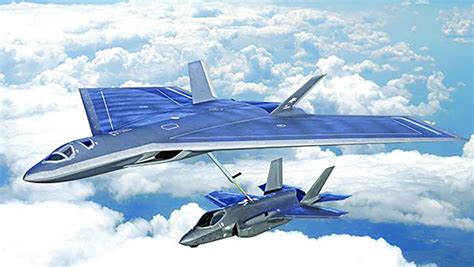
JetZero’s blended-wing-body transport offers dramatic improvements in fuel efficiency and has attracted Air Force interest for future tanker applications.
Meanwhile, autonomous cargo drones, runway-independent logistics aircraft, hybrid-electric transports, and advanced vertical lift systems aim to solve the increasingly difficult “last mile” logistics problem.
These technologies address different operational challenges rather than replacing the C-17’s strategic mission.
Instead of competing directly, they could eventually operate alongside traditional transport aircraft as part of a layered logistics network.
Future Warfare Is Changing Strategic Airlift
Modern military planners increasingly recognize that large transport aircraft face growing risks in contested environments.
Long-range missiles, sophisticated integrated air defense systems, advanced fighters, and expanding surveillance networks make operations near hostile territory considerably more dangerous than in previous decades.
Consequently, strategic transports will likely remain farther from the front lines.
Future logistics concepts envision aircraft like the C-17 delivering supplies to relatively secure regional hubs before smaller autonomous aircraft, cargo drones, short takeoff transports, or unmanned systems complete final delivery.
This evolution does not diminish the importance of strategic airlift.
Instead, it changes where strategic aircraft operate within increasingly distributed logistics networks.
The ability to move enormous quantities of cargo rapidly across oceans will remain indispensable even as battlefield delivery methods evolve.
Boeing Faces Both Opportunity And Challenge
If Congress ultimately authorizes new procurement, Boeing would face one of the most ambitious production restart efforts in modern aerospace history.
Rebuilding supplier networks, recruiting specialized workers, modernizing manufacturing methods, certifying updated systems, and integrating digital production techniques would require years of coordinated effort.
Nevertheless, Boeing possesses valuable institutional knowledge from producing nearly three hundred aircraft.
Modern manufacturing technologies—including digital engineering, advanced automation, additive manufacturing, and improved quality control systems—could also simplify certain aspects of restarting production compared with previous decades.
The challenge would be significant, but it would not be unprecedented.
The Future Of America’s Heavy Airlift Capability
The renewed discussion surrounding the C-17 Globemaster III reflects a broader strategic reality rather than simple affection for a legendary aircraft.
America’s military continues to rely upon unmatched global mobility. Strategic competition, humanitarian crises, alliance commitments, and rapid force projection all require aircraft capable of transporting enormous payloads across continents with minimal warning.
Although the Next Generation Airlifter promises transformational capabilities in the future, it remains years from operational service. Until then, the proven C-17 continues to represent one of the most capable strategic transport aircraft ever built.
Whether Boeing ultimately restarts production will depend on congressional funding, Air Force priorities, industrial feasibility, and international demand. Yet the fact that serious discussions are taking place more than eleven years after production ended highlights one unmistakable conclusion: the C-17 Globemaster III remains an essential pillar of American military logistics, and its remarkable combination of payload, range, reliability, and operational flexibility has yet to be truly replaced.
Frequently Asked Questions
Why did Boeing stop producing the C-17 Globemaster III?
Production ended in 2015 primarily because Boeing had completed U.S. Air Force and international customer orders, leaving insufficient demand to justify keeping the production line open.
Could Boeing realistically restart C-17 production?
Yes, but doing so would require rebuilding supplier networks, restoring manufacturing tooling, hiring skilled workers, updating aircraft systems, and investing billions of dollars before new aircraft could be delivered.
Will the C-17 eventually be replaced?
Yes. The U.S. Air Force plans to replace both the C-17 and the C-5M through the Next Generation Airlifter (NGAL) program, although that aircraft is not expected to enter operational service until the 2040s.