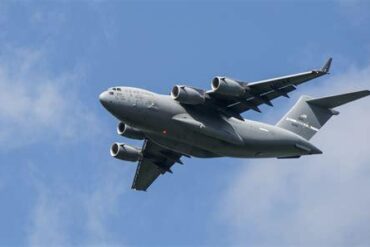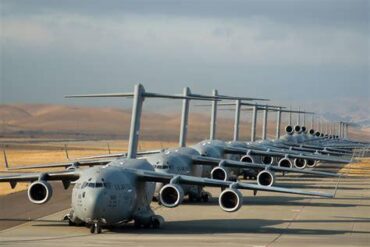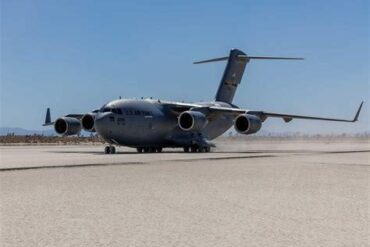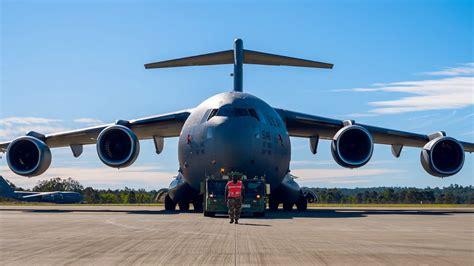
The Boeing C-17 Globemaster III occupies a rare and powerful position in global aviation: it is both omnipresent and understated. For more than three decades, this aircraft has carried the weight of modern logistics—sometimes literally tanks and helicopters, sometimes entire relief efforts—without fanfare. While newer platforms arrive with glossy renderings and ambitious promises, the C-17 keeps flying, quietly proving that relevance is not defined by age but by utility.
Questions about retirement surface regularly, often driven by assumptions that longevity implies obsolescence. In the case of the C-17, that assumption collapses under scrutiny. The aircraft was designed to solve a problem that still exists: how to move heavy cargo across intercontinental distances and deliver it directly into environments where infrastructure is damaged, minimal, or nonexistent. That mission profile has not faded with time. If anything, global instability, humanitarian crises, and dispersed military operations have made it more urgent.
What keeps the C-17 firmly anchored in future planning is not nostalgia or institutional inertia. It is a convergence of engineering foresight, strategic necessity, and fiscal reality. Few aircraft have been built with such deliberate balance between raw capability and adaptability, and fewer still have proven that balance across decades of real-world operations. The result is an airlifter that remains indispensable, not because there is no desire to replace it, but because no viable replacement yet exists.
A Strategic Airlifter Designed for a Problem That Never Went Away
The origins of the C-17 trace back to a hard lesson learned during the late Cold War. Military planners recognized a dangerous gap between strategic airlift and tactical delivery. Existing aircraft forced a tradeoff: large transports could carry heavy loads but required long, pristine runways, while smaller aircraft could land close to the front but lacked the payload and range to move decisive equipment. The C-17 was conceived to erase that compromise.
First flown in 1991 and entering service in the early 1990s, the aircraft embodied a then-radical idea: a single platform capable of global reach and frontline access. It was not designed as a specialized niche tool but as a flexible backbone for air mobility. That design philosophy explains why it still fits so cleanly into today’s operational demands.
The aircraft’s service record tells the story better than any brochure. From major combat deployments to disaster relief operations following earthquakes and floods, the C-17 has repeatedly demonstrated that speed of delivery often matters more than theoretical efficiency. Being able to land heavy cargo exactly where it is needed, rather than hundreds of miles away, has reshaped how planners think about logistics.
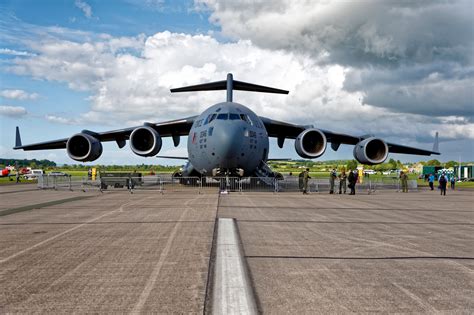
Performance That Blends Strategic Reach With Tactical Precision
What truly separates the C-17 from other airlifters is not a single headline statistic but the way its capabilities reinforce one another. Payload capacity alone would not make it exceptional, nor would runway performance in isolation. It is the synthesis of these traits that defines its enduring value.
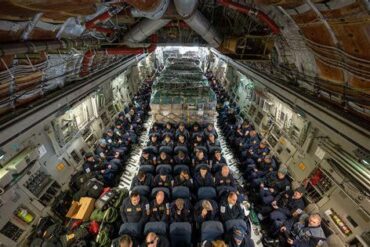
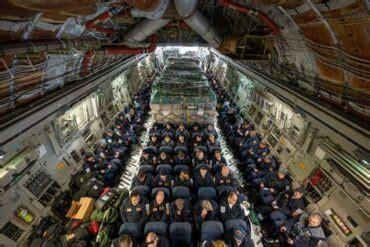
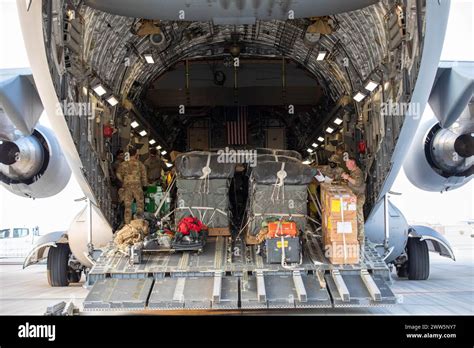
The aircraft can carry nearly 171,000 pounds of cargo, accommodating main battle tanks, helicopters, armored vehicles, and outsized equipment without modification. This capacity places it firmly in the heavy-lift category, yet it operates comfortably from runways as short as 3,500 feet and from semi-prepared surfaces. In practical terms, this means the C-17 can bypass secure hub airports and deliver directly to forward bases or disaster zones.
Range further amplifies this flexibility. With a heavy payload, the aircraft can fly roughly 2,400 nautical miles unrefueled, and with aerial refueling its reach becomes effectively global. Advanced fly-by-wire flight controls allow precise handling at low speeds, enabling steep approaches and controlled landings in confined environments. These characteristics are rare individually and almost unheard of in combination on an aircraft of this size.
The result is an airlifter that behaves less like a blunt instrument and more like a precision tool. It can support large-scale force movements while remaining agile enough for missions that demand finesse rather than brute force.
Why No Aircraft Can Truly Replace the C-17 Today
Retirement discussions inevitably raise the question of alternatives. On paper, the global airlift landscape appears crowded, yet none of the available platforms replicate the C-17’s balanced capability set. Each alternative excels in one dimension while falling short in others.
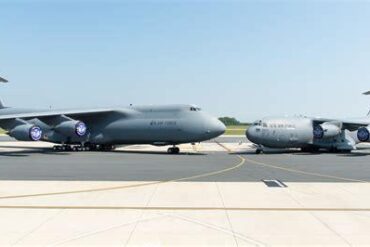
The C-130 Hercules family is unrivaled in tactical flexibility and austere field operations, but it cannot move the heavy equipment required for modern mechanized forces across oceans. At the opposite extreme, the C-5 Galaxy offers immense payload capacity but is constrained by runway requirements that limit where it can operate. Other aircraft, such as the Airbus A400M, Kawasaki C-2, and Embraer C-390, bring impressive performance within their design envelopes but stop short of combining heavy-lift capacity with true short-field performance.
The long-discussed Next-Generation Airlifter concept underscores this gap rather than closing it. Still in early planning stages, such a program is unlikely to deliver an operational aircraft before the late 2030s or 2040s. That timeline leaves a multi-decade window during which retiring the C-17 would create a severe capability shortfall.
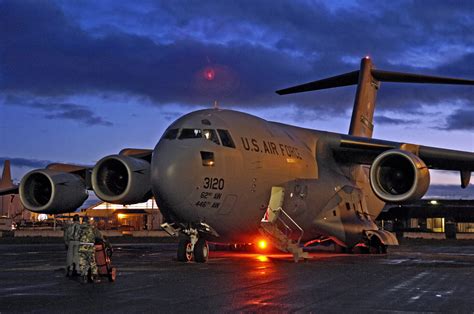
Until a new platform can match or exceed the C-17 across payload, range, and runway flexibility, the aircraft occupies a category of one. In strategic planning, uniqueness translates directly into longevity.
Structural Longevity Built Into the Airframe
Another reason the C-17 resists retirement is that it was never built with a short horizon in mind. The airframe incorporates substantial fatigue margins, reflecting an expectation of decades of heavy use. This foresight has paid dividends as the fleet continues to log demanding flight hours without encountering insurmountable structural limits.
Service Life Extension Programs have further reinforced this durability. Regular inspections, targeted reinforcements, and structural upgrades have extended the aircraft’s usable life well beyond original projections. Unlike platforms that face diminishing returns from maintenance, the C-17 benefits from a design that accommodates renewal rather than resists it.
Modernization potential adds another layer of resilience. Avionics, communications systems, navigation suites, and defensive countermeasures can be upgraded incrementally, allowing the aircraft to adapt to evolving threats and operational concepts. This approach mirrors the longevity strategies applied to other iconic platforms that have remained relevant for generations.
High mission-capable rates strengthen the case even further. The C-17 consistently demonstrates reliability levels that planners can trust, reducing the need for excessive redundancy and maximizing available lift capacity. In an era where readiness is as critical as raw numbers, that reliability carries enormous weight.
A Cornerstone of Humanitarian and Disaster Response
While military logistics often dominate discussions, the C-17’s humanitarian role has quietly become one of its most visible contributions. When infrastructure collapses after natural disasters, the aircraft’s ability to deliver aid directly into affected areas becomes invaluable. Short runways, damaged airstrips, and remote locations are precisely the environments where the C-17 thrives.
Time-sensitive relief operations benefit from the aircraft’s combination of speed and capacity. Medical supplies, shelter materials, and heavy engineering equipment can be delivered in a single sortie, accelerating response efforts and saving lives. This capability has made the aircraft a familiar presence in international relief missions, often arriving before civilian infrastructure can recover.
The trust built through these missions extends beyond national borders. Allied nations operating the C-17 rely on shared procedures, training, and interoperability, reinforcing long-term commitments to sustain the platform. This international dependence creates a powerful incentive to keep the aircraft viable for decades.
Budget Reality and the Cost of Replacement
Even if a perfect replacement existed on paper, replacing the C-17 fleet would confront daunting economic barriers. The production line has been closed for years, and reconstituting it would require rebuilding specialized tooling, requalifying suppliers, and retraining a skilled workforce. Such an effort would consume billions of dollars and many years before yielding a single operational aircraft.
Developing a new platform from scratch would be even more expensive, with research, testing, and certification stretching timelines further. Matching the existing fleet’s capacity would require procuring hundreds of aircraft, compounding costs and risks. Against this backdrop, extending the service life of a proven platform emerges not as a conservative choice but as a strategically rational one.
History reinforces this logic. Aircraft such as the B-52 Stratofortress and KC-135 Stratotanker demonstrate how robust design paired with disciplined modernization can keep platforms operational for half a century or more. The C-17, with its remaining structural life and upgrade potential, fits squarely within this tradition.
The Future of Airlift Still Depends on the C-17
Looking ahead, the strategic environment shows little sign of simplifying. Distributed operations, rapid crisis response, and humanitarian obligations all demand flexible, reliable airlift. The C-17’s unique ability to bridge strategic and tactical requirements ensures it remains central to these missions.
Rather than fading quietly into history, the aircraft continues to shape how air mobility is planned and executed. Its presence buys time for future programs to mature without forcing dangerous capability gaps. It also provides a benchmark against which new designs are measured, setting a high bar for any would-be successor.
The C-17 Globemaster III endures not because of sentiment or lack of imagination, but because it still solves problems better than anything else in the sky. In aviation, usefulness is the ultimate measure of youth. By that standard, the C-17 is far from old.