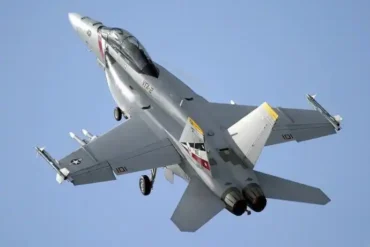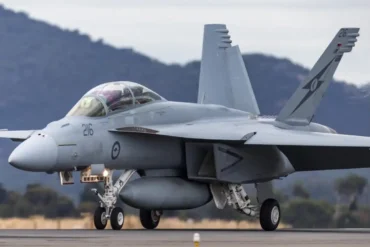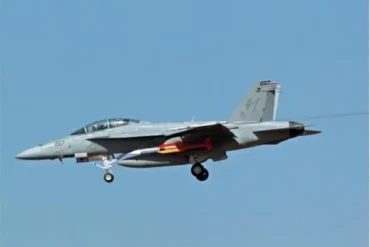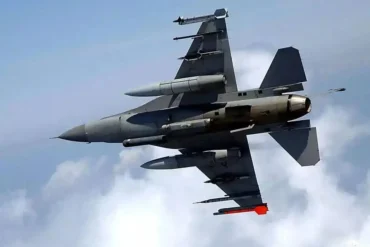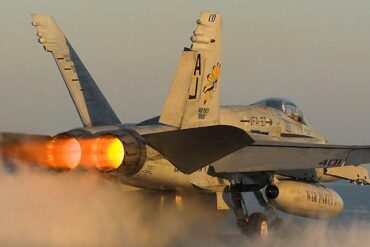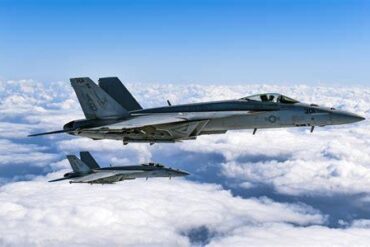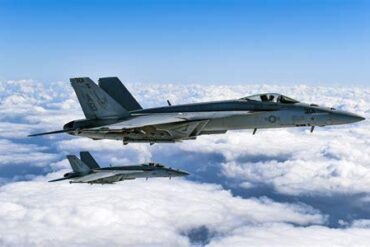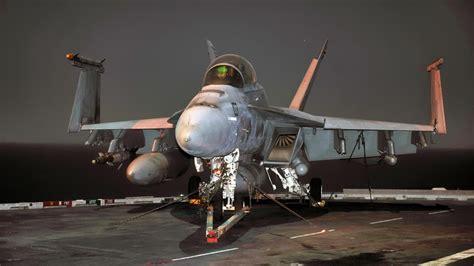
The Boeing F/A-18E/F Super Hornet stands as one of the most strategically significant aircraft in modern naval aviation, not because it is the newest or most technologically exotic platform, but because it delivers something far more valuable: consistent, scalable combat power. In 2026, as the Lockheed Martin F-35C Lightning II continues its gradual integration into carrier air wings, the Super Hornet remains the backbone of U.S. Navy strike capability, accounting for a dominant share of deployed aircraft.
This enduring relevance is not accidental. It is the result of deliberate design choices, decades of operational refinement, and continuous modernization efforts that have transformed the Super Hornet into a platform uniquely suited for the realities of modern warfare. While stealth aircraft dominate headlines, it is the Super Hornet that quietly carries the operational burden—day after day, sortie after sortie—across some of the most contested regions in the world.
From Replacement to Backbone: The Strategic Evolution of the Super Hornet
When the Super Hornet first emerged, it was not simply intended as a successor to a single aircraft. Instead, it was designed to replace an entire ecosystem of legacy platforms, including the Grumman F-14 Tomcat, McDonnell Douglas F/A-18C/D Hornet, Grumman A-6 Intruder, and Lockheed S-3 Viking. This ambitious consolidation marked a fundamental shift in naval aviation strategy.
Rather than maintaining a diverse fleet with specialized roles, the U.S. Navy opted for a multirole platform capable of executing air superiority, strike, reconnaissance, and support missions within a single airframe. The result was a dramatic simplification of logistics and maintenance. Carrier strike groups, operating in isolated and high-pressure environments, benefited enormously from this streamlined approach.
However, this transformation was not without compromise. The Super Hornet lacked the extreme speed and long-range interception capabilities that made the F-14 legendary. Yet, in an era defined less by Cold War standoffs and more by asymmetric conflicts and rapid deployment cycles, the trade-off proved not only acceptable but advantageous.
The Super Hornet’s larger airframe—approximately 20% bigger than its predecessor—enabled greater fuel capacity, increased payload, and improved survivability. It evolved into a true “jack-of-all-trades,” absorbing mission sets that were once divided among multiple aircraft types. This adaptability laid the foundation for its enduring dominance in carrier air wings.
Combat-Proven Reliability Across Two Decades of Warfare
Few aircraft can claim the operational pedigree of the Super Hornet. Since achieving initial operational capability in 2001, it has been continuously deployed in major combat operations, including Operation Iraqi Freedom, Operation Enduring Freedom, and Operation Inherent Resolve. Across Iraq, Afghanistan, and Syria, the aircraft demonstrated its ability to execute a wide spectrum of missions under real combat conditions.
At its core, the Super Hornet combines power, flexibility, and survivability. Equipped with twin General Electric F414-GE-400 engines, it achieves speeds of up to Mach 1.6 while carrying an impressive payload of nearly 18,000 pounds across 11 hardpoints. This allows it to deploy a diverse arsenal, from AIM-120 AMRAAM missiles for air combat to JDAM precision-guided bombs for ground strikes.
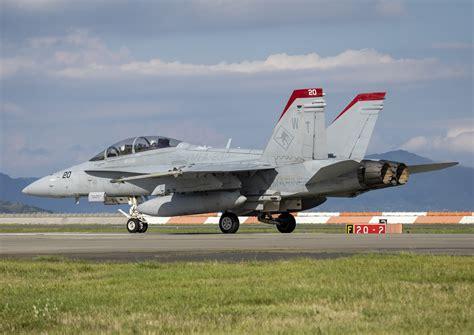
The aircraft’s AN/APG-79 AESA radar represents a significant technological advantage, enabling simultaneous tracking of air and ground targets. This capability allows pilots to transition seamlessly between mission roles during a single sortie—an essential feature in dynamic combat environments where conditions can shift rapidly.
One defining moment came in 2017, when a Super Hornet successfully shot down a Syrian Su-22. This engagement underscored a critical reality: even in an age of advanced sensors and long-range weapons, traditional fighter capabilities remain indispensable. The Super Hornet proved it could still dominate in air-to-air combat while maintaining its primary role as a strike platform.
Beyond combat, its “buddy refueling” capability further enhances its versatility. By carrying external fuel tanks and refueling pods, Super Hornets can extend the operational range of other aircraft, reducing dependence on dedicated tanker platforms. This flexibility is particularly valuable in carrier operations, where deck space and resources are limited.
Why Block III Upgrades Are Redefining the Aircraft’s Future
The continued dominance of the Super Hornet in 2026 is not merely a legacy of past success; it is the result of a forward-looking modernization strategy. The Block III upgrade program represents a comprehensive effort to transform the aircraft into a fully networked combat platform capable of operating in next-generation battlespaces.
At the heart of this transformation is the shift toward network-centric warfare. The introduction of the Distributed Targeting Processor-Networked (DTP-N) dramatically enhances onboard computing power, enabling faster data processing and improved sensor fusion. Paired with Tactical Targeting Network Technology (TTNT), the Super Hornet can share vast amounts of data in real time with other platforms.
This connectivity allows it to operate seamlessly alongside the F-35C and the Northrop Grumman E-2D Hawkeye, acting as both a sensor and a shooter within a distributed combat network. The result is a force multiplier effect that extends far beyond the capabilities of any single aircraft.
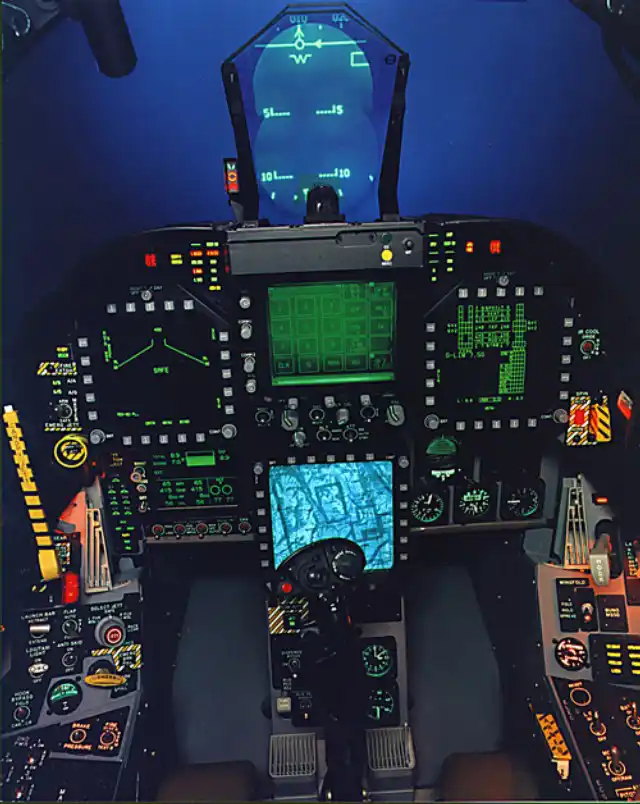
The Advanced Cockpit System, featuring a large-area display, significantly improves pilot situational awareness. In high-intensity missions, where split-second decisions can determine outcomes, reducing cognitive workload is not a luxury—it is a necessity. This upgrade enhances mission effectiveness while maintaining pilot safety.
In terms of survivability, Block III enhancements include subtle but impactful reductions in radar cross-section, along with the integration of the Infrared Search and Track (IRST) system. This passive sensor allows the aircraft to detect and track targets without emitting radar signals, providing a crucial advantage in contested environments.
The EA-18G Growler: Expanding the Super Hornet’s Ecosystem
The Super Hornet’s influence extends beyond its own capabilities through its close relationship with the Boeing EA-18G Growler, an electronic warfare variant that plays a pivotal role in modern air combat. Sharing approximately 90% of its airframe with the Super Hornet, the Growler benefits from the same logistical and operational efficiencies.
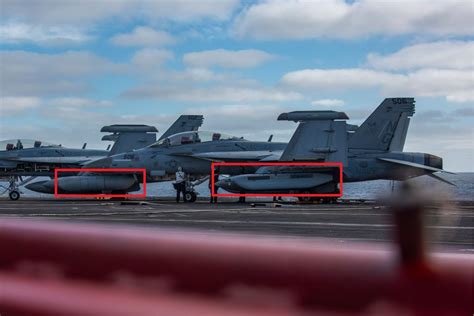
Equipped with advanced systems such as the AN/ALQ-218 receiver and the ALQ-99 jamming system, the Growler is capable of disrupting enemy radar, communications, and air defense networks. The integration of the Next Generation Jammer (NGJ) further enhances its ability to operate in highly contested environments.
In practice, the Growler enables Suppression and Destruction of Enemy Air Defenses (SEAD/DEAD) missions, clearing the way for strike aircraft to operate with reduced risk. This capability is especially critical in regions with sophisticated integrated air defense systems, where traditional strike operations would otherwise face significant challenges.
The synergy between the Super Hornet and the Growler creates a self-sustaining combat ecosystem, where strike, escort, and electronic warfare capabilities are tightly integrated within the same carrier air wing.
Operational Dominance in the 2026 Iran Conflict
Recent events in the 2026 Iran crisis have once again highlighted the Super Hornet’s indispensable role. During the early phases of Operation Epic Fury, aircraft from carriers such as the USS Abraham Lincoln (CVN-72) conducted sustained strike operations targeting air defense systems, missile sites, and command infrastructure.
What distinguishes the Super Hornet in this context is not just its capability, but its operational tempo. While stealth platforms like the F-35C focus on high-value targets, the Super Hornet handles the bulk of continuous operations—strike missions, escort duties, and airspace control—on a daily basis.
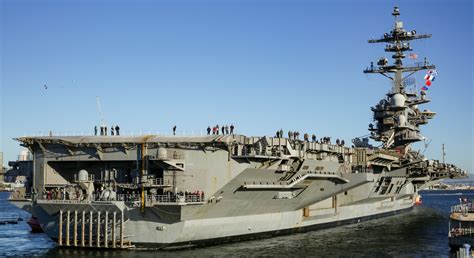
In a battlespace characterized by drones, missiles, and complex coalition operations, the ability to adapt mid-mission becomes critical. The Super Hornet excels in this regard, seamlessly transitioning between roles as conditions evolve. This flexibility proved essential in maintaining air superiority and protecting critical maritime routes during the conflict.
The sheer volume of sorties generated by Super Hornets underscores a key reality: sustained airpower depends not on the most advanced platform, but on the most reliable and available one.
Why the Super Hornet Still Outperforms at Scale
In an era increasingly defined by high-end, specialized platforms, the Super Hornet’s greatest strength lies in its balance. It may not match the stealth capabilities of fifth-generation fighters, but it offers a combination of attributes that are unmatched at scale:
- Cost-efficiency, allowing larger fleet sizes and higher sortie rates
- Multirole flexibility, enabling rapid adaptation to changing mission requirements
- Proven reliability, ensuring consistent performance across extended deployments
- Upgrade potential, extending operational relevance well into the 2040s
These qualities make the Super Hornet uniquely suited to the realities of carrier operations, where space, resources, and time are all constrained.
The Future: Complementing, Not Replacing, Next-Generation Fighters
As the U.S. Navy looks toward future programs such as the Next Generation Air Dominance (NGAD) initiative, the role of the Super Hornet is evolving rather than diminishing. Instead of being replaced outright, it is being integrated into a more complex and interconnected air wing.
The F-35C brings unmatched stealth and sensor fusion capabilities, while future platforms promise even greater advancements. Yet, these aircraft are not designed to replace the Super Hornet’s role as a workhorse platform. Instead, they complement it, creating a layered and resilient force structure.
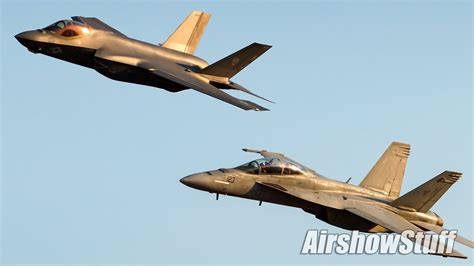
This hybrid approach reflects a deeper strategic understanding: modern warfare requires a blend of high-end capability and scalable force projection. The Super Hornet provides the latter, ensuring that carrier strike groups can maintain a persistent presence across global theaters.
Conclusion: The Power of Practical Superiority
The enduring relevance of the Boeing F/A-18E/F Super Hornet in 2026 is a testament to the value of practical design and continuous evolution. It is not the most advanced aircraft in the sky, but it is arguably the most operationally indispensable.
In the demanding environment of carrier aviation, where reliability, flexibility, and efficiency determine success, the Super Hornet continues to deliver unmatched value. It bridges the gap between legacy systems and next-generation platforms, ensuring that the U.S. Navy retains its ability to project power anywhere in the world.
As new technologies emerge and the nature of warfare continues to evolve, one reality remains clear: the aircraft that wins wars is not always the one with the most advanced features, but the one that shows up, adapts, and delivers—again and again.