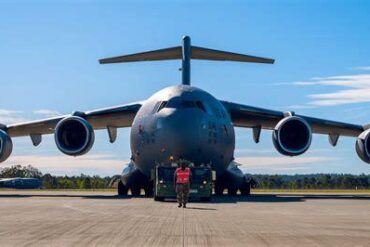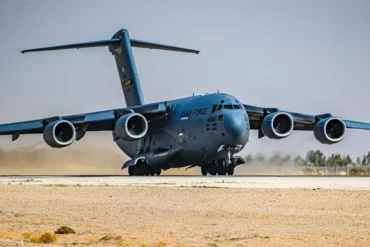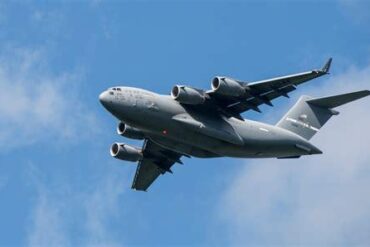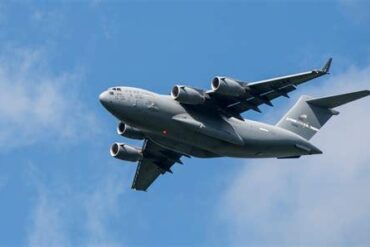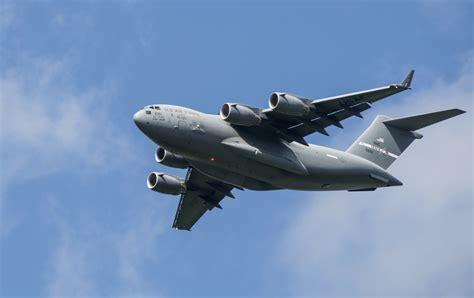
For more than three decades, the Boeing C-17 Globemaster III has served as the backbone of American strategic airlift operations. In an era dominated by stealth fighters, hypersonic missiles, drones, and satellite warfare, it may seem surprising that a massive four-engine military transport aircraft first introduced in the early 1990s remains one of the most indispensable assets in the United States Air Force inventory. Yet in 2026, the C-17 is not only still flying at high operational tempo, it is receiving billions of dollars in modernization and sustainment funding designed to keep the aircraft active into the 2060s and potentially beyond.
The reason is simple: few aircraft in aviation history have successfully blended strategic range, tactical flexibility, payload capacity, and austere field performance the way the C-17 has. While newer military technologies continue to transform the battlefield, wars still depend heavily on logistics. Troops must be moved. Tanks must be delivered. Humanitarian supplies must arrive rapidly after disasters. Medical evacuations must occur under dangerous conditions. The aircraft capable of performing all these missions reliably remains the Globemaster III.
Unlike specialized cargo aircraft that excel in only one environment, the C-17 was engineered to bridge multiple operational roles simultaneously. It can fly intercontinental missions from major US bases, then land on rough, relatively short runways near combat zones. That unique capability continues to make it irreplaceable even as the Pentagon studies future next-generation airlift concepts.
The aircraft’s continuing relevance explains why the United States is investing heavily to maintain the fleet despite the production line closing more than a decade ago.
The Origins Of The C-17 Globemaster III
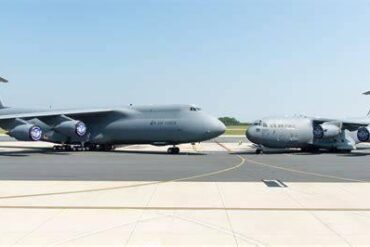
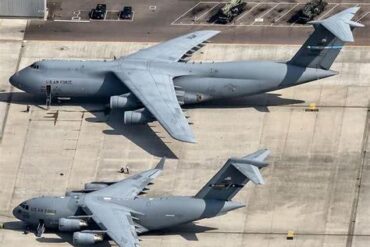
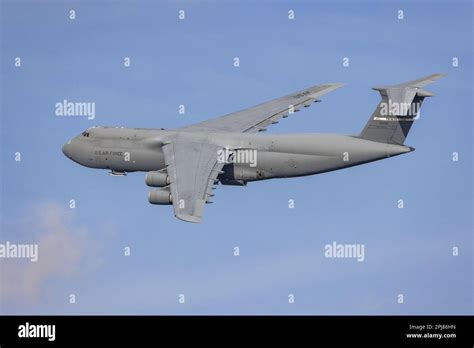
The roots of the C-17 program stretch back to the late Cold War era. Following the Vietnam War, US military planners recognized growing weaknesses within America’s airlift fleet. Existing transport aircraft such as the Lockheed C-141 Starlifter lacked sufficient payload capacity and struggled with short-field operations. Meanwhile, the enormous Lockheed C-5 Galaxy could carry heavy equipment across continents but required long, reinforced runways unavailable in many operational theaters.
Military strategists needed something entirely different: a transport aircraft capable of carrying large armored vehicles while still operating close to front-line combat zones. The aircraft would need strategic reach without sacrificing tactical agility.
This requirement eventually evolved into the CX competition launched in 1981. McDonnell Douglas secured the contract and began development of what would become the C-17 Globemaster III. The aircraft made its maiden flight in 1991 before officially entering service with the United States Air Force in 1993.
Timing proved critical. Although originally conceived during the Cold War, the aircraft entered service just as military operations began shifting toward regional conflicts, rapid expeditionary warfare, humanitarian interventions, and peacekeeping missions. The C-17’s versatility allowed it to adapt perfectly to these evolving strategic realities.
Why The C-17 Still Matters In Modern Warfare
Military conflicts in the 21st century increasingly emphasize rapid deployment capability. Modern combat forces must be able to move thousands of troops and massive quantities of equipment across the globe in extremely short periods of time. The C-17 excels in precisely this role.
The aircraft combines impressive payload performance with operational flexibility rarely seen in large transports. It can carry approximately 170,900 pounds (77,500 kilograms) of cargo while operating from runways as short as 3,000 feet. That capability dramatically expands the number of airfields accessible during combat operations.
This matters enormously during high-intensity deployments. Traditional strategic transports often rely on large centralized airbases far from active combat areas. Cargo must then move forward through vulnerable and time-consuming logistics chains. The C-17 reduces this dependence by flying directly into forward operating locations.
Its cargo capabilities are equally impressive. Depending on configuration, the aircraft can transport:
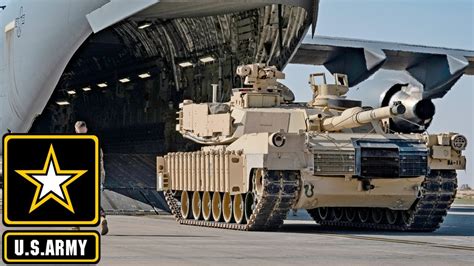
- One M1 Abrams main battle tank
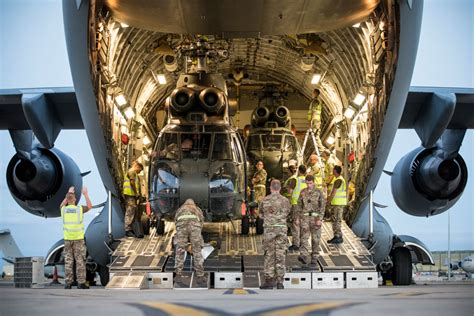
- Multiple Apache-sized helicopters
- Up to 18 Humvees
- More than 100 fully equipped troops
- Heavy artillery systems and engineering vehicles
This flexibility allows commanders to tailor deployments rapidly based on operational requirements. One sortie may transport armored vehicles, while the next delivers humanitarian aid pallets or evacuates wounded personnel.
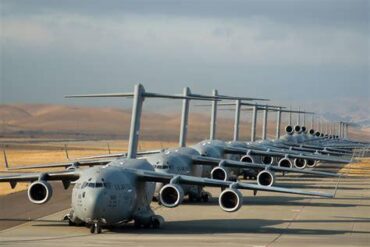
The aircraft also plays a central role in creating military “air bridges,” continuous streams of aircraft moving personnel and equipment between staging areas and operational zones. During large-scale deployments, these air bridges can sustain entire combat formations overseas.
The Massive Investment Keeping The C-17 Flying
Although the last USAF C-17 delivery occurred in 2013, the Pentagon has no intention of retiring the aircraft anytime soon. Instead, the Air Force is pouring enormous sums into sustainment and modernization efforts.
In 2021, Boeing secured a sustainment contract potentially worth $23.8 billion over ten years under the Globemaster III Sustainment Program (GISP). Additional modifications and support agreements have expanded the overall value of ongoing maintenance work into the multi-billion-dollar range.
These investments are not cosmetic upgrades. The aircraft fleet experiences intense operational stress due to constant worldwide deployments. Keeping the fleet mission-capable requires comprehensive structural inspections, avionics modernization, engine upgrades, and extensive fatigue management.
The Air Force recognizes that replacing the C-17 immediately would be extraordinarily difficult. No current aircraft combines the same mixture of payload, range, runway flexibility, and operational maturity.
As a result, the strategy has shifted toward extending the aircraft’s operational lifespan through deep modernization programs.
Modernization Efforts Are Transforming Aging Airframes
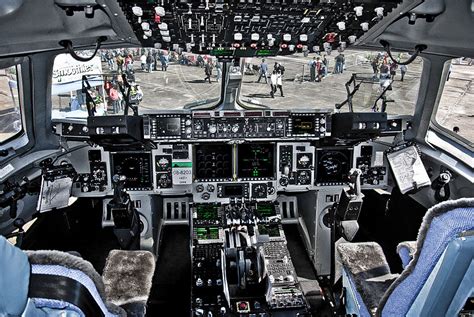
Many C-17 systems were originally designed using technology from the 1980s and 1990s. Some avionics components currently installed in the fleet are over two decades old. To address this challenge, modernization initiatives are replacing aging mission computers, cockpit displays, and electronic architecture systems.
One major focus involves implementing modular open-architecture systems. These upgrades simplify future integration of new software, sensors, communications systems, and mission technologies. Rather than requiring expensive redesigns, modular systems allow upgrades to be inserted more efficiently over time.
Cockpit modernization also improves reliability and reduces maintenance burdens. Older electronic components often become difficult to source as manufacturers discontinue production lines. Replacing them now ensures long-term fleet sustainability.
Engine modernization is another critical area. Pratt & Whitney received a contract worth approximately $5.5 billion to support and improve the C-17’s engines. This work includes upgraded compressor blade coatings and efficiency improvements designed to reduce lifecycle costs while enhancing fuel performance.
Fuel efficiency matters greatly for strategic airlift operations. Even small efficiency gains produce major savings across thousands of annual flight hours.
Structural maintenance remains equally important. Continuous global deployments place enormous stress on airframes. Engineers routinely inspect areas prone to fatigue cracking, corrosion, and heavy wear. High-stress structural zones such as cargo floor beams, landing gear attachment points, and center wing box sections receive particular attention.
Without these ongoing upgrades, maintaining readiness rates for the fleet would become increasingly difficult.
The C-17’s Unique Tactical Advantage
What truly separates the C-17 from many other strategic transports is its tactical versatility. The aircraft was specifically engineered to operate under austere conditions where traditional cargo aircraft would struggle.
Its high-lift wing design, powerful engines, and advanced flight control systems enable steep tactical descents and short-field landings. This allows the aircraft to reach smaller forward airstrips much closer to combat zones.
The cargo handling system further enhances operational speed. The aircraft features a large rear cargo ramp combined with a roll-on/roll-off loading design. Internal rollers and locking systems allow pallets and vehicles to move rapidly without requiring extensive external loading equipment.
This efficiency becomes vital during wartime operations where minimizing ground exposure is essential. C-17 crews can unload enormous quantities of cargo within minutes before departing rapidly from potentially dangerous areas.
The aircraft’s ability to combine strategic and tactical functions in one platform dramatically simplifies logistics planning. Instead of relying on multiple aircraft types and transfer points, commanders can use the C-17 for direct delivery missions spanning intercontinental distances.
This blended capability remains relatively rare even in modern military aviation.
Operation Joint Endeavor Demonstrated The Aircraft’s Value
One of the earliest major demonstrations of the C-17’s capabilities occurred during Operation Joint Endeavor in Bosnia during the mid-1990s.
Following the Dayton Peace Agreement, NATO launched a large multinational peacekeeping mission involving approximately 60,000 personnel from 36 countries. The United States contributed roughly 28,000 troops, primarily from the 1st Armored Division.
The operation demanded rapid movement of personnel, armored vehicles, helicopters, engineering equipment, and humanitarian supplies into a region with limited infrastructure and difficult terrain. The C-17 quickly proved invaluable.
During the first three months of operations, Air Force mobility forces flew thousands of missions while transporting tens of thousands of troops and more than 45,000 short tons of cargo. Although the C-17 flew just over a quarter of the missions, it delivered nearly half of the total cargo volume.
That efficiency highlighted the aircraft’s extraordinary operational utility.
Crews reportedly unloaded cargo loads approaching 165,000 pounds in under 15 minutes during the operation. Such rapid turnaround times significantly improved operational tempo while reducing vulnerability on the ground.
Perhaps more importantly, the C-17 reduced reliance on complicated logistics chains stretching across Europe. Instead of unloading at major rear-area airbases, aircraft could move directly into forward operating airfields in Bosnia.
The Bosnia operation became one of the earliest large-scale proofs that the aircraft’s design philosophy worked exactly as intended.
Humanitarian Missions Expanded The C-17’s Importance
Although designed primarily for military operations, the C-17 has become equally important in humanitarian response missions worldwide.
Natural disasters frequently destroy transportation infrastructure precisely when large-scale aid deliveries become most urgent. Earthquakes, hurricanes, tsunamis, and floods often damage major airports and ports, making traditional logistics difficult.
The C-17’s ability to operate from damaged or austere runways makes it exceptionally valuable during these crises. The aircraft has delivered emergency supplies during disasters across Asia, Africa, the Middle East, and the Americas.
Medical evacuation capability further expands its usefulness. The aircraft can rapidly convert into flying hospital configurations capable of transporting wounded personnel or disaster victims over long distances.
These humanitarian missions also carry strategic importance. Rapid disaster response strengthens diplomatic relationships, demonstrates military readiness, and projects American global influence without direct combat involvement.
For many nations, the arrival of a C-17 loaded with relief supplies represents the visible face of US logistical capability.
Why No True Replacement Exists Yet
Despite ongoing discussions regarding a future Next-Generation Airlifter, no aircraft currently under development fully replaces the C-17’s mission profile.
Creating a successor presents major engineering and financial challenges. Any replacement must combine:
- Strategic intercontinental range
- Heavy payload capacity
- Short runway performance
- High sortie reliability
- Rapid loading capability
- Survivability in contested environments
Balancing all these requirements in one platform is extraordinarily difficult.
Additionally, the current C-17 fleet still performs effectively. Because modernization efforts continue improving avionics, engines, and structural longevity, the Air Force sees little urgency in rushing a replacement program into production.
Future airlift concepts may eventually incorporate autonomous systems, advanced propulsion technologies, stealth characteristics, or distributed logistics networks. However, such systems remain years away from operational maturity.
Until then, the C-17 continues serving as the logistical workhorse underpinning American global mobility strategy.
The Globemaster’s Role In Future Military Strategy
As geopolitical tensions intensify in regions such as Eastern Europe, the Indo-Pacific, and the Middle East, strategic mobility becomes increasingly important. Modern military doctrine emphasizes rapid reinforcement capability across vast distances.
The C-17 remains central to this strategy.
Potential future conflicts may require rapid deployment of armored brigades, missile defense systems, engineering units, and humanitarian support assets simultaneously. The ability to establish operational presence within days rather than weeks could prove decisive.
The aircraft also supports alliance operations. Numerous allied nations operate the C-17, including the United Kingdom, Australia, Canada, India, Qatar, and NATO’s Strategic Airlift Capability consortium. Shared interoperability enhances coalition logistics during multinational operations.
Even in an age increasingly focused on advanced weapons systems, logistics still determines whether military power can be projected effectively. Sophisticated fighters and missiles accomplish little if fuel, ammunition, spare parts, and personnel cannot reach operational theaters reliably.
That reality explains why the C-17 remains one of the most strategically valuable aircraft in the US military inventory.
The Aircraft That Quietly Powers Global Operations
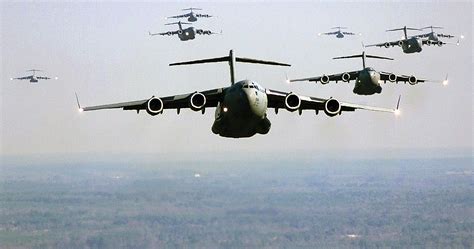
The Boeing C-17 Globemaster III rarely attracts the public attention commanded by stealth bombers or advanced fighter jets. Yet few aircraft have shaped modern military operations more profoundly.
Its combination of strategic range, tactical flexibility, enormous payload capacity, and austere runway capability created an aircraft uniquely suited for post-Cold War military realities. From Bosnia to Afghanistan, Iraq, humanitarian disasters, and global rapid-response operations, the C-17 repeatedly demonstrated why air mobility remains fundamental to military power.
The aircraft’s continued operation in 2026 is not simply a matter of extending the life of an aging platform. It reflects the reality that the Globemaster still performs missions no other aircraft can replicate with the same efficiency and versatility.
Until a true successor emerges, the C-17 will remain an essential pillar of American military logistics, quietly enabling operations across the globe while continuing to prove why it became one of the most successful transport aircraft ever built.