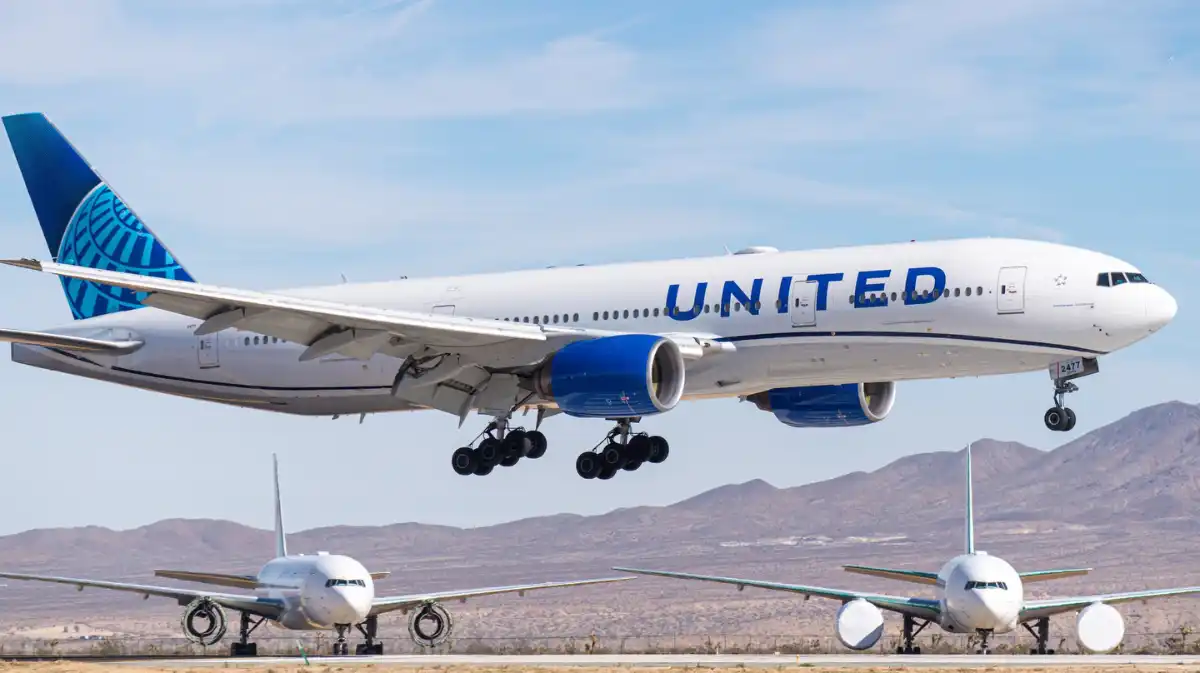
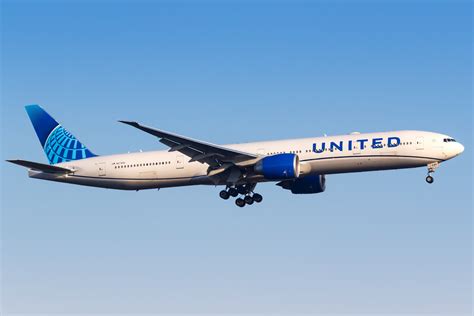
The Boeing 777 has long been one of the pillars of global long-haul aviation, but a growing number of United Airlines’ oldest examples are now sitting in the California desert instead of carrying passengers across the Pacific. At first glance, the decision appears surprising. After all, these aircraft remain structurally capable of flying and represent billions of dollars in original investment. However, a closer examination reveals that United’s decision is not primarily about engine failures. It is the result of a complex combination of engineering challenges, maintenance bottlenecks, supply chain constraints, fleet economics, and long-term replacement planning that has fundamentally changed the value proposition of keeping older aircraft in service.
The situation became even more significant after the Federal Aviation Administration (FAA) extended the compliance deadline for mandatory modifications affecting Pratt & Whitney PW4000-powered Boeing 777s until March 2033. Rather than signaling that the problem has disappeared, the extension demonstrates how extraordinarily difficult the required redesign has become. For United Airlines—the world’s largest remaining operator of this rare Boeing 777 variant—the new deadline offers regulatory flexibility but does little to change the underlying economics.
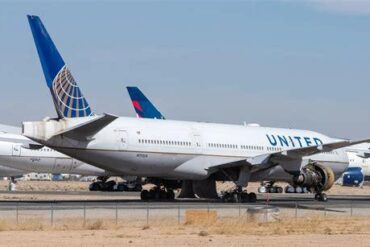
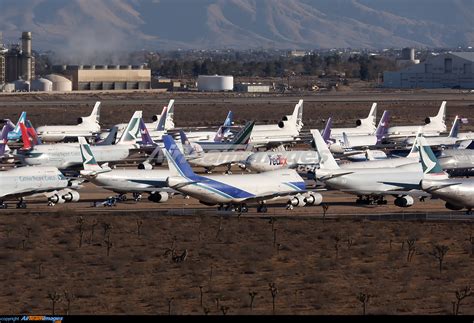
Instead of rushing to repair every aircraft, United has chosen a more selective approach. Fourteen Boeing 777-200s have already been transferred to long-term storage at Victorville, California, where they may remain preserved for years while the airline concentrates resources on aircraft that provide the greatest operational and financial return.
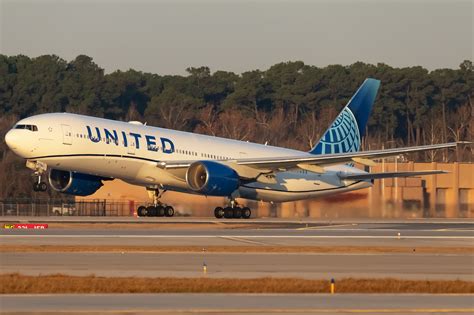
The FAA Extension Reflects A Much Bigger Engineering Problem
The FAA’s latest regulatory decision was widely interpreted as a simple deadline extension. In reality, it represents official recognition that Boeing and Pratt & Whitney are facing one of the industry’s most demanding nacelle redesign programs in recent years.
The redesign originated after the dramatic United Airlines Flight 328 incident in February 2021, when a Pratt & Whitney PW4077 engine experienced a catastrophic fan blade failure shortly after departing Denver. Although the aircraft landed safely without injuries, large portions of the engine inlet and cowling separated during the event, scattering debris across nearby communities. The incident immediately exposed weaknesses in how the nacelle structure behaved during an extremely rare but highly destructive fan-blade-out event.
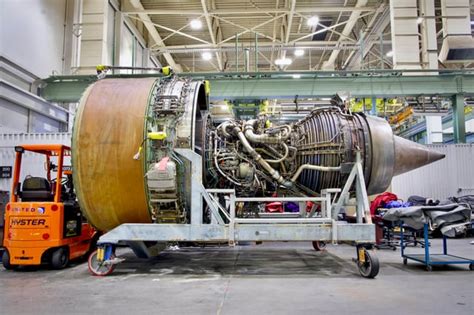
Rather than replacing a single defective component, engineers discovered that multiple structural systems needed improvement simultaneously. The inlet assembly, fan cowl doors, attachment fittings, hinges, latch mechanisms, containment structures, and surrounding engine components all required integrated redesigns capable of withstanding extraordinary forces while remaining light enough for efficient airline operations.
Developing those improvements has proven far more difficult than originally anticipated. Every reinforced structural component must undergo extensive computer modeling, laboratory testing, destructive testing, certification analysis, and flight validation before regulators approve installation across the worldwide fleet. Boeing must complete the final engineering package before airlines can begin implementing the modifications at scale, making this a project measured in years rather than months.
Why Fixing The Engines Alone Would Not Solve United’s Problems
Many observers assume United could simply overhaul the affected Pratt & Whitney engines and return every aircraft to service. The reality is considerably more complicated.
The PW4000 itself is only one element of the broader maintenance challenge. Even after engines undergo inspections and repairs, airlines must still coordinate mandatory nacelle modifications, heavy maintenance checks, structural inspections, and engine overhaul schedules. These events cannot always occur independently, meaning one maintenance delay frequently cascades into several others.
Adding to the complexity is the continuing shortage of spare engines. Airlines worldwide have experienced prolonged overhaul turnaround times as engine maintenance facilities struggle with unprecedented workloads. PW4000 shop visits often require months, leaving operators with fewer available spare powerplants.
For United Airlines, returning fourteen stored Boeing 777-200s to service would require substantially more than simply repairing engines. Each aircraft would compete for scarce maintenance slots, specialized technicians, replacement hardware, certified nacelle assemblies, and available Pratt & Whitney engines that are already in short supply.
Maintenance Capacity Has Become One Of Aviation’s Biggest Constraints
One of the aviation industry’s least visible challenges today is the shortage of heavy maintenance capacity.
Aircraft maintenance providers remain overwhelmed as airlines continue flying older fleets longer than originally expected. Pandemic-era retirements of experienced technicians, ongoing recruitment challenges, global parts shortages, and increasing maintenance demand have combined to create significant backlogs.
Widebody aircraft present even greater challenges because they require larger hangars, specialized tooling, and highly trained personnel. Maintenance visits lasting several weeks frequently extend into several months due to delayed component deliveries or unexpected repair findings.
The Pratt & Whitney modification program introduces yet another major workload for facilities that are already operating near capacity. Reinforced nacelle structures, redesigned fasteners, updated cowling assemblies, and newly certified attachment systems cannot simply be ordered from inventory. Manufacturing capacity remains limited, forcing operators to prioritize which aircraft receive upgrades first.
This maintenance reality helps explain why the FAA concluded that extending the compliance deadline would create fewer disruptions than forcing airlines to remove dozens of additional aircraft from service simultaneously.
The Economics Increasingly Favor Retirement Instead Of Investment
While safety initiated the regulatory action, economics are increasingly driving airline decision-making.
Industry estimates suggest the worldwide modification program could ultimately cost between $500 million and $750 million. Because United operates by far the largest remaining fleet of Pratt & Whitney-powered Boeing 777-200s, analysts estimate the airline could eventually bear $250 million to $350 million of those expenses.
That level of investment becomes increasingly difficult to justify when many of the affected aircraft are already more than twenty years old.
Aircraft age alone does not determine retirement decisions. Many Boeing 777s continue flying successfully after decades of service. However, every additional year increases maintenance costs while reducing the remaining period during which airlines can recover expensive investments.
Modern long-haul aircraft also provide compelling financial advantages. New-generation twinjets consume significantly less fuel, require fewer unscheduled maintenance events, offer improved reliability, and produce lower emissions. These savings accumulate over thousands of annual flight hours, gradually widening the cost gap between older and newer aircraft.
United therefore faces a fundamental business question. Should it invest millions of dollars upgrading aircraft that may only remain in service for another decade, or should those resources support the arrival of newer, more efficient fleet types?
For many individual airframes, the answer increasingly points toward retirement rather than restoration.
Victorville Offers More Than Just A Parking Lot
Victorville, California, has become one of the world’s most important aircraft storage locations for a reason.
Its dry desert climate dramatically reduces corrosion, allowing aircraft to remain preserved for extended periods while maintaining the possibility of future reactivation. Low humidity, stable weather conditions, and extensive storage infrastructure make the airport an ideal location for airlines managing surplus aircraft.
However, long-term storage does not guarantee an aircraft will ever fly passengers again.
Many stored aircraft eventually become valuable sources of spare parts. Engines, landing gear, avionics, flight control surfaces, auxiliary power units, and countless other components may be removed to support active fleets. Others are converted into freighters, while some ultimately proceed to dismantling and recycling.
United’s fourteen stored Boeing 777-200s currently occupy an uncertain middle ground. They remain preserved well enough for possible return to service, but every passing year makes permanent retirement increasingly likely.
United’s Fleet Renewal Strategy Makes The Decision Easier
United Airlines’ long-term fleet plan also explains why these older Boeing 777s are becoming less essential.
The airline has committed to one of the industry’s largest modernization programs, including substantial orders for Boeing 787 Dreamliners, Boeing 737 MAX aircraft, Airbus A321neo, Airbus A321XLR, and future Airbus A350-900 deliveries.
These aircraft promise significant improvements in operating efficiency, maintenance costs, passenger comfort, and route flexibility.
The Boeing 787 family, in particular, delivers major fuel savings compared with early-generation Boeing 777 variants while maintaining excellent long-range performance. Lower operating costs enable airlines to profitably serve routes that might otherwise struggle using older widebody aircraft.
As additional next-generation aircraft join United’s fleet over the coming years, the operational necessity of maintaining every Pratt & Whitney-powered Boeing 777 naturally diminishes.
Fleet modernization therefore reinforces the financial logic behind selective retirement rather than comprehensive refurbishment.
The Shrinking Global Fleet Is Creating A Cost Spiral
United’s situation also reflects a broader global trend.
Only a handful of airlines continue operating Pratt & Whitney-powered Boeing 777s today. Previous operators such as Japan Airlines and Korean Air have steadily retired or replaced their aircraft, leaving United as the dominant remaining customer.
That shrinking operator base creates a challenging economic cycle.
Manufacturers must continue supporting specialized components for fewer customers, reducing production efficiency. Maintenance providers must preserve technical expertise despite declining demand. Spare parts become more expensive as production volumes decrease, while certification costs remain largely unchanged regardless of fleet size.
As more airlines retire their aircraft, the cost burden shifts onto those that remain.
United therefore faces rising maintenance expenses precisely because so few Pratt & Whitney-powered Boeing 777s continue flying worldwide.
Passenger Networks Are Already Feeling The Impact
Although most travelers never notice the maintenance decisions occurring behind the scenes, fleet availability directly influences airline scheduling.
United previously relied heavily on its high-capacity Boeing 777-200 fleet for domestic routes with exceptional passenger demand, particularly services connecting the mainland United States with Hawaii. These aircraft offered substantial seating capacity while efficiently handling peak travel periods.
As aircraft entered storage and maintenance backlogs increased, United adjusted aircraft assignments throughout its domestic and international network. Some routes received different aircraft types, while scheduling flexibility became increasingly dependent upon the availability of active Boeing 777s.
The average passenger may never realize why one flight operates with a Boeing 787 instead of a Boeing 777, yet these changes frequently originate from complex maintenance planning rather than commercial strategy alone.
Safety Still Remains The Central Priority
Despite the extended compliance deadline, safety remains at the center of the entire modification program.
Pilot organizations, including the Air Line Pilots Association (ALPA), expressed concern that extending implementation allows aircraft to continue operating without the permanent improvements recommended after the Flight 328 investigation.
From a regulatory perspective, however, the FAA concluded that forcing immediate compliance would remove too many aircraft from service before industry maintenance capacity could realistically complete the work.
Importantly, airlines are not operating without oversight during the extension period.
Enhanced inspection programs, revised maintenance procedures, frequent engine examinations, and additional operational safeguards remain mandatory while Boeing finalizes the redesigned nacelle system. These interim measures are intended to manage identified risks until permanent hardware becomes available.
The compromise illustrates one of commercial aviation’s most difficult balancing acts: implementing meaningful safety improvements while maintaining enough aircraft availability to support global transportation demand.
Why More Boeing 777-200s Could Permanently Stay In The Desert
United Airlines’ decision to store fourteen Boeing 777-200s is unlikely to represent the final chapter in this story.
Every year that passes brings additional maintenance costs, advancing aircraft age, and increasing deliveries of more efficient replacements. At the same time, the Pratt & Whitney modification program continues requiring significant engineering resources, specialized maintenance capacity, and substantial financial investment.
For individual aircraft nearing the end of their economic lives, spending millions of dollars on mandatory upgrades becomes increasingly difficult to justify. Instead of viewing the FAA’s 2033 deadline as permission to delay repairs, many airlines may ultimately interpret it as an opportunity to retire aging aircraft on their own timetable.
United’s growing desert fleet therefore symbolizes far more than temporary storage. It represents a fundamental shift in airline economics, where maintenance complexity, regulatory requirements, shrinking fleet sizes, and next-generation aircraft are collectively accelerating the quiet retirement of one of aviation’s most distinctive Boeing 777 variants.
Rather than repairing every Pratt & Whitney-powered Boeing 777-200 at any cost, United Airlines is making calculated decisions about which aircraft deserve another decade of service—and which are better left waiting in the California desert.