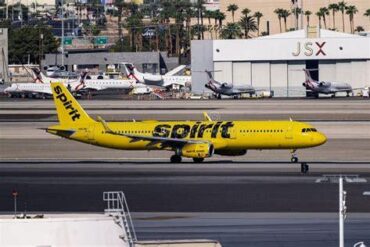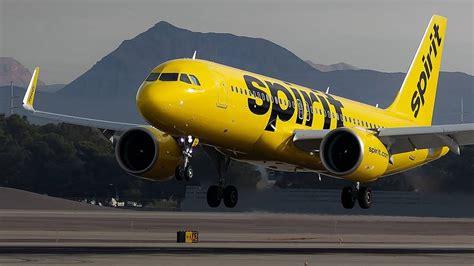
The collapse of Spirit Airlines has created one of the most surreal scenes in modern American aviation: pilots who once flew passengers across the United States are now being paid to fly the airline’s bright yellow jets on their final journeys into the Arizona desert.
After abruptly shutting down operations in early May following years of financial turmoil, the Florida-based budget carrier left behind a scattered fleet, thousands of unemployed workers, and aircraft parked idle at airports nationwide. Now, those same airplanes are slowly disappearing from terminals and remote ramps as specialized ferry crews reposition them for storage or eventual resale.
For many of the airline’s former pilots, the work is more than just temporary income. It is the final chapter of a career they never expected to end this way.
The relocation effort is being coordinated by Nomadic Aviation Group, a company experienced in ferrying aircraft during airline restructurings and bankruptcies. Managing Partner Bob Allen explained that the company intentionally hired displaced Spirit pilots to conduct the flights because they already know the aircraft, procedures, and routes intimately.
According to Allen, the emotional impact of an airline collapse often resembles a personal loss inside the aviation community. Pilots spend years building seniority, relationships, and routines around a carrier, only to see it vanish almost overnight. Allowing crews to fly the aircraft one final time gives many of them a sense of closure while also providing immediate financial support.
“Putting money in their pocket” was how Allen described the arrangement in interviews discussing the ferry operation. Yet the significance extends far beyond a paycheck. Many pilots reportedly viewed these final flights as symbolic goodbyes to an airline that shaped their careers.
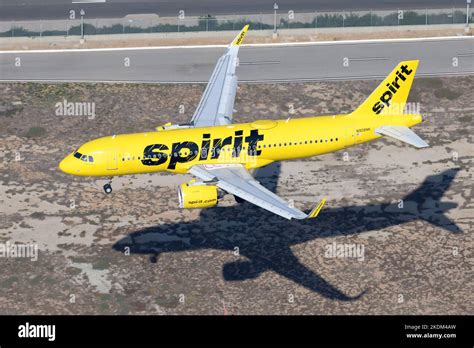
Across the United States, Spirit’s fleet became stranded at 26 airports after operations ceased. Aircraft that once cycled through dense daily schedules suddenly sat motionless on taxiways and remote parking stands. Parking fees at major airports accumulate rapidly, creating urgency for lessors and financial institutions eager to reposition the aircraft as quickly as possible.
That urgency is especially important in today’s unusually constrained aircraft market. Ongoing production delays at Boeing and engine reliability issues affecting certain Airbus models have tightened global aircraft availability. As a result, second-hand narrowbody jets remain valuable assets despite Spirit’s failure as a business.
Many of the aircraft are leased rather than owned outright, meaning leasing companies are now racing to recover and redeploy them. Some jets may eventually join other low-cost airlines around the world. Others could be parted out for engines, avionics, and high-demand components. In aviation, even a grounded aircraft can still represent millions of dollars in recoverable value.
At least 20 former Spirit pilots have already joined the relocation effort. Flights are departing from multiple airports nationwide and heading primarily toward Arizona’s famous aircraft storage facilities, including Phoenix Goodyear Airport and Pinal Airpark.
These desert facilities are ideal for long-term aircraft preservation because the dry climate dramatically reduces corrosion. Rows of retired airliners, military aircraft, and stored commercial fleets already dominate the landscape there. Spirit’s bright yellow Airbus jets now add another striking visual layer to the desert horizon.
Flight tracking data showed several Spirit aircraft arriving in Arizona shortly after the shutdown announcement, with more continuing to arrive daily. The sight has become emotionally charged among aviation enthusiasts and former employees alike. Aircraft that once represented aggressive expansion and ultra-cheap travel are now taxiing silently into indefinite storage.
The end of Spirit Airlines marks the collapse of one of the most recognizable ultra-low-cost carriers in the United States. Founded in 1992 and headquartered in Dania Beach, the airline spent decades reshaping domestic airfare pricing with aggressively low base fares and optional add-on fees.
Its business model drew criticism from some travelers but forced larger airlines to compete more aggressively on price. Spirit became particularly influential in leisure markets, where travelers often prioritized affordability above all else. The carrier expanded rapidly throughout the 2010s, building a network that stretched across the United States, Latin America, and the Caribbean.
However, the airline struggled to regain stable profitability after the COVID-19 pandemic devastated travel demand. Rising operating costs, mounting debt, fleet-related challenges, and intense competition gradually pushed the company toward collapse.
When Spirit officially announced that all operations would cease, approximately 17,000 employees were suddenly left without jobs. Major U.S. airlines quickly introduced rescue fares and additional flights to accommodate stranded passengers, while airports across the country were left managing dozens of abandoned aircraft positions.
The shutdown also triggered a complicated legal and financial process involving creditors, lessors, regulators, and aviation service providers. Before any aircraft can be ferried, operators must coordinate access permissions, maintenance inspections, insurance approvals, and authorization from the Federal Aviation Administration.
For the pilots now conducting these ferry flights, the missions are operationally simple but emotionally heavy. Instead of boarding passengers excited for vacations or business trips, they are flying nearly empty aircraft toward uncertain futures.
Some jets may fly again under different airlines and different paint schemes. Others may never carry passengers again.
For former Spirit crews, however, each desert landing closes a remarkable chapter in American aviation history — one final takeoff for an airline that once painted the skies bright yellow.