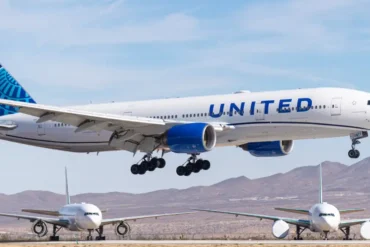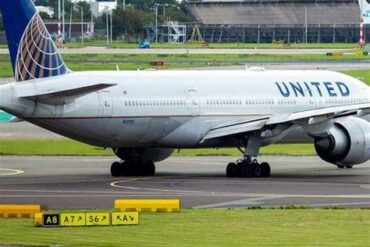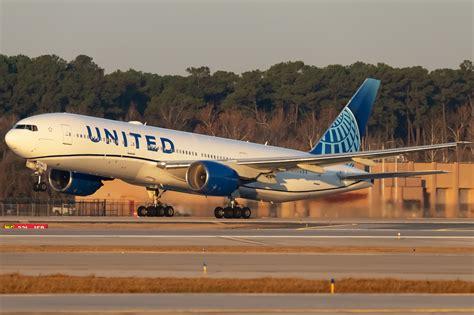
The world’s first Boeing 777-200 delivered to an airline has completed what is widely believed to be its final passenger mission. Registered N777UA, the aircraft served as the launch jet for Boeing’s iconic 777 program and spent more than 30 years operating for United Airlines. Its journey ended with a short hop from San Francisco to Victorville on November 29, where it entered storage during an ongoing shortage of Pratt & Whitney PW4077 engine components.
For United, this aircraft was more than a fleet asset. It was a symbol of early long-haul ambition and the beginning of a partnership that made United the world’s largest 777 operator. Since its delivery on May 15, 1995, the jet logged decades of transpacific, transatlantic, and later high-density domestic missions across the carrier’s busiest corridors.
Across the years, N777UA served as a physical timeline of the airline’s own evolution. It began in the classic Battleship Gray livery, later adopting the Blue Tulip, then the United/Continental globe, and finally the modern blue-swept design introduced in 2019.
The Long Career of Aircraft N777UA
The jet first took to the skies on a Boeing test flight on April 25, 1995, making it among the earliest examples of a twin-engine widebody built for extended-range operations. It became a backbone of United’s long-haul ambitions, enabling the carrier to open and sustain key intercontinental routes at a time when twin-engine reliability standards were rewriting global aviation norms.
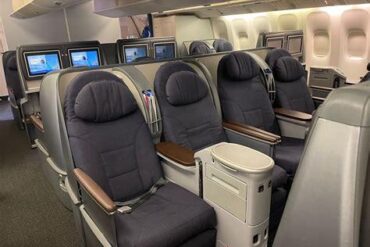
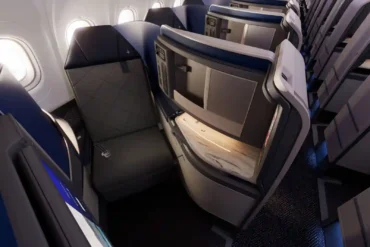
As the fleet matured and newer variants entered service, United shifted its aging 777-200s into domestic and short-haul international roles. These aircraft were reconfigured to carry 364 passengers across three cabins—28 United First, 102 Economy Plus, and 234 Economy—making them high-capacity workhorses for transcontinental markets.
The Final Week of Flying
In its last days with paying passengers, N777UA remained remarkably active. Flight tracking from Flightradar24 shows a dense roster of routes including Chicago, Denver, Los Angeles, Washington D.C., San Francisco, and one cross-border run to Cancun International Airport. These missions reflect the aircraft’s modern role as a capacity booster on United’s busiest corridors.
Its final operational segment—San Francisco (SFO) to Victorville (VCV)—lasted just 48 minutes. It departed at 11:05 and touched down at 11:52, ending a service life of more than three decades.
Storage Amid Engine Shortages
While Planespotters.net lists the aircraft as withdrawn from use, the exact status remains ambiguous. Some industry watchers suggest the jet could simply be parked until Pratt & Whitney engine components become available. Pratt has not produced PW4077 engines for years, and support has become increasingly limited.
Victorville, located in the Mojave Desert, is a frequent destination for long-term aircraft storage thanks to its extremely dry climate. The environment reduces corrosion and allows airlines to preserve airframes or selectively harvest components for other aircraft.
Fleet Modernization and the End of an Era
United’s decision to park portions of its 777-200 fleet stems from wider supply chain challenges affecting PW4000-powered aircraft. Aging engines and limited parts availability have pushed carriers to accelerate retirements and invest more aggressively in next-generation widebodies.
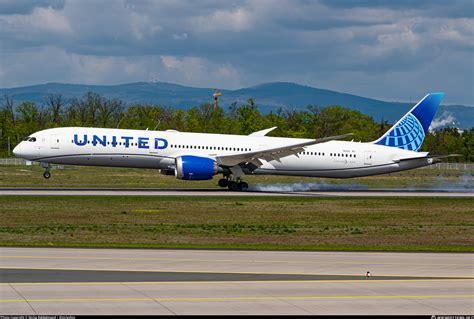
United currently operates one of the world’s largest fleets, including more than 1,000 active aircraft, with around a quarter being widebodies. The airline is moving toward a future centered around the Boeing 787-9, 787-10, and eventually the Airbus A350-900, of which United holds 45 orders for next-decade delivery. The older 767 and 777 families are gradually being phased out as new aircraft arrive.
A Farewell That Marks Aviation History
N777UA was not just the first 777 delivered to United—it was the first 777 delivered to any airline. Its retirement or long-term storage marks a significant chapter in commercial aviation, closing the book on one of the industry’s most influential and reliable aircraft models.
While its ultimate fate remains uncertain, its decades of service stand as a testament to the durability of the 777 program and the technological leap it represented. Whether preserved, parted out, or permanently retired, N777UA’s legacy remains firmly cemented in United Airlines history and the story of modern long-haul travel.