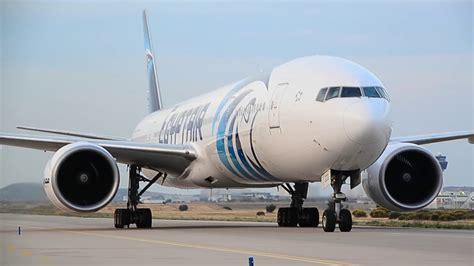
The Boeing 777-200 did not become one of the most influential widebody aircraft in modern aviation by accident. When it entered service in the mid-1990s, it quietly rewrote several industry assumptions about long-haul flying, twin-engine reliability, and airline influence over aircraft design. One of its most unusual and revealing features was the availability of three distinct engine types from Pratt & Whitney, General Electric, and Rolls-Royce—a rarity even by today’s standards.
This was not an engineering indulgence or a marketing gimmick. It was a calculated response to airline economics, technological uncertainty, and a fiercely competitive long-haul market. To understand why the 777-200 carried three engine options, it helps to look beyond the nacelles and into the business logic that shaped the aircraft from day one.
The 777 program arrived at a pivotal moment. Airlines were beginning to trust extended-range twin-engine operations, fuel prices were volatile, and engine manufacturers were racing to push thrust limits while proving long-term reliability. Boeing chose flexibility over uniformity, and that decision left a lasting mark on the aircraft—and the industry.
The Boeing 777-200 as a Market Disruptor
The original 777-200 was designed to bridge a gap that airlines increasingly felt in the early 1990s. The Boeing 767 lacked capacity and range for certain intercontinental routes, while the 747 often carried more seats—and fuel—than many markets could profitably support. Airbus was pressing forward with the A330 and A340, offering multi-engine redundancy as a psychological safety net for long oceanic sectors.
Boeing’s answer was a widebody twin that could match or exceed four-engine aircraft on range while dramatically lowering operating costs. That vision required not just a new airframe, but engines powerful enough to make long-haul twin-engine flying routine rather than exceptional.
By offering three engine choices, Boeing reduced risk at every level. Airlines gained choice, engine makers gained competition, and Boeing avoided dependence on a single propulsion path at a time when thrust levels were climbing into unfamiliar territory.
Why One Engine Was Not Enough
Most aircraft programs select one or two engine suppliers to simplify certification and logistics. Boeing deliberately did the opposite. In the early 1990s, no single engine manufacturer could confidently claim dominance in high-thrust, ultra-reliable turbofans for extended-range twin operations at the scale the 777 demanded.
Each manufacturer brought something different to the table. Pratt & Whitney offered familiarity and conservative engineering. Rolls-Royce focused on efficiency and smoothness. General Electric pushed raw power and advanced materials further than anyone had before. Instead of choosing winners early, Boeing let airlines decide which philosophy best fit their networks.
This approach also shifted negotiating power toward airlines. With three suppliers competing for the same airframe, pricing, maintenance terms, and performance guarantees became sharper. That competition lowered acquisition costs and made the 777-200 easier to justify internally for carriers weighing fleet renewal decisions.
Pratt & Whitney PW4000: Familiarity and Proven Reliability
The Pratt & Whitney PW4000 was the most conservative of the three options, and for many airlines, that was its greatest strength. Derived from earlier PW4000 variants already in widespread service, the engine emphasized predictable maintenance cycles, known failure modes, and existing support infrastructure.
For airlines already operating Pratt & Whitney-powered fleets, choosing the PW4000 minimized disruption. Spare parts inventories, mechanic training programs, and overhaul partnerships could be extended rather than reinvented. In an industry where downtime is expensive and predictability is currency, that mattered.
The PW4000 did not chase headline-grabbing thrust records, but it delivered dependable performance across a wide range of missions. That balance made it especially attractive to carriers like United Airlines, which valued operational continuity as much as raw performance.
Rolls-Royce Trent 800: Efficiency as a Strategic Weapon
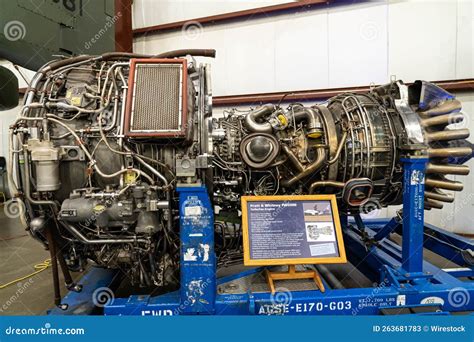
The Rolls-Royce Trent 800 approached the 777-200 from a different angle. Built on the Trent family’s three-spool architecture, the engine emphasized fuel efficiency, smooth power delivery, and lower vibration levels. These traits translated into both economic and passenger-experience benefits.
Fuel burn improvements may look incremental on paper, but over thousands of flight hours they reshape route economics. Airlines operating dense long-haul networks found the Trent 800 particularly appealing for missions where efficiency outweighed extreme thrust requirements.
Rolls-Royce also positioned the Trent 800 as a premium product, supported by long-term service agreements that aligned maintenance costs with engine utilization. For airlines seeking predictable expenses rather than upfront savings, this model fit neatly into broader fleet strategies.
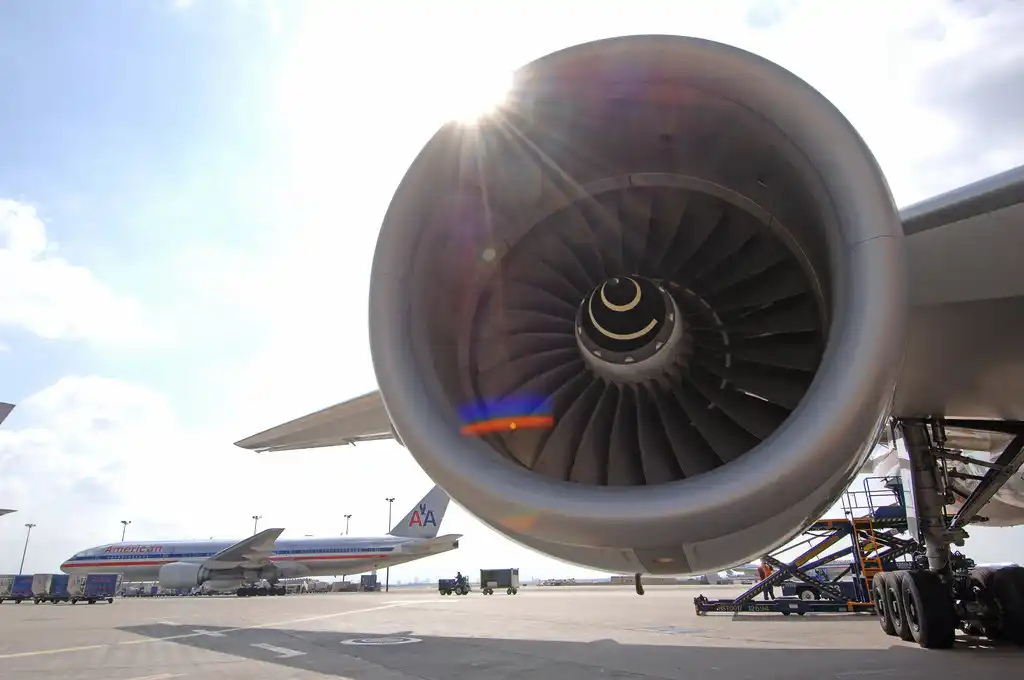
General Electric GE90: Redefining What a Twin Could Do
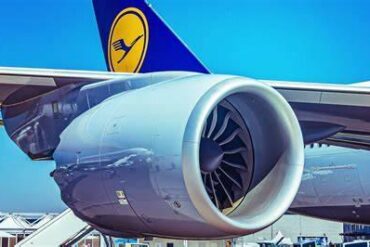
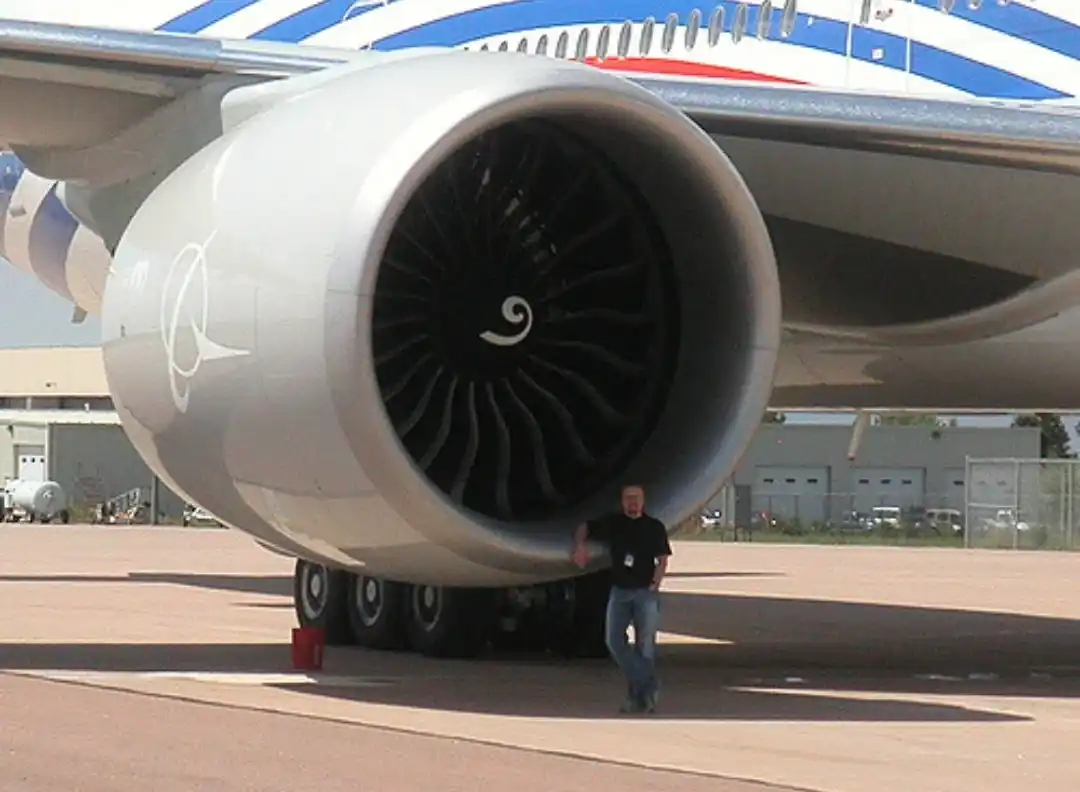
The GE90 was the most radical choice, and the least common on the 777-200. At the time of its introduction, it became the most powerful turbofan engine ever built, featuring massive composite fan blades that redefined engine architecture.
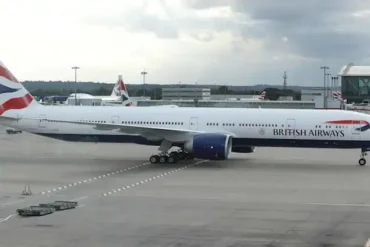
Only British Airways ultimately operated GE90-powered 777-200s, but the engine’s influence far exceeded its limited deployment on this variant. The GE90 proved that twin-engine aircraft could safely and economically operate missions once reserved for three- and four-engine jets.
High thrust made the GE90 ideal for hot-and-high airports, heavy payloads, and long overwater routes. It also laid the groundwork for later 777 variants, where even greater thrust would be required. In many ways, the GE90 was less about the 777-200 itself and more about establishing the technological ceiling for the entire 777 family.
Airline Influence and Fleet Politics
Airlines are not passive customers. They arrive at new aircraft programs with entrenched preferences shaped by decades of operational experience and contractual relationships. By offering three engines, Boeing acknowledged that reality rather than fighting it.
Engine commonality reduces costs in subtle but powerful ways. Training syllabi, spare-engine pools, maintenance tooling, and even simulator programming can be shared across fleets when engine families align. For a global carrier, those efficiencies compound quickly.
This flexibility also allowed airlines to hedge risk. Choosing an engine aligned with existing fleets reduced exposure to early-service technical issues—an important consideration when extended-range twin operations were still gaining regulatory and public confidence.
Operational Diversity and Mission Profiles
The 777-200 was expected to fly everything from high-frequency transatlantic services to long, thin intercontinental routes. Different engines optimized different mission profiles.
High-thrust engines favored long runways and heavy payloads. Efficient engines favored fuel-sensitive networks. Conservative designs favored predictable dispatch reliability. By accommodating all three, Boeing ensured the airframe could adapt to widely divergent airline strategies without structural compromise.
This adaptability also protected Boeing from supply-chain disruption. If one engine program encountered delays or technical setbacks, the aircraft itself could continue entering service with alternative options—a quiet but important risk-management advantage.
The United Airlines Effect
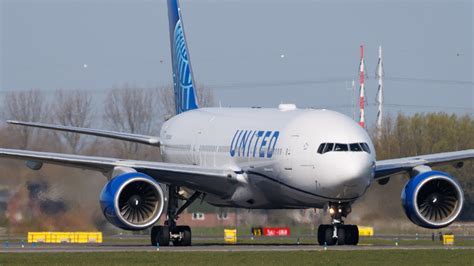
United Airlines played an outsized role in shaping the 777-200, and its choice of Pratt & Whitney PW4000 engines reflected broader operational priorities. United valued reliability, maintainability, and fleet consistency as it transitioned away from older widebodies.
The aircraft entered service with United in 1995 on the Washington Dulles–London Heathrow route, immediately demonstrating that twin-engine long-haul flying could meet both economic and passenger expectations. That early success validated Boeing’s multi-engine strategy and encouraged broader market adoption.
Over time, United repurposed the 777-200 for high-capacity domestic and leisure routes, extending the aircraft’s economic life well beyond its original long-haul mission profile.
Why Modern Aircraft Rarely Follow This Model
Today, offering three engine options on a single aircraft variant is rare. Engine development costs have skyrocketed, certification timelines have lengthened, and airlines increasingly accept single-supplier arrangements in exchange for optimized performance.
The 777-200 emerged during a transitional era, when engine technology was advancing rapidly but market uncertainty encouraged redundancy. Boeing leveraged that moment skillfully, using competition to accelerate innovation while protecting the aircraft’s commercial appeal.
Later 777 variants and newer aircraft families would narrow engine choices, but they did so on a foundation built by the lessons of the original 777-200.
A Strategic Decision That Aged Well
The presence of three engine types on the Boeing 777-200 was not a compromise. It was a strategic multiplier. It aligned airline economics with manufacturer competition and technological ambition, allowing the aircraft to succeed across diverse markets and operational philosophies.
That decision helped normalize long-haul twin-engine flying, reshaped airline procurement strategies, and accelerated engine innovation at a critical moment in aviation history. The 777-200 may no longer dominate global skies, but its design choices continue to echo through every modern widebody twin that followed.
In aviation, flexibility often determines longevity. The Boeing 777-200 proved that sometimes the smartest way forward is not choosing a single path—but building an aircraft capable of thriving on several at once.