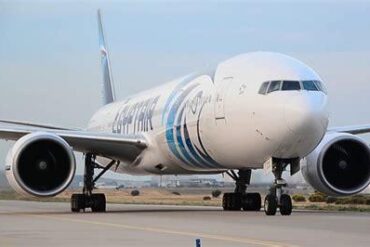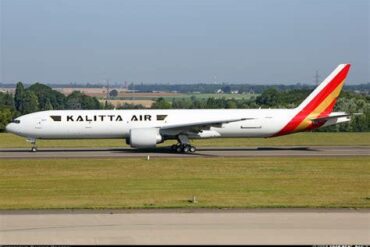
The Boeing 777-300 is one of those aircraft that quietly does its job while its louder, more famous sibling—the 777-300ER—soaks up the spotlight. At a glance, the original -300 looks like a straightforward stretch of the 777-200, but one technical detail keeps intriguing engineers, pilots, and airline planners alike: why did it fly with only two engine families when the rest of the 777 lineage enjoyed far more choice?
This question isn’t trivial. Engine selection defines an aircraft’s economics, performance envelope, maintenance philosophy, and long-term relevance. The limited engine options of the 777-300 tell a deeper story about timing, technology, and how quickly the widebody market evolved in the late 1990s.
To understand the answer, it helps to strip away hindsight. The 777-300 was born into a narrow window—after engine competition had matured, but before ultra-high-thrust engines reshaped long-haul aviation. That narrow window shaped everything that followed.
The Boeing 777-300’s Place in the 777 Family
When Boeing launched the 777-300, it was not chasing record-breaking range or payload. The aircraft was designed as a high-capacity people mover, intended to replace older quadjets like the Boeing 747-200 and Airbus A300 on dense regional and medium-haul routes.
Its mission profile emphasized seat count over distance. Airlines in Asia and Europe wanted an aircraft that could carry more passengers without stepping up to a four-engine behemoth. The 777-300 delivered exactly that, stretching the fuselage while retaining much of the systems architecture of earlier 777 variants.
What it did not do was redefine performance expectations. The aircraft entered service before airlines demanded that every widebody be capable of flying halfway around the planet. As a result, its engine requirements were conservative by later standards.
Why Only Two Engine Families Were Chosen
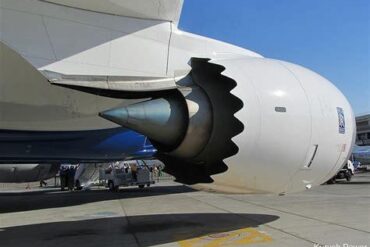
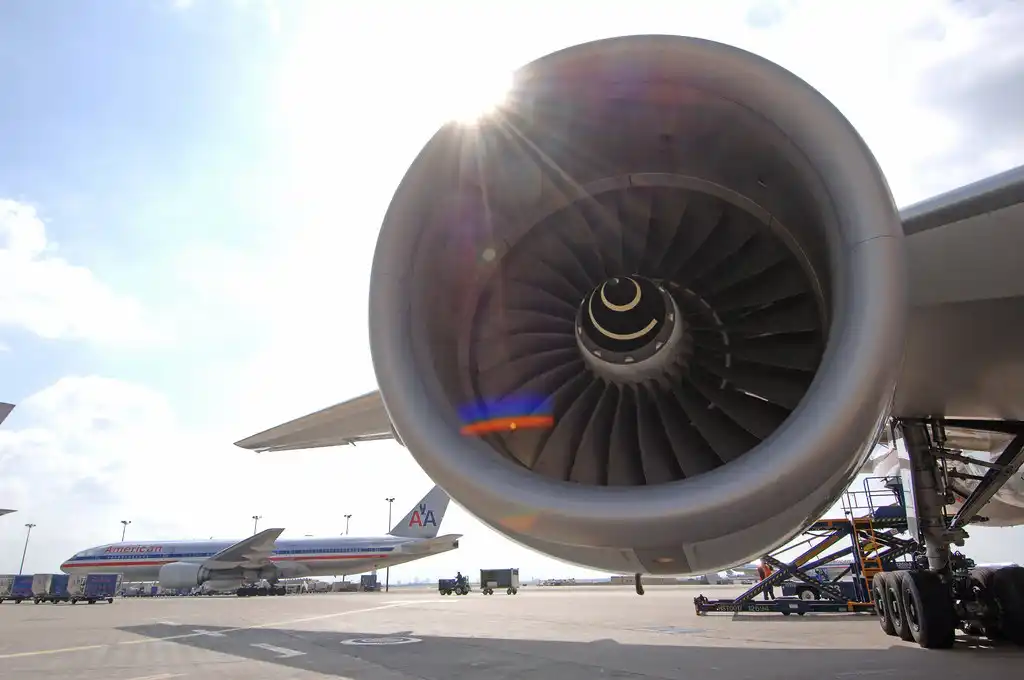
At entry into service, the Boeing 777-300 was powered by just two engine families: the Pratt & Whitney PW4000 and the Rolls-Royce Trent 800. Both engines were already certified on earlier 777 variants and could be adapted to the stretched airframe without radical redesign.
From a program-management perspective, this mattered enormously. Boeing wanted a low-risk derivative, not a clean-sheet reinvention. Introducing a brand-new engine or heavily uprated design would have added cost, testing time, and certification complexity—none of which aligned with the aircraft’s relatively modest market ambitions.
General Electric’s GE90 often enters the conversation here, largely because it later became synonymous with the 777 brand. In reality, early GE90 variants were certified for the 777-300, but certification alone doesn’t guarantee adoption. Airlines showed little interest. The early GE90 lacked the growth margin and operational maturity that carriers wanted for this specific role.
When no launch customer selected the GE90, the outcome was sealed. The 777-300 would enter service with two engines, not three.
Design Timing: The Hidden Constraint
Timing is everything in aviation, and the 777-300 arrived at a particularly awkward moment.
In the mid-to-late 1990s, engine technology sat in a transitional phase. Manufacturers had achieved impressive reliability and efficiency, but true ultra-high-thrust engines had not yet become the default solution for large twinjets. The industry had not fully embraced the idea that one engine type could dominate an entire aircraft variant.
The PW4000 and Trent 800 both occupied the 90,000-pound thrust class, which was more than sufficient for the 777-300’s maximum takeoff weight and runway performance targets. Crucially, they offered airlines something even more valuable than raw power: predictability.
Airlines already flying the 777-200 could integrate the -300 with minimal disruption. Maintenance procedures, pilot training, spare parts inventories, and engineering documentation all aligned neatly. In an industry obsessed with cost control, that mattered more than squeezing out a few extra percent of performance.

Why the GE90 Didn’t Gain Traction
From today’s perspective, the absence of GE90-powered 777-300s feels strange. After all, the GE90 would go on to become the most powerful jet engine ever certified. But in the 777-300 era, the GE90 was still finding its footing.
Early GE90 variants faced challenges with vibration behavior, fan blade containment, and fuel efficiency optimization. These were solvable issues, but airlines tend to be cautious when introducing new technology—especially when the benefits are marginal for the intended mission.
For the 777-300’s typical routes, the extra capability simply wasn’t needed. The PW4000 and Trent 800 already met performance requirements with comfortable margins. Introducing a third engine option would have increased complexity without delivering a compelling operational advantage.
Airline Strategy and Regional Demand
Launch customers played a decisive role in locking in the engine lineup. Airlines such as Cathay Pacific and All Nippon Airways were focused on dense regional networks rather than ultra-long-haul expansion.
These carriers valued dispatch reliability, predictable maintenance costs, and fleet commonality above all else. The PW4000 appealed to airlines already operating Pratt-powered fleets, while the Trent 800 benefited from Rolls-Royce’s strong presence and support infrastructure in Asia.
Environmental conditions also influenced decisions. Hot-and-humid operations in Southeast Asia placed a premium on engines with stable, well-understood performance characteristics. Both engine families delivered exactly that, with minimal surprises.
A Transitional Aircraft by Design
Industry analysts often describe the 777-300 as a transitional aircraft, and the engine story reinforces that label. It arrived too late to define the original 777 concept and too early to benefit from the technological leap that would soon follow.
This transitional nature explains why the aircraft feels restrained compared to later variants. The engines are quieter and less powerful than those on the 777-300ER, but they are also entirely appropriate for what the aircraft was designed to do.
In many ways, the 777-300 represents the last moment when airline flexibility outweighed outright capability. Soon after, market expectations shifted decisively toward specialization.
How the 777-300ER Changed Everything
The arrival of the 777-300ER rewrote the rules. Unlike its predecessor, the ER was engineered from the outset around a single idea: maximum global capability.
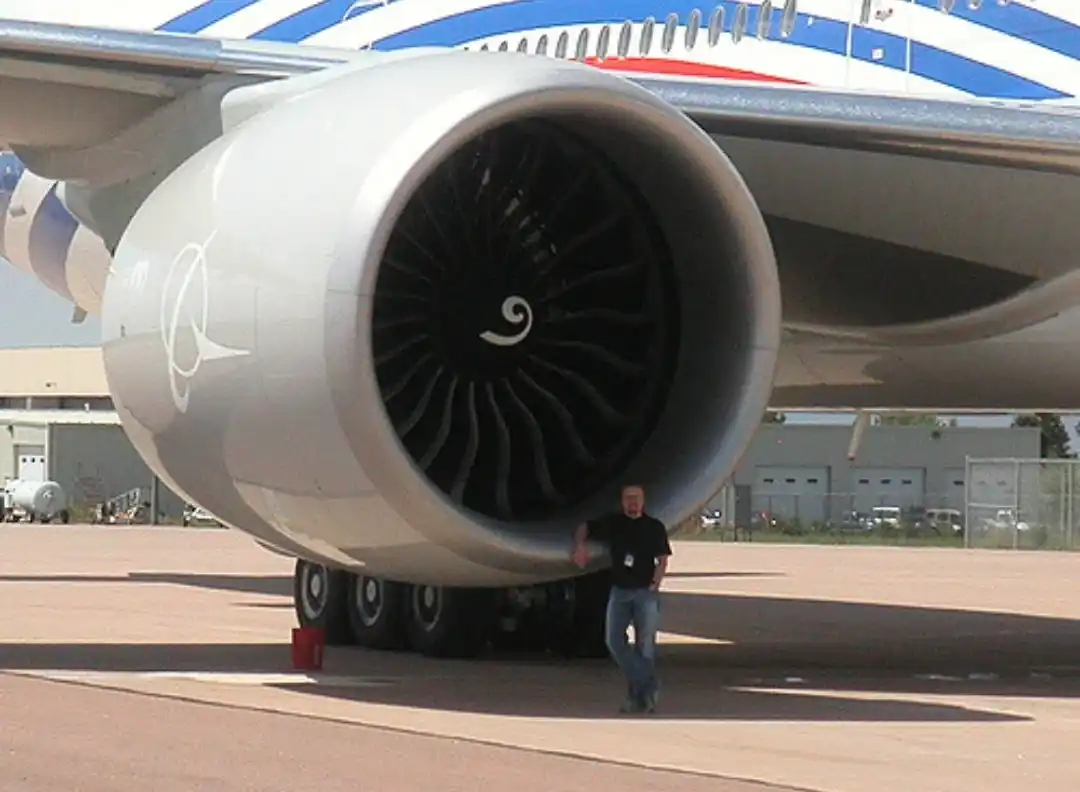
That ambition demanded a different class of engine. The GE90-115B wasn’t just an option; it was a requirement. Its immense thrust enabled longer range, higher payload, and hot-and-high performance that the original 777-300 simply could not match.
By designing the aircraft around one engine, Boeing accepted reduced choice in exchange for unmatched performance. The market responded enthusiastically, and the 777-300ER went on to become one of the most successful widebodies in aviation history.
In contrast, the original 777-300 remained anchored to its earlier design philosophy—and its two engines.
Operational Strengths of the Two-Engine Setup
Despite its limitations, the 777-300’s engine configuration delivered tangible benefits. Both engine families proved durable and reliable, with many aircraft remaining in service for decades.
Pilots frequently praise the engines for smooth operation and flexible thrust management, particularly during derated takeoffs and noise-sensitive airport operations. Maintenance teams appreciate their mature design and predictable wear patterns, which simplify long-term planning.
Cathay Pacific’s continued operation of Trent 800-powered 777-300s underscores this point. Aircraft approaching 30 years of age remain economically viable on well-defined routes where their performance envelope aligns with demand.
The Long-Term Drawbacks Become Clear
Over time, however, the limitations of the 777-300’s engines became harder to ignore. Both the PW4000 and Trent 800 belong to an earlier generation of engine design, with limited growth potential.
As fuel prices rose and emissions standards tightened, airlines found fewer opportunities to offset these pressures through engine upgrades. The aircraft’s payload-range flexibility also lagged behind newer designs, particularly in hot-and-high conditions or on longer sectors.
Maintenance ecosystems shifted as well. As newer 777 variants dominated fleets worldwide, support networks increasingly prioritized modern engines, leaving older powerplants with shrinking overhaul capacity and longer turnaround times.
Why Two Engines Ultimately Made Sense
Viewed through the lens of its time, the 777-300’s two-engine lineup was not a flaw but a reflection of careful, conservative engineering. Boeing selected engines that met requirements without overreaching, aligned with airline priorities, and minimized program risk.
The aircraft succeeded in its intended role, even if it never achieved the fame of its successor. Its limited engine choices highlight how rapidly aviation technology and market expectations can evolve—and how even well-designed aircraft can be overtaken by change.
The Legacy of the Boeing 777-300
Today, the Boeing 777-300 stands as a reminder that aircraft design is always a product of timing. The PW4000 and Trent 800 were the right engines for the job Boeing envisioned in the 1990s. They powered an aircraft built for capacity, reliability, and efficiency on dense routes—not global domination.
As the industry moved toward ultra-long-haul performance and single-engine specialization, the 777-300 naturally faded into a niche role. Yet its continued service with select operators proves that thoughtful design choices, even constrained ones, can deliver lasting value.
The story of why the Boeing 777-300 had only two engine types is ultimately a story about transition—between eras, technologies, and philosophies. And in aviation, those transitions are often where the most interesting lessons live.