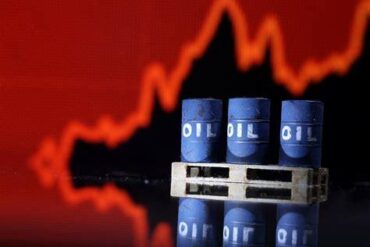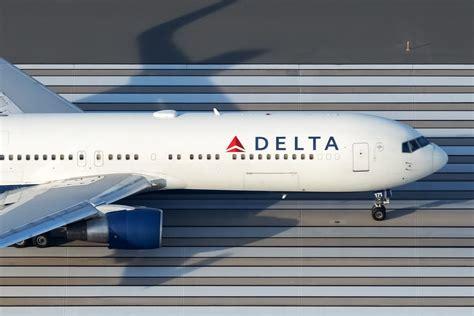
The airline industry has always lived at the mercy of fuel prices. When oil spikes, profits shrink—sometimes violently. Yet in a twist that seems almost counterintuitive, Delta Air Lines has engineered a strategy that allows it to profit from the very fuel shocks that punish its competitors. While most carriers are watching margins evaporate under the weight of rising jet fuel costs, Delta is quietly capturing value from the same market forces, turning volatility into a financial advantage.
This isn’t luck. It’s the result of a bold, unconventional decision that once drew skepticism across Wall Street and the aviation world. Today, that decision is generating an estimated $300 million benefit in a single quarter, all while competitors struggle to absorb billions in added costs.
The Fuel Crisis Reshaping Airline Economics
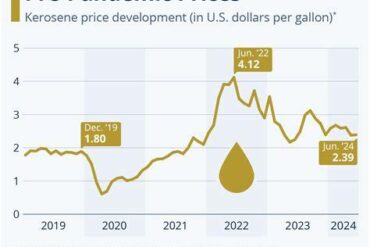
Fuel is not just another expense for airlines—it is often the single largest variable cost. When geopolitical tensions disrupt oil supply chains, the impact ripples quickly through jet fuel markets. Recent developments tied to instability in the Middle East have pushed jet fuel prices above $4.80 per gallon, nearly doubling from earlier levels in the year.
For most airlines, this surge is devastating. Analysts estimate the industry could face tens of billions in additional fuel expenses, compressing margins and forcing difficult operational decisions such as capacity cuts, fare increases, or both. Airlines are uniquely vulnerable because they consume refined fuel, not crude oil, meaning they pay the full markup embedded in refining costs.
Delta is exposed to these pressures too. Its fuel bill is projected to rise by around $2 billion in a single quarter. But unlike its rivals, Delta has something else working in its favor—a built-in mechanism that captures value from rising refining margins.
The Unusual Bet: Owning a Refinery
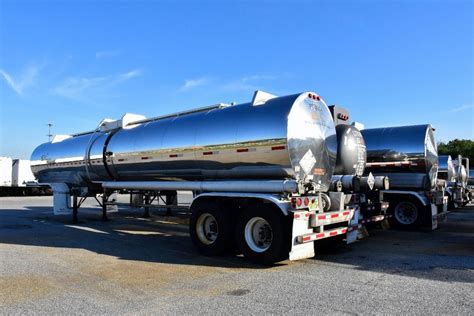
At the heart of Delta’s strategy is the Trainer refinery in Pennsylvania, operated through its subsidiary, Monroe Energy. This facility processes crude oil into refined products, including jet fuel, effectively positioning Delta as both a consumer and producer in the fuel supply chain.
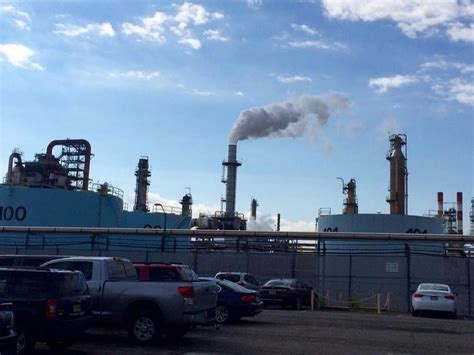
The move to acquire a refinery was widely viewed as unconventional, even risky. Airlines are not oil companies, and managing a refinery introduces a completely different set of operational, regulatory, and environmental challenges. Yet Delta’s leadership saw something others missed: control over fuel supply could translate into control over financial outcomes.
By owning refining capacity, Delta reduces its reliance on third-party suppliers and captures part of the refining margin, which becomes especially valuable when markets are disrupted.
A Painful Lesson That Changed Strategy Forever
Delta’s refinery story begins not with ambition, but with hardship. In 2005, the airline was pushed into bankruptcy, with soaring fuel costs playing a central role. Expenses surged far beyond expectations, and without effective hedging mechanisms in place, Delta had little choice but to absorb the full impact.
That experience left a lasting impression. Fuel was no longer just a cost—it was a strategic vulnerability.
Attempts to hedge fuel prices in subsequent years proved equally frustrating. Financial hedging strategies, while theoretically protective, often backfired when market conditions shifted unexpectedly. At one point, Delta incurred over $1 billion in hedge-related losses, reinforcing a hard truth: traditional methods of managing fuel risk were unreliable.
This realization set the stage for a more radical approach—one that would fundamentally reshape how Delta interacts with the energy market.
Inside the Trainer Refinery Acquisition
In 2012, Delta acquired the Trainer refinery for approximately $180 million, a relatively modest sum compared to the scale of its operations. The facility, originally built in 1925, had been shuttered due to weak profitability under previous ownership.
Delta didn’t just reopen the refinery—it reimagined its purpose. The company invested heavily to optimize jet fuel production, aligning the refinery’s output with its own operational needs.
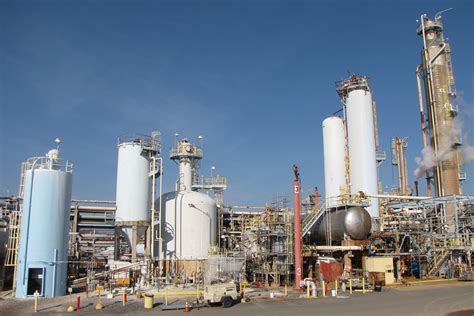
Today, the refinery processes around 200,000 barrels of crude oil per day and supplies a significant portion of Delta’s domestic fuel requirements. Through a combination of direct production and strategic exchanges, it covers roughly 80% of the airline’s fuel consumption in the United States.
This level of integration is virtually unheard of in the airline industry, where most carriers remain entirely dependent on external suppliers.
Understanding the Crack Spread Advantage
To grasp why Delta’s strategy works, it’s essential to understand the concept of the crack spread. This term refers to the difference between the price of crude oil and the price of refined products like jet fuel.
In times of market stress, crack spreads often widen dramatically. That means refined fuel becomes disproportionately more expensive compared to crude oil, amplifying costs for airlines.
For Delta, however, this dynamic creates an opportunity.
As a refinery owner, Delta captures part of that widening spread. While it still pays more for fuel overall, it also earns higher refining margins, offsetting a portion of those costs. In effect, Delta is hedging operational risk not through financial instruments, but through physical asset ownership.
When the Strategy Proved Its Worth
The real test came in 2022, when global energy markets were thrown into turmoil following geopolitical conflict in Eastern Europe. Oil prices surged, and refining margins reached historic highs.
For most airlines, it was a brutal year. For Delta, it was a validation.
The Trainer refinery generated hundreds of millions in operating income, helping reduce overall fuel expenses by a substantial margin. The hedge was no longer theoretical—it was material and measurable.
That moment marked a turning point in how the industry viewed Delta’s strategy. What once seemed like an eccentric diversification now looked like a strategic masterstroke.
Why the Current Fuel Shock Favors Delta Again
Fast forward to today’s environment, and the same dynamics are playing out once more. Rising geopolitical tensions have driven oil prices higher, but more importantly, they have expanded refining margins, creating the perfect conditions for Delta’s refinery to shine.
The company expects the Trainer facility to deliver approximately $300 million in additional earnings in a single quarter, directly offsetting part of its increased fuel bill.
This doesn’t make Delta immune to high fuel prices—but it significantly reduces the net impact. While competitors absorb the full force of rising costs, Delta retains a financial cushion that softens the blow.
Criticism That Refuses to Disappear
Despite its recent success, Delta’s refinery strategy has never been free from criticism. Skeptics argue that operating a refinery introduces unnecessary complexity and risk into an already challenging business.
Concerns typically center around several factors:
- The refinery business is capital-intensive and cyclical
- Operational risks include maintenance issues and unexpected shutdowns
- Environmental and regulatory compliance adds ongoing costs
- Benefits may not consistently outweigh the risks in weaker markets
These arguments are not without merit. The Trainer refinery has experienced periods of volatility, including years of financial losses. It is not a guaranteed profit engine—it is a strategic hedge with variable outcomes.
Yet in moments like the current fuel crisis, its value becomes difficult to ignore.
Even Competitors Acknowledge the Edge
Perhaps the most telling validation comes not from analysts, but from competitors. Executives at rival airlines have openly acknowledged that Delta enjoys a unique advantage when refining margins spike.

This acknowledgment underscores a simple reality: while other airlines can attempt to hedge fuel costs through financial instruments or operational adjustments, none possess the same integrated supply chain advantage.
Delta stands alone in this regard.
The Financial Impact: Small Asset, Big Returns
What makes the refinery strategy particularly compelling is its outsized financial impact relative to its initial cost. Delta’s total investment in the Trainer facility and its upgrades is roughly comparable to the price of a single modern aircraft.
Yet in favorable market conditions, the refinery can generate hundreds of millions—or even over a billion dollars annually—in benefits.
From a financial perspective, this translates into meaningful improvements in operating margins. Even a modest increase of one or two percentage points can significantly enhance profitability in an industry where margins are typically thin.
A Hedge That Evolves With the Market
Unlike traditional hedging strategies, which rely on contracts with fixed terms and expiration dates, Delta’s refinery is a living asset. Its value fluctuates with market conditions, adapting in real time to changes in supply, demand, and geopolitical dynamics.
This flexibility is both a strength and a challenge. It requires continuous management, investment, and operational expertise. But it also provides a level of responsiveness that financial instruments cannot match.
What Happens If Fuel Prices Stay High?
If current market conditions persist, the implications for Delta could be substantial. Sustained high fuel prices combined with wide crack spreads would continue to drive strong refining margins, potentially pushing annual benefits into the billion-dollar range.
Such a scenario would not only offset higher costs but could also enhance Delta’s competitive positioning, allowing it to maintain pricing flexibility and operational stability while others struggle.
The Bigger Picture: Rethinking Airline Strategy
Delta’s refinery experiment challenges a long-standing assumption in the airline industry—that carriers should focus exclusively on flying and leave everything else to specialized providers.
By stepping outside that traditional boundary, Delta has demonstrated that vertical integration, when executed strategically, can create powerful advantages. It’s not a model that every airline can or should replicate, but it does highlight the value of thinking beyond conventional limits.
Conclusion: Turning Volatility Into Opportunity
In an industry defined by unpredictability, Delta Air Lines has found a way to transform one of its greatest risks into a strategic asset. The ability to earn $300 million from rising fuel costs is not just a financial anomaly—it is the product of deliberate, forward-thinking decisions rooted in hard-earned lessons.
The refinery does not eliminate risk. It reshapes it.
And in doing so, Delta has achieved something rare in aviation: a measure of control over forces that typically dictate the fate of airlines.