The expanding conflict involving Iran has sent shockwaves far beyond the battlefield, rippling directly into global financial markets and hammering airline stocks across continents. As airspace closures multiplied across the Middle East, aviation’s delicate operational web began to unravel with startling speed. Investors responded immediately. Within hours of markets opening, billions in airline market capitalization evaporated as carriers grappled with cancellations, reroutes, and surging fuel prices.
More than 11,000 flights have been cancelled at two of the region’s most critical hubs—Dubai International Airport and Hamad International Airport—displacing hundreds of thousands of passengers worldwide. The Middle East is not simply another aviation region; it is the connective tissue linking Europe, Asia, Africa, and Oceania. When that artery constricts, the entire circulatory system of global air travel strains.
Global Airline Stocks Slide as Conflict Escalates
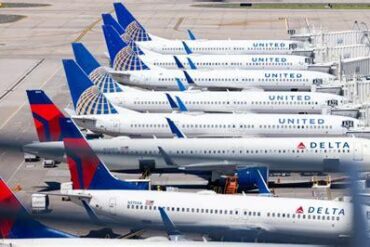
Airline equities fell sharply as geopolitical tensions intensified. In the United States, United Airlines dropped nearly 4% in a single session. American Airlines shed approximately 6%, while Delta Air Lines declined 3.5%. Even carriers without direct Middle East routes were caught in the downdraft, demonstrating how interconnected route networks and investor sentiment truly are.
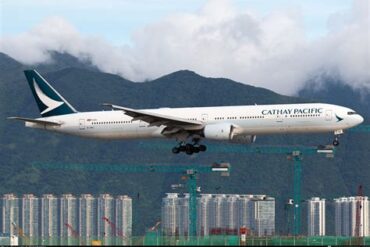
European and Asia-Pacific airlines suffered similar declines. Parent group International Airlines Group fell around 5%, while Air France-KLM dropped 9%, reflecting heightened exposure to long-haul markets. Lufthansa, Qantas, Cathay Pacific, Singapore Airlines, and Japan Airlines all recorded losses near 5%.
Collectively, more than $22.6 billion in airline market value was wiped out in a single trading window. Aviation is capital-intensive and thin-margin even in stable times. When geopolitical risk spikes, investor patience evaporates faster than jet fuel in desert heat.
The Middle East: Aviation’s Strategic Artery
The Middle East’s role as a transit corridor has grown even more critical since Russian airspace closures forced airlines to reroute southward. Flights connecting Europe to Asia now frequently arc over the Caucasus and Middle Eastern skies. The closure of Iranian airspace has therefore created a cascading operational crisis.
Approximately 660,000 passengers transit through Middle Eastern hubs daily. Flag carriers such as Emirates and Qatar Airways operate dense long-haul networks linking cities that would otherwise require multiple connections. When these hubs slow or shut down, global schedules destabilize.
Both airlines, along with Etihad Airways, are government-owned and therefore not publicly listed. That ownership structure shields them from stock market volatility, but it does not insulate them from operational and financial strain. Aircraft grounded on tarmac still incur leasing costs. Crews must be repositioned. Passenger reaccommodation generates cascading logistical expense.
Oil Prices Surge, Adding Pressure to Airline Balance Sheets
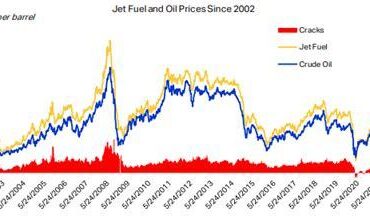
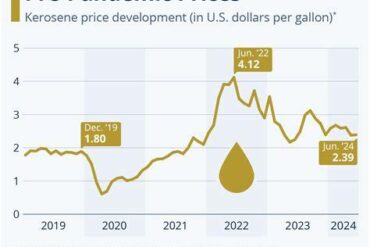
Military strikes and retaliatory threats have heightened fears surrounding the Strait of Hormuz, a critical oil transit chokepoint. Reports indicate oil shipments through the strait have slowed significantly. As a result, crude prices have climbed roughly 13% week-over-week.
Fuel is typically the largest or second-largest cost for airlines. A sudden double-digit spike in oil prices can erase quarterly profit forecasts overnight. Carriers already navigating reroutes that extend flight times must now burn additional fuel at higher prices. The math becomes brutal quickly.
This dual shock—operational disruption and fuel inflation—explains why equity markets reacted so decisively. Investors are pricing in weeks of reduced capacity, higher expenses, and fragile consumer confidence.
Flight Cancellations and Reroutes Reshape Global Networks
Airspace closures across eight or more regional countries have forced airlines to redraw flight paths in real time. Some long-haul services have been cancelled outright. Others operate via circuitous routes that add hours to journey times.
Despite the turmoil, limited operations are gradually resuming. Data from Flightradar24 shows select departures restarting from Dubai. Emirates flight EK500 departed for Mumbai late in the evening, signaling cautious reactivation. Meanwhile, Flydubai resumed services with a Warsaw departure in the early hours.
Interestingly, some fifth-freedom routes—flights between two foreign countries operated by an airline based elsewhere—have continued. Emirates’ Sydney to Christchurch Airbus A380 service remains active, demonstrating how diversified route rights can provide limited resilience even amid regional disruption.
Investor Psychology and Aviation’s Volatility
Air travel demand had rebounded strongly following the pandemic recovery period. Load factors were high, and international routes were expanding. That optimism now collides with geopolitical fragility. Aviation thrives on predictability. Conflict injects uncertainty, and markets dislike uncertainty more than almost anything.
The current downturn reflects not only immediate cancellations but expectations of prolonged instability. If conflict extends several weeks, corporate travel may pause, insurance premiums may rise, and booking confidence could soften. Airlines operate on forward bookings; when passengers hesitate, revenue visibility clouds quickly.
At the same time, some displaced travelers are filling alternative routes to 100% capacity. This phenomenon offers partial relief, yet it cannot fully offset the scale of cancellations at major hubs.
Aviation at the Mercy of Geopolitics
Airlines operate some of the most sophisticated logistical systems ever devised. Yet even the most advanced network collapses under closed skies and military escalation. The expanding Iran conflict illustrates aviation’s paradox: global connectivity depends on local stability.
For now, markets remain jittery, oil prices elevated, and flight paths uncertain. Whether airline stocks stabilize will depend not only on earnings reports but on diplomatic developments unfolding thousands of miles above the tarmac. In aviation, geopolitics is not background noise. It is the weather system that determines whether aircraft soar—or stay grounded.