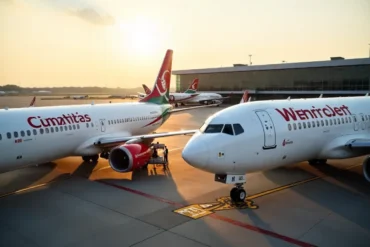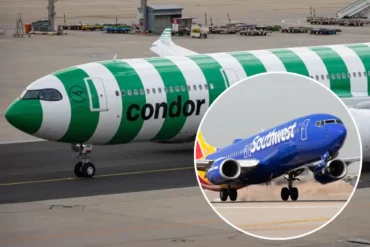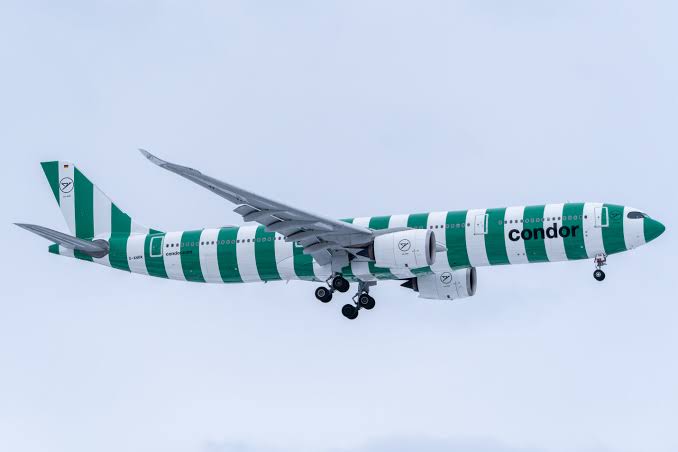
American Airlines and German leisure carrier Condor have signed a new interline agreement designed to expand travel options between North America and Europe. The partnership will allow customers to combine flights operated by both airlines on a single itinerary, opening access to more than 150 cities through Condor’s transatlantic gateways at New York’s John F. Kennedy International Airport, Boston Logan International Airport, and Los Angeles International Airport.
For travelers, the agreement addresses one of the biggest challenges involved in combining separate airline networks: connecting different flights without having to construct an entirely separate journey. Customers booking eligible itineraries involving both carriers will be able to purchase the trip on a single ticket, while checked baggage can be transferred through to the final destination, subject to applicable border-control requirements.
The partnership is particularly significant because Condor’s North American footprint is continuing to expand. The German airline is scheduled to launch service to Chicago O’Hare International Airport in May 2027, adding another major U.S. gateway to its transatlantic network. From Chicago, Condor passengers will be able to fly nonstop to Frankfurt before connecting onward to destinations throughout Europe, while American can feed passengers from its extensive domestic network into Condor’s European services.
American Airlines Gains More European Connectivity Through Condor
The Chicago addition gives the agreement an important dimension for American Airlines as the Fort Worth-based carrier continues developing its presence at O’Hare. American’s domestic network reaches hundreds of destinations, creating opportunities to connect passengers from cities across the United States with Condor’s international flights. In the opposite direction, European travelers arriving on Condor can connect onto American-operated services to destinations across North America.
Jeff Ogar, American Airlines’ Managing Director of Alliances, said the agreement reflects the carrier’s effort to connect customers with more destinations. He highlighted the combination of American’s North American network and Condor’s presence in Germany and Europe as a way to provide additional travel choices.
The arrangement is more than simply adding destinations to a route map. Interline agreements can make complex international journeys considerably easier to book because passengers do not necessarily have to purchase separate tickets for each segment. A protected connection can also provide additional assistance when disruptions occur. If a delayed flight causes a passenger to miss a connecting service, the airlines can coordinate a new itinerary under the applicable interline arrangements rather than leaving the traveler to resolve the entire problem independently.
Condor Expands Its North American Partnership Network
For Condor, the agreement with American adds another major North American partner to a network that already includes a longstanding relationship with Alaska Airlines. That partnership has provided Condor with access to additional destinations across the United States, and the American agreement expands the range of connecting possibilities available to passengers on the continent.
Condor is also pursuing international connectivity beyond North America. The airline has established a partnership with Qantas, providing opportunities for onward connections across Australia and New Zealand. Taken together, these relationships form part of Condor’s broader strategy of expanding its international reach without relying exclusively on its own aircraft to serve every destination.
David Carlisle, Condor’s Vice President of Network Planning and Partnerships, said American’s network complements Condor’s own operations and strengthens its transatlantic offering. The agreement gives Condor customers additional options on both sides of the Atlantic while allowing the German carrier to extend its reach into markets that would otherwise require separate arrangements.
Frankfurt Opens the Door to Condor’s European Network
Condor’s Frankfurt operation is particularly important to the new partnership because the German hub provides access to a broad collection of European leisure destinations. Passengers arriving from American’s North American network can continue through Frankfurt toward countries including France, Italy, Germany, Spain, Austria, Greece, and Switzerland, among others.
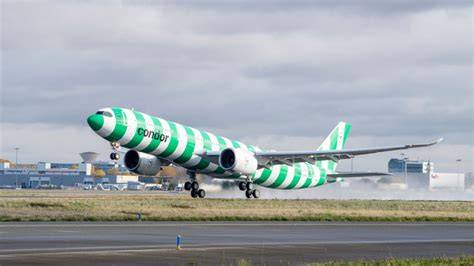
Condor has built its identity around connecting Germany with popular vacation destinations, while its long-haul network extends beyond Europe to markets in Africa, Asia, South America, the Caribbean, and North America. Its fleet includes Airbus A319s, A320s, A320neos, A321s, A321neos, and A330-900neos, along with a small number of Embraer E190 aircraft.
The fleet structure gives Condor a combination of narrowbody aircraft for shorter European routes and widebody A330-900neos for long-haul operations. This allows the airline to use Frankfurt and other German airports as gateways between its European network and international destinations.
What the American-Condor Agreement Means for Passengers
The practical value of the agreement will be most apparent to passengers whose journeys require a combination of American and Condor flights. Instead of arranging separate tickets, eligible travelers can book a connected itinerary covering both airlines. Through-checked baggage is another important convenience, reducing the need to reclaim bags and recheck them during qualifying connections.
The protected-connection element could also become valuable when irregular operations affect an itinerary. While the precise conditions depend on the ticket and applicable airline rules, the interline relationship gives the carriers a framework for assisting customers whose journeys are disrupted.
With Condor’s planned Chicago launch, the partnership will gain another major gateway alongside JFK, Boston, and Los Angeles. For American, it adds another pathway into Europe; for Condor, it provides broader access to the extensive U.S. domestic market. The result is a larger combined network in which each airline can extend the reach of the other’s flights without operating every segment itself.