From a fragile wooden biplane that barely cleared the ground to an uncrewed spaceplane spending years in orbit, American experimental aircraft have repeatedly redrawn the limits of flight. The machines were built for very different purposes, but they shared one goal: proving that a new combination of speed, altitude, range, propulsion, or endurance was possible.
The pursuit was rarely comfortable. Test pilots accepted enormous risks, engineers worked with incomplete aerodynamic data, and many projects operated close to the edge of what materials and engines could survive. Some aircraft disappeared in crashes, while others became museum pieces after only a handful of flights. Yet their records often became stepping stones for the next generation of aviation.
The following aircraft are arranged broadly by the dates of their defining achievements. Together, they trace the extraordinary progression from the first powered flight through the jet age, the supersonic era, hypersonic research, nonstop global flight, and reusable orbital operations.
Wright Flyer: The First Powered Flight
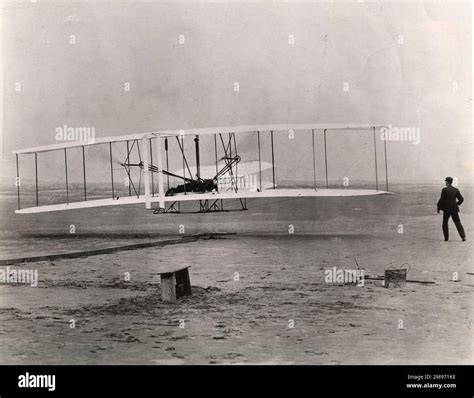
The Wright Flyer begins the story because almost every later aviation record rests on the achievement of Orville and Wilbur Wright. Built from spruce and ash with cotton muslin fabric covering, the single-place biplane weighed only 605 pounds without its pilot. Its lightweight construction was essential because the brothers did not have a powerful modern engine to compensate for excess mass.
Instead, the Wright brothers created their own approximately 12-horsepower gasoline engine and connected it to two pusher propellers. The propellers turned in opposite directions to counteract gyroscopic effects and improve controllability. The aircraft also incorporated the brothers’ pioneering approach to three-axis control, allowing them to manage roll, pitch, and yaw rather than simply pointing the machine into the wind and hoping for the best.
On December 17, 1903, Orville Wright climbed into the pilot position at Kitty Hawk, North Carolina. At 10:35 a.m., the Flyer became the first powered, controlled, sustained heavier-than-air aircraft to make a successful flight. The initial run covered only 120 feet in about 12 seconds, but its significance was enormous. The distance was tiny by later standards, yet the fundamental barrier had been broken: a powered aircraft had taken off under its own power and been controlled in flight.
The Wright Flyer established a starting point from which aviation could accelerate at a remarkable pace. Within decades, aircraft would travel thousands of miles, exceed the speed of sound, and reach the edge of space. A small piece of the original Flyer even traveled to Mars aboard NASA’s Ingenuity helicopter, connecting the first powered flight on Earth with the first powered, controlled flight on another world.
Hughes H-1 Racer: The Private Pilot Who Broke the Speed Record
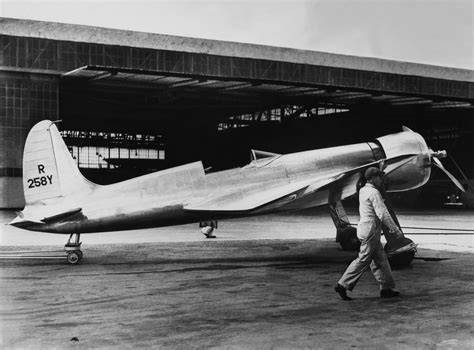
The Hughes H-1 Racer demonstrated how quickly aircraft performance could improve when designers treated speed itself as an engineering objective. Developed by Howard Hughes and his Hughes Aircraft Company, the sleek racer made its first flight on August 17, 1935. Unlike later experimental machines backed primarily by government agencies, the H-1 emerged from private ambition and private financing.
On September 13, 1935, Hughes flew the H-1 at Santa Ana, California, and reached an average speed of 352 mph, establishing a new world speed record. The aircraft used interchangeable wings to suit different missions. Shorter wings, spanning about 25 feet, reduced drag for maximum-speed attempts, while longer wings measuring 31 feet 9 inches supported longer-distance operations.
The H-1 produced another remarkable result on January 19, 1937, when Hughes flew from Los Angeles to Newark in 7 hours, 28 minutes, and 25 seconds. The 2,490-mile journey produced an average speed of about 332 mph, setting a transcontinental speed record. The achievement illustrated an important principle in aircraft design: a machine optimized for outright speed could also become a highly effective long-distance platform when its configuration was changed.
The H-1 is particularly important because it was the last aircraft owned and operated by a private individual to hold the world speed record before military and government-backed aircraft took over the absolute-speed contest. Its streamlined shape also foreshadowed the increasingly aerodynamic designs that would dominate the coming decades.
Douglas D-558-I Skystreak: The Navy Takes the Speed Record
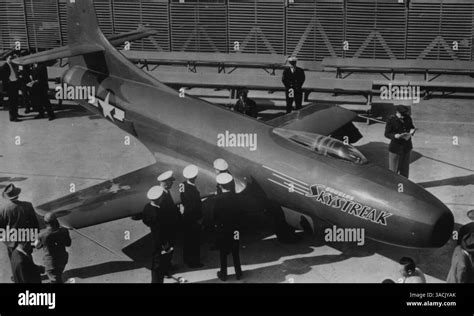
The end of World War II created an urgent race to understand high-speed jet flight. The introduction of aircraft such as the German Messerschmitt Me 262 demonstrated that the piston-engine era was giving way to jet propulsion. The U.S. Navy, the Bureau of Aeronautics, and the National Advisory Committee for Aeronautics (NACA) worked with Douglas Aircraft to investigate the new technology through the D-558 program.
The resulting D-558-I Skystreak was designed around a 5,000-pound-thrust Allison J35-A-11 turbojet. Unlike rocket aircraft that required an external carrier aircraft for every flight, the Skystreak could take off and land using its own engine. Its large nose intake and integrated wing fuel tanks reflected the demands of sustained high-speed research.
On August 20, 1947, Navy test pilot Cmdr. Turner F. Caldwell pushed the Skystreak to an average speed of 640.743 mph, taking the world speed record from the Lockheed P-80R Shooting Star. The Navy’s hold on the record was extremely brief. Only five days later, Marine Corps Lt. Col. Marion Carl flew another D-558-I to an average of 650.796 mph.
That rapid exchange demonstrated how intensely the American military services were competing to master jet propulsion. The Skystreak’s records were not simply trophies; they generated data about stability, engine performance, heating, and aerodynamic behavior at speeds that conventional propeller aircraft could not approach. Surviving examples are preserved at the National Naval Aviation Museum in Pensacola and the Marine Corps Air Ground Museum in Quantico.
Bell X-1 Glamorous Glennis: Breaking the Sound Barrier
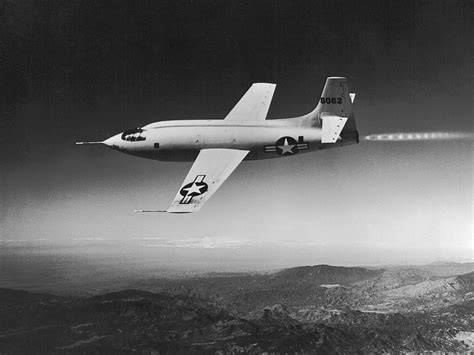
The Bell X-1 became one of the most recognizable experimental aircraft in history because it achieved a milestone that had long seemed almost impossible. Built by Bell Aircraft as a transonic and supersonic research vehicle, the orange-colored aircraft was designed around a thin, bullet-like fuselage and a rocket propulsion system.
Capt. Charles “Chuck” Yeager flew the aircraft that he named Glamorous Glennis after his wife. On October 14, 1947, the X-1 was carried beneath a Boeing B-29 Superfortress to about 23,000 feet before being released. Yeager then ignited its rocket engine and accelerated over the Mojave Desert near Muroc Dry Lake.
The aircraft reached Mach 1.06, approximately 700 mph, at 43,000 feet, making Yeager the first person to exceed the speed of sound in level flight in a piloted aircraft. The event demonstrated that the feared “sound barrier” was not an impenetrable physical wall. Instead, aircraft encountered complex aerodynamic effects that could be studied, managed, and overcome.
The X-1 continued pushing beyond its original achievement. On March 26, 1948, it reached Mach 1.45, or about 957 mph, at 40,130 feet. Its single-seat configuration and Reaction Motors rocket engine, producing roughly 6,000 pounds of thrust, made it a specialized research machine rather than a practical combat aircraft. Its real legacy was the knowledge it created for every later supersonic aircraft.
Bell X-2 Starburster: The First Crewed Mach 3 Flight
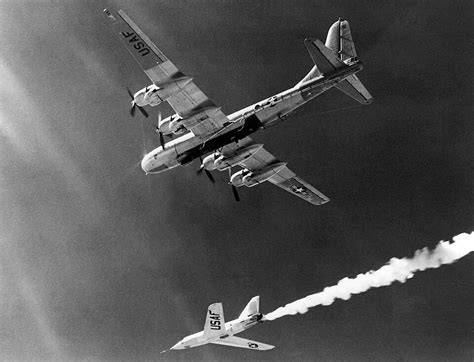
After Mach 1 had been conquered, American researchers wanted to understand what happened at much higher speeds. The Bell X-2 Starburster was created by Bell Aircraft and NACA for research into supersonic and extreme high-altitude flight. Its sharp, swept design reflected the increasingly severe aerodynamic environment encountered as speed increased.
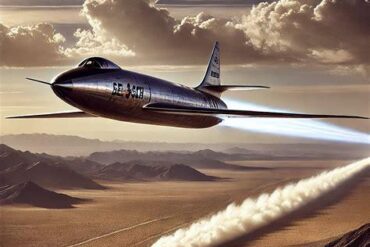
The X-2’s early flights were made after it was dropped from a Boeing B-50 bomber. On July 23, 1956, Lt. Col. Frank “Pete” Everest flew the aircraft to Mach 2.87, approximately 2,202 mph, at 68,000 feet, becoming known at the time as the fastest man alive. The flight crossed a new boundary in speed and exposed researchers to the difficult interaction between aerodynamic heating, stability, and high-altitude flight.
The ultimate milestone came on September 27, 1956, when Capt. Milburn “Mel” Apt accelerated the X-2 to Mach 3.196, approximately 2,452 mph. Apt became the first pilot to fly an aircraft beyond three times the speed of sound.
The X-2 program also demonstrated the human cost of experimental progress. One X-2 was lost in an accident in 1953 that killed test pilot Skip Ziegler and B-50 crewmember Frank Wolko. The second X-2 was later destroyed during Apt’s Mach 3 flight, killing Apt. Another X-2 flight had previously reached about 126,000 feet, illustrating the extraordinary range of the program. The records survived even though the aircraft and one of its pilots did not.
Lockheed YF-12: The Mach 3 Interceptor That Never Entered Service
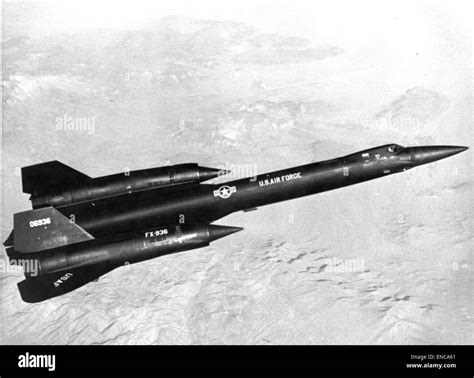
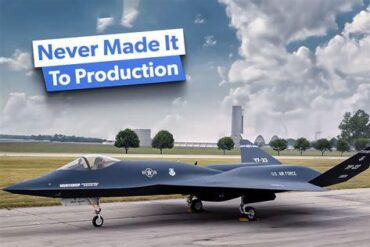
The Lockheed YF-12 occupies a fascinating place in American aviation history because it combined fighter-interceptor ambitions with the extraordinary technology that later became associated with the SR-71 Blackbird. Lockheed built only three YF-12 prototypes in the 1960s. The aircraft was intended to intercept enemy bombers at extreme altitude and speed, but it never entered production service.
On May 1, 1965, a YF-12 established a combined speed and altitude record by flying at about Mach 2.7, or 2,070 mph, at 80,257 feet. Subsequent testing demonstrated a top speed of approximately Mach 3.2, around 2,455 mph. Those numbers were extraordinary for an air-breathing aircraft, particularly one large enough to carry a crew and an operational weapons system.
The YF-12 relied on design solutions that were revolutionary for the period. Its long, narrow fuselage, specialized engine inlets, titanium construction, and careful management of airflow were essential to surviving sustained flight at extreme speed. The same family of technologies contributed to the SR-71, which became famous as a reconnaissance aircraft.
The YF-12 therefore represents a path not taken as much as a successful experiment. It showed that an operational interceptor could theoretically fly faster and higher than virtually any conventional fighter. One prototype was destroyed by fire, while another entered NASA research work. The only surviving YF-12 is displayed at the National Museum of the U.S. Air Force at Wright-Patterson Air Force Base.
Convair NB-36H Crusader: The Flying Nuclear Reactor
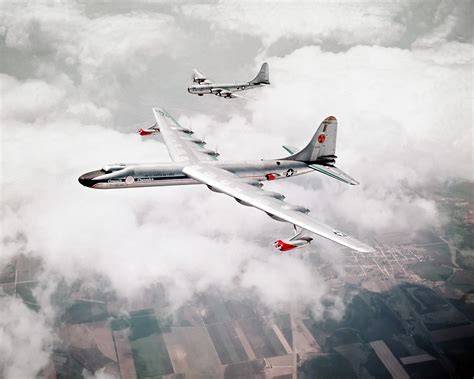
Some records involve speed or altitude. The Convair NB-36H Crusader achieved something far stranger: it became the first aircraft to carry an operating nuclear reactor in flight. The program grew out of America’s postwar interest in using nuclear energy to power aircraft, potentially allowing bombers to remain airborne for extraordinary periods.
The NB-36H was a heavily modified Convair B-36. A conspicuous radiation trefoil on the tail warned that the aircraft was carrying unusual equipment. Inside was a 35,000-pound, one-megawatt nuclear reactor, which was used to study the effects of airborne nuclear operations rather than to directly power the aircraft.
On September 17, 1955, test pilot Fitzhugh L. “Fitz” Fulton Jr. flew the NB-36H from Carswell Air Force Base in Texas toward Roswell, New Mexico, covering about 460 miles. Over its test career, the aircraft accumulated approximately 215 flight hours, giving engineers valuable information about shielding, radiation exposure, and the practical challenges of operating a nuclear reactor in an aircraft.
The concept ultimately proved impractical. The United States abandoned plans for nuclear-powered bombers as intercontinental ballistic missiles became more capable and the risks of routinely flying nuclear reactors over populated areas became increasingly difficult to justify. The NB-36H nevertheless secured a unique place in aviation history by proving that a nuclear reactor could be carried airborne and operated as part of a flying research laboratory.
North American X-15: The Hypersonic Record Holder
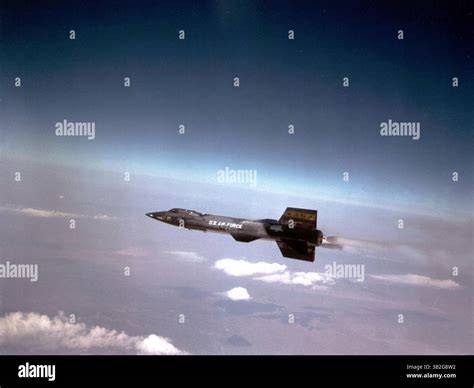
The North American X-15 took experimental flight into a regime where ordinary jet aircraft could not operate effectively. Developed with support from NASA and the U.S. Air Force, the rocket-powered X-15 was built to investigate hypersonic aerodynamics, propulsion, heating, control, and the boundary between atmospheric flight and space.
The aircraft was carried aloft beneath a Boeing B-52 and released before igniting its rocket engine. This approach allowed the X-15 to begin its powered acceleration from high altitude rather than wasting enormous amounts of propellant climbing from the runway.
Its defining speed record came when an X-15 reached Mach 6.7, approximately 4,534 mph, at 102,100 feet. That remains one of the most famous speed achievements in crewed powered flight. The X-15 had already become the first winged aircraft to reach Mach 4, Mach 5, and Mach 6, making its research program a succession of milestones rather than a single record-setting event.
Three X-15 aircraft were built, and together they completed 199 research flights. The program also reached remarkable altitudes. The highest flight climbed to approximately 354,200 feet, or more than 67 miles. Under the U.S. definition of the astronaut boundary at 50 miles, pilots who exceeded that altitude qualified as astronauts. Among those pilots was Neil Armstrong, who flew the X-15 before becoming the first human to walk on the Moon.
Rutan Model 76 Voyager: Around the World Without Refueling
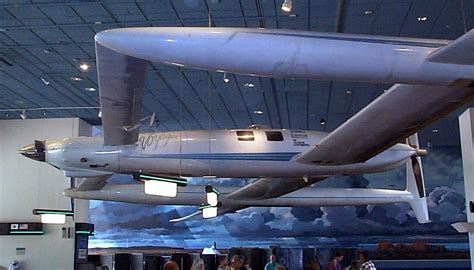
The Rutan Model 76 Voyager attacked a different aviation problem: endurance. Instead of trying to fly faster than everything else, designers sought to fly farther than any previous aircraft without landing or refueling. Dick Rutan and Jeana Yeager, who was not related to Chuck Yeager, made aviation history with a carefully engineered aircraft built around extreme fuel efficiency.
Voyager departed Edwards Air Force Base, California, on December 14, 1986. The aircraft completed the circumnavigation in 9 days, 3 minutes, and 44 seconds, covering approximately 24,986.578 miles without landing or refueling. That was a radically different challenge from a conventional around-the-world flight, because every pound of fuel had to be carried for thousands of miles.
The aircraft’s structure was crucial. Voyager had an enormous 110.8-foot wingspan while weighing only about 2,250 pounds without fuel. It incorporated 17 fuel tanks, and its takeoff weight reached roughly 9,694.5 pounds once fuel, pilots, provisions, and equipment were included.
The aircraft’s lightweight composite construction and efficient configuration made the flight possible, but the journey remained physically demanding. Fuel burn, weather, turbulence, and the need to preserve the delicate structure all had to be managed continuously. The successful return to Edwards transformed Voyager into one of the most famous long-range experimental aircraft ever built. The aircraft later received the Collier Trophy, and it is preserved by the National Air and Space Museum.
Grumman F8F Bearcat Rare Bear: The Fastest Piston-Propeller Aircraft
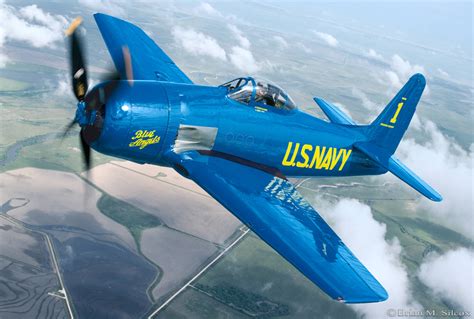
The Rare Bear proved that piston-engine aircraft were not automatically obsolete in the pursuit of speed. Built from a heavily modified Grumman F8F Bearcat, the aircraft became one of the most successful machines in unlimited air racing. Lyle Shelton transformed the former military aircraft into a specialized speed machine, replacing its original engine with a much more powerful Wright R-3350 radial engine and fitting a propeller associated with the Douglas A-1 Skyraider.
The modifications went far beyond an engine swap. The aircraft was rebuilt and refined to extract every possible advantage from its aerodynamic shape and powerplant. In air racing, where competitors operate at very low altitude and high speed, small changes in drag, cooling, weight, and propeller performance can produce major differences.
Rare Bear’s defining record came in the three-kilometer speed category, where it reached 528.33 mph, approximately Mach 0.68. That performance earned it recognition as the fastest piston-powered, propeller-driven aircraft. It also developed a remarkable competition record, winning more Unlimited races than any other aircraft.
The achievement is particularly striking because the aircraft remained below the speed of sound while approaching a velocity that would have been unimaginable for the early propeller aircraft of the 20th century. Rare Bear demonstrated how far piston propulsion could be pushed through extreme engineering, even after turbojets had transformed mainstream aviation.
NASA X-43A: Mach 9.64 With a Scramjet
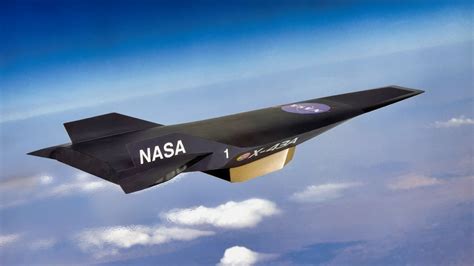
The NASA X-43A moved the record race from conventional rockets and turbojets into air-breathing hypersonic propulsion. Developed under NASA’s Hyper-X program, the uncrewed vehicle was designed to test a scramjet, an engine that compresses incoming air through the vehicle’s high-speed motion rather than using conventional rotating compressor stages.
On November 16, 2004, an X-43A reached approximately Mach 9.64, or 6,363 mph, at 110,000 feet. The result established an extraordinary record for a jet-powered, air-breathing vehicle. NASA had hoped to reach Mach 10, but the demonstrated Mach 9.64 performance was still a landmark in hypersonic research.
The X-43A was not a reusable aircraft. Each vehicle was designed for a single experimental flight, and after completing its powered portion of the mission it was deliberately sent into the Pacific Ocean. This made the program fundamentally different from the X-15 or later reusable spaceplanes.
The record also revealed the difficulty of hypersonic propulsion. A scramjet must operate while air rushes through the engine at extreme velocity, and the vehicle must remain stable while exposed to intense aerodynamic heating. NASA’s Hyper-X program ended after the X-43A series, but its data became part of the broader knowledge base for future hypersonic research.
Boeing X-37B: Records Measured in Years, Not Seconds
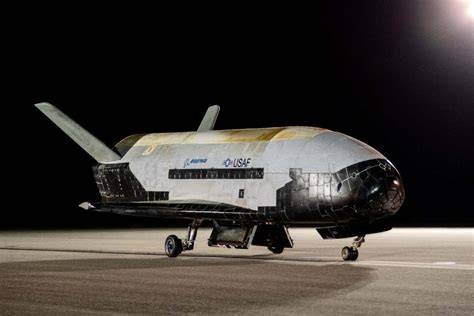
The Boeing X-37B represents the latest stage in this progression because its most remarkable records are measured not in miles per hour, but in days spent in orbit. Operated by the U.S. military, the uncrewed reusable spaceplane launches vertically on a rocket and returns to Earth by landing on a runway, combining spacecraft operations with an aircraft-like recovery method.
The vehicle’s missions have repeatedly extended orbital endurance. On its fifth mission, the X-37B remained in space for 780 days before landing on October 27, 2017. Its sixth mission pushed the duration even farther, completing 908 continuous days in orbit before returning to Earth on November 13, 2022.
Across its missions, the X-37B has accumulated more than 4,000 days in orbit and traveled more than 1.3 billion miles, demonstrating the durability of reusable space hardware. Its operational purpose remains only partly visible to the public because specific payload details and some mission objectives are classified.
The eighth mission launched on August 21, 2025, continuing a program that has steadily expanded the demonstrated endurance of reusable orbital vehicles. Unlike the short flights of the Wright Flyer or the seconds-long record runs of high-speed research aircraft, the X-37B’s achievement is persistence. It shows how the definition of an experimental aircraft record has expanded from simply flying farther or faster to surviving and operating for years beyond Earth’s atmosphere. Its endurance highlights reusable orbital aircraft’s expanding frontier.