In the early 1980s, American Airlines faced mounting financial pressure and sought creative solutions to raise quick capital. Among their boldest innovations was the AAirpass, a membership-based ticketing experiment that offered an almost mythical promise: unlimited first-class travel for life. What began as a daring financial maneuver quickly spiraled into a cautionary tale of corporate miscalculation, elite abuse, and multimillion-dollar fallout.
The Birth of AAirpass: A Lifeline for a Struggling Airline
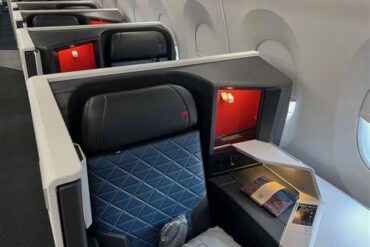
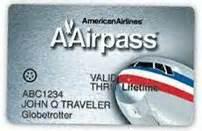
Launched in 1981, the AAirpass was designed as an ultra-premium loyalty program. For an upfront payment of $250,000—roughly $864,660 in 2024 dollars—pass holders received lifetime, unrestricted, first-class access to any American Airlines flight, anywhere in the world. Buyers could add a companion pass for another $150,000, making it a $400,000 luxury travel investment for two.
At its core, the idea was simple: inject fast cash into the airline while fostering customer loyalty among high-net-worth individuals. Early adopters included billionaire tech mogul Michael Dell, Dallas Mavericks owner Mark Cuban, baseball legend Willie Mays, and America’s Cup winner Dennis Conner—all of whom found immense value in the freedom to fly anytime, anywhere.
The strategy worked—temporarily. The program attracted ultra-wealthy clientele, generating an immediate infusion of millions. But the brilliance of the model masked its fatal flaw: it vastly underestimated the long-term liability such unrestricted travel entailed.
Rising Costs and Disappearing Margins
By 1990, American Airlines increased the price of the AAirpass to $600,000—about $1.44 million in 2024 dollars—and again in 1993, when the cost surged to $1.01 million (equivalent to over $2.2 million today). Despite these hikes, the economic return still couldn’t offset the operational losses from frequent fliers who traveled constantly, often on the most expensive routes.
In 1994, after recognizing the mounting red ink, the airline ceased sales of the unlimited AAirpass. An extravagant one-time resurrection appeared in the 2004 Neiman Marcus Christmas catalog, where American Airlines offered the pass for a staggering $3 million, or $4.99 million today, and a companion version for $2 million. Not a single unit sold.
How the AAirpass Became a Corporate Nightmare
Only 66 unlimited lifetime passes were sold, yet these few customers disproportionately impacted the airline’s financials. The true cost didn’t lie in just the free tickets—but in mileage accrual, first-class seating costs, companion benefits, and tax and airport fee coverage, all handled by the airline.
Among the most infamous of these high-flying users were Steven Rothstein and Jacques E. Vroom Jr.—two men who became case studies in corporate regret.
Steven Rothstein: From VIP to Persona Non Grata
Steven Rothstein, a Chicago financier, purchased his AAirpass in 1987 for $233,509.93 after applying a discount for previous mileage purchases. He later acquired a companion pass for another $150,000, with customized contract provisions allowing flexible use for friends and associates.
For over two decades, Rothstein flew obsessively—sometimes multiple flights a day, even booking empty seats under aliases to keep rows clear for privacy or extra luggage. At his peak, he made over 10,000 flights, costing American Airlines more than $1 million annually.
On December 13, 2008, while preparing to board a flight to Bosnia, Rothstein was approached at Chicago O’Hare and handed a termination letter. The airline accused him of fraudulent behavior—particularly manipulating the companion seat system, including assigning names to fake passengers to reserve entire rows.
Rothstein sued, alleging breach of contract, and cited an earlier personal note from then-CEO Robert Crandall, who had promised, “you can count on us to keep the Company solid, and to honor the deal.” The legal battle dragged on due to American’s Chapter 11 bankruptcy, and eventually, in 2012, both parties quietly settled out of court.
Jacques Vroom: 38 Million Miles and a Lifetime Ban
Jacques E. Vroom Jr., a Dallas marketing executive, purchased his unlimited AAirpass and companion option for $356,000 in 1989. In just under two decades, Vroom amassed nearly 38 million miles, frequently globe-trotting with his companion pass.

In 2008, at London Heathrow, airline security personally delivered his termination letter. The reason: Vroom allegedly sold access to his companion seat, violating American Airlines’ 1994 Tariff Rule 744. Vroom countersued, claiming the tariff was enacted after his purchase, and accused the airline of slander.
His case remains legally unresolved due to the airline’s bankruptcy proceedings. But the damage was clear—what was once a marketing tool had become a legal liability and financial hemorrhage.
The Revenue Integrity Crackdown of 2007
The tipping point for the airline came in 2007, when a newly formed Revenue Integrity Unit began analyzing the data. It concluded that select AAirpass holders, including Rothstein and Vroom, were bleeding the airline dry, each costing more than $1 million annually. American estimated that tens of millions of miles had been flown on seats that were not only free, but came with first-class perks, elite lounges, meals, and fees absorbed by the company.
What had once been celebrated as the “golden ticket” had turned into what executives called “a huge disaster.”
The Decline and Retirement of the Program
After ending the original unlimited AAirpass in 1994, American Airlines launched a rebranded version under the name AirPass, which was significantly more conservative. Instead of offering lifetime travel, it functioned as a prepaid fare subscription for corporate clients and high-frequency business travelers. Passengers paid annual fees for fixed-rate travel and lounge access, but without the open-ended generosity of the original model.
In November 2022, American Airlines ceased offering AirPass to new customers and began a gradual phase-out. As of March 31, 2024, the airline officially stopped renewing or honoring new subscriptions. However, original unlimited AAirpass holders—those not terminated—still hold valid, active passes.
Why AAirpass Failed—and What It Revealed
The story of AAirpass isn’t just about corporate miscalculation. It exposed deeper flaws in how unlimited-use programs can be exploited, especially when contractual loopholes, lack of oversight, and customer entitlement collide. For American Airlines, the program—while visionary—was ultimately unsustainable. What they intended as a loyalty strategy became a cautionary tale taught in business schools.
Key Lessons from the AAirpass Saga:
- Unlimited does not mean predictable: High-value customers behaved in ways no algorithm or revenue model foresaw.
- Contractual ambiguity can be weaponized: The companion seat clause became a legal grey zone.
- Short-term liquidity can cause long-term pain: The immediate cash boost in the 1980s created decades of mounting costs.
- Customer goodwill can become hostile: When benefits were revoked, legal backlash followed.
A Legacy Etched in Aviation Folklore
Decades later, AAirpass still captures the imagination of aviation enthusiasts, financial analysts, and loyalty program architects. It has been featured in documentaries, investigative reports, and even pop culture retellings, including op-eds from Rothstein’s own daughter.
The AAirpass represents a moment in airline history when risk-taking met reality, and when the dream of flying forever ran headlong into the hard ceiling of corporate economics. Today, it remains a legend—a $250,000 gamble that gave birth to the most powerful ticket in the sky, and nearly grounded its creator.