Commercial aviation usually rewards the middle ground. Aircraft that are neither too large nor too small tend to attract the biggest orders because they can serve the widest range of routes while keeping structural weight, fuel consumption, and passenger capacity in balance. Yet both Boeing and Airbus have repeatedly pushed their aircraft families toward the extremes, producing unusually long stretches and unusually short variants that solved specific airline requirements but struggled to attract a broad customer base.
That history has left the industry with three remarkably rare passenger aircraft. The Boeing 757-300, Boeing 767-400ER, and Airbus A318 were all members of highly successful aircraft families, but each became an outlier within its respective range. Across their entire production lives, Boeing and Airbus delivered only 173 examples of these three variants combined. Today, scheduled passenger operations have narrowed to just three airlines: United Airlines, Delta Air Lines, and Air France, with each carrier preserving a different piece of this unusual chapter in commercial aviation.
The story is especially interesting because none of these aircraft was simply a commercial mistake. Each was designed around a genuine market requirement. The problem was that the same engineering decisions that made the aircraft useful to launch customers also limited their appeal to other airlines. Their stories reveal why aircraft manufacturers generally prefer the middle of a family rather than its outer edges.
Boeing 757-300: The Longest Single-Aisle Passenger Jet
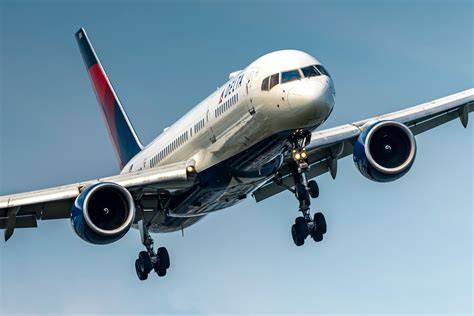
The Boeing 757-300 represents perhaps the most dramatic example of stretching an existing narrowbody platform. Boeing extended the 757-200 by 23 feet 4 inches (7.11 meters), producing an aircraft measuring 178 feet 7 inches (54.43 meters) from nose to tail. That made the 757-300 the longest single-aisle passenger aircraft ever produced.
Boeing did not simply add seats and leave the rest of the aircraft untouched. The extreme stretch required structural reinforcement involving the wings, landing gear, and center fuselage. The resulting aircraft could accommodate as many as 295 passengers, making it exceptionally attractive on dense routes where airlines could keep a large number of seats filled.
The economics could be impressive. A long, narrow aircraft carrying nearly 300 passengers could generate very low seat-mile costs when operating at high load factors. For airlines serving busy domestic markets, particularly routes connecting major hubs with leisure destinations, the 757-300 offered an unusual combination of capacity and narrowbody operating characteristics.
But the aircraft also demonstrated the operational penalties associated with an extreme stretch. Boarding such a long single-aisle aircraft through a limited number of doors can take considerable time. Gate requirements and airport infrastructure can also become constraints. More importantly, the aircraft’s length creates different rotation and ground-handling considerations from those of the shorter 757-200.
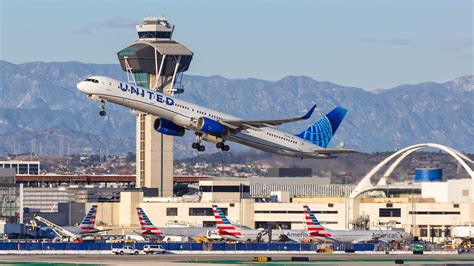
The operator base eventually became extremely small. Condor retired its final 757-300 aircraft in late 2025, following the earlier withdrawal of the type by other operators including Icelandair. That left United Airlines and Delta Air Lines as the two scheduled passenger carriers still flying the aircraft.
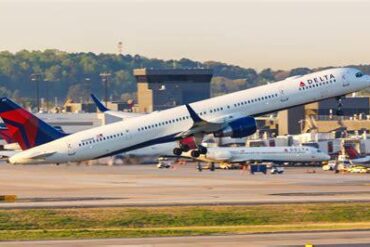
United operates 21 Boeing 757-300s, giving it the largest active fleet of the type. Delta operates another 16, meaning the two US airlines account for 37 of the 55 aircraft Boeing originally produced between 1998 and 2004. Their continued presence is largely tied to routes where high-density capacity remains valuable.
United’s 757-300s can be found on major domestic networks associated with hubs such as Denver International Airport and Chicago O’Hare International Airport, while Delta makes extensive use of its fleet from Atlanta. Leisure-heavy markets such as Orlando, Las Vegas, Tampa, and other major US destinations remain natural territory for the aircraft.
Boeing 767-400ER Was Built for a Very Specific Market
The Boeing 767-400ER followed a completely different path. Rather than being developed for a broad worldwide market, the aircraft emerged from a specific fleet-replacement requirement involving Delta Air Lines and Continental Airlines.
Boeing stretched the 767-300ER by 21 feet 1 inch (6.43 meters), creating an aircraft measuring 201 feet 4 inches (61.37 meters) long. It also received aerodynamic raked wingtips, increasing the wingspan to 170 feet 4 inches (51.92 meters). These changes helped create a larger and more modern 767 variant capable of carrying additional passengers while retaining much of the family’s existing operating infrastructure.
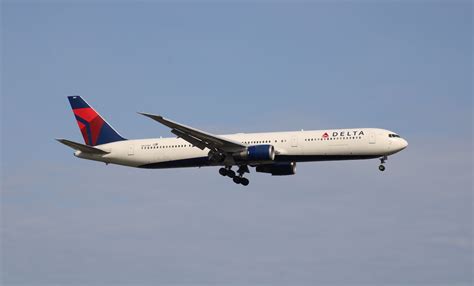
Yet the production run was extraordinarily small. Boeing built only 38 767-400ERs. Delta received 21 aircraft, Continental received 16, and one aircraft was delivered for VIP transportation to the Kingdom of Bahrain.
The type nevertheless became an important aircraft for both launch airlines. Delta used the 767-400ER on major long-haul routes, particularly across the Atlantic, while United inherited Continental’s aircraft following their merger. The aircraft offered more passenger capacity than the 767-300ER while avoiding the operating scale of larger widebodies such as the Boeing 777.
The cockpit also represented an important step forward. The 767-400ER incorporated updated flight deck displays influenced by the Boeing 777, while its enlarged cabin allowed airlines to provide more premium seating on routes where demand justified additional capacity but did not necessarily require a much larger aircraft.
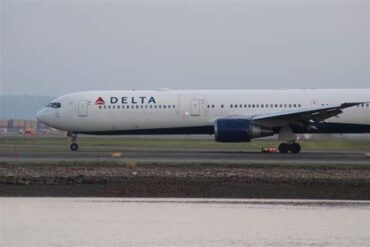
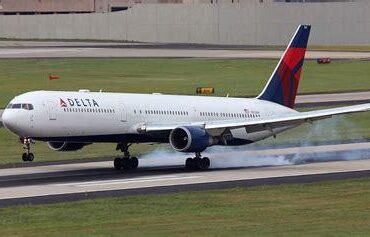
Today, United Airlines and Delta Air Lines remain the only scheduled passenger operators of the 767-400ER. United’s 16 aircraft are particularly associated with Newark Liberty International Airport and Washington Dulles International Airport, serving transatlantic destinations and selected long-haul domestic markets such as Hawaii.
Delta’s 21 aircraft continue to operate on important international routes from hubs including New York JFK and Atlanta, linking the United States with major European destinations.
The 767-400ER’s timing ultimately became one of its defining characteristics. It entered service just as the commercial aviation industry was beginning to move toward newer-generation aircraft. The arrival of aircraft such as the Boeing 787 Dreamliner changed the economics of long-haul fleet planning, leaving the 767-400ER as an unusually capable aircraft from an earlier generation.
United has indicated that it plans to retire its remaining 767 fleet by 2030, allowing newer long-range aircraft to take over many of the missions once assigned to the veteran widebody.
Airbus A318: The Smallest Airbus A320 Family Member
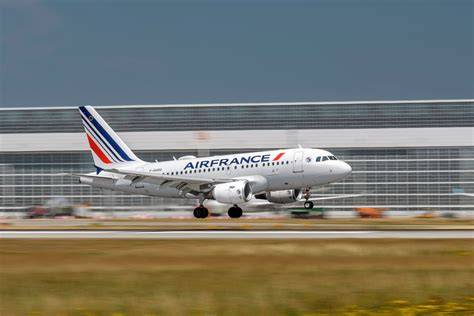
At the opposite extreme is the Airbus A318, an aircraft created by shrinking rather than stretching an established platform. At just 103 feet 2 inches (31.45 meters) long, the A318 is 6 feet 3 inches (1.90 meters) shorter than the A319.
Airbus positioned the A318 for markets requiring roughly 100 to 120 seats, where airlines might otherwise have selected a regional jet or a smaller narrowbody. On paper, the concept appeared logical: take the highly successful A320 family and create a smaller member while retaining fleet commonality.
The difficulty was structural efficiency. Shrinking a large aircraft does not automatically shrink every component in proportion to passenger capacity. The A318 retained substantial elements of the A320 family’s architecture, including a wing and landing gear designed around larger aircraft.
That meant the aircraft could carry fewer passengers while retaining a significant amount of structural weight. Fuel consumption and airport-related costs therefore became less favorable on a per-seat basis than airlines could obtain from aircraft designed specifically for smaller passenger loads.
Only 80 A318s were produced between 2001 and 2013. The aircraft nevertheless found several distinctive roles. Its relatively small size and steep-approach capability made it particularly useful for specialized operations, including routes where airport characteristics favored an aircraft with unusual approach performance.
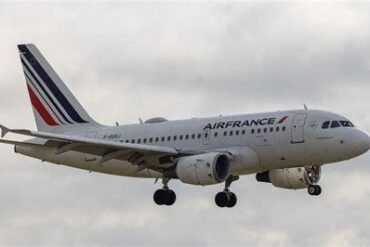
Air France became the A318’s final scheduled passenger operator after the retirement of the type by TAROM. The French airline once operated as many as 18 examples, primarily on domestic and European short-haul routes.
Today, however, the A318 is approaching the end of its commercial career. Air France has reduced the fleet to only four active aircraft, operating from Paris Charles de Gaulle Airport to European destinations including Madrid, Venice, and Bologna.
The arrival of the more efficient Airbus A220-300 has accelerated that transition. Air France is expected to complete the A318’s retirement by early 2027, closing the book on Airbus’s smallest original A320 family member in scheduled passenger service.
Why Extreme Aircraft Variants Rarely Become Best Sellers
The three aircraft demonstrate two sides of the same engineering problem. When an aircraft is stretched dramatically, capacity increases faster than some operational characteristics can adapt. When an aircraft is heavily shortened, structural weight does not necessarily disappear at the same rate as passenger capacity.
For the A318, the central challenge was the empty-weight penalty per seat. A smaller cabin still had to carry major structural components inherited from the larger A320 family. That reduced the economic advantage of using a narrowbody aircraft in the lower-capacity segment.
The 757-300 faced a different problem. Its long fuselage created tremendous capacity, but the aircraft’s length affected boarding, airport compatibility, and handling. The type could be highly effective when full, yet airlines needed routes with consistently strong demand to exploit its capacity.
The 767-400ER illustrates another issue: market timing. The aircraft was a practical answer to the needs of its launch customers, but it arrived during a period when the industry was moving toward newer widebody technology. Its limited customer base meant Boeing never achieved the production scale associated with the more successful members of the 767 family.
This explains why the middle variants of aircraft families are generally more successful. The Airbus A320, for example, offers a capacity and range combination that fits thousands of routes. The Boeing 787-9 similarly occupies a broad segment of the long-haul market without pushing the architecture to an extreme.
Modern manufacturers have increasingly adopted purpose-built aircraft when a market is large enough to justify a new design. The Airbus A220 family, for example, was developed specifically around the smaller end of the mainline narrowbody market rather than being created simply by shrinking the A320.
Where Passengers Can Still Fly These Rare Boeing and Airbus Jets
For aviation enthusiasts, the remaining opportunities are becoming increasingly limited. The Boeing 757-300 is now essentially a US domestic experience, with United and Delta providing the remaining scheduled passenger flights. United’s aircraft are concentrated around major hubs including Denver and Chicago, while Delta’s fleet remains closely associated with Atlanta and high-volume leisure markets.
The Boeing 767-400ER offers a different opportunity because both remaining operators continue to use the type internationally. United operates the aircraft from Newark and Washington Dulles on routes including Europe and Hawaii, while Delta continues to deploy its fleet on major transatlantic services from New York JFK and Atlanta.
The Airbus A318 has the narrowest remaining window. Air France’s final four aircraft operate short-haul European routes from Paris Charles de Gaulle, with destinations including Madrid, Venice, and Bologna. With retirement planned for early 2027, the remaining aircraft represent some of the final scheduled passenger operations of the smallest A320 family member.
A Unique Chapter in Commercial Aviation
The Boeing 757-300, Boeing 767-400ER, and Airbus A318 were never mass-market aircraft, but their small numbers should not obscure the roles they played. Each was created because an airline saw value in modifying an existing platform rather than waiting for an entirely new aircraft.
That strategy made sense in an era when fleet commonality, existing maintenance infrastructure, pilot type ratings, and development costs carried enormous weight. A stretched or shortened derivative could give an airline a tailored capacity solution without requiring the complete transition to a new aircraft family.
Their eventual disappearance reflects how commercial aviation has evolved. Airlines now place greater emphasis on fuel efficiency, structural optimization, range flexibility, and aircraft designed around specific capacity categories. Extreme derivatives can still be useful, but the economics have to be unusually compelling to justify their compromises.
The final 757-300s, 767-400ERs, and A318s therefore represent more than three obscure aircraft variants. They are physical reminders of an era when manufacturers were willing to push a successful airframe family toward its limits. With only three scheduled passenger airlines preserving these three rare types, their remaining years are becoming an increasingly unusual opportunity to experience aircraft that were once experimental solutions to very specific airline problems.