As inflight Wi-Fi has shifted from a premium extra to an expected part of the modern airline experience, the quality of an aircraft’s internet connection can increasingly shape how passengers view an airline. Travelers now expect to browse the web, send messages, stream content, and handle work while flying, making speed, consistency, and coverage important parts of the onboard experience.
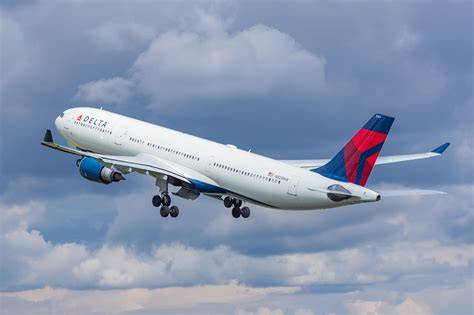
That trend makes the latest development from Viasat particularly significant for Delta Air Lines. The satellite communications company has confirmed that its newest satellite, VS3 F2, has entered commercial service across the Americas. Because Delta currently uses Viasat technology for its onboard Wi-Fi, the additional network capacity could eventually translate into faster and more reliable connections for passengers.
The timing is also notable because Viasat’s new satellite is designed to strengthen connectivity in regions where demand continues to grow. VS3 F2 primarily expands capacity across the Americas while extending coverage toward the Pacific, potentially improving the experience for Delta passengers on both domestic and long-haul services. However, the benefits will not necessarily appear on Delta aircraft immediately.
Viasat VS3 F2 Satellite Enters Service Across the Americas
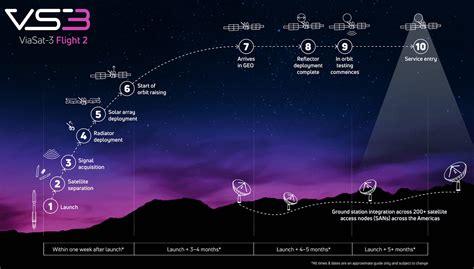
Viasat confirmed that VS3 F2 is now operational, marking another important stage in the expansion of its third-generation satellite network. The company said the satellite has entered service across the Americas, significantly increasing its network capacity while adding greater flexibility and resilience.
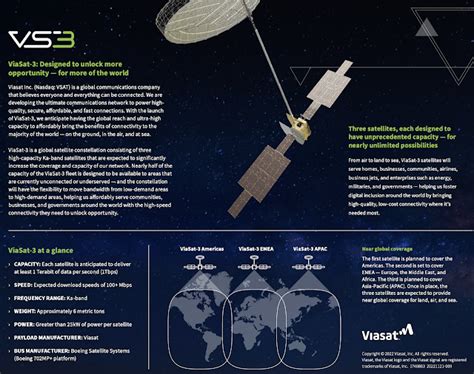
The satellite belongs to Viasat’s VS3 constellation, which the company has positioned as a major technological step in commercial satellite communications. VS3 satellites use advanced adaptive beam-forming technology, allowing network resources to be directed more effectively toward areas experiencing high demand.
Viasat Chairman and CEO Mark Dankberg described the VS3 satellites as among the world’s most advanced commercial satellites in terms of adaptive beam forming. He also highlighted improvements involving solar power generation and thermal management, technologies that are increasingly important as satellite networks handle substantially larger amounts of data.
With VS3 F2 now operational, Viasat has effectively added more capacity to a network already serving aviation and other commercial and government customers. For airlines, additional satellite capacity can be especially valuable because thousands of passengers may simultaneously compete for bandwidth during busy flights.
What VS3 F2 Could Mean for Delta Wi-Fi Speeds
For Delta Air Lines passengers, the most important question is straightforward: will the new Viasat satellite make onboard Wi-Fi faster?
Aviation expert Ben Bearup indicated that Delta Wi-Fi speeds, along with those of several other airlines using Viasat, should receive a boost as the additional satellite capacity becomes available to aircraft. The key word, however, is should. VS3 F2 entering service does not automatically mean every Delta aircraft immediately receives a faster connection.
The satellite must first be integrated into the airline’s operational connectivity network and made available to equipped aircraft. Bearup noted that he did not know precisely when the additional capacity would become active on Delta aircraft, although he expected the change to happen relatively soon.
The potential improvement is nevertheless substantial. Reported expected upload speeds associated with the new connectivity capability have reached around 100 MB per second, although real-world passenger speeds will depend on several factors, including aircraft equipment, network demand, satellite capacity, and the number of passengers using the connection simultaneously.
For passengers, the practical benefit could be less about achieving a specific headline speed and more about maintaining a stable connection when an aircraft is heavily occupied.

Pacific Coverage Could Benefit Delta’s Transpacific Routes
One of the more interesting aspects of VS3 F2 is its geographic role. Although the satellite primarily serves the Americas, its coverage also extends westward over significant portions of the Pacific Ocean. That matters to Delta because the airline operates an extensive network connecting the United States with destinations across Asia.
As Delta aircraft travel west across the Pacific, the VS3 network can provide continuity between satellites. VS3 F2 covers one portion of the network, while VS3 F3 entered service across the Asia-Pacific region in August. The ability to transition between the two satellites should help maintain connectivity as aircraft move between coverage areas.
That could be particularly useful for passengers working during long-haul flights. A reliable connection allows travelers to participate in online meetings, exchange large files, communicate with colleagues, and perform other tasks that become increasingly difficult when satellite coverage is inconsistent.
The improvement also illustrates why satellite constellation design matters. Rather than relying on one spacecraft to provide connectivity over an enormous geographical area, multiple satellites can collectively provide greater capacity and more flexible coverage.
Delta Is Already Looking Beyond Viasat
Despite the potential short-term improvement, Viasat’s relationship with Delta is not expected to define the airline’s long-term Wi-Fi strategy. Delta has already selected Amazon Leo for its next generation of inflight connectivity.
Delta plans to begin installing Amazon Leo technology on 500 aircraft from 2028, with the airline intending to work with Amazon to expand connected travel features, including its Delta Sync Wi-Fi and seatback experiences.
That means VS3 F2 could represent an important intermediate improvement for Delta passengers rather than the beginning of a permanent Viasat-based strategy. Until the airline’s future connectivity system becomes widespread, however, improvements to its existing Viasat network remain highly relevant.
The transition also highlights how quickly the competitive landscape for airline Wi-Fi is changing. Satellite operators are adding capacity, airlines are installing new antennas and network equipment, and passengers increasingly judge connectivity as part of the overall flight experience rather than as an optional luxury.
For Delta travelers, the immediate significance of Viasat VS3 F2 is therefore simple: the new satellite gives the existing network more capacity and stronger coverage, particularly across the Americas and parts of the Pacific. Once Delta activates the additional capacity on compatible aircraft, passengers could see faster and more consistent Wi-Fi, even as the airline prepares for its larger connectivity transition beginning in 2028.