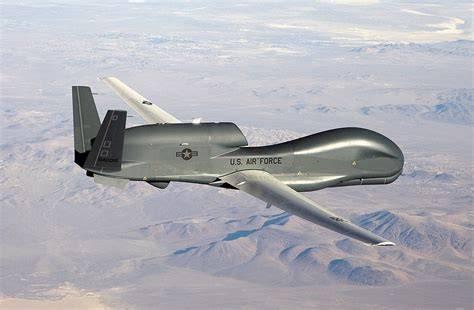
The Northrop Grumman RQ-4 Global Hawk has spent more than two decades performing one of the most demanding jobs in military aviation: collecting intelligence, surveillance, reconnaissance, and target-acquisition data from high altitude for extraordinarily long periods. First introduced in 2001, the unmanned aircraft became an important part of the US Air Force’s intelligence architecture even as technology moved toward stealthier aircraft, satellites, and distributed sensors.
The Global Hawk’s longevity is especially notable because the Air Force has repeatedly sought to retire it. The service previously planned to eliminate the fleet in the late 2020s, arguing that money would be better directed toward newer capabilities designed for increasingly contested battlespaces. Yet congressional resistance has repeatedly complicated that plan, reflecting a broader concern that removing an existing sensor before its successors are fully mature could create an avoidable intelligence gap.
That tension explains why the RQ-4 may remain relevant into the 2030s. The aircraft is undeniably vulnerable against sophisticated air defenses and modern fighter aircraft, but vulnerability in one type of mission does not make an aircraft useless in every mission. The United States faces a worldwide collection problem involving peer competitors, regional conflicts, maritime activity, border surveillance, and other situations in which a long-endurance aircraft can still provide valuable information without penetrating heavily defended airspace.
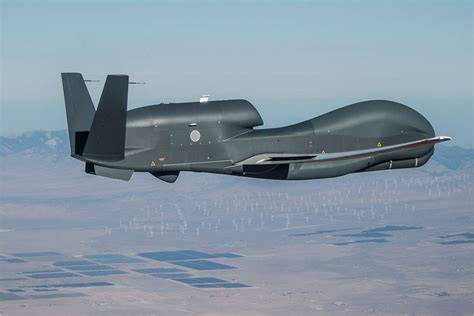
Why The US Air Force Wanted To Retire The RQ-4 Global Hawk
The Air Force’s retirement argument is closely connected to the changing character of modern warfare. The RQ-4 was designed around the advantages of altitude, endurance, sensors, and relatively safe operations in environments where an opponent could not easily threaten it. That formula remains useful in permissive airspace, but it becomes much less attractive when an adversary possesses long-range surface-to-air missiles, advanced fighters, powerful electronic warfare, and increasingly capable air-to-air weapons.
The problem is therefore not simply that the Global Hawk is old. Its larger limitation is that it was never intended to survive inside the most dangerous parts of a high-end conflict. Against a country such as China, a large, non-stealthy aircraft operating within the engagement range of sophisticated fighters and missiles could face serious risks. Budget documents have explicitly characterized the RQ-4 as unable to compete in a contested environment, reinforcing the Air Force’s argument that scarce modernization funds should support systems designed for that threat.
The retirement plan also involves the Lockheed U-2 Dragon Lady, another high-altitude intelligence platform that has been targeted for years. From the Air Force’s perspective, continuing to fund two legacy systems while simultaneously developing next-generation ISR capabilities can appear inefficient. Every dollar devoted to maintaining older aircraft is a dollar that cannot be spent elsewhere, particularly as the service prepares for programs involving advanced fighters, bombers, autonomous aircraft, and space-based sensing.
Why Congress Has Resisted Rapid Global Hawk Retirement
Congress has approached the issue from a different risk perspective. Rather than asking only whether the Global Hawk can survive against a peer adversary, lawmakers have to consider whether the United States has enough ISR capacity and redundancy across the full spectrum of operations. An aircraft can be unsuitable for penetrating Chinese airspace and still be extremely useful hundreds or thousands of miles away from that threat.
That distinction is important because American military operations are not limited to a single hypothetical war. Global Hawks can support surveillance in permissive environments, monitor the Middle East, contribute to observation in international airspace, and conduct missions where endurance matters more than stealth for commanders worldwide. Their ability to remain airborne for long periods can also reduce the need to repeatedly launch and recover manned aircraft for persistent collection.
Congressional efforts to restrict retirement therefore reflect a hedge against uncertainty. If a replacement system experiences delays, costs more than expected, encounters technical problems, or performs differently from projections, the existing fleet provides an available capability. The same logic applies if an adversary successfully disrupts another part of the intelligence network. A diverse collection architecture can be more resilient than one optimized around a small number of exceptionally advanced systems.
The Remaining RQ-4 Fleet And Block 40 Sensors
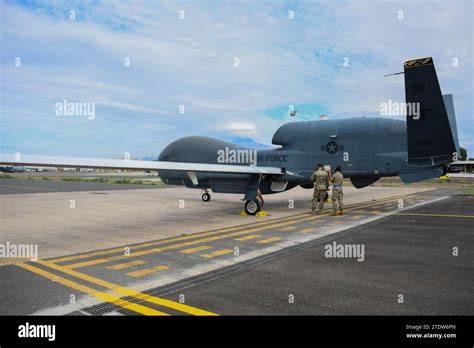
The Air Force originally planned to acquire 63 Global Hawks, but the program was ultimately reduced to 45 aircraft. Earlier Block 10 aircraft and signals-intelligence variants have already left service, leaving a smaller force centered on the more capable Block 30 and Block 40 versions. According to the supplied budget material, 27 aircraft remain in these configurations, including 18 Block 30s and 11 Block 40s.
The Block 40 aircraft are particularly relevant because they carry the Multi-Platform Radar Technology Insertion Program, or MP-RTIP, which provides ground-moving-target indication and related surveillance capabilities. That sensor makes the aircraft more than a simple high-altitude camera platform. It can contribute to a broader operational picture by tracking activity across large areas and feeding information into networks used by commanders and other intelligence assets.
The fleet’s age also does not automatically mean its sensors have reached the end of their useful life. Aircraft can receive hardware and software improvements, cybersecurity updates, communications changes, and other modifications that extend operational relevance. The practical question is whether those investments produce enough useful capability to justify sustaining the airframes while newer systems gradually assume more demanding missions.
The MQ-4C Triton Shows What Comes Next
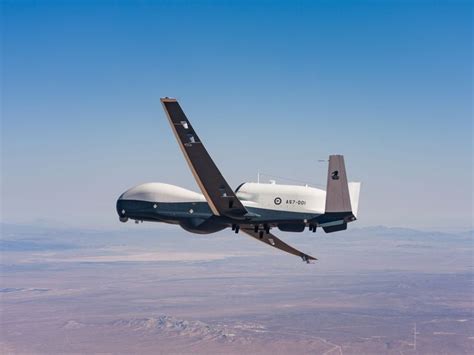
The Global Hawk’s story is also connected to its naval relative, the Northrop Grumman MQ-4C Triton. Derived from the same broad aircraft family, Triton is being developed for maritime surveillance and remains an active procurement program. The US Navy plans a substantial fleet, while Australia operates the type and additional international interest has emerged through NATO-related plans.
The Triton program demonstrates that the basic high-altitude, long-endurance concept has not been discarded. Instead, it is being adapted to different operational requirements and paired with newer sensors, communications, and mission systems. Current funding described in the reference material includes development of capabilities such as ground-moving-target-indication radar modes, enhanced electro-optical and infrared detection, improved SIGINT collection, and stronger communications resilience in denied environments.
The Global Hawk Is Becoming Part Of A Family Of Systems
The RQ-4 is not really being replaced by one new aircraft. Instead, its traditional ISR role is being distributed across a family of systems. Penetrating aircraft, stealthy unmanned platforms, fighter sensors, bombers, satellites, commercial data sources, ground radars, warships, and allied systems can all contribute pieces of the same intelligence picture.
The concept is attractive because it avoids placing too much dependence on one exquisite platform. An F-35, for example, is not merely a fighter that receives information from other aircraft. Its sensors allow it to act as a networked collection node. Future systems associated with the F-22 modernization effort, Collaborative Combat Aircraft, the F-47 program, and the B-21 bomber could further expand that distributed sensing architecture.
Yet sensor fusion is difficult. Collecting information from dozens of systems does not automatically create a coherent picture. Data must be transmitted, processed, authenticated, shared, and interpreted rapidly, often while an adversary is attempting to jam communications or deceive sensors. Until the broader architecture reaches sufficient maturity, established platforms such as the Global Hawk can provide useful capacity and operational experience.
Space ISR Creates Another Reason To Keep The RQ-4
The US Space Force is central to the long-term transformation of American ISR. Space-based sensors can potentially provide persistent coverage across enormous geographic areas without requiring traditional forward air bases. They can also perform functions that are difficult or expensive for individual aircraft to sustain continuously.
However, treating space as an automatic replacement for airborne surveillance introduces another strategic risk. China and Russia have developed or pursued counter-space capabilities, including systems designed to disrupt, degrade, or attack satellites. Jamming, dazzling, cyber operations, and kinetic anti-satellite weapons can all complicate assumptions about uninterrupted access to orbital sensors.
That makes the Global Hawk useful as a hedge even if it is not a suitable platform for penetrating heavily defended territory. If satellites are disrupted, communications networks degraded, or other advanced ISR assets temporarily unavailable, an existing aircraft fleet can provide another source of information. Diversification becomes the central principle: the objective is not to make every platform equally capable, but to prevent the entire intelligence system from depending on one vulnerable technological pathway.

Could The RQ-4 Really Reach 2033?
The supplied material points to a potential service life extending beyond the previously discussed retirement date. It describes a pre-solicitation covering development, modernization, retrofit, and sustainment activities from January 2028 through June 2033, with an option for an additional six months. Because that document is described as appearing in August 2027, it should be treated as a future-looking element of the reference material rather than as a currently verifiable September 2026 event.
Even without relying on that future document, the broader direction is clear: congressional restrictions on early retirement can keep the fleet available while replacement capabilities mature. A potential 2033 endpoint would therefore represent a gradual transition rather than a reversal of the Air Force’s modernization strategy.
The distinction matters. Keeping the Global Hawk does not necessarily mean the Air Force believes it can fight through China’s integrated air defenses. Instead, the aircraft can be assigned to missions where its limitations are manageable and its endurance remains valuable. That could allow more advanced and expensive systems to concentrate on missions where survivability is genuinely critical.
Why Legacy ISR May Still Matter In The 2030s
The RQ-4 Global Hawk illustrates a recurring problem in military modernization: the best system for one mission is not automatically the best system for every mission. A platform that is too vulnerable for one battlefield can remain valuable for border surveillance, maritime monitoring, crisis observation, training, or intelligence collection in permissive airspace.
Its future will therefore depend less on whether the aircraft remains technologically dominant and more on how the United States builds a resilient ISR portfolio. If space systems, stealth aircraft, autonomous platforms, allied sensors, and networked fighters mature as planned, the Global Hawk’s role should gradually narrow. But if those systems encounter delays or vulnerabilities, retaining a proven long-endurance aircraft provides additional breathing room.
The likely significance of a Global Hawk fleet operating into the 2030s is consequently not that an old drone has somehow defeated the march of technology. It is that military intelligence systems rarely transition cleanly from one generation to another. Until the replacement network can reliably provide the coverage, persistence, resilience, and sensor capacity demanded by commanders, the aircraft already sitting on the ramp can remain surprisingly difficult to replace.
For the US Air Force, that makes the RQ-4 less a symbol of failed modernization than a practical insurance policy. Its days as a premier high-altitude ISR platform may be numbered, but its ability to generate persistent intelligence in environments where survivability is less demanding could keep the Global Hawk relevant well beyond the retirement dates once associated with the fleet.