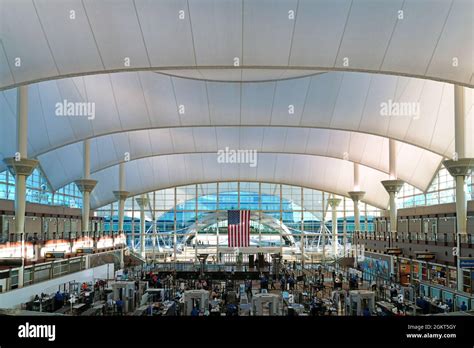
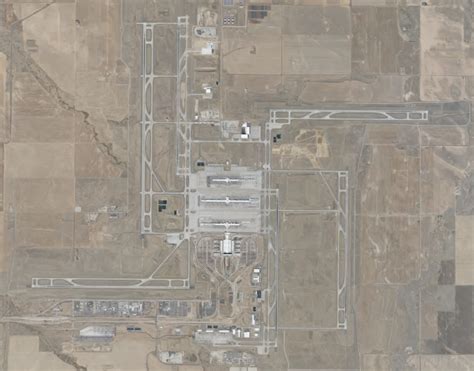
Denver International Airport was designed to represent the future of aviation. When it opened in 1995, it replaced the increasingly constrained Stapleton International Airport with a massive new facility built on 53 square miles of land northeast of Denver. Its distinctive white tent-like terminal roof, six-runway layout, enormous scale, and room for future expansion were intended to create an airport capable of serving generations of travelers.
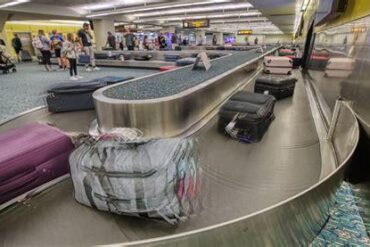
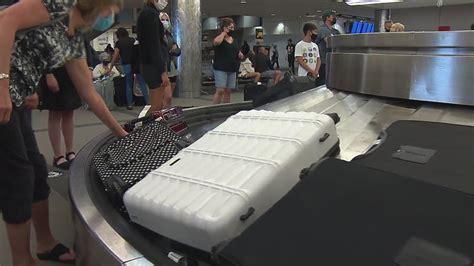
Yet one of the most ambitious ideas incorporated into the project nearly became its defining disaster. Denver’s planners wanted to move beyond conventional baggage handlers, tugs, and conveyor belts by creating a fully automated baggage system capable of routing individual bags around the airport at remarkable speed. Thousands of computer-controlled carts would identify luggage, select destinations, and deliver bags between aircraft, check-in areas, and baggage claim.
On paper, the concept seemed perfectly matched to an airport built around efficiency and scale. In reality, the system proved so unreliable that it delayed Denver International Airport’s opening by 16 months and generated enormous additional costs. The frequently cited figure of approximately $560 million captures only part of the financial damage. Once the baggage system, related construction, and accumulated interest are considered, the broader burden exceeded $1 billion.
Denver International Airport Was Built For The Future
The need for a new Denver airport was not difficult to understand. Stapleton International Airport had become increasingly restricted by its location, limited opportunities for expansion, operational delays, and noise concerns. Denver therefore embarked on one of the largest airport construction projects in the United States, beginning construction on November 22, 1989.
The replacement airport was extraordinarily ambitious. Approximately 110 million cubic yards of earth had to be moved to prepare the enormous site, while the six-runway configuration was intended to provide enough capacity for decades of growth. The terminal’s famous roof, designed to evoke the Rocky Mountains, gave the project a visual identity that was very different from the conventional concrete-and-glass airport terminals of the period.
The scale also created an opportunity to rethink how passengers and airlines interacted with the building. Rather than simply constructing a larger version of an existing airport, Denver’s planners wanted technology to make the new facility dramatically more efficient. That philosophy was particularly evident in the baggage operation.
The airport was ultimately scheduled to open on February 28, 1995, after an overnight relocation from Stapleton that involved more than 100 aircraft. But getting to that opening date became one of the most complicated episodes in the airport’s history because the baggage system was nowhere near ready for the job it had been designed to perform.
The $250 Million Automated Baggage System
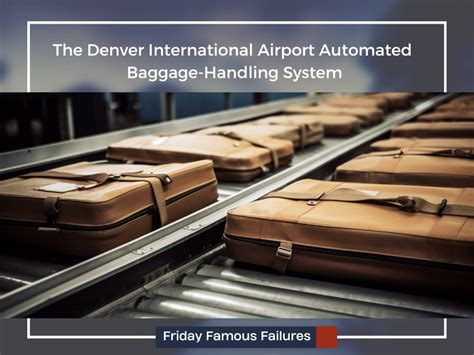
The centerpiece of the baggage plan was an enormous automated network using approximately 4,000 destination-coded vehicles, or small computer-controlled carts. These vehicles were designed to travel across roughly 17 miles of track, carrying individual pieces of luggage toward their assigned destinations.
The system relied on far more than carts and tracks. Barcode readers, sensors, computers, conveyors, switches, and control software all had to function together. Each bag effectively became its own package moving through a computerized transportation network inside the airport.
That distinction was critical. A traditional baggage operation is relatively flexible because human workers can respond when circumstances change. A flight can move gates, a passenger can check an unusual bag, an aircraft can arrive late, or a conveyor can become unavailable. Workers can adjust their actions immediately. Denver’s automated system had to interpret those changes through hardware and software.
The technology therefore created a huge number of potential failure points. A jam could disrupt other bags. A damaged component could affect an entire section of the network. Software problems could produce incorrect routing decisions. Even seemingly small changes to the airport could have consequences for equipment that had been designed as part of an interconnected system.
The project eventually cost around $250 million, an enormous investment in a technology that had not yet demonstrated that it could reliably operate on the scale Denver required.
Testing Revealed Problems Before The Airport Opened
The most important warning signs appeared during testing. The system struggled to deal with realistic baggage volumes and operating conditions, with reports of bags being misrouted or damaged and automated carts experiencing jams and derailments.
The scale of the problem was particularly revealing because testing did not initially involve the entire network. Even a relatively small portion of the eventual system could encounter enough baggage jams to interfere with testing.
That created a fundamental problem for the airport project. Denver had not merely purchased an experimental technology and planned to evaluate it after opening. The automated baggage network had become closely connected to the airport’s operating concept, meaning its failure could affect whether the entire facility was ready to receive passengers.
This was the deeper design mistake. The issue was not simply that a computer program contained bugs or that individual pieces of machinery failed. An unproven and highly complex technology had been placed on the critical path to opening an entirely new airport.
The distinction matters because large infrastructure projects have many interdependent components. If an experimental feature fails, the rest of the project can continue when there is a practical backup. Denver did not initially have that luxury.
Why Denver International Airport’s Opening Was Delayed 16 Months
Denver International Airport had originally been expected to open in 1993. Instead, repeated problems with the baggage system contributed heavily to delays that eventually pushed the opening back by 16 months.
The airport’s physical infrastructure could be substantially complete while the facility remained unable to operate as intended. Airlines needed a dependable baggage process, and the automated system was not delivering one.
Every month of delay carried financial consequences. Borrowed money accumulated interest, contractors and project personnel remained involved, and completed infrastructure could not generate the operating revenue expected after the airport opened. The baggage system therefore transformed a technology problem into a much larger financial problem.
The commonly cited $560 million figure is associated with the consequences of the delayed opening and related overruns. It should not, however, be interpreted as the purchase price of the automated baggage system itself. The financial story is considerably broader.
Denver eventually had to install conventional baggage equipment alongside the automated network. The airport could therefore open with a system based on proven technology rather than depending entirely on the automation that had originally been expected to transform baggage handling.
That decision effectively acknowledged the central weakness of the original plan: Denver needed something that worked reliably, even if it was less technologically impressive.
The True Cost Went Far Beyond $560 Million
The financial consequences continued well beyond the delayed opening. The automated baggage system itself cost approximately $250 million, while another roughly $100 million was spent on construction associated with making the system work.
Then there was interest.
Because the airport’s opening had been delayed, approximately $341 million in interest accumulated during the prolonged project period. That figure illustrates why infrastructure failures can become vastly more expensive than the original technology purchase.
A failed machine sitting in a warehouse might represent a large but relatively contained loss. A failed system holding up a multibillion-dollar airport can create costs across financing, construction, contracts, airline operations, staffing, and scheduling.
There was also a separate financial burden involving United Airlines. The airline, which would become Denver’s dominant hub carrier, was tied to a lease arrangement associated with the automated baggage system costing approximately $60 million per year.
That obligation became particularly uncomfortable as the airline gained experience with the system and concluded that continuing to rely on it was not worthwhile.
The numbers therefore tell several different stories depending on which costs are being counted. The approximately $560 million figure is often used to describe the delay and associated overruns, while adding the approximately $250 million system cost, $100 million in related construction, and $341 million in interest produces a combined burden of more than $1 billion.
United Airlines Abandoned The Automated System
The baggage system survived for years after Denver International Airport finally opened, but its limitations became increasingly difficult to justify.
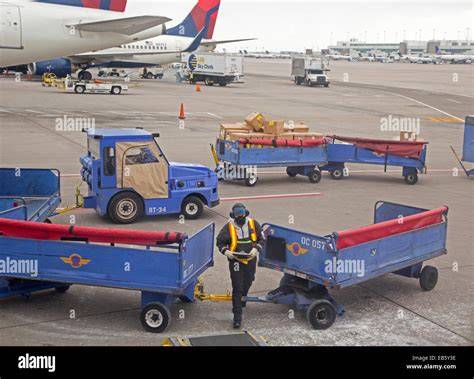
United Airlines eventually announced in 2005 that it would abandon the automated system and return to a conventional baggage operation using baggage handlers, carts, and tugs. The airline expected the change to reduce operating expenses by approximately $1 million per month.
That decision was significant because it came after more than a decade of experience rather than immediately after the system’s troubled development. The technology had therefore been given considerable time to demonstrate its value in actual airport operations.
Instead, maintenance requirements and operating costs undermined much of the original business case. Automation was supposed to reduce labor and accelerate baggage movement, but the sophisticated system required substantial maintenance and operational attention of its own.
Approximately $43 million of automated baggage equipment was written off in 2005, while only a small residual value remained afterward. The system had gone from being one of the most technologically ambitious elements of the airport to an expensive asset whose original purpose could no longer justify its continued use.
Why Simpler Baggage Handling Won
The irony of Denver’s baggage experiment is that the conventional system it attempted to replace offered something automation struggled to reproduce: flexibility.
Airports are unpredictable environments. Aircraft arrive late, gates change, connecting passengers miss flights, bags vary in size and shape, and irregular operations can suddenly alter the normal flow of luggage. Human baggage workers can make decisions in response to these circumstances without requiring an entire computerized network to be reconfigured.
Denver’s automated system was built around precision. Every bag needed to be identified, routed, transported, and delivered through an intricate network. That precision was powerful when everything behaved as expected, but aviation rarely provides a completely predictable operating environment.
The lesson was not that automation itself was inherently flawed. Automated baggage systems have become common at airports around the world, and technology can provide substantial benefits when systems are properly designed, tested, and integrated.
Denver demonstrated something more specific: automating a complicated process does not automatically make that process simpler. If the underlying operation contains thousands of variables, automation may simply transfer that complexity into software, sensors, machinery, and infrastructure.
The crucial difference is whether the technology has been sufficiently tested at the scale and conditions in which it will actually operate.
Denver’s Biggest Problem Was Integration, Not Ambition
It would be easy to describe Denver’s baggage system simply as an ambitious technology project that failed. The more useful interpretation is that the project suffered from the way ambition, timing, and infrastructure became intertwined.
The airport itself was being built at the same time as the baggage network. Changes to one could affect the other. The baggage system was expected to function at unprecedented scale while its environment was still evolving.
That combination left little room for learning through gradual deployment. Instead of proving the technology in a smaller environment before making it essential to airport operations, Denver attempted to make the system part of the airport’s fundamental operating architecture.
The result was an unusually expensive lesson in project management. A complex system can be impressive in demonstrations while remaining unreliable under full operational pressure. Testing must therefore account not only for whether individual components work, but whether thousands of components, software instructions, people, aircraft movements, and unexpected events can function together.
Denver’s experience also highlighted the importance of fallback systems. Once conventional baggage handling was installed alongside the troubled automation, the airport had a practical way to continue operating. Without that alternative, the consequences of failure could have been even more severe.
The Airport Outgrew Its Famous Failure
Despite the baggage disaster, Denver International Airport itself ultimately became an extraordinarily successful and important aviation facility. The airport now occupies approximately 34,000 acres, or about 13,759 hectares, and has expanded far beyond the passenger volumes originally expected.
In 2025, it handled more than 82 million passengers, placing it among the world’s busiest airports. United Airlines also remains its dominant carrier, with approximately 50.4% of the airport’s market share according to the supplied reference data, followed by Southwest Airlines at 29.0%.
That growth makes the baggage-system failure more interesting, not less. Denver was not rendered useless by its technological miscalculation. The airport’s enormous site, runway capacity, terminal infrastructure, and position as a major connecting hub proved considerably more durable than the baggage technology.
The abandoned baggage system nevertheless remains embedded in the airport’s history. Specialized infrastructure had been constructed around a concept that never reached its intended airport-wide potential. Money had been borrowed, contracts had been signed, equipment had been installed, and years had been spent attempting to make the system perform.
The ultimate lesson is therefore bigger than baggage handling. The most expensive design mistake was not choosing automation. It was making an unproven automated system essential to the successful launch of one of America’s largest new airports.
Denver International Airport eventually demonstrated that the broader project could survive that mistake. The airport continued growing, airlines built major operations there, and passenger demand eventually exceeded many early expectations.
But the baggage system left behind a powerful reminder for future infrastructure projects. The newest technology is not automatically the best technology, and complexity is not the same thing as efficiency. When an experimental system becomes a dependency for an entire project, a technical failure can quickly become a construction delay, a financing problem, an airline burden, and ultimately a billion-dollar lesson.