
At first glance, it seems almost impossible. United Airlines is one of the world’s best-known aviation companies, carrying millions of passengers across a vast global network of aircraft and routes. Yet in August 2026, Aena, the Spanish airport operator that many travelers may barely recognize by name, was worth more than United Airlines by more than $10 billion. The surprising valuation gap reveals an important distinction in aviation: owning the infrastructure that airlines depend on can sometimes be a far more powerful business than operating the aircraft themselves.
Aena is the world’s largest airport operator by passenger volume, and its scale is difficult to ignore. In 2025, airports across its portfolio handled approximately 384.8 million passengers, roughly twice the number of passengers United Airlines carried on its own flights. The Spanish company’s network stretches well beyond Spain, encompassing airports in Brazil and the United Kingdom and providing exposure to additional facilities through its strategic stake in Grupo Aeroportuario del Pacífico.
The difference is not simply about passenger numbers, however. Aena’s valuation reflects the economics of its business model, particularly its ability to generate substantial revenue from both aeronautical activities and highly profitable commercial operations. Unlike an airline, Aena does not need to purchase aircraft, hire flight crews, manage fuel exposure, or compete for passengers on every individual route. Instead, airlines compete to bring passengers to infrastructure that Aena controls.
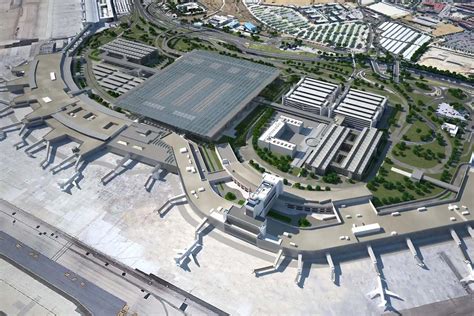
Why Aena Is Worth More Than United Airlines
The most important reason behind Aena’s extraordinary valuation is its profitability. Airports can be expensive, capital-intensive businesses, but a strategically positioned airport can also become an exceptionally efficient source of recurring revenue once the underlying infrastructure is established.
Aena generated approximately $3 billion in EBIT in its last full financial year, producing an EBIT margin of around 46.8%. That figure is striking when placed beside the economics of the global airline industry. IATA estimated an operating margin of only about 6.7% for airlines, highlighting just how different the two business models can be.
Airlines generally operate with much thinner margins because their costs are enormous and highly exposed to market conditions. Fuel prices can change dramatically. Aircraft deliveries can be delayed. Labor costs can rise. Maintenance requirements can increase unexpectedly. Airlines must also continually adjust schedules and fares in response to competitors, changing demand, geopolitical events, and economic conditions.
Aena faces many challenges of its own, particularly because airports require continuous infrastructure investment. But once an airport has strong passenger demand, the operator can monetize that traffic through several different channels. Every traveler passing through the terminal represents an opportunity for airport charges, retail spending, parking, food and beverage purchases, advertising, and other commercial activity.
That diversified revenue structure helps explain why an airport operator can command a higher valuation than an airline despite lacking the same household recognition.
Aena’s Commercial Revenue Is the Hidden Powerhouse
One of the most revealing figures in Aena’s 2026 financial results is the extraordinary profitability of its commercial business.
During the first half of 2026, Aena’s Spanish aeronautical operations generated approximately €1.70 billion in revenue and €752 million in EBITDA, producing a 44.2% EBITDA margin. Commercial activities, however, generated around €991 million in revenue and €806 million in EBITDA, equivalent to an extraordinary 81.3% EBITDA margin.
That difference illustrates why airports are much more than runways and passenger terminals. An airport is effectively a large commercial environment where hundreds of thousands of people can pass through every day. Travelers have time to eat, shop, park, rent cars, purchase services, and spend money before or after their flights.
For Aena, the passenger is therefore valuable even when the company has nothing to do with the actual flight.
The first-half figures underline this broader model. Across the Aena Group, revenue reached approximately €3.30 billion, while EBITDA was about €1.80 billion, giving the group an EBITDA margin of 54.5%. Real estate services were also highly profitable, generating €71.7 million of revenue and €54 million of EBITDA, while the international segment produced €529 million of revenue and €189 million of EBITDA.
The numbers demonstrate why investors can view airport infrastructure as an attractive long-term asset. Aena is not relying on a single source of income. It is monetizing an entire ecosystem surrounding air travel.
Spain Gives Aena an Unusually Powerful Home Market
Although Aena has become increasingly international, Spain remains the foundation of the company.
In 2025, Aena’s Spanish airports handled more than 321 million passengers, accounting for more than 80% of the group’s total traffic. That concentration might initially appear to create risk, but Spain is an unusually attractive aviation market because of its enormous tourism industry, geographical characteristics, and international connectivity.
The country is one of Europe’s most important tourism destinations, creating substantial recurring demand for airport infrastructure. Spain also has a particularly important domestic aviation market because its geography includes the Balearic and Canary Islands. For many journeys between the mainland and these islands, rail is simply not a direct alternative.
Madrid adds another layer of strategic value. Madrid-Barajas Airport has become a major European gateway to Latin America, benefiting from deep business, tourism, migration, and cultural connections between Spain and countries across the Atlantic.
Barcelona-El Prat is equally important but has a somewhat different traffic profile. Barcelona combines major tourism demand with business traffic and extensive international connectivity, making it one of Europe’s most important metropolitan aviation markets.

Madrid and Barcelona Are Central to Aena’s Next Growth Phase
Aena cannot simply rely on passenger growth continuing indefinitely without expanding its infrastructure. Some of Spain’s largest airports are moving closer to their existing capacity limits, creating a major investment requirement.
The company has proposed a €12.9 billion investment program for 2027 through 2031, representing one of the most significant upgrades to Spain’s airport network in decades if approved substantially as proposed.
Almost €10 billion of the program consists of regulated investment. This includes essential infrastructure such as terminals, airfields, security systems, and baggage-handling facilities. Because these projects fall within Spain’s regulated airport framework, they require government approval and form part of the system governing how Aena recovers investment through aeronautical charges.
Another €2.9 billion is earmarked for non-regulated commercial investment. This includes retail areas, food and beverage facilities, parking, and other passenger-focused services.
The location of the spending is especially important. Approximately 62% of Aena’s regulated investment is expected to be concentrated at Madrid-Barajas and Barcelona-El Prat.
Together, those two airports handled roughly 39% of Aena’s Spanish passenger traffic in 2025. Investing heavily in them therefore does more than add physical capacity. It protects the infrastructure that generates a substantial portion of Aena’s future revenue while creating new opportunities to increase commercial income per passenger.
This is a crucial distinction. Aena is not simply trying to accommodate more travelers. It is attempting to make every additional traveler economically more valuable.
Aena’s Airport Portfolio Extends Far Beyond Spain
The company’s Spanish network provides its foundation, but Aena has spent years building an international portfolio designed to diversify its earnings.
Its preferred strategy is generally not to purchase airports outright. Instead, Aena pursues long-term concession agreements under which governments retain ownership of the infrastructure while Aena receives the rights to operate, develop, and profit from the airport for several decades.
This structure has important advantages. Aena does not necessarily need to finance the full acquisition cost of an airport as though it were buying a conventional private asset. Instead, it contributes operational expertise, investment, management capabilities, and commercial know-how over the duration of the concession.
There are still substantial financial commitments involved. Concession agreements can include upfront payments and long-term investment requirements, meaning international expansion is far from risk-free. Nevertheless, the model allows Aena to enter major aviation markets while governments retain ownership of strategically important infrastructure.
It is a business structure that fits Aena particularly well because the company’s expertise is precisely what many airport concessions require: operational efficiency, infrastructure development, passenger management, and commercial monetization.
Brazil Has Become Aena’s International Growth Engine
Brazil is now one of the most important pieces of Aena’s international strategy.
The company received a 30-year concession in 2019 to manage six airports in northeastern Brazil, including Recife. In 2022, it won another 30-year concession covering 11 additional airports, including São Paulo-Congonhas, one of Brazil’s most important airports.
The scale of the Brazilian opportunity has continued to expand. Earlier in 2026, Aena revealed that it had been awarded the concession to operate Rio de Janeiro Galeão International Airport, Brazil’s third-largest airport.
Once that transaction is completed, Aena is expected to operate 18 facilities across Brazil.
That expansion matters because Brazil offers Aena something its Spanish network cannot provide on its own: exposure to a huge domestic aviation market with significant long-term growth potential. The country is geographically vast, making air transportation particularly important for connecting major population and economic centers.
Aena’s international strategy therefore complements rather than replaces its Spanish business. Spain provides the stable foundation, while markets such as Brazil provide additional opportunities for long-term expansion.

The United Kingdom Adds Another Layer of Diversification
Aena’s presence in the United Kingdom also illustrates how its concession strategy can evolve.
The company’s international expansion began almost three decades ago with its entry into Colombia. Aena eventually operated airports including Barranquilla and Cartagena, although its Colombian presence ended when its Cali concession expired in 2025.
The United Kingdom subsequently became a much more important market. Aena initially acquired a 40% stake in the company holding the concession for London Luton Airport, increasing that ownership to 51% the following year.
In May 2026, Aena expanded its UK portfolio again by acquiring a 51% stake in a holding company that owns Leeds Bradford Airport outright and 49% of Newcastle Airport.
These airports provide additional exposure to UK passenger demand while reducing Aena’s dependence on Spanish traffic. More importantly, they demonstrate that the company is becoming a genuinely international airport operator rather than simply a Spanish infrastructure company with a few overseas assets.
Government Ownership Gives Aena a Unique Position
There is another unusual feature of Aena’s structure: the Spanish government owns 51% of the company, while the remaining 49% is publicly traded.
That ownership structure gives Aena a hybrid character. It operates as a publicly listed commercial enterprise, but it also controls an airport network that is strategically important to Spain and supported by government ownership.
For investors, the structure can create both advantages and limitations. The company benefits from its dominant position and the enormous barriers to entry surrounding airport infrastructure, but it also operates within a regulated environment and remains closely connected to government policy.
That regulation is particularly relevant when Aena invests billions of euros in airports and seeks to recover some of those costs through aeronautical charges. Its future earnings are therefore influenced not only by passenger growth and commercial performance but also by regulatory decisions.
Even so, the fundamental competitive advantage is difficult to replicate. A rival cannot simply decide to build another Madrid or Barcelona airport network and immediately compete with Aena.
Why Airports Can Beat Airlines in the Valuation Race
The contrast between Aena and United Airlines ultimately comes down to where the economic power sits in the aviation ecosystem.
United owns and operates aircraft that must continually fly to generate revenue. It competes with other airlines for passengers, manages expensive fleets, negotiates labor agreements, purchases fuel, handles maintenance, and constantly adapts its network to changing market conditions.
Aena controls the infrastructure through which those passengers must travel.
That distinction does not make airports immune to risk. A recession can reduce passenger demand. Regulations can constrain pricing. Construction projects can experience delays or cost overruns. Political decisions can affect concessions, and international investments introduce currency and country-specific risks.
But the economics remain compelling when an airport has a strong market position.
Aena can benefit when airlines add routes, when tourism increases, when passengers spend more inside terminals, and when airports become more efficient. It does not need to operate the aircraft responsible for generating those passengers.
That creates a powerful form of infrastructure leverage.
Aena’s Future Depends on Turning Traffic Into Higher-Value Passengers
The biggest question for Aena is no longer whether Spain will remain a major aviation market. The company’s enormous passenger volumes already establish that.
The more interesting question is how effectively Aena can transform future traffic growth into higher earnings.
The €12.9 billion investment plan provides a major opportunity. Expanded terminals can handle more passengers, improved baggage systems can increase efficiency, and upgraded retail and dining facilities can generate additional commercial spending.
International expansion provides another growth avenue. Brazil, the United Kingdom, and Aena’s wider Latin American exposure can diversify earnings while giving the company access to markets identified as important components of long-term global air traffic growth.
The strategy is therefore built around three complementary pillars: dominant Spanish infrastructure, highly profitable commercial revenue, and long-term international airport concessions.
That combination helps explain the remarkable fact behind the headline. Aena does not need to be as famous as United Airlines to be more valuable than United Airlines.
The Airport Operator Behind the Aviation Boom
For travelers, Aena may remain largely invisible. Passengers notice the airline painted on the aircraft, the cabin crew, the boarding pass, and the destination on the departure screen. The company operating the airport itself often fades into the background.
From an investment perspective, however, that invisible position may be precisely what makes Aena so powerful.
Its airports handled nearly 385 million passengers in 2025, its Spanish network remains deeply embedded in one of Europe’s strongest tourism markets, and its commercial operations generate exceptional margins. At the same time, the company is preparing to invest billions of euros in Spain and expand its international concession portfolio.
United Airlines remains a major global airline with enormous strategic importance. But Aena represents a different side of aviation economics: the infrastructure layer beneath the airlines.
And as the August 2026 valuation gap demonstrates, the company that controls the airports can sometimes capture more economic value than the companies flying the aircraft between them.