The Dream of an American Supersonic Titan
In the feverish race for technological supremacy during the Cold War, speed was more than a luxury—it was a statement of dominance. When Concorde began slicing through the skies in the late 1960s, it symbolized European ingenuity and ambition. The United States, unwilling to concede the future of aviation, set its sights on something even more audacious: a supersonic airliner that would dwarf Concorde in both size and speed.
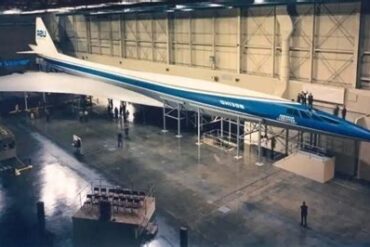
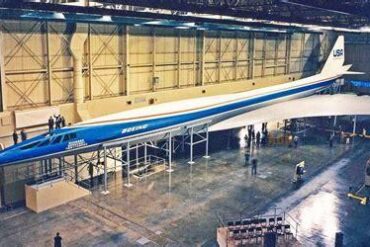
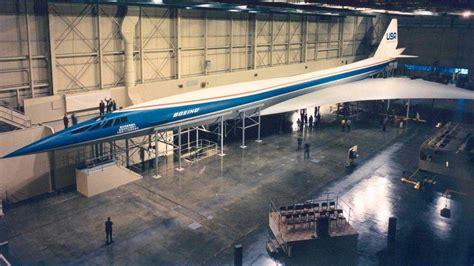
That aircraft was the Boeing 2707, a machine envisioned not merely as a competitor but as a quantum leap forward in commercial aviation. Where Concorde carried around 100 passengers, Boeing’s design promised to transport more than double that number, at speeds approaching Mach 2.7—significantly faster than its European rival. It wasn’t just an airplane; it was an attempt to redefine what global travel could feel like.
The ambition was staggering. Engineers and policymakers imagined a future where crossing the Atlantic would take just a few hours, where the concept of distance itself would shrink under the pressure of raw speed. Airlines placed tentative orders. The public watched in fascination. For a brief moment, it seemed inevitable that the United States would dominate the second generation of supersonic travel.
Yet, in one of aviation’s most dramatic reversals, the Boeing 2707 never left the ground.
Engineering the Impossible: Inside the Boeing 2707 Design
At its core, the Boeing 2707 was a bold experiment in pushing aerodynamic and structural boundaries. Initially known as the Model 733, it emerged as the winner of the U.S. government’s National Supersonic Transport (SST) competition in 1967—a decision that unlocked massive federal funding and placed Boeing at the center of the nation’s supersonic ambitions.
The aircraft’s early design featured an advanced swing-wing configuration, allowing the wings to pivot depending on speed. At lower speeds, the wings would extend outward to generate lift during takeoff and landing. At supersonic speeds, they would sweep back sharply to reduce drag. It was elegant in theory—and brutally complex in practice.
Ultimately, Boeing abandoned the swing-wing concept in favor of a more conventional fixed delta wing, a move that simplified the design but also underscored the immense engineering challenges involved. Powering the aircraft would be four General Electric GE4 turbojet engines, each contributing to a combined thrust capable of propelling the jet to nearly three times the speed of sound.
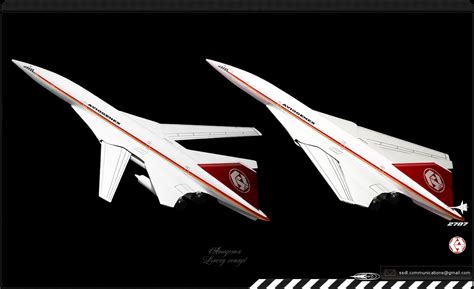
The projected specifications read like something pulled from science fiction:
- Passenger capacity: 234
- Length: 306 feet
- Wingspan: 141 feet
- Maximum takeoff weight: 750,000 pounds
- Cruise speed: Mach 2.7
- Range: 3,900 nautical miles
Inside, passengers would experience a cabin far more spacious than Concorde’s famously narrow interior. A 2-3-2 seating configuration, larger windows, and early concepts of in-flight entertainment hinted at a premium travel experience designed to justify the high cost of supersonic tickets.
It was, in every sense, a supersonic airliner built for scale—not just speed.
Political Winds Shift: When Congress Turned Against Supersonic Flight
For a time, the Boeing 2707 enjoyed strong political backing, including support from President Richard Nixon, who saw the program as essential to maintaining American leadership in aerospace. Billions in today’s dollars flowed into development, and momentum seemed unstoppable.
But aviation history has a habit of colliding with political reality.
By March 1971, the mood in Washington had shifted dramatically. Mounting costs, growing skepticism, and a rapidly changing public sentiment converged into a decisive moment: the U.S. Senate voted to cut all funding for the SST program. The House of Representatives soon followed, sealing the aircraft’s fate.
The backlash was immediate and emotional. Advocacy groups like the National Committee for an American SST rallied public support, even encouraging citizens to send symbolic one-dollar contributions to keep the dream alive. Letters poured in, along with over $1 million in donations, a remarkable display of grassroots enthusiasm for a machine that had yet to fly.
Labor unions raised alarms about the economic consequences. With the Vietnam War winding down and the Apollo program nearing its conclusion, the aerospace sector faced an uncertain future. Leaders warned that canceling the SST would cost tens of thousands of jobs and erode America’s industrial base.
Despite these arguments, Congress remained unmoved. Even projections of 150,000 future jobs tied to the program failed to reverse the decision. The Boeing 2707 was canceled before a single prototype could take to the skies.
The fallout was severe. Approximately 60,000 jobs were lost, and the project earned a grim nickname: “the airplane that almost ate Seattle.”
The Environmental Reckoning That Changed Aviation Forever
While cost and politics played decisive roles, the true turning point in the Boeing 2707’s downfall came from an unexpected direction: environmental science.
During the late 1960s and early 1970s, public awareness of environmental issues surged. The SST program became a lightning rod for concerns about noise pollution, atmospheric damage, and the long-term sustainability of supersonic travel.
One of the most controversial issues was the sonic boom—the explosive noise generated when an aircraft exceeds the speed of sound. Tests conducted over Oklahoma City in 1964 revealed the real-world consequences. Thousands of residents reported shattered windows, structural damage, and general disruption. More than 9,000 complaints were filed, along with thousands of formal damage claims.
The conclusion was unavoidable: routine supersonic flight over populated areas was not viable under existing technology.
Even more alarming were findings related to high-altitude emissions. Scientists warned that a fleet of supersonic aircraft could release large amounts of water vapor and nitrogen oxides into the stratosphere, potentially disrupting the ozone layer—Earth’s natural shield against harmful ultraviolet radiation.
Environmental advisor Russell Train estimated that widespread SST operations could increase stratospheric water content by up to 100%, with measurable impacts on ozone formation. Studies from institutions like MIT reinforced these concerns, suggesting a possible 1–2% global reduction in ozone levels.
Environmental organizations, including the Sierra Club and the National Wildlife Federation, mobilized against the program. Their influence helped shape public opinion and ultimately policy, leading to strict restrictions—and in some cases outright bans—on supersonic flight over land.
The Boeing 2707 became a casualty of a broader realization: technological progress without environmental consideration carries a cost too high to ignore.
Meanwhile Behind the Iron Curtain: The Rise and Fall of the Tu-144
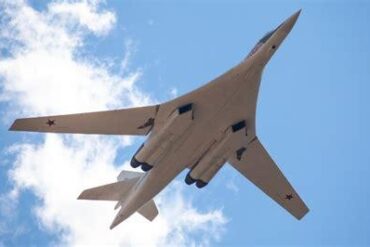
While the United States wrestled with political and environmental challenges, the Soviet Union pursued its own supersonic ambitions with relentless determination. The result was the Tupolev Tu-144, a striking aircraft that would briefly claim the title of the world’s first operational supersonic airliner.
The Tu-144 achieved several milestones before Concorde, including its first flight in December 1968 and its first supersonic run in 1969. On paper, it appeared to be a formidable competitor, capable of speeds exceeding Mach 2 and operating at altitudes above 50,000 feet.
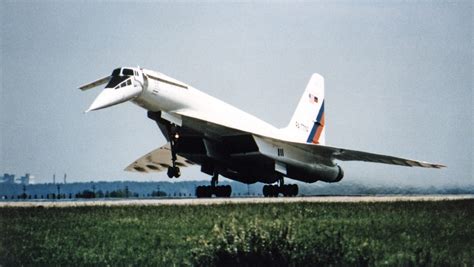
However, the reality was far less glamorous. The aircraft suffered from persistent technical issues, with 226 recorded failures during its brief operational life. Many of these occurred mid-flight, raising serious safety concerns and undermining confidence in the program.
The turning point came at the 1973 Paris Air Show, when a Tu-144 disintegrated in midair during a demonstration flight, killing both crew members and people on the ground. The disaster cast a long shadow over the program.
Although the aircraft entered limited passenger service in 1977, it lasted barely a year before being retired. High operating costs, reliability issues, and safety concerns made sustained operations impossible.
In a twist of history, the Tu-144 would later find a second life in NASA research programs, contributing valuable data to the very field it had struggled to conquer.
Could Supersonic Travel Make a Comeback?
For decades, the dream of widespread supersonic travel remained grounded, constrained by regulation, economics, and environmental realities. But the story may not be over.
Recent legislative efforts in the United States aim to revisit the long-standing ban on supersonic flight over land, driven by advances in noise-reduction technology. Companies like Boom Supersonic are developing aircraft designed to minimize or even eliminate the disruptive effects of sonic booms.
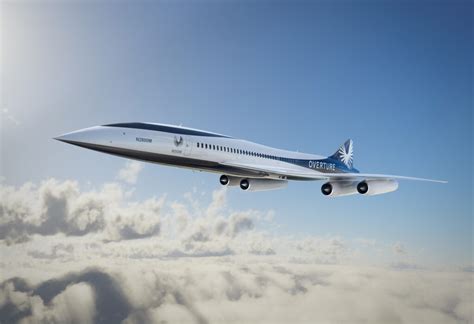
The proposed changes would require the Federal Aviation Administration (FAA) to update its regulations, potentially opening the door to a new era of faster-than-sound travel. Yet significant challenges remain.
Supersonic flight is inherently fuel-intensive, making it expensive and environmentally contentious. Even with modern materials and more efficient engines, the economics are difficult to ignore. Ticket prices are likely to remain high, limiting accessibility to a niche market of business travelers and premium passengers.
Moreover, the environmental questions that doomed the Boeing 2707 have not entirely disappeared. High-altitude emissions, while better understood today, still present complex challenges that engineers and policymakers must address.
The next generation of supersonic aircraft will need to succeed where earlier efforts failed—not just in speed, but in sustainability, efficiency, and public acceptance.
A Legacy That Still Shapes the Future
The Boeing 2707 never flew, yet its impact on aviation is undeniable. It represents a moment when ambition collided with reality—when the limits of technology, politics, and environmental responsibility became impossible to ignore.
In many ways, the aircraft was ahead of its time. Its scale, speed, and vision anticipated a world that wasn’t quite ready to exist. The lessons learned from its rise and fall continue to influence modern aerospace design, regulatory frameworks, and environmental policy.
There’s a certain irony in its story. The plane that was meant to shrink the world ultimately expanded our understanding of what progress should look like. Not just faster, not just bigger—but smarter, cleaner, and more balanced.
And if supersonic travel does return in a meaningful way, it will do so in the shadow of the Boeing 2707—a reminder that even the boldest ideas must answer to more than just ambition.