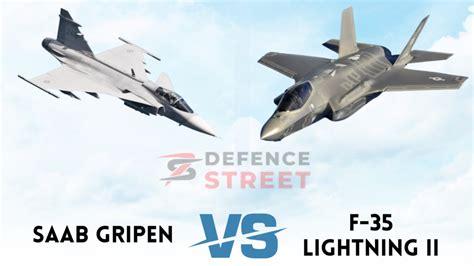
Canada’s future fighter jet strategy is entering a new era, and the debate is no longer only about which aircraft can fly faster, carry more weapons, or remain invisible to enemy radar. The deeper question is about military sovereignty, technological independence, and control over critical defense systems.
For decades, Canada has relied heavily on the United States for defense technology. The relationship has been built through shared commitments in NORAD, NATO, intelligence cooperation, and decades of joint military operations. However, recent political tensions between Ottawa and Washington have forced Canadian policymakers to reconsider whether depending almost entirely on American defense systems creates strategic risks.
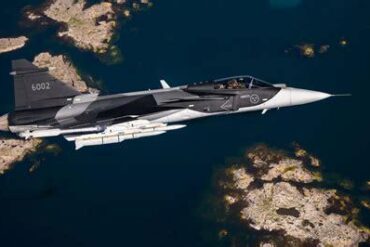
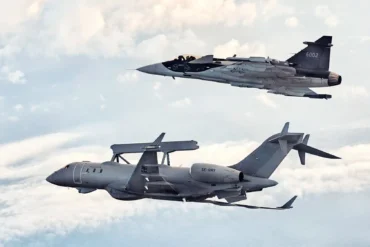
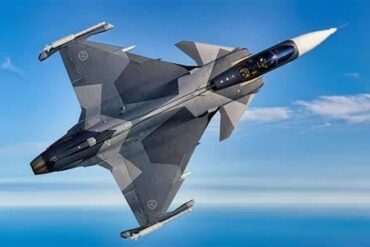
This shift does not mean Canada is abandoning the F-35 Lightning II. The stealth fighter remains the centerpiece of Canada’s future air combat capability. Instead, Ottawa appears increasingly interested in creating a second pathway through the Saab Gripen E/F, particularly because Saab has offered something Lockheed Martin cannot provide: deeper access to technology, software control, and potential sovereign management of the aircraft’s mission systems.
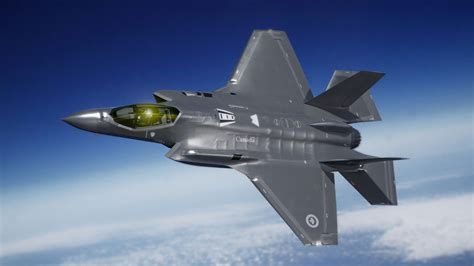
The changing priorities reveal a fascinating reality of modern fighter procurement. A fifth-generation stealth fighter may provide unmatched battlefield capability, but access to source code and independent upgrade authority could become equally valuable for countries that want greater control over their military future.
Canada’s Fighter Jet Strategy Is Shifting From Capability Alone to Sovereignty
Choosing a fighter aircraft is never simply a technical decision. Modern combat aircraft represent decades-long partnerships involving maintenance agreements, software updates, weapons integration, training programs, industrial investment, and political relationships.
A fighter jet purchase can shape a nation’s defense independence for generations. Once an air force commits to a platform, it becomes tied to the manufacturer’s supply chains and software ecosystem. Every future improvement, security patch, weapons upgrade, and operational change can depend on cooperation from the original producer.
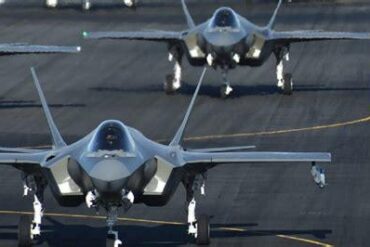
Canada’s original plan was straightforward: replace its aging CF-18 Hornet fleet with the F-35A, the world’s most advanced operational stealth fighter. The aircraft offered unmatched sensor fusion, low observable technology, advanced networking, and full compatibility with NORAD requirements.
However, changing geopolitical conditions have complicated that decision.
Canada has traditionally viewed the United States as its closest defense partner. Yet recent political disagreements and uncertainty surrounding future American commitments have encouraged Ottawa to examine ways to reduce excessive dependence on Washington while maintaining essential cooperation.
The result is not a rejection of American technology. Instead, Canada appears to be developing a balancing strategy: maintain the F-35 for high-end missions while exploring Saab’s Gripen as a more sovereign-controlled alternative.
Why Saab Gripen Source Code Access Matters to Canada
The biggest advantage Saab offers is not necessarily that the Gripen E is a better fighter than the F-35. It is that Saab has shown greater willingness to provide customers with control over the aircraft’s digital foundation.
Modern fighters are essentially flying computers. Their effectiveness depends heavily on software that manages sensors, electronic warfare systems, communications, weapons integration, and mission planning.
Having access to source code allows a country to independently modify and maintain these systems without requiring constant approval from the original manufacturer.
For Canada, this could mean several strategic advantages. Ottawa could potentially develop national upgrades, integrate Canadian weapons, modify mission systems for Arctic operations, and maintain greater control over sensitive military data.
The F-35 program operates differently. Canada is a long-standing partner in the Joint Strike Fighter program and benefits from industrial participation. Canadian companies manufacture components used on every F-35 built worldwide.
However, participation does not equal ownership.
Canada does not receive unrestricted access to the F-35’s source code, nor is it likely to gain independent control over the fighter’s core software architecture. The aircraft remains deeply connected to the American-led global F-35 ecosystem.
For many countries, this arrangement is acceptable because the F-35 delivers capabilities no other fighter can easily match. But for Canada, the question is becoming whether maximum combat power should be combined with greater technological independence.
The F-35 Still Remains Canada’s Most Important Fighter Capability
Despite growing interest in Saab’s offer, the F-35 remains extremely difficult to replace.
Canada’s geography creates unique military requirements. The country has enormous territory, vast Arctic regions, and critical responsibilities within NORAD. These missions demand long-range performance, advanced sensors, and seamless integration with American defense networks.
The F-35A was designed precisely for this environment.
Its stealth characteristics allow it to operate in heavily defended airspace. Its advanced sensor suite provides pilots with a comprehensive picture of the battlefield. Its ability to share information with allied aircraft makes it more than just a fighter jet; it functions as a networked command platform.
The Gripen E, while highly capable, was designed around different priorities.
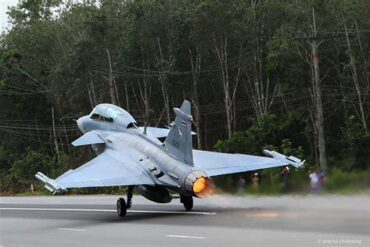
Sweden developed the Gripen for national defense against a technologically advanced opponent while operating from dispersed locations. The aircraft emphasizes affordability, rapid maintenance, and the ability to operate from smaller airfields.
Those features are valuable, but Canada’s strategic environment is different. Canadian fighters must patrol enormous distances and integrate deeply with NORAD systems controlled jointly with the United States.
Previous evaluations reportedly showed the F-35 performing significantly better than the Gripen in meeting Canada’s fighter requirements. The F-35 achieved a near-perfect evaluation score, while the Gripen scored considerably lower.
This explains why Canada is not replacing the F-35 with Saab aircraft. Instead, Ottawa appears to be considering a dual-fleet approach.
A Two-Fighter Fleet Could Give Canada More Strategic Flexibility
A future Canadian fighter fleet could look very different from earlier plans.
The F-35 would remain the premier combat aircraft, responsible for missions requiring stealth, advanced sensors, and maximum interoperability with American forces.
The Gripen could serve as a complementary platform focused on sovereignty, domestic industrial participation, and independent operations.
This arrangement would resemble a strategic hedge.
Canada would retain access to the world’s most advanced fighter network while reducing the risk of relying on a single foreign supplier for every aspect of air defense.
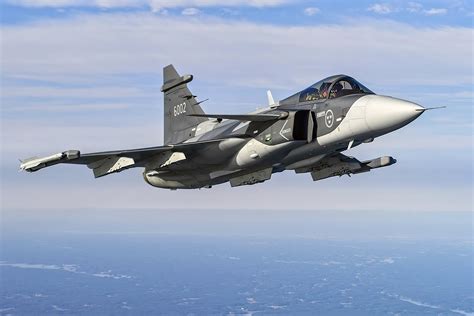
The idea is particularly attractive because Saab has offered significant technology transfer and industrial benefits. The company has previously established production partnerships in countries such as Brazil, where the Gripen program included technology sharing and local manufacturing involvement.
For Canada, Saab has suggested establishing production and support capabilities domestically, potentially creating thousands of aerospace jobs.
This aligns with Canada’s desire to strengthen its own defense industry rather than simply purchasing foreign equipment.
Canada’s Aerospace Industry Makes Saab’s Proposal Attractive
Canada is not a newcomer to advanced aerospace technology.
The country has produced world-class aerospace companies and played important roles in aircraft development, manufacturing, and maintenance. Companies such as Pratt & Whitney Canada, CAE, and Bombardier have established global reputations.
The possibility of expanding domestic fighter-related production therefore has political and economic appeal.
A Saab partnership could provide opportunities in aircraft assembly, maintenance, software development, training systems, and aerospace manufacturing.
The Gripen proposal also connects with Canada’s broader ambition to maintain industrial capability in strategic sectors. Defense procurement is often viewed not only as a military investment but also as an economic development opportunity.
However, the promise of sovereignty must be examined carefully.
The Gripen is not entirely independent from American and European technology. Its F414 engine is supplied by GE Aerospace, and many subsystems involve international suppliers.
That means Canada would still face export restrictions and foreign technology dependencies.
The difference is that Saab appears more willing to provide customers with greater control over integration and upgrades than the F-35 program allows.
The Hidden Complexity Behind Fighter Jet Independence
The idea of owning a “sovereign fighter” is more complicated than it appears.
Even aircraft designed outside the United States often rely on international supply chains. Modern fighters combine engines, radar systems, electronic warfare equipment, processors, sensors, and weapons from multiple countries.
No major Western fighter program is completely independent.
The Gripen’s advantage is therefore not total independence. Instead, it is a higher degree of customer control.
Canada could potentially have more freedom to modify the aircraft, manage upgrades, and operate the system according to national priorities.
The F-35 offers unmatched capability but requires operating within a highly controlled ecosystem.
The Gripen offers fewer combat advantages but potentially more national flexibility.
This difference explains why Canada’s debate is not simply about choosing the better aircraft. It is about deciding what kind of defense relationship the country wants in the future.
NORAD Integration Remains Canada’s Biggest Challenge
The greatest obstacle for the Gripen is not performance. It is integration.
NORAD relies on highly classified American and Canadian systems, including secure communications, command networks, identification systems, and advanced data-sharing capabilities.
The United States controls many elements of this architecture.
Even if Saab provides software access and technical cooperation, Canada cannot independently decide how every aircraft interacts with NORAD.
Washington ultimately determines which systems are allowed into sensitive networks.
This reality limits how much independence a Gripen-based capability could provide.
The aircraft could give Canada more control over certain missions, but it would not replace the importance of the US defense partnership.
Canada’s Future Fighter Choice Is About Balance, Not Replacement
The debate surrounding Saab Gripen and the F-35 is often presented as a competition between two aircraft. In reality, Canada’s strategy appears far more nuanced.
The F-35 provides the advanced combat capability needed for NORAD, NATO operations, and future high-threat environments.
The Gripen offers something different: industrial benefits, technology access, and greater control over national defense decisions.
Canada may ultimately decide that the best solution is not choosing one aircraft over the other, but combining both.
The country’s future fighter fleet could represent a new model of defense planning: maintaining access to the world’s most advanced military technology while building a stronger domestic aerospace capability.
For Canada, Saab’s source code promise is valuable not because it makes the Gripen superior to the F-35, but because it addresses a growing strategic concern. In an uncertain geopolitical environment, the ability to control, modify, and maintain military technology independently has become almost as important as the technology itself.
The future of Canadian air power may therefore depend on a delicate balance between stealth capability and sovereignty, between partnership and independence, and between the unmatched power of the F-35 and the strategic flexibility offered by Saab’s Gripen.