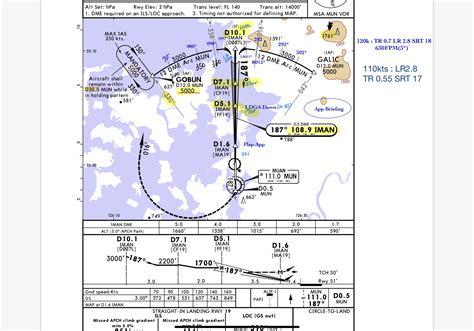
The Final Approach Fix, or FAF, is a crucial point in an instrument approach procedure. It marks where the final approach segment begins. Located on the final approach path, the FAF is positioned so that pilots can set their final approach configuration. This setup allows them to slow down to the final approach speed and descend from the intermediate altitude to the Minimum Descent Altitude/Height (MDA/H). This applies whether the approach is straight-in or involves a visual circling maneuver.
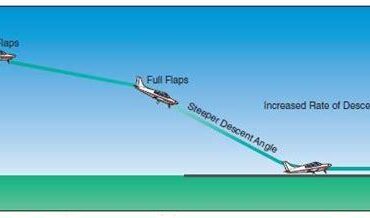
Pilots should cross the FAF at the specified altitude during descent. However, they must not go below the minimum crossing altitude associated with the FAF under International Standard Atmosphere (ISA) conditions. To maintain the correct descent gradient or angle, pilots should start their descent before reaching the FAF. Waiting until the FAF to begin descending will increase the angle beyond the usual 3 degrees.
When available, range information aids in determining the descent profile. On approach charts, the FAF is typically shown with a Maltese cross symbol. In some airports, there may not be a suitable facility to define a FAF. In these cases, the approach might use the same facility as both the Initial Approach Fix (IAF) and the Missed Approach Point (MAPt). Here, the descent to MDA/H occurs once the aircraft is on the final approach track.