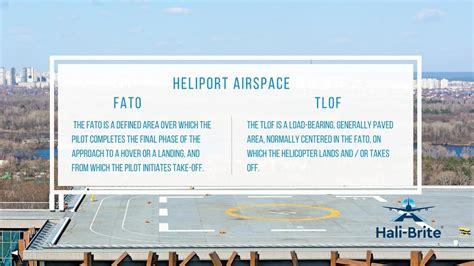
The Final Approach and Takeoff Area (FATO) is a specific space where helicopters complete their final approach before landing or hovering. It’s also where they start their takeoff maneuvers. For performance Class 1 helicopters, this area must include space for rejected take-offs.
A FATO is essential for every heliport. It doesn’t have to be solid and can be located near runway or taxiway strips. The main goal of a FATO is to provide a clear area, free from obstacles. While the shape can vary, it must meet size and slope requirements outlined in important documents like ICAO Annex 14 and Doc 9261. These guidelines also cover nearby areas that ensure safety, such as safety zones and protected slopes.
When considering the FATO length, it’s crucial to account for conditions like altitude and temperature. These factors can impact helicopter performance during takeoff and landing. Sometimes, the FATO includes a designated touchdown area, but it’s not always necessary. Often, helicopters prefer to hover first before air-taxiing to a better spot for landing. Likewise, helicopters can take off from their parked positions and then taxi to the FATO to hover before starting their climb.
Regardless of the scenario, the surface of the FATO needs to support emergency landings, particularly for the heaviest helicopters intended to use it. In some cases, pilots might choose to hover and then taxi to a more suitable location for touchdown, emphasizing the flexibility and functionality of the FATO.