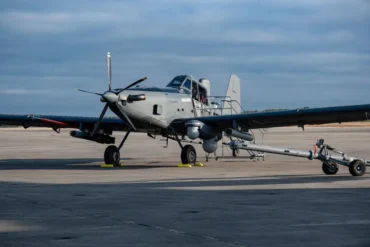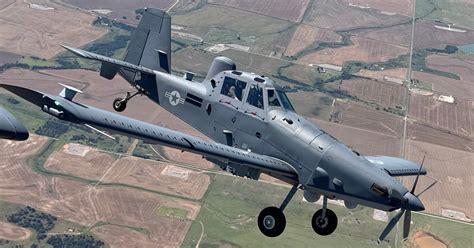
The L3Harris OA-1K Skyraider II was designed to bring a new generation of affordable, rugged air support capability to the United States Air Force Special Operations Command. Built around the proven Air Tractor platform and powered by a powerful Pratt & Whitney PT6A turboprop engine, the aircraft was expected to operate from remote locations, support special operations missions, and provide precision combat capability in challenging environments.
However, during one training mission, a tiny cockpit design issue measuring only a few inches contributed to the destruction of one of these advanced aircraft. The accident did not happen because of an engine failure, structural weakness, or mechanical defect. Instead, it resulted from a combination of pilot workload, cockpit layout, unclear visual cues, and a critical fuel control mistake.
The aircraft, valued at approximately $17.9 million, was destroyed after a student pilot unintentionally shut off fuel to the engine while attempting to perform a routine checklist action. The incident became the first major accident involving the Air Force’s new “attack tractor” and revealed how even experienced military aviators can be vulnerable when cockpit design and human factors collide.
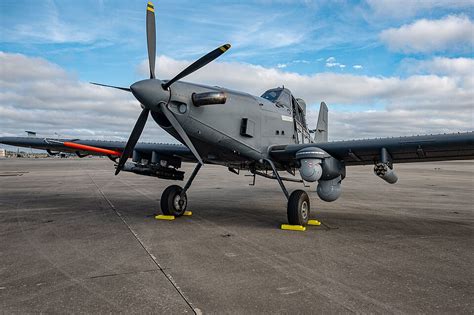
A Routine Training Flight Turned Into a Life-Threatening Emergency
The mishap occurred during an OA-1K Skyraider II training sortie when a student pilot was practicing aircraft procedures with an instructor pilot in the rear seat. The student was not an inexperienced aviator. Before transitioning to the Skyraider II, the pilot had accumulated approximately 2,300 flight hours on the Pilatus U-28 Draco, another special operations aircraft used by the Air Force.
Despite that experience, the OA-1K presented a different challenge. The pilot had flown only a limited number of hours in the aircraft type, including just over three hours in the specific airframe involved in the accident. The unfamiliar cockpit environment became a major factor when the emergency developed.
During the flight, the crew was already dealing with communication problems. The student pilot struggled with audio issues throughout the mission, creating additional stress and reducing effective communication between the front and rear cockpits. At the same time, the pilot was managing multiple tasks, including aircraft control, helmet audio adjustments, autopilot functions, and checklist procedures.
The critical mistake occurred when the instructor instructed the student to open the fuselage fuel tank valve. This was a normal action, but the cockpit arrangement placed two similar controls extremely close together. The correct control was a silver fuel valve lever, while only a few inches away was a red emergency fuel shutoff handle.
Instead of pulling the silver handle, the student grabbed the red emergency control and rotated it clockwise into the OFF position.
The result was immediate. Fuel flow to the engine was cut, causing the PT6A-67F turboprop engine to lose power. The aircraft suddenly transformed from a powerful attack aircraft into a heavy glider with limited time to recover.
The Five-Inch Cockpit Difference That Changed Everything
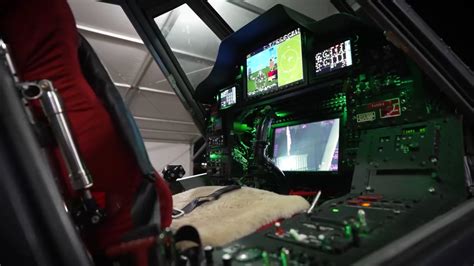
The Air Force Accident Investigation Board (AIB) determined that the primary cause of the accident was an incorrect pilot control input. However, investigators also examined how cockpit design contributed to the mistake.
The problem was not simply that two handles existed. Aircraft often contain numerous switches, levers, and emergency controls. The issue was that these two controls were positioned close enough together that, under pressure, a pilot could easily select the wrong one.
The red emergency fuel shutoff handle was highly visible and located in an unobstructed position. Meanwhile, the correct silver fuel valve lever was partially hidden from the pilot’s normal seated viewpoint because of cockpit configuration differences between aircraft variants.
The AIB photographed the cockpit from the student pilot’s perspective and found that the larger power lever in the newer aircraft partially blocked the silver fuel control. The pilot’s eyes naturally focused on the more visible red handle, causing the hand to move toward the wrong control.
This situation demonstrated a key principle in aviation safety: pilots do not always interact with aircraft controls based solely on memory. Under high workload, humans rely heavily on visual recognition and physical positioning. If a control looks easier to find or appears more accessible, the brain can select it before conscious verification occurs.
A difference of only several inches inside a cockpit may seem insignificant during normal operations. However, during a high-pressure checklist procedure, those inches can determine whether an aircraft continues flying or suddenly loses power.
Human Factors Behind the OA-1K Skyraider II Accident
The accident was not caused by a single mistake. Instead, investigators identified a chain of human-factor problems that combined to create a dangerous situation.
The student pilot was experiencing task saturation, meaning the amount of information and actions required exceeded the pilot’s available attention capacity. While attempting to complete checklist actions, the pilot was also dealing with communication difficulties and aircraft management responsibilities.
After the fuel shutoff occurred, the pilot did not immediately recognize the error. More importantly, the student did not clearly communicate the mistake to the instructor pilot.
The investigation found that the student later returned the fuel valve to the ON position but did so without informing the instructor. This created confusion inside the cockpit because both pilots had different understandings of who was managing the emergency.
The student believed the instructor pilot was taking command of the situation. However, the instructor believed the student pilot was still handling certain procedures. This breakdown in crew resource management (CRM) reduced the effectiveness of the emergency response.
In aviation, communication is often as important as aircraft control. A pilot who makes a mistake but immediately announces it allows the crew to solve the problem together. A mistake that remains hidden removes valuable time from the emergency response.
Why the Skyraider II Became Difficult to Control After Engine Failure
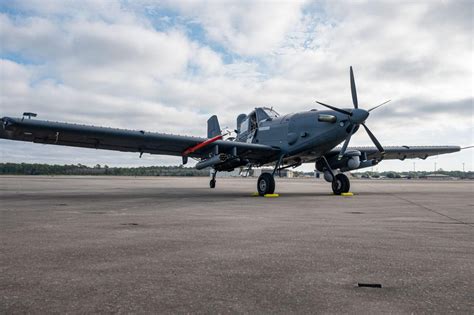
The OA-1K Skyraider II is powered by the 1,600 shaft horsepower Pratt & Whitney PT6A-67F engine, turning a massive 118-inch aluminum propeller. Under normal conditions, this provides excellent performance for tactical operations.
However, once the engine lost power, the aircraft faced a serious aerodynamic challenge. The propeller continued spinning in the airflow, creating significant drag. Instead of acting like an efficient glider, the aircraft began descending rapidly.
The Air Force investigation noted that the crew could have significantly improved the situation by immediately placing the propeller into a feathered position. Feathering rotates the propeller blades so they align with the airflow, reducing drag and improving glide performance.
This single action could have provided an additional 60 to 90 seconds of valuable flight time.
In an aircraft emergency, one minute can completely change the outcome. Those extra seconds could have allowed the crew to identify the closed fuel valve, restore fuel flow, restart the engine, or select a safer landing area.
The OA-1K’s design also added challenges during the forced landing. Like the Air Tractor aircraft it is based on, the Skyraider II uses a tailwheel landing gear configuration. This creates a high nose attitude on the ground and reduces forward visibility, especially when the large engine cowling blocks the pilot’s view.
During the emergency descent, the student pilot experienced cognitive tunnel vision. Instead of focusing primarily on maintaining airspeed and flying the aircraft, attention remained inside the cockpit while attempting to troubleshoot systems.
That delay proved critical.
The Final Moments Before the $17.9 Million Aircraft Was Lost
With altitude rapidly decreasing, the instructor pilot eventually took control. However, by that point, the aircraft was already too low and too slow to recover comfortably.
Unlike many military aircraft, the OA-1K does not feature ejection seats. The crew had no option to escape and had to complete a forced landing.
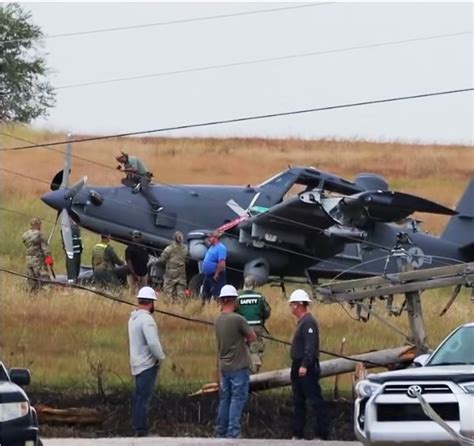
The instructor pilot guided the aircraft toward an open area, but the available options were extremely limited. The Skyraider II struck obstacles during the descent, including power lines and a stop sign, before coming to rest in a field.
Remarkably, both pilots survived without serious injury. However, the aircraft suffered damage beyond economical repair and was officially written off.
The accident also created a dangerous situation for people on the ground. A nearby driver’s dashcam footage showed how close the aircraft came to a roadway, highlighting how quickly an aircraft emergency can become a public safety concern.
Lessons From the OA-1K Skyraider II Cockpit Design Failure
The Skyraider II accident demonstrates that advanced aircraft are only as effective as the relationship between humans and machines. Modern military aviation places enormous demands on pilots, requiring them to manage sensors, communications, navigation systems, weapons, and emergency procedures simultaneously.
The investigation did not blame the accident entirely on cockpit design. The AIB clearly identified the pilot’s incorrect fuel shutoff action as the primary cause. However, it also recognized that cockpit arrangement, visibility, and control placement contributed to the likelihood of the mistake.
The accident highlights why aircraft manufacturers and military organizations invest heavily in human-centered cockpit design. Controls must not only function correctly; they must also communicate their purpose clearly when pilots are under extreme pressure.
A well-designed cockpit should help prevent mistakes before they happen. Emergency controls should be visually distinct, physically separated, and positioned so pilots can identify them instantly.
The OA-1K Skyraider II remains an important aircraft for special operations missions, but this accident provided a valuable reminder that even small design details can have enormous consequences. A few inches between two handles, combined with stress and workload, were enough to destroy a multimillion-dollar aircraft.
In aviation, the smallest details often carry the greatest weight.