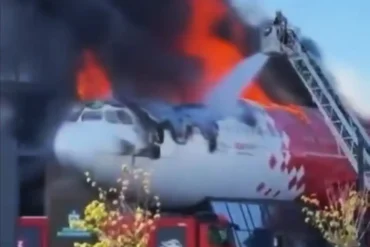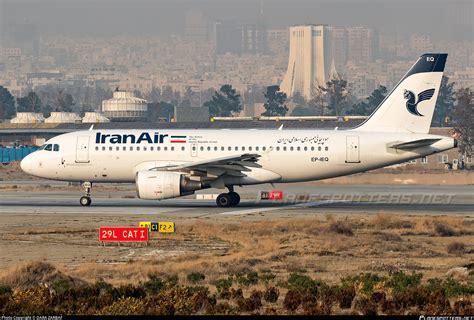
The ongoing escalation of military tensions in the Middle East has begun to affect not only strategic infrastructure but also civil aviation assets. One of the most striking recent incidents involved the destruction of an Iran Air Airbus A319-100 at Bushehr Airport on Iran’s southwestern coast. The aircraft, which belonged to the country’s national carrier, was reportedly caught in the crossfire during a wave of air strikes conducted by United States and Israeli forces targeting Iranian military infrastructure.
The attack illustrates how modern conflicts increasingly intersect with civilian aviation systems. Airports that serve both commercial airlines and military operations often become high-risk locations during wartime. Bushehr Airport, which handles domestic passenger traffic while sharing facilities with a nearby military base, has been repeatedly identified as a strategic location during the latest phase of hostilities.
Reports indicate that the aircraft was parked at the airport when the strikes occurred. The resulting damage appears extensive, with aviation observers suggesting the jet has been destroyed beyond economic repair, effectively removing it from Iran Air’s operational fleet.
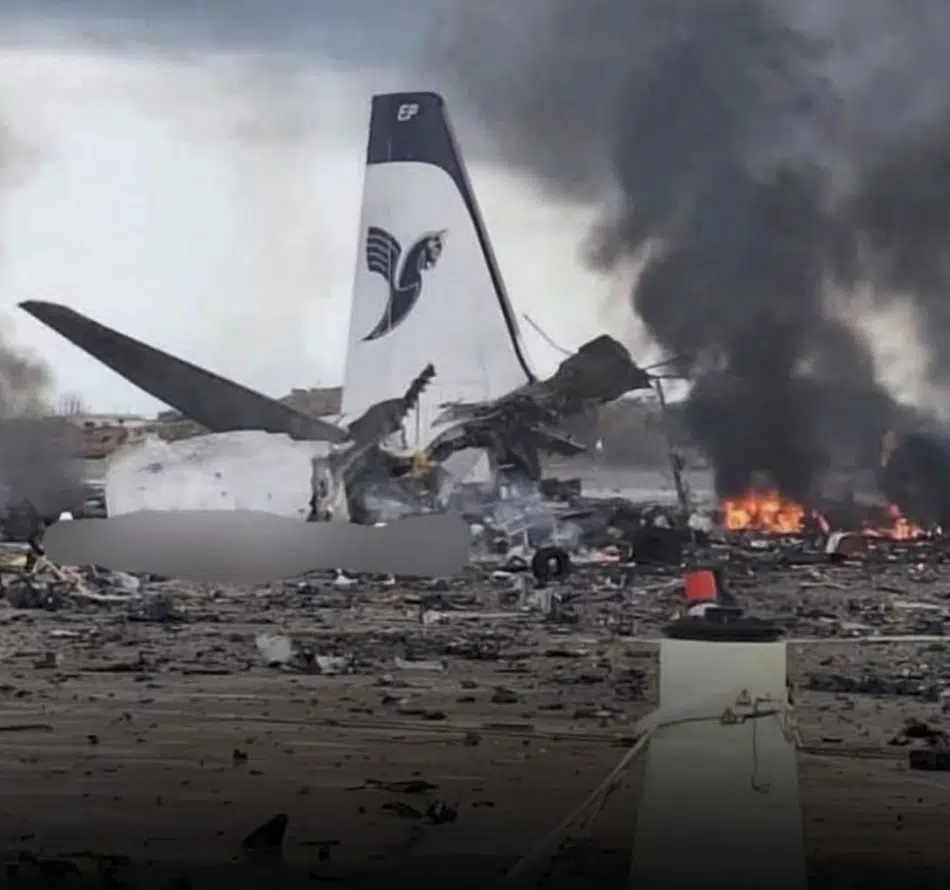
Bushehr Airport Caught in the Crossfire
Bushehr Airport (BUZ) sits along Iran’s Persian Gulf coastline, a region of considerable geopolitical significance. Beyond its commercial aviation role, the surrounding city hosts major strategic infrastructure, including a nuclear power plant and military installations. Although the nuclear facility itself was not believed to be a direct target of the strikes, the presence of military assets in the vicinity made the airport vulnerable.
According to aviation monitoring reports, the airfield has faced repeated attacks since the beginning of the current escalation. Satellite imagery and videos circulating on social media appear to show aircraft stands and apron areas suffering blast damage, with the Iran Air A319 taking the most severe hit among visible assets.
Such incidents highlight a persistent issue in modern aviation conflict zones. Civil airports that also serve defense operations often blur the line between civilian and military targets, increasing the risk of collateral damage to commercial aircraft parked on the ground.
The Aircraft: Airbus A319-100 EP-IEP
The destroyed aircraft carried the registration EP-IEP, a narrow-body Airbus A319-100 operated by Iran Air. According to fleet records, the jet had a long and varied operational history spanning more than two decades.
The aircraft first flew on January 8, 2002, before being delivered just two weeks later to Zhejiang Airlines in China. During its early service years, the jet retained its original Chinese registration B-2225, even after the airline merged into Air China in 2003. The aircraft continued flying under Air China’s operations until 2012.
After leaving the Chinese carrier, the A319 passed through several operators across different regions. It flew for Rossiya Airlines in Russia between 2012 and 2016, later moving through smaller leasing and charter operators including Hyoerion Aviation and Asia Sky Lines. Eventually, the aircraft was transferred to Iran Air in December 2019, receiving the registration EP-IEP and entering the airline’s narrow-body fleet.
At the time of its destruction, the aircraft was configured with 124 economy class seats and 12 business class seats, a layout commonly used on regional routes within Iran and neighboring countries.
Active Service Until Its Final Weeks
Flight tracking data shows that the aircraft remained actively deployed throughout its final month of operations. Iran Air regularly used the A319 on domestic routes and short-haul international flights across the Middle East.
Records indicate the jet frequently operated flights linking Iranian cities with regional hubs such as Dubai International Airport (DXB) in the United Arab Emirates. These routes formed part of Iran Air’s efforts to maintain regional connectivity despite international sanctions and operational constraints affecting the country’s aviation sector.
The aircraft’s final recorded flight occurred on February 28, when it was scheduled to travel from Bushehr to Tehran. However, flight tracking data shows the jet ultimately diverted back to Bushehr shortly after departure. The reasons for the diversion remain unclear, but the aircraft remained parked at the airport in the days leading up to the air strike that destroyed it.
Strikes Expand to Other Iranian Airports
Bushehr has not been the only airport affected during the current conflict. Reports from regional media outlets indicate that Mehrabad International Airport in Tehran has also experienced strikes.
Mehrabad once served as Tehran’s primary international gateway before the opening of Imam Khomeini International Airport (IKA) in 2005. Today, it functions mainly as a domestic aviation hub, handling a large share of internal flights within Iran.
Images shared by local sources reportedly show smoke rising near the airport’s runway area, suggesting that nearby infrastructure was struck during the attacks. While full damage assessments remain limited, the situation underscores the growing vulnerability of civil aviation infrastructure during geopolitical crises.
Civil Aviation in a Conflict Zone
The destruction of Iran Air’s Airbus A319 highlights a broader reality in modern warfare. Aircraft that are not airborne but parked at mixed-use airports can become unintended casualties of military operations. For airlines already operating under economic and regulatory pressure, the loss of even a single aircraft represents a significant blow.
For Iran Air, which maintains a relatively small fleet of Airbus A319 aircraft, the loss of EP-IEP further reduces operational flexibility. Replacement aircraft are difficult to obtain due to international sanctions restricting aircraft sales, leasing agreements, and spare parts supply chains.
As tensions continue to reshape the aviation map of the Middle East, events like the destruction of this A319 serve as a reminder that the global air transport system—often perceived as purely civilian—remains deeply intertwined with geopolitics. When conflict reaches airport runways, the consequences ripple far beyond the battlefield, affecting airlines, passengers, and the delicate infrastructure that keeps international aviation moving.