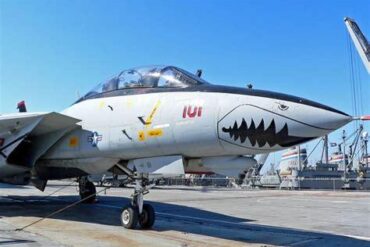
The Grumman F-14 Tomcat remains one of the most recognizable fighter aircraft ever built. With its sweeping variable-geometry wings, twin tails, and unmistakable silhouette, the aircraft symbolized American naval air power during the later decades of the Cold War and into the early 21st century. It was fast, heavily armed, technologically sophisticated, and widely respected by pilots and adversaries alike. Yet despite its legendary status, the majority of these aircraft did not retire quietly into museums or storage facilities. Instead, almost every American F-14 Tomcat was deliberately destroyed in the Arizona desert.
This unusual decision was not about cost or logistics. It was a carefully calculated national security strategy designed to prevent advanced military technology from falling into the wrong hands. The aircraft’s fate tells a remarkable story about geopolitics, military technology, and the long shadow cast by Cold War alliances.
Understanding why the United States destroyed its Tomcats requires exploring the aircraft’s capabilities, its historical role, and the unique geopolitical circumstances that turned a once-trusted ally into a strategic concern.
The Rise of the Grumman F-14 Tomcat
Introduced in 1974, the Grumman F-14 Tomcat represented a major leap forward in fighter aircraft design. Developed for the United States Navy, it replaced the aging McDonnell Douglas F-4 Phantom II, a legendary fighter in its own right. The Navy needed an aircraft capable of defending carrier battle groups against long-range Soviet bomber threats, and the F-14 was designed precisely for that mission.
Unlike many earlier fighters, the Tomcat was built around long-range interception and air superiority. It combined advanced radar technology with powerful missiles capable of striking enemy aircraft far beyond visual range. The aircraft also featured a two-person crew configuration consisting of a pilot and a Radar Intercept Officer (RIO), allowing complex sensor and weapons systems to be managed efficiently during combat.
Technologically, the Tomcat stood among the first generation of fourth-generation fighters, alongside aircraft such as:
- F-15 Eagle
- F-16 Fighting Falcon
- F/A-18 Hornet
These aircraft introduced major advancements in avionics, maneuverability, and weapons systems, transforming aerial combat.
The F-14, however, had a unique feature that made it instantly recognizable.
Variable Geometry Wings: Engineering for Every Speed
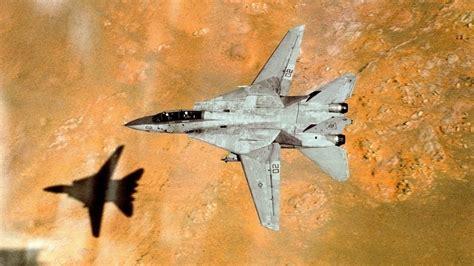
Perhaps the most iconic characteristic of the Tomcat was its variable-sweep wings, often referred to as “swing wings.” These wings could change position during flight, automatically adjusting their angle to optimize aerodynamic performance.
At low speeds—such as during dogfighting or carrier landings—the wings extended forward, creating greater lift and improved maneuverability. When flying at high speeds, the wings swept backward, reducing drag and allowing the aircraft to maintain stability at supersonic velocities.
This engineering innovation allowed the F-14 to perform effectively across a wide range of flight conditions, from slow carrier approaches to high-speed interceptions thousands of miles from the fleet.
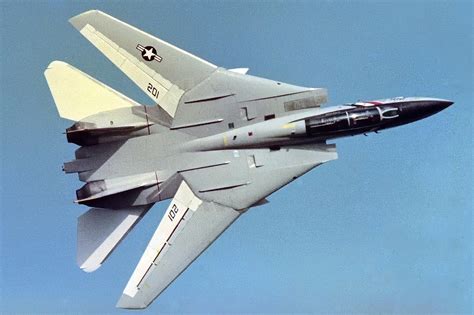
Only a handful of American military aircraft adopted this complex design philosophy. Notable examples include the General Dynamics F-111 and the Rockwell B-1 Lancer bomber. While effective, swing-wing technology added mechanical complexity and maintenance demands, making it less common in later aircraft generations.
Nevertheless, the Tomcat’s design gave it extraordinary performance for its time.
A Cold War Guardian of the Seas
During the Cold War, the U.S. Navy relied heavily on the F-14 Tomcat to protect carrier strike groups from Soviet bombers armed with anti-ship missiles. Soviet long-range bombers such as the Tu-22M Backfire posed a significant threat because they could launch cruise missiles from hundreds of miles away.
To counter this threat, the Tomcat used the powerful AWG-9 radar system combined with the long-range AIM-54 Phoenix missile. This combination allowed the aircraft to track multiple targets simultaneously and engage them from distances exceeding 100 miles.
This capability made the F-14 one of the most formidable interceptors ever deployed on an aircraft carrier.
Throughout its service life, the Tomcat participated in numerous operations, including:
- Cold War interception missions over the Atlantic and Pacific
- Operations during the Lebanese Civil War
- U.S. strikes against Libya in the 1980s
- The Gulf War
- Operations in the Balkans
- The Iraq War
The Navy ultimately operated 632 F-14 Tomcats, making it a cornerstone of American naval aviation for more than three decades.
The Only Foreign Operator: Iran
One of the most unusual aspects of the F-14 story is that only one foreign country ever operated the aircraft: Iran.
In the 1970s, the United States maintained strong diplomatic and military ties with the Pahlavi monarchy under Shah Mohammad Reza Pahlavi. Iran was considered a key Western ally in the Middle East and a critical counterweight to Soviet influence.
As part of this strategic partnership, the United States agreed to sell 80 F-14 Tomcats to Iran in 1974.
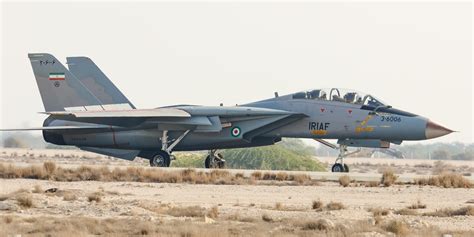
The deal included extensive support packages:
- Spare parts and replacement engines
- Maintenance infrastructure
- Weapons systems and radar technology
- Pilot and technician training
At the time, this arrangement seemed logical. Iran needed a powerful interceptor to defend its vast airspace against Soviet reconnaissance aircraft, and the Tomcat was the most capable option available.
But the geopolitical landscape changed dramatically only a few years later.
The Iranian Revolution Changes Everything
In 1979, the Iranian Revolution overthrew the Shah and established the Islamic Republic of Iran. Almost overnight, a close American ally became one of the United States’ most hostile adversaries.
Military cooperation collapsed. Arms agreements were canceled. Diplomatic relations ended.
One of the 80 Tomcats ordered by Iran was never delivered, leaving the country with 79 operational aircraft. However, the support agreements that allowed the aircraft to remain operational also disappeared.
Without American support, Iran suddenly faced a major challenge: keeping a highly complex aircraft operational without access to spare parts or technical assistance.
Despite these obstacles, the Iranian Air Force managed to maintain a portion of its Tomcat fleet by relying on a combination of domestic engineering and cannibalizing grounded aircraft for spare parts.
This unusual situation would later influence the United States’ decision to destroy its own Tomcats.
The Retirement of the F-14 Tomcat
By the early 2000s, the Tomcat was reaching the end of its service life. Although powerful, it was expensive to maintain and specialized primarily for interception missions.
The Navy gradually transitioned to the F/A-18 Hornet and the newer F/A-18E/F Super Hornet, which offered greater versatility, modern avionics, and lower operating costs.
In 2006, the United States officially retired the F-14 Tomcat from active service.
Retired aircraft were flown to the 309th Aerospace Maintenance and Regeneration Group (AMARG) at Davis-Monthan Air Force Base in Arizona. This facility—often called “The Boneyard”—is the world’s largest aircraft storage and preservation center.
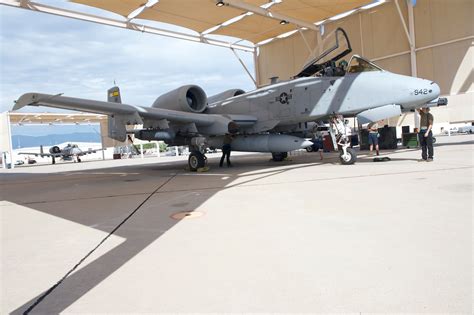
Normally, retired aircraft stored there are preserved for potential future use or dismantled for spare parts. But the Tomcat’s case would become very different.
A Security Decision: Destroying the Fleet
Initially, the U.S. Department of Defense planned to salvage and sell certain non-sensitive components from the retired Tomcats while destroying only critical parts unique to the aircraft.
However, intelligence reports and investigations revealed a troubling possibility.
F-14 spare parts were appearing on the international market, sometimes through unofficial or illegal channels. If these parts reached Iran, they could significantly extend the operational life of the Iranian Tomcat fleet.
Because Iran remained the only country still operating the aircraft, even small numbers of replacement components could make a major difference.
In response, the Pentagon reversed its earlier decision.
In 2007, the United States ordered the complete destruction of all remaining F-14 airframes in storage.
This policy aimed to ensure that no spare parts could ever reach Iran, intentionally shortening the lifespan of the Iranian fleet.
The Final Destruction in the Arizona Desert
The destruction process was methodical and absolute.
Stored Tomcats at the Arizona facility were cut apart, shredded, and reduced to scrap metal. Sensitive systems were removed and destroyed first, followed by the dismantling of the aircraft structures themselves.
By 2009, the last remaining American Tomcat had been dismantled.
Only a limited number of aircraft survived, and those were placed in museums or static displays where they were rendered completely inoperable.
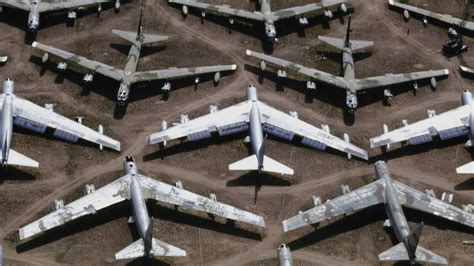
This extraordinary measure ensured that no usable components could be salvaged or exported.
Few other aircraft in U.S. military history have been treated this way.
Sanctions and the Battle Over Spare Parts
The decision to destroy the Tomcat fleet was closely tied to broader economic and military sanctions against Iran.
Since the 1990s, the United States has imposed strict restrictions preventing Iran from acquiring Western military equipment. These restrictions also affect civil aviation, leaving Iran reliant on aging commercial aircraft and improvised maintenance solutions.
In both military and civilian sectors, Iran often keeps aircraft operational by cannibalizing grounded planes for spare parts.
Without access to new F-14 components, Iran has gradually been forced to reduce the size of its operational fleet.
Estimates suggest that between 20 and 30 Iranian Tomcats may still be airworthy, although the exact number remains classified or uncertain.
Modern Conflict and the Decline of the Iranian Tomcats
Even decades after American retirement, the Tomcat continues to play a symbolic role in modern military dynamics.
Iran still relies on the aircraft as one of its most advanced interceptors. However, its long-term survival has become increasingly unlikely due to aging airframes and the scarcity of replacement components.
Military analysts believe the fleet’s numbers have steadily declined over the years as aircraft are retired or dismantled for parts.
In recent regional conflicts and air campaigns targeting Iranian military assets, several F-14 airframes have reportedly been destroyed, further shrinking the fleet.
Each lost aircraft represents not only a reduction in combat capability but also the loss of another potential source of spare parts.
Eventually, the aircraft may disappear entirely—not through formal retirement, but simply because maintaining them becomes impossible.
The Cultural Legacy of the Tomcat
Beyond its military achievements, the F-14 Tomcat achieved a level of pop-culture fame rarely seen in military aviation.
Its starring role in the 1986 blockbuster “Top Gun”, flown by the fictional pilot Pete “Maverick” Mitchell, introduced the aircraft to a global audience. The film turned the Tomcat into a symbol of speed, skill, and American airpower.
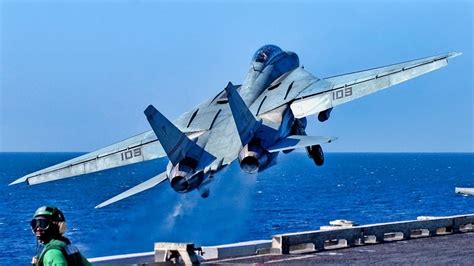
Even decades later, the aircraft’s popularity remains strong among aviation enthusiasts. Air museums displaying preserved Tomcats frequently rank among the most visited exhibits, and scale models, documentaries, and flight simulations continue to celebrate the aircraft.
Its reputation is built not only on cinematic appearances but also on its genuine combat capabilities.
Why the Tomcat Was Never Widely Exported
Despite its impressive performance, the Tomcat was never widely exported like many other American fighters.
Several factors limited its international appeal:
- Extremely high operating costs
- Complex maintenance requirements
- Highly specialized interceptor role
- Sensitive radar and missile technology
Countries seeking modern fighters often preferred more versatile and affordable platforms such as the F-16 Fighting Falcon or F/A-18 Hornet.
As a result, Iran remained the only foreign operator in history.
Ironically, this exclusivity later forced the United States to eliminate its own fleet to prevent technology leakage.
The Strategic Logic Behind Destroying a Legend
Destroying hundreds of advanced fighter aircraft might seem wasteful at first glance. Yet from a strategic perspective, the decision was straightforward.
Allowing spare parts to circulate on global markets could have extended the life of Iran’s Tomcat fleet for decades.
By eliminating every available source of parts, the United States ensured that the aircraft’s operational life would eventually end.
This approach reflects a broader principle in military planning: technology denial can be just as important as technological advancement.
Conclusion: A Fighter Too Dangerous to Leave Behind
The Grumman F-14 Tomcat remains one of the most extraordinary fighters ever built. Its combination of speed, radar capability, long-range missiles, and iconic swing wings made it a defining aircraft of Cold War aviation.
Yet the aircraft’s story did not end with ceremonial retirement.
Instead, it concluded in the Arizona desert, where the United States dismantled nearly every remaining example to protect sensitive technology and weaken a potential adversary.
Few aircraft have ever experienced such a dramatic final chapter. The Tomcat’s destruction was not an act of disposal but a calculated security measure shaped by decades of geopolitical tension.
Even today, the legend of the F-14 endures—remembered not only as a powerful interceptor but also as one of the few fighter jets considered too strategically valuable to exist after retirement.