Emirates has built one of the most recognizable premium travel brands in the world. For decades, the Dubai-based airline has been associated with luxury, long-haul connectivity, and a passenger experience designed to compete with the very best airlines on the planet. However, even a company known for setting industry standards can make strategic decisions that eventually become costly. One of Emirates’ biggest product mistakes was its decision to maintain a dense Boeing 777-300ER business class configuration long after the premium aviation market had moved in another direction.
The airline is now spending approximately $5 billion to correct that decision. Through one of the largest aircraft interior modernization programs ever attempted by a commercial carrier, Emirates is rebuilding its widebody fleet, replacing outdated cabins, introducing new technology, and reshaping its premium experience for the next generation of travelers.
This massive investment is not simply about installing new seats. It represents a complete transformation of Emirates’ long-haul strategy. The airline is effectively rebuilding its existing aircraft to compete against younger fleets from rivals such as Qatar Airways, Singapore Airlines, and other premium-focused carriers that have aggressively improved their business class offerings.
The timing of this transformation is closely connected to delays affecting Emirates’ future fleet plans. The airline originally expected the arrival of next-generation aircraft, particularly the Boeing 777-9, to introduce a completely new premium cabin experience. However, manufacturing delays pushed those aircraft further into the future, forcing Emirates to rethink its approach.
Instead of waiting several more years for new aircraft, Emirates chose to take control of its own timeline. The result is an ambitious in-house retrofit program designed to keep its existing Boeing 777 and Airbus A380 fleet competitive well into the 2030s.
The Boeing 777 Business Class Mistake That Cost Emirates Premium Customers
The biggest weakness in Emirates’ premium product was found on its Boeing 777-300ER business class cabin. While the airline’s Airbus A380 business class experience remained highly competitive, its twin-engine fleet continued operating with a 2-3-2 seating layout.
At a time when leading international airlines were moving toward 1-2-1 business class configurations, Emirates continued offering seven seats across each row. This meant some passengers had no direct aisle access and, most importantly, some travelers were forced into the unpopular middle seat.
For economy passengers, a middle seat may be an inconvenience. For business class customers paying thousands of dollars for a premium experience, it became a serious product disadvantage.
The modern premium traveler increasingly expects privacy, personal space, and uninterrupted access to the aisle. Corporate executives, frequent flyers, and high-value leisure travelers began viewing direct aisle access as a basic requirement rather than a luxury feature.
Competitors quickly recognized this shift. Qatar Airways introduced its highly praised Qsuite business class, creating private suites with doors, adjustable layouts, and the ability for passengers traveling together to create shared spaces. Singapore Airlines and other Asian carriers also invested heavily in spacious, highly personalized premium cabins.
Against this changing landscape, Emirates’ 777 business class product began to appear outdated.
The problem was not that Emirates offered a poor experience. The airline still provided excellent service, premium dining, and a globally respected brand. The issue was that the physical cabin design no longer matched customer expectations.
The airline had created a mismatch between its reputation and its hardware. A passenger choosing Emirates because of its premium image could find a business class seat that felt several generations behind competing products.
Why Emirates Chose a $5 Billion Retrofit Instead of Waiting for New Aircraft
The original solution appeared straightforward: wait for the arrival of the Boeing 777-9 and introduce a completely new generation of cabins. However, aircraft delivery delays changed the equation.
The 777-9 program experienced significant delays, pushing Emirates’ expected fleet expansion timeline further into the future. For an airline operating one of the world’s largest long-haul networks, waiting was not a realistic option.
Every year of delay created a competitive risk. Emirates needed to protect its premium routes, maintain customer loyalty, and ensure that its product remained strong on some of the world’s most valuable international markets.
Sir Tim Clark, Emirates’ president, decided that the airline could no longer depend entirely on aircraft manufacturers to determine its product strategy. Instead, Emirates launched a massive internal engineering effort to upgrade its existing fleet.
The program required enormous planning. Engineers needed to redesign aircraft interiors, install new technology systems, modify cabin layouts, and complete complex maintenance work without creating excessive aircraft downtime.
The airline even abandoned earlier cabin development efforts because the delays made some planned technologies outdated before they entered service. Millions of dollars in engineering investment had to be written off as Emirates changed direction.
Rather than waiting, Emirates created its own aircraft transformation system.
Inside Emirates’ Massive Aircraft Modernization Program
The scale of Emirates’ retrofit project is among the most ambitious in commercial aviation history. The airline established a continuous production-style process at its Dubai engineering facilities, allowing aircraft to move through a highly organized modernization pipeline.
The company’s technical teams are effectively treating passenger aircraft like products moving through a factory.
Each aircraft undergoes a complete interior transformation. Seats are removed, cabin structures are modified, electrical systems are upgraded, entertainment systems are replaced, and new premium features are installed.
A Boeing 777 retrofit can be completed in approximately 18 days, while an Airbus A380 requires around 22 days. The airline has achieved a pace of returning multiple upgraded aircraft to service every month.
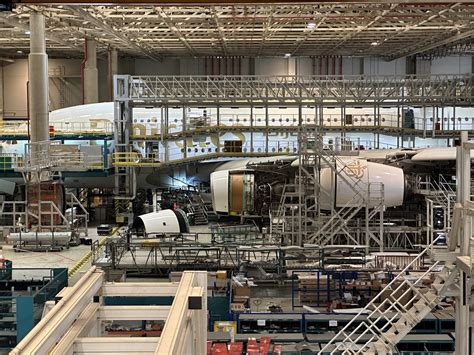
The project has already required millions of engineering hours and represents a major investment in Emirates’ own technical capabilities. Instead of simply refreshing interiors, the airline is creating a standardized premium experience across different aircraft types.
This approach allows Emirates to bridge the gap between its existing fleet and future aircraft deliveries.
The goal is consistency. Whether passengers board an upgraded Boeing 777, a refreshed Airbus A380, or a newer Airbus A350, they should recognize the same Emirates premium identity.
A New 1-2-1 Business Class Seat Eliminates the Middle Seat Problem
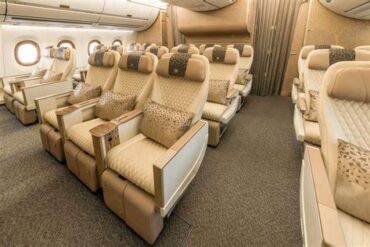
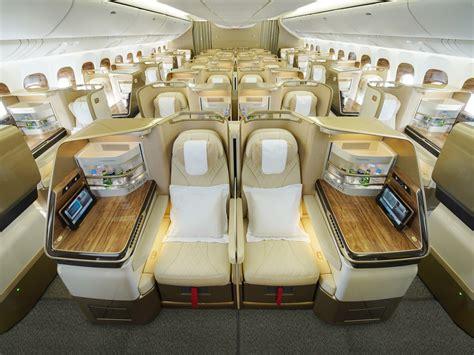
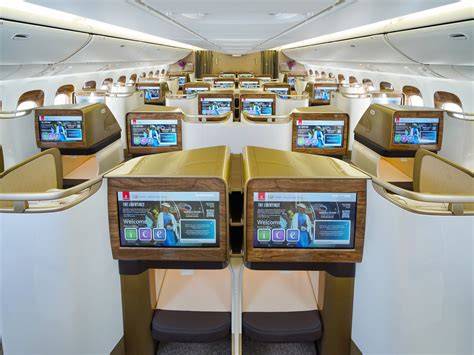
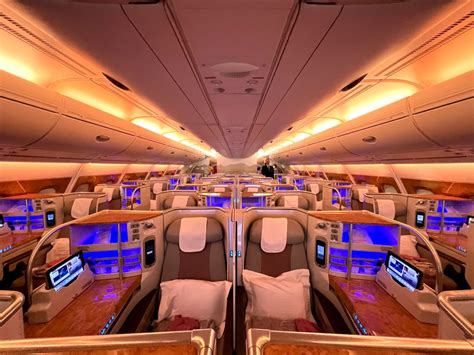
The centerpiece of Emirates’ transformation is the replacement of the old seven-abreast business class cabin with a modern four-abreast 1-2-1 layout.
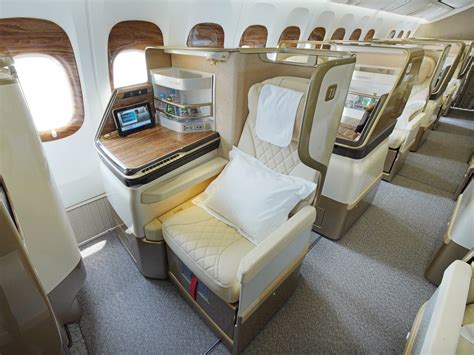
This change completely alters the passenger experience. Every business class traveler receives direct aisle access, eliminating the awkward situation of climbing over another passenger during overnight flights.
The new seats are based on an advanced Safran platform, providing improved privacy, greater personal space, and enhanced sleeping comfort.
Compared with the previous configuration, the upgraded cabin delivers several major improvements:
- A move from 2-3-2 seating to 1-2-1 seating
- Direct aisle access for every passenger
- Longer lie-flat beds
- Improved personal storage
- More privacy-focused seat design
- Better charging options and connectivity
The transformation comes with a significant financial trade-off. Removing seats means Emirates loses some premium cabin capacity.
A Boeing 777-300ER business class cabin that previously carried around 42 passengers may now carry approximately 38 to 40 passengers depending on configuration.
However, Emirates believes the higher-quality product will generate stronger revenue. By offering a superior business class experience, the airline can defend premium fares and attract more valuable customers.
In premium aviation, fewer seats can sometimes produce greater profits when each passenger generates significantly higher revenue.
Technology Upgrades Bring Emirates Business Class Into the Digital Era
The $5 billion modernization program extends far beyond seating.
Modern business travelers expect their aircraft cabin to function as a connected workspace. Emirates has therefore upgraded the digital infrastructure of its aircraft alongside the physical redesign.
One of the major improvements is the introduction of the Panasonic Astrova entertainment system. Business class passengers receive large 4K HDR OLED screens designed to deliver sharper images, improved contrast, and a more premium viewing experience.
The airline is also upgrading aircraft wiring systems, replacing older technology with advanced digital networks capable of supporting future connectivity requirements.
Power access has also been redesigned. Instead of inconvenient charging locations, passengers receive easier access to high-speed charging ports, including powerful USB-C connections suitable for laptops and professional devices.
Wireless charging options and improved connectivity features help transform the business class seat into a more productive environment.
The modernization also includes improvements to onboard internet services, ensuring passengers can remain connected during long international flights.
Emirates Is Building a Complete Four-Class Long-Haul Experience
Although business class is the headline feature, Emirates’ retrofit strategy affects the entire aircraft.
The airline is using the opportunity to create a complete four-class passenger experience, including the introduction and expansion of premium economy.
The premium economy cabin fills the gap between business class and economy, targeting travelers who want more comfort without paying full business class prices.
Emirates has installed premium economy seats featuring improved cushioning, adjustable leg support, upgraded materials, and enhanced personal space.
The economy cabin is also receiving improvements, including redesigned seats, better entertainment screens, and upgraded passenger comfort features.
This comprehensive approach demonstrates that Emirates is not simply repairing one product problem. It is redesigning its entire long-haul ecosystem.
The Strategic Importance of Protecting Emirates’ Premium Brand
Emirates’ global reputation has always depended on delivering an exceptional passenger experience. The airline’s first-class suites, Airbus A380 onboard lounge, and extensive international network helped establish it as one of aviation’s most recognizable luxury brands.
However, premium aviation is constantly changing. Customer expectations evolve quickly, and airlines cannot rely only on brand reputation.
The business class mistake of the past decade shows that even successful companies must continuously adapt. A product that was acceptable years ago can become a disadvantage when competitors redefine the market.
Emirates’ decision to spend $5 billion demonstrates the financial importance of maintaining premium leadership.
The airline could have continued operating its existing cabins and waited for new aircraft. Instead, it chose a more aggressive approach: investing billions to protect its position before customers began moving elsewhere.
The retrofit program represents a major lesson in modern aviation. Aircraft are expensive assets, and waiting for replacement fleets is not always the best solution. Sometimes, the smarter strategy is to transform existing equipment and extend its competitive life.
Emirates’ $5 Billion Investment Could Define Its Next Decade
The Emirates fleet modernization program is more than an interior upgrade. It is a strategic correction of a decision that eventually became impossible to ignore.
The airline’s old Boeing 777 business class layout served its purpose for years, but the premium aviation market moved forward. Direct aisle access, privacy, and personalized space became essential features rather than optional benefits.
By investing billions into aircraft retrofits, Emirates is acknowledging that its previous approach needed to change. The airline is removing the middle seat, upgrading technology, improving comfort, and creating a consistent premium experience across its fleet.
The delayed Boeing 777-9 may eventually introduce Emirates’ next-generation flagship cabin, but the $5 billion retrofit ensures that the airline remains competitive until then.
In the highly competitive world of international aviation, reputation alone is not enough. Airlines must continuously earn customer loyalty through the products they provide. Emirates’ massive transformation shows that correcting a costly mistake can sometimes become the foundation for future success.