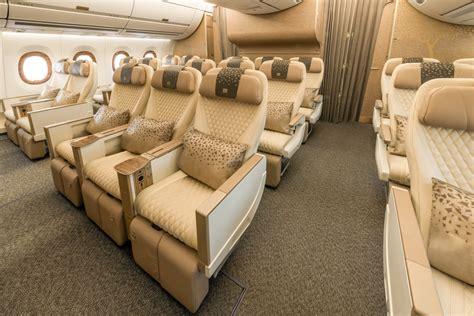
For decades, the economy cabin was the foundation of commercial aviation. Airlines built their networks around filling as many seats as possible, using large coach sections to carry the majority of passengers while relying on premium cabins as profitable additions. Business class and premium economy were positioned as optional upgrades for travelers who wanted more comfort, extra space, or enhanced service.
That model is now undergoing a major transformation. Across the global airline industry, carriers are quietly redesigning aircraft interiors, adjusting fleet strategies, and investing heavily in premium products. The most important change is not simply the growth of luxury seating. It is the gradual reduction of traditional coach capacity as airlines discover that fewer high-paying passengers can generate stronger financial returns than larger numbers of economy travelers.
The shift has been subtle enough that many passengers have not fully noticed it. Airlines are not announcing dramatic reductions in economy seats. Instead, the transformation is happening through thousands of individual decisions: new aircraft deliveries with premium-heavy layouts, widebody cabin retrofits, expanded loyalty incentives, and pricing strategies designed to move passengers toward higher-value products.
The result is a slow but significant restructuring of commercial aviation. The familiar economy cabin remains, but its role is changing. It is becoming less of the airline industry’s primary growth engine and more of a foundation that supports a business model increasingly centered on premium revenue.
Premium Cabins Have Become the New Financial Engine for Airlines
The strongest evidence of this industry transformation comes from airline revenue performance. The importance of premium cabins is no longer measured only by the number of seats installed but by the amount of money generated from each passenger.
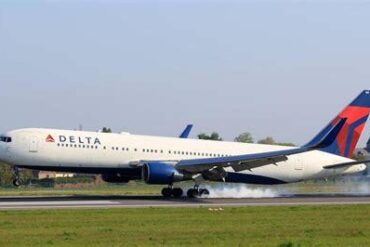
A major milestone occurred when Delta Air Lines reported premium cabin revenue reaching approximately $5.7 billion, slightly exceeding the $5.62 billion generated by its main cabin. This represented a fundamental change in how airlines evaluate their products. Premium seating was no longer simply a profitable side business; it had become one of the company’s most important sources of income.
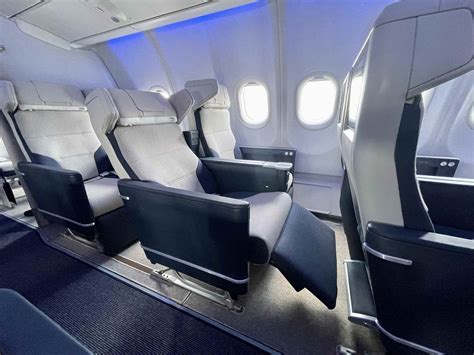
The economics behind this change are straightforward. An additional business class or premium economy passenger can generate revenue comparable to multiple economy passengers. Although premium seats require more physical space, they often produce significantly higher returns per square foot of aircraft cabin.
This has changed aircraft planning decisions across the industry. Airline executives are increasingly asking a different question when configuring new aircraft: not “How many passengers can this aircraft carry?” but rather “Which cabin arrangement produces the strongest long-term financial performance?”
That shift has enormous consequences. Every additional premium seat represents valuable aircraft space that could otherwise be occupied by several economy seats. As airlines prioritize profitability over maximum passenger volume, the traditional high-density coach model becomes less attractive.
The trend reflects a broader change in passenger behavior. Premium travel demand has recovered strongly, particularly among business travelers and wealthier leisure passengers who are willing to pay more for comfort, flexibility, and better service. Airlines are responding by redesigning their fleets around these customers.
The 12% Premium Fleet Threshold Shows Where Airlines Are Heading
One of the clearest examples of this strategy comes from United Airlines. Premium seating now represents roughly 12% of the carrier’s total fleet capacity, a figure that may appear relatively small but represents a significant structural change.
A 12% premium share means thousands of seats across the fleet have shifted away from traditional economy configurations. More importantly, the percentage continues growing as new aircraft enter service and older aircraft receive interior upgrades.
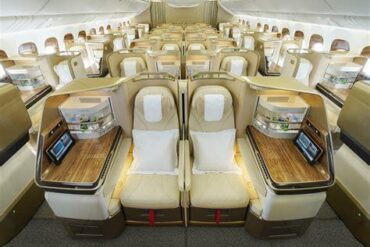
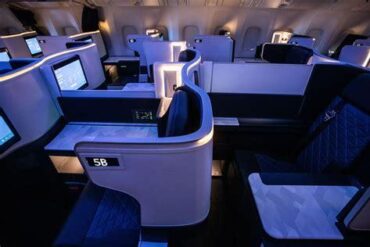
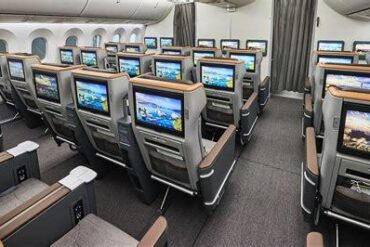
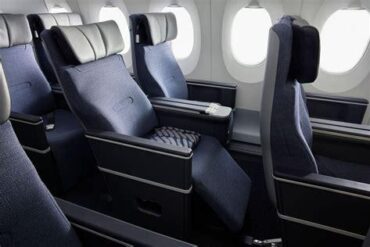
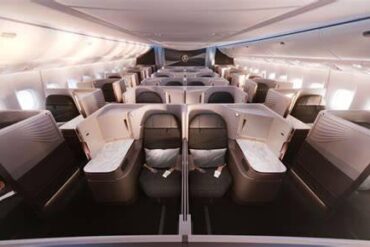
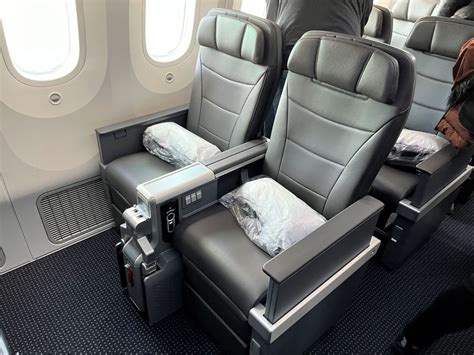
United’s newest Boeing 787-9 configurations demonstrate this philosophy. Instead of maximizing economy capacity, the aircraft includes 64 business class seats and 35 premium economy seats, leaving approximately 123 standard economy seats.
That configuration would have appeared unusually premium-focused only a few years ago. Today, it reflects a growing industry belief that premium-heavy layouts can produce stronger returns throughout an aircraft’s decades-long service life.
Similar strategies are appearing across other major airlines. American Airlines has also introduced premium-focused layouts on newer Boeing 787-9 aircraft, signaling that the trend is not limited to one carrier.
The important detail is how quietly this change happens. Travelers rarely notice a single aircraft redesign as part of a much larger movement. A passenger may board a new aircraft and simply see a larger premium cabin without realizing that dozens of similar changes are occurring across airline fleets worldwide.
Over time, these individual decisions reshape the entire passenger experience.
Economy Class Capacity Is Losing the Battle for Future Investment
While airlines are expanding premium offerings, the more significant story may be what they are not doing: aggressively increasing traditional coach capacity.
For many years, economy class growth was directly connected to airline expansion. More aircraft meant more seats, and more seats meant more opportunities to attract price-sensitive travelers. That strategy worked well when passenger volume was the dominant measure of success.
Today, the calculation has changed.
Airlines increasingly believe that future profitability depends on attracting passengers who spend more rather than simply carrying more people. As a result, new aircraft deliveries and cabin refurbishments are often focused on premium products instead of expanding economy sections.
This does not mean airlines are abandoning coach. Economy passengers remain essential because they provide the volume necessary to support global route networks. However, the cabin is no longer receiving the same level of strategic attention.
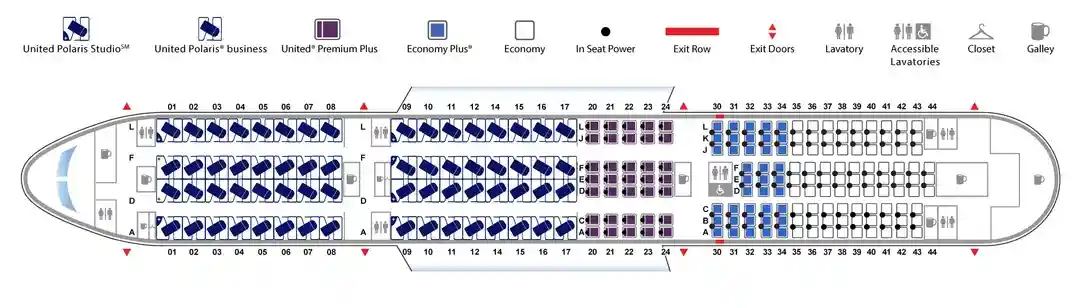
The impact is especially visible on long-haul flights. International routes have traditionally relied heavily on economy passengers, but airlines are now converting space into premium economy sections and larger business class cabins because those seats generate higher yields.
For travelers, the change may appear only during booking. During popular travel periods, fewer economy seats may be available at lower fare levels, while premium upgrades become more aggressively promoted.
The aircraft still looks familiar. The economy cabin still exists. But the economics behind it have changed.
Airlines Are Using Loyalty Programs to Move Travelers Upward
Fleet redesign is only one part of the industry’s premium strategy. Airlines are also changing passenger behavior through loyalty programs and targeted incentives.
Programs that once rewarded passengers mainly for flying frequently are increasingly encouraging customers to purchase higher-value tickets. Premium economy has become a key target because it provides airlines with a middle category between traditional coach and expensive business class.
Lufthansa, for example, has used promotions through its Miles & More program to provide additional rewards for premium economy bookings. These incentives encourage travelers to view the cabin as a realistic upgrade rather than a rare luxury.
This strategy works because passenger expectations are highly adaptable. Once travelers experience additional legroom, improved meals, priority services, and better flexibility, returning to standard economy can feel like a downgrade.
Airlines understand this psychological shift. Instead of immediately convincing passengers to purchase business class, they use premium economy as a stepping stone. It introduces customers to higher-value travel habits while increasing revenue without requiring a full premium purchase.
The approach is especially effective among frequent travelers. Business professionals and experienced leisure travelers often become more willing to pay extra once they recognize the benefits.
Over time, premium economy moves from being an occasional choice to becoming the preferred option for many passengers.
The Rise of Multi-Level Cabin Pricing Is Changing Air Travel
The premium transformation is not only about physical seats. Airlines are also creating more sophisticated pricing systems designed to extract additional revenue from every passenger segment.
Modern airlines increasingly divide cabins into multiple fare categories. A business class ticket may come with different levels of flexibility, baggage allowance, lounge access, and upgrade benefits. Premium economy is experiencing a similar evolution.
Instead of selling one premium product, airlines now create multiple versions of the same seat. One passenger may pay more for additional flexibility, while another chooses a lower-priced option with fewer benefits.
This approach allows airlines to capture more revenue from travelers who are willing to spend extra but do not necessarily require every premium feature.
The result is a more complicated but more profitable cabin structure. Airlines are no longer simply selling seats; they are selling combinations of convenience, comfort, and flexibility.
This strategy also helps airlines maximize revenue from high-value leisure travelers. Many passengers who cannot justify business class prices may still be willing to pay significantly more than economy fares for a better experience.
Premium cabins are becoming less about exclusivity and more about revenue optimization.
The Future of Coach: Essential but No Longer the Priority
The gradual restructuring of airline cabins does not mean economy class will disappear. The global aviation system still depends on millions of passengers purchasing affordable tickets every year.
However, the role of coach is changing.
The traditional economy cabin was once the center of airline strategy. Today, it increasingly serves as the foundation supporting a premium-focused business model.
The evidence can be seen across the industry. United Airlines carried approximately 27.4 million premium passengers in 2025, while premium revenue continued growing at strong rates. Similar trends are appearing among major airlines in North America, Europe, and Asia.
The long-term transformation is not a sudden replacement of economy seating. It is a gradual hollowing out of the coach experience through hundreds of small adjustments.
A few additional premium rows on one aircraft may seem insignificant. A loyalty bonus here or a fare restructuring there may appear unrelated. But together, these decisions represent a major strategic shift.
Airlines are building fleets for a future where profitability comes less from carrying the maximum number of passengers and more from convincing travelers to spend more on each journey.
For passengers, the biggest change may not be noticed immediately. The economy cabin will still exist, aircraft will still carry large numbers of coach travelers, and affordable fares will remain available.
But the airline industry is quietly changing what it considers valuable space inside an aircraft.
The 12% premium fleet shift is not just a seating adjustment. It is a signal that airlines are redesigning commercial aviation around a new financial reality — one where the future of flying increasingly belongs to passengers willing to move beyond traditional coach.