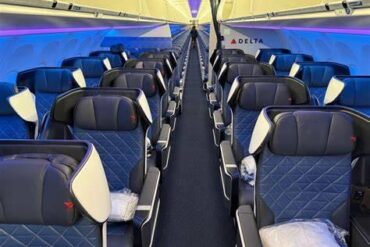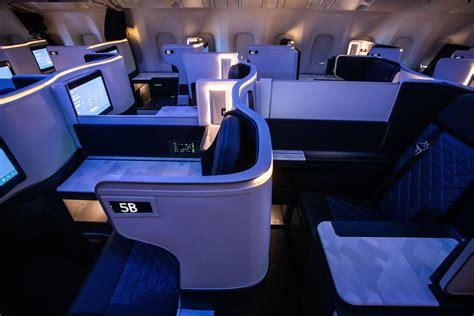
The competitive landscape of long-haul premium travel is entering a decisive new phase, and Delta Air Lines is positioning itself squarely at the forefront. By quietly signaling the introduction of a “mini first class” concept within its flagship Delta One cabin, the airline is reshaping expectations around what business class can—and should—deliver in the years ahead.
Rather than reviving traditional international first class, Delta is pursuing a more nuanced strategy: embedding a superior, ultra-premium experience within its existing business class footprint. This approach reflects a broader industry recalibration, where efficiency, revenue optimization, and evolving passenger expectations intersect in increasingly sophisticated ways.
At the center of this shift is a subtle but powerful design evolution. Delta’s Chief Commercial Officer has confirmed that future aircraft will feature enhanced front-row suites offering more personal space and exclusivity—effectively creating a tier above standard business class without the operational complexity of a separate cabin.
A Strategic Pivot Toward Tiered Business Class Luxury
For years, Delta appeared resistant to segmenting its Delta One product. Early previews of its upcoming suites suggested a uniform layout across the cabin, reinforcing the airline’s reputation for consistency rather than stratification. That perception has now changed dramatically.
The introduction of a front-row “mini first class” signals a deliberate pivot toward tiered premium offerings. Passengers seated in these bulkhead positions will benefit from expanded personal space, a feature that carries significant psychological and experiential value in long-haul travel. More room translates not only to comfort, but also to a heightened sense of exclusivity—something high-yield travelers increasingly demand.
This move places Delta in direct alignment with competitors who have already embraced differentiated business class cabins. American Airlines has rolled out its Flagship Suite concept on new widebody deliveries, while United Airlines has introduced Polaris Studio suites that redefine the front row experience. Meanwhile, Virgin Atlantic markets its Retreat Suites as a premium upgrade within Upper Class.
Why Airlines Are Abandoning Traditional First Class
The shift toward “mini first class” products is not merely aesthetic—it is deeply տնտեսական. Maintaining a dedicated international first class cabin is costly, both in terms of space and service requirements. At the same time, demand for such cabins has narrowed to a small segment of ultra-wealthy travelers.
By contrast, enhancing business class allows airlines to capture a broader spectrum of premium demand. Travelers willing to pay more for privacy, space, and elevated service can be accommodated within a single cabin structure, maximizing both seat density and revenue yield.
This hybrid model has gained momentum as premium leisure travel continues to surge. Post-pandemic travelers are prioritizing comfort and personal space more than ever, often upgrading to business class even on leisure itineraries. Airlines are responding by refining the product rather than expanding cabin classes.
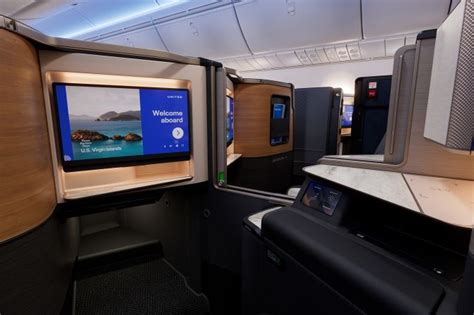
The Role of Advanced Seat Design in Delta’s Vision
A key enabler of Delta’s strategy is the next-generation seating platform developed by Thompson Aero Seating. The airline is set to become the launch customer for the VantageNOVA suite on its incoming Airbus A350-1000 fleet.
This platform has been specifically engineered to support enhanced bulkhead configurations without requiring extensive cabin redesign. In practical terms, this means airlines can create larger, more luxurious front-row suites while preserving the overall efficiency of the cabin layout.
Thompson’s “VantageNOVA First” concept aligns almost perfectly with Delta’s ambitions. It allows for meaningful differentiation—more space, potentially larger surfaces, and improved ergonomics—without sacrificing the number of seats in the aircraft. This balance is critical in an era where every square meter of cabin real estate must justify its revenue potential.
What Passengers Can Expect From the ‘Mini First Class’ Experience
While Delta has yet to unveil full details, the implications of this design direction are clear. Passengers in these front-row suites can expect a noticeably elevated experience, even if the airline stops short of branding it as first class.
The most immediate upgrade will be spatial. Bulkhead positioning inherently allows for expanded footwells and more generous suite dimensions. This could translate into wider seating surfaces, larger entertainment screens, and improved storage solutions.
Beyond physical design, the real opportunity lies in service differentiation. Airlines introducing similar concepts have layered in enhanced dining, premium bedding, and exclusive ground services to justify higher fares. Whether Delta follows suit remains to be seen, but the competitive pressure suggests it will.

A New Battleground at the Front of the Cabin
The emergence of “mini first class” products underscores a fundamental shift in airline competition. The battle for premium passengers is no longer centered on whether to offer first class, but on how to elevate business class beyond its traditional boundaries.
For Delta, this strategy represents both a defensive and offensive play. It ensures parity with rivals already offering segmented cabins while also creating new opportunities to upsell within its most profitable segment.
More importantly, it reflects a broader redefinition of luxury air travel. Instead of rigid cabin hierarchies, airlines are embracing fluid, modular experiences that cater to varying levels of willingness to pay. The front row of business class has become the new frontier—where innovation, revenue strategy, and passenger expectations converge.
As Delta moves closer to unveiling its final product, one thing is certain: the future of premium flying will not be defined by the return of first class, but by how convincingly airlines reinvent it within the space that already exists.