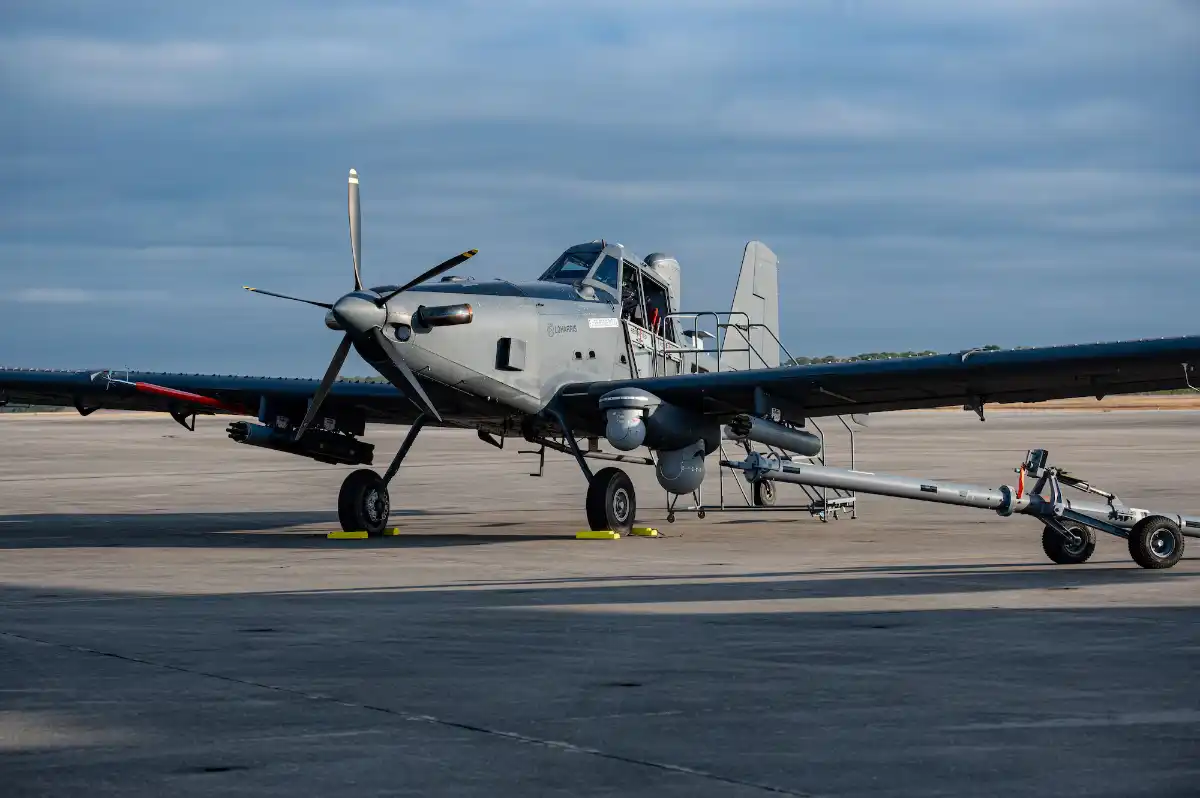
Close air support has shaped the outcome of countless American military operations for more than eight decades. From the battlefields of World War II to the rugged mountains of Afghanistan, the ability to summon precision firepower from above has repeatedly given ground forces a decisive advantage. Yet modern warfare is changing. Special operations teams increasingly operate in isolated regions, far from established bases and often beyond the immediate reach of conventional airpower. In response to this challenge, the United States Air Force Special Operations Command (AFSOC) is introducing a new aircraft designed specifically for this evolving battlefield: the OA-1K Skyraider II.
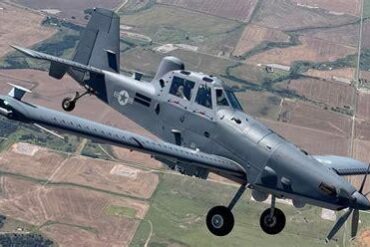
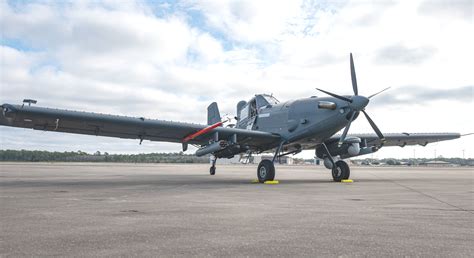
Rather than relying on expensive high-performance fighters or large unmanned systems, the Skyraider II embraces a different philosophy. It prioritizes endurance, simplicity, affordability, and the ability to operate from austere locations. Built around the rugged Air Tractor AT-802 airframe and transformed into a military platform through extensive modifications by L3Harris Technologies, the aircraft represents one of the most unconventional additions to the modern U.S. military inventory.
Its appearance may seem modest compared to stealth fighters or advanced bombers, but the mission it is intended to perform could make it one of the most important aircraft in future special operations campaigns. The return of the Skyraider name is more than symbolic—it reflects a renewed appreciation for persistent, responsive airpower operating close to troops on the ground.
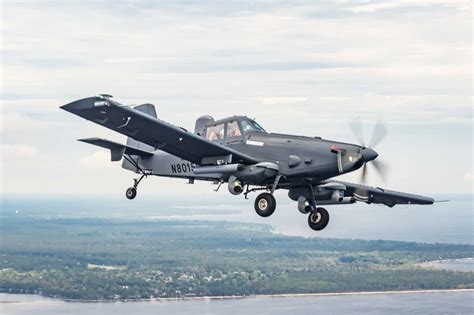
The Return Of A Legendary Name
The Skyraider II carries a name deeply rooted in American military aviation history. Its predecessor, the Douglas A-1 Skyraider, became legendary during the Korean and Vietnam Wars. Unlike the jet aircraft that eventually dominated military aviation, the original Skyraider was a piston-powered attack aircraft capable of carrying enormous payloads while remaining over the battlefield for extended periods.
Pilots and ground troops valued the aircraft because it could provide immediate and sustained support during intense combat situations. Its ability to deliver bombs, rockets, machine-gun fire, and other ordnance made it a trusted companion for forces facing enemy attacks.
The decision to revive the Skyraider name reflects a recognition that many modern military challenges resemble those faced decades ago. While technology has evolved dramatically, the need for persistent aerial support over remote battlefields remains unchanged. The OA-1K seeks to bring that capability into the twenty-first century using modern sensors, communications systems, and precision-guided weapons.
Unlike its predecessor, however, the new Skyraider II is optimized specifically for special operations missions. Its role extends beyond traditional close air support and includes intelligence gathering, surveillance, reconnaissance, armed overwatch, and precision strike operations.
From Crop Duster To Combat Aircraft
One of the most fascinating aspects of the Skyraider II program is its unconventional origin. The aircraft begins life as an Air Tractor AT-802, a platform originally designed for agricultural operations.
At first glance, choosing a crop-dusting aircraft for military service might appear unusual. Yet the AT-802 possesses characteristics that make it exceptionally attractive for armed overwatch missions. Agricultural aircraft are engineered to operate in demanding environments, carry substantial payloads, and withstand harsh operating conditions. They are also relatively inexpensive to maintain compared to sophisticated combat jets.
After construction, the aircraft is transferred to L3Harris facilities where it undergoes extensive military modifications. These changes transform the civilian platform into the AT-802U Sky Warden, which ultimately receives the military designation OA-1K Skyraider II.
The transformation includes advanced mission systems, communications equipment, electro-optical and infrared sensors, weapons integration, survivability enhancements, and specialized avionics. The result is an aircraft that combines civilian ruggedness with military effectiveness.
AFSOC’s Armed Overwatch competition attracted multiple contenders, but the Sky Warden emerged victorious. In August 2022, Air Tractor and L3Harris secured a multibillion-dollar contract to supply the aircraft for the program.
Why The Armed Overwatch Mission Matters
The Armed Overwatch concept emerged from real-world operational lessons. One of the most significant examples was the tragic 2017 Tongo Tongo ambush in Niger.
During that incident, U.S. Army Special Forces personnel and their Nigerien partners came under heavy attack from hostile forces. The engagement highlighted a critical operational gap: the lack of dedicated airborne overwatch capable of rapidly delivering scalable firepower and maintaining continuous situational awareness.
For special operations teams, support delays can be measured in minutes, but those minutes may determine whether a mission succeeds or fails. Conventional fighter aircraft often operate from distant bases. Even when available, they may require substantial transit times before reaching troops in contact.
Africa illustrates this challenge perfectly. The continent covers an immense geographical area, and remote operations frequently occur hundreds or even thousands of miles from major airfields. Similar challenges exist throughout the Indo-Pacific region, where special operations forces may be dispersed across isolated islands separated by vast expanses of ocean.
The Skyraider II was designed specifically to address these operational realities. It offers persistent presence, rapid responsiveness, and a smaller logistical footprint than traditional combat aircraft.
Designed For The World’s Most Remote Battlefields
The defining characteristic of the Skyraider II is its ability to operate where many other aircraft cannot.
Modern combat aircraft often depend on long runways, extensive maintenance infrastructure, and significant support personnel. The Skyraider II takes a different approach. Its robust landing gear, turboprop engine, and short takeoff and landing capabilities allow it to operate from rough and minimally prepared airstrips.
This flexibility creates enormous operational advantages. Commanders can position aircraft much closer to mission areas, reducing response times and increasing sortie rates. Instead of launching from major centralized airbases, Skyraider IIs can operate from forward locations near special operations teams.
Such capability becomes increasingly important in regions where adversaries possess sophisticated missile arsenals capable of targeting large airfields. Dispersing aircraft across multiple smaller operating locations complicates enemy targeting efforts and improves survivability.
The aircraft’s rugged design also simplifies maintenance in remote environments. This characteristic may prove invaluable during extended operations in regions with limited infrastructure.
A Powerful Arsenal For Precision Support
Despite its agricultural origins, the Skyraider II is far from lightly armed.
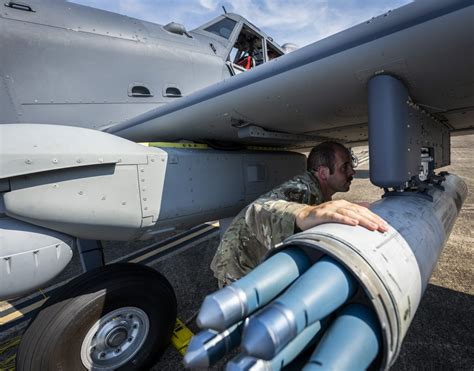
The aircraft can carry approximately 6,000 pounds of external ordnance, providing remarkable firepower for a platform of its size. This weapons capacity enables it to engage a broad range of targets while remaining flexible enough to support diverse mission requirements.
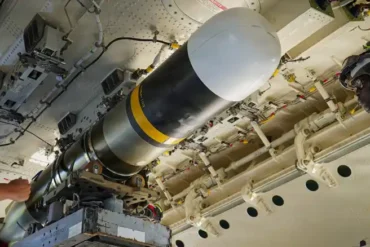
Among its available weapons are the AGM-114 Hellfire missile, a combat-proven precision-guided weapon capable of destroying vehicles, fortified positions, and other high-value targets. The aircraft can also employ the Advanced Precision Kill Weapon System (APKWS), which converts standard rockets into highly accurate guided munitions.
Laser-guided rockets offer commanders a valuable middle ground between large missiles and conventional gunfire. They provide precision engagement capability while minimizing collateral damage and reducing costs.
Additional armament options include GAU-19 .50-caliber machine guns and M134 miniguns, giving the aircraft effective suppressive fire capabilities against enemy personnel and light vehicles.
Combined with advanced targeting systems, these weapons allow the Skyraider II to deliver scalable force ranging from warning shots to precision strikes against heavily defended positions.
Advanced Sensors And Battlefield Awareness
Firepower alone does not define modern close air support. Equally important is the ability to identify, track, and monitor threats before they can endanger friendly forces.
The Skyraider II incorporates sophisticated electro-optical and infrared sensor systems that provide operators with detailed battlefield awareness. These sensors allow crews to detect enemy activity during both day and night operations.
Persistent surveillance capability is especially valuable for special operations missions. Teams conducting reconnaissance, direct-action raids, or counterterrorism operations often require continuous monitoring of surrounding terrain. The aircraft’s ability to remain airborne for extended periods creates a protective layer of observation that enhances force protection.
Beyond surveillance, advanced communications systems enable the Skyraider II to share information rapidly with ground forces, command centers, and other aircraft. This connectivity transforms the platform into more than a weapons carrier—it becomes an aerial command-and-control asset supporting complex operations.
Agile Combat Employment And The Future Of Airpower
The Skyraider II fits neatly into one of the U.S. Air Force’s most important emerging concepts: Agile Combat Employment (ACE).
ACE seeks to distribute combat capability across numerous smaller locations rather than concentrating forces at a handful of major bases. This strategy recognizes that large installations may become vulnerable during future conflicts against technologically advanced adversaries.
Under the ACE model, aircraft must be capable of rapid deployment, efficient operation, and minimal logistical dependence. The Skyraider II excels in all three areas.
One of its most innovative features is transportability. The aircraft’s wings can be removed, allowing it to be loaded aboard a Boeing C-17 Globemaster III strategic airlifter. Once delivered to a forward location, the aircraft can be reassembled and prepared for operations quickly.
This capability significantly accelerates deployment timelines. Instead of requiring extensive infrastructure development, commanders can establish operational airpower in remote regions within days.
Across the Indo-Pacific, where hundreds of potential operating locations exist throughout island chains, this flexibility may prove invaluable.
Testing, Certification, And Fielding Timeline
The Skyraider II remains in the testing and evaluation phase, but progress has been substantial.
The first missionized aircraft was accepted by AFSOC in April 2025, marking a major milestone in the program’s development. Since then, testing activities have focused on validating airworthiness, verifying manufacturer performance claims, and assessing operational effectiveness.
The aircraft’s certification process involves comprehensive examination of weapons integration, avionics functionality, sensor performance, and flight characteristics. Additional testing is expanding the flight envelope to operational altitudes of approximately 25,000 feet.
Thousands of flight hours have already been accumulated throughout the evaluation process. These extensive trials provide valuable data regarding reliability, maintainability, and mission performance.
Current plans envision operational fielding around fiscal year 2028, at which point the aircraft will begin assuming its intended armed overwatch role across multiple theaters.
Why The Skyraider II Could Become Indispensable
The modern battlefield increasingly rewards adaptability. Expensive stealth aircraft remain essential for penetrating heavily defended airspace, but not every mission requires cutting-edge fighters costing tens of thousands of dollars per flight hour.
Many operations demand persistence rather than speed, endurance rather than stealth, and accessibility rather than complexity. The Skyraider II occupies this niche exceptionally well.
Its combination of affordability, ruggedness, deployability, precision strike capability, and long-duration overwatch fills a gap that has existed for years within the special operations community. It provides commanders with a tool specifically tailored for supporting small teams operating far from conventional military infrastructure.
As strategic competition intensifies and military planners prepare for operations across vast geographic regions, platforms capable of functioning independently from austere locations will become increasingly valuable. The Skyraider II was designed with precisely that challenge in mind.
The Skyraider Legacy Enters A New Era
The OA-1K Skyraider II represents more than the introduction of another military aircraft. It symbolizes a shift toward practical, mission-focused airpower designed around the realities of modern special operations warfare.
While advanced fighters dominate headlines, the aircraft most likely to save lives on remote battlefields may be a rugged turboprop inspired by an agricultural workhorse. By combining proven durability with modern sensors, precision weapons, and expeditionary flexibility, the Skyraider II delivers a capability that many commanders have sought for years.
As AFSOC prepares for future conflicts stretching from Africa to the Indo-Pacific, the aircraft’s importance is likely to grow. Its ability to provide persistent surveillance, immediate fire support, and rapid deployment from austere locations addresses some of the most pressing operational challenges facing American special operations forces today.
The Skyraider name once became synonymous with dependable close air support over the jungles of Southeast Asia. Decades later, that legacy is returning—updated for a new generation of warfare, but driven by the same principle that made the original famous: being exactly where ground troops need it, exactly when they need it most.