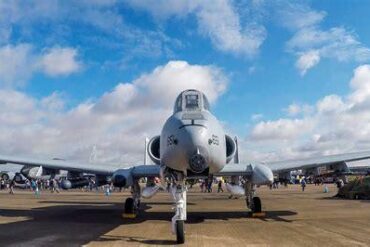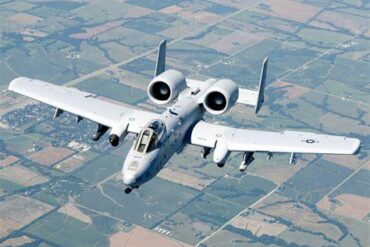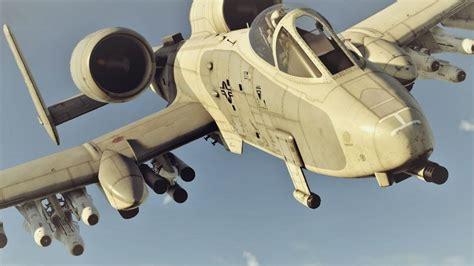
The Fairchild Republic A-10 Thunderbolt II, universally known as the A-10 Warthog, stands as one of the most purpose-built aircraft in modern military aviation. Unlike multirole fighters designed to juggle air superiority and strike missions, the A-10 was engineered with a singular, uncompromising objective: close air support (CAS). Every line, angle, and internal structure reflects that mission, producing an aircraft that prioritizes durability, low-speed control, and battlefield persistence over raw speed or sleek aerodynamics.
This deliberate design philosophy explains why the A-10 continues to command respect decades after its introduction. In environments where aircraft must fly low, identify targets visually, and withstand intense ground fire, structural resilience becomes more valuable than cutting-edge speed. The Warthog thrives precisely because it embraces that reality, transforming what might seem like design limitations into decisive operational advantages.
To understand the enduring dominance of the A-10 in close air support missions, it is essential to look beyond its iconic GAU-8 Avenger cannon and examine the structural innovations embedded deep within its airframe. These features are not cosmetic—they are the backbone of its battlefield effectiveness, enabling it to survive, adapt, and deliver precision firepower under the harshest conditions imaginable.
Titanium “Bathtub” Armor: The Foundation of Pilot Survivability
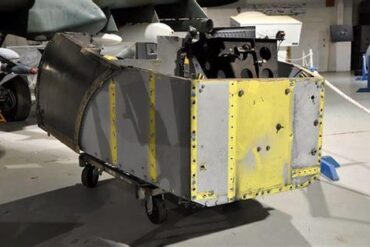
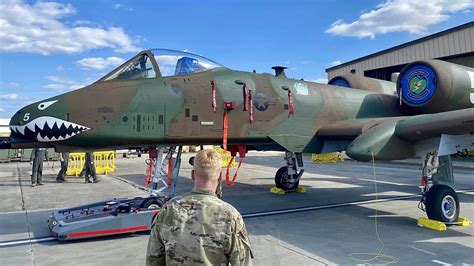
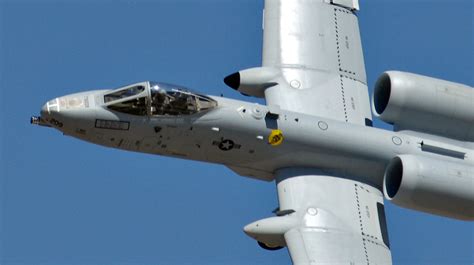
At the heart of the A-10’s survivability lies one of its most distinctive structural features: the titanium-armored cockpit, often referred to as the “bathtub.” Weighing approximately 1,200 pounds (544 kilograms), this protective shell surrounds the pilot and critical flight systems in a cocoon designed to withstand direct hits from small arms fire, anti-aircraft artillery, and shrapnel.
This is not merely defensive engineering—it is a deliberate acknowledgment of the realities of close air support missions. CAS aircraft operate at low altitudes, often within range of enemy ground forces, where exposure to hostile fire is unavoidable. In such an environment, protecting the pilot is not optional; it is essential for mission continuity.
The titanium armor ensures that even when the aircraft sustains damage, the pilot remains capable of maintaining control and completing the mission. This structural resilience translates directly into operational persistence, allowing the A-10 to remain in the fight long after more fragile aircraft would be forced to disengage.
What makes this feature particularly compelling is how seamlessly it integrates into the aircraft’s overall design philosophy. The armor is not an add-on—it is a core structural element, reinforcing the idea that survivability is not a secondary consideration but the defining characteristic of the platform.
Straight High-Aspect Wing: Precision, Stability, and Loitering Power
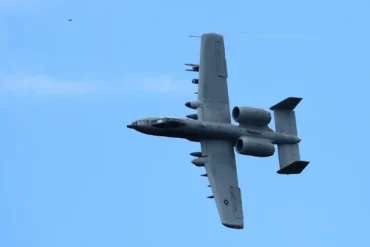
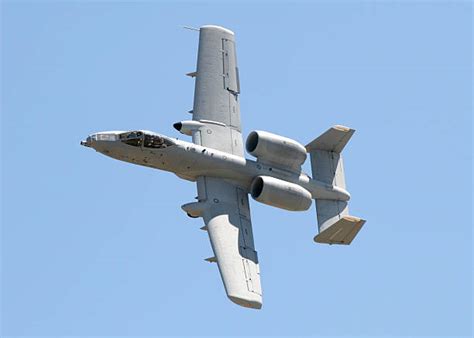
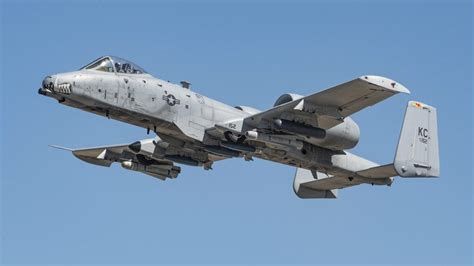
The A-10’s broad, straight wing, spanning over 57 feet (17.4 meters), represents a radical departure from the swept-wing designs of high-speed fighter jets. While swept wings excel at supersonic performance, they sacrifice low-speed handling and stability—two qualities that are absolutely critical for close air support.
The Warthog’s wing is optimized for low-speed maneuverability and extended loiter time, enabling pilots to remain over the battlefield for prolonged periods. This capability is invaluable in dynamic combat scenarios, where ground forces may require immediate and repeated support.
The structural advantages of this wing design manifest in several key ways:
- Enhanced lift at low speeds, allowing tighter turns and controlled flight at lower altitudes
- Stable weapons delivery, improving accuracy during strafing runs and bombing passes
- Extended endurance, enabling the aircraft to “loiter” near the battlefield and respond quickly to emerging threats
Rather than rushing in and out like faster jets, the A-10 adopts a more deliberate approach. It circles patiently, observes carefully, and strikes with precision. This measured style of engagement is made possible by the wing’s structural characteristics, which prioritize control and visibility over speed.
High-Mounted Twin Engines: Survivability Through Smart Placement
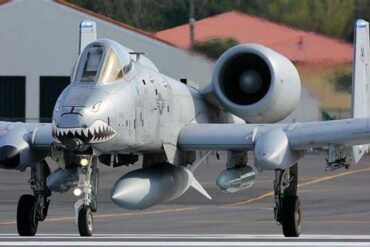
One of the most visually distinctive features of the A-10 is its twin-engine configuration, mounted high on the rear fuselage. Powered by two General Electric TF34 turbofan engines, each producing 9,065 pounds of thrust, this arrangement is far from conventional—but it is profoundly effective.
The elevated engine placement delivers multiple structural and operational benefits that directly enhance survivability in combat environments. By positioning the engines away from the ground, the design significantly reduces the risk of foreign object damage (FOD) during operations from rough or improvised airstrips. This is particularly important for a CAS aircraft that may be required to operate from forward bases with limited infrastructure.
Equally important is the physical separation between the engines. In the event of damage to one engine, the likelihood of the second engine being affected is reduced, increasing the aircraft’s chances of remaining airborne. This redundancy is a critical factor in ensuring mission success and pilot safety.
Additionally, the placement of the engines helps to mask infrared emissions, as the aircraft’s tail structure partially shields the exhaust. While not a stealth feature in the modern sense, this design choice contributes to reduced vulnerability against heat-seeking missiles.
Taken together, these elements highlight a recurring theme in the A-10’s design: every structural decision serves a practical battlefield purpose. The engine configuration is not about aesthetics—it is about keeping the aircraft operational in the face of real-world threats.
Redundant Flight Controls: Built to Fly After Damage
Surviving a hit is only half the battle; the ability to continue flying after sustaining damage is what truly defines a resilient combat aircraft. The A-10 excels in this regard through its redundant flight control systems, backed by a manual reversion mode that allows pilots to control the aircraft even after a complete hydraulic failure.
In most modern aircraft, the loss of hydraulic systems would result in catastrophic loss of control. The A-10, however, was designed with the expectation that such failures could occur in combat. Its manual reversion system provides a direct mechanical linkage, enabling the pilot to maneuver the aircraft without hydraulic assistance.
This capability has been proven in real-world combat scenarios, most notably during the Iraq War, when an A-10 pilot successfully landed a severely damaged aircraft after losing hydraulic power. Such incidents underscore the aircraft’s extraordinary structural resilience and its ability to endure conditions that would disable other platforms.
From an engineering perspective, this redundancy transforms the A-10 from a machine that merely resists damage into one that actively adapts to it. It ensures that even in worst-case scenarios, the aircraft retains a degree of controllability, dramatically increasing the chances of survival for both the pilot and the mission.
Rugged Landing Gear: Enabling True Battlefield Flexibility
The A-10’s rugged landing gear is a deceptively simple feature that plays a crucial role in its effectiveness as a close air support platform. Designed to handle a maximum takeoff weight of over 50,000 pounds (23,133 kilograms), the landing gear allows the aircraft to operate from short, unprepared, and austere airstrips near the front lines.
This capability provides a significant strategic advantage. By basing closer to the battlefield, the A-10 can reduce response times, increase sortie rates, and maintain a more consistent presence over combat zones. In close air support operations, where timing can mean the difference between success and failure, this responsiveness is invaluable.
The structural design of the landing gear also incorporates damage tolerance. The partially exposed wheels allow for safer gear-up landings, minimizing damage to the aircraft and increasing the likelihood of recovery after an emergency. This reflects the same design philosophy seen throughout the aircraft: anticipate failure, and engineer around it.
Moreover, the ability to operate from rough fields reduces dependence on large, well-equipped airbases, making the A-10 more adaptable in diverse operational environments. This flexibility enhances its overall utility and ensures that it can continue to support ground forces even when infrastructure is limited or compromised.
Why Structural Design Defines the A-10’s Legacy
The enduring effectiveness of the A-10 Warthog is not the result of a single standout feature but rather the integration of multiple structural advantages, each reinforcing the others. The titanium armor protects the pilot, the wing ensures control and endurance, the engines enhance survivability, the flight controls guarantee recoverability, and the landing gear enables operational flexibility.
Together, these elements create an aircraft that is uniquely suited to the demands of close air support. It is not fast, and it is not stealthy—but it is reliable, resilient, and relentlessly effective in the environment for which it was designed.
In an era increasingly dominated by advanced stealth fighters and high-tech systems, the A-10 serves as a powerful reminder that purpose-built design still matters. Its structural features are not relics of the past but enduring solutions to the timeless challenges of battlefield aviation.
The Warthog does not try to be everything. Instead, it excels at one mission with unmatched consistency—and it does so because its structure was engineered with absolute clarity of purpose.