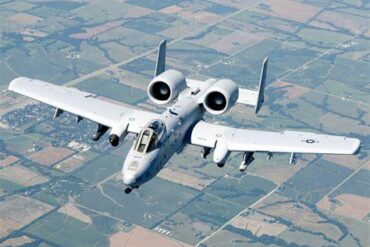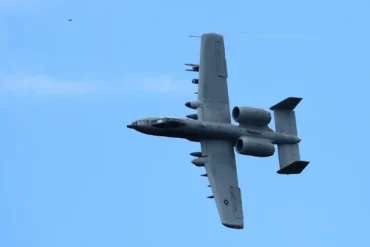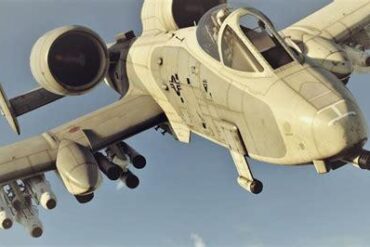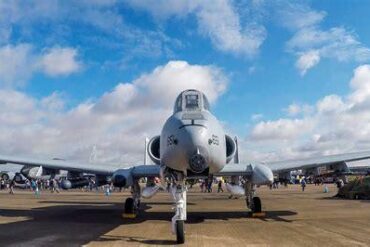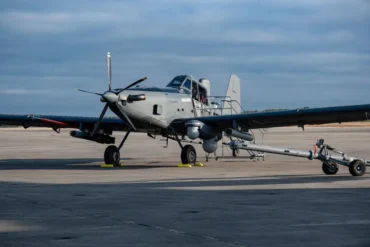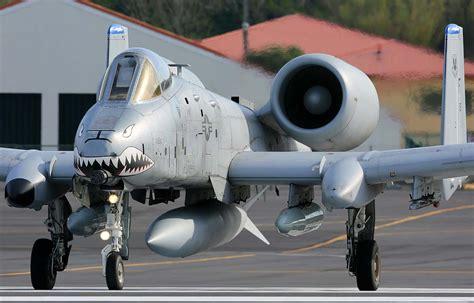
The Fairchild Republic A-10 Warthog stands as one of the most purpose-driven aircraft ever engineered, a machine whose brutal aesthetics conceal a singular mission: keep the pilot alive while dominating the battlefield. In an era where sleek stealth fighters dominate headlines, the A-10 remains unapologetically rugged, prioritizing survivability over elegance. Its design is not accidental—it is the direct product of hard-learned lessons, battlefield realities, and a relentless focus on protecting the human inside the cockpit.
From its titanium-armored cockpit to redundant flight systems and damage-tolerant engines, every inch of the A-10 reflects a philosophy rarely matched in aviation: the aircraft exists to absorb punishment and bring its pilot home. This is not merely engineering—it is battlefield empathy translated into metal, hydraulics, and firepower.
Vietnam War Lessons That Forged a Survivor
The origins of the A-10’s survivability trace back to the devastating air losses experienced during the Vietnam War. Thousands of American aircraft were shot down, many by relatively unsophisticated weapons—small arms fire, anti-aircraft artillery, and shoulder-fired missiles. These losses revealed a stark truth: speed and altitude alone could not guarantee survival.
Close air support missions demanded aircraft that could fly low and slow, directly over hostile territory, where threats were constant and unpredictable. Existing aircraft like the F-4 Phantom and UH-1 Huey lacked the resilience required for sustained exposure to ground fire. The need for a new kind of aircraft became undeniable—one that could endure direct hits and still complete its mission.
The A-10 was born from this necessity, designed not just to fight, but to survive under the harshest conditions imaginable. Engineers built it around a strict set of survivability requirements, incorporating over a hundred features specifically aimed at reducing vulnerability.
Engineering a Flying Fortress Around the Pilot
Unlike conventional aircraft, where survivability is often a secondary consideration, the A-10 was built from the inside out—starting with the pilot. The result is an aircraft that functions as a flying armored shell, prioritizing human protection above all else.
Its wide wings provide stability at low speeds, allowing precise targeting while minimizing stall risk. Its straight-wing design enhances maneuverability in tight, low-altitude environments. But more importantly, its structure is intentionally overbuilt, capable of withstanding severe structural damage without catastrophic failure.
This philosophy extends to every component, from control systems to fuel storage. The A-10 does not rely on avoiding damage—it assumes damage will occur and prepares accordingly.
The Titanium Bathtub: A Pilot’s Lifeline Under Fire
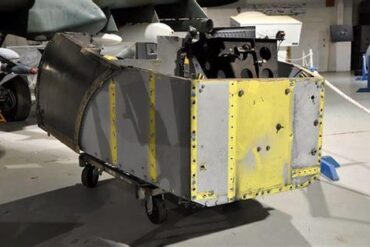
At the heart of the A-10’s survivability lies its most famous feature: the titanium “bathtub”. This armored enclosure surrounds the cockpit, forming a protective shell that shields the pilot from high-velocity threats.
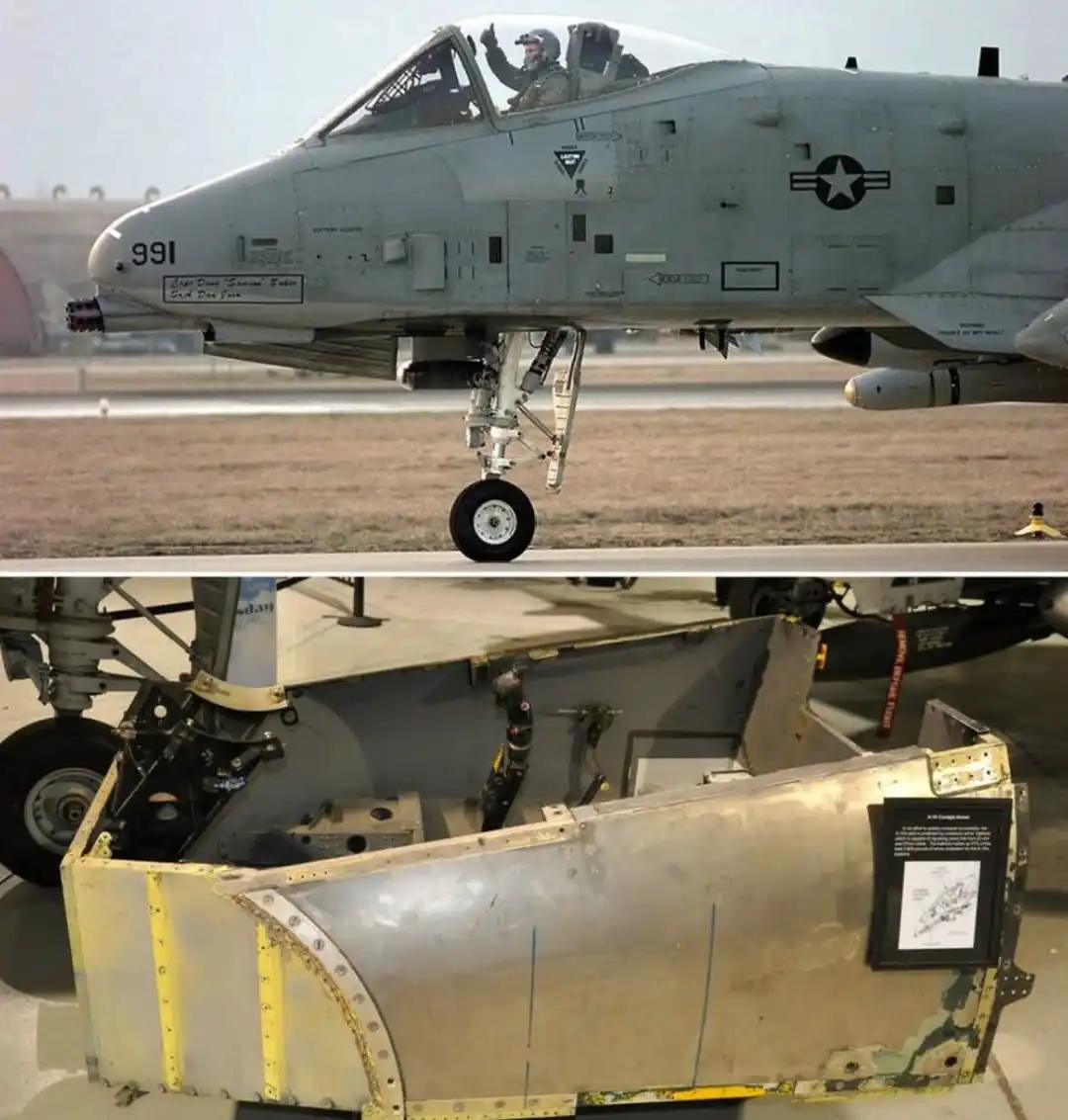
Weighing approximately 1,200 pounds and reaching thicknesses of up to 1.5 inches, this titanium structure is engineered to withstand direct hits from armor-piercing rounds and anti-aircraft shells. When struck, incoming projectiles deform or shatter, dissipating their energy before penetrating the cockpit.
This protection is especially critical in what is known as the “dead man zone”—low-altitude airspace where aircraft are most vulnerable to ground fire. In this environment, the titanium bathtub transforms the cockpit into a survivable capsule, dramatically increasing the pilot’s chances of returning home.
The canopy itself is designed to resist bird strikes and debris, while internal systems are arranged to minimize the risk of critical failures from localized damage. Every detail reinforces a singular objective: protect the pilot at all costs.
Redundancy Redefined: Systems That Refuse to Fail
If the titanium armor represents passive protection, the A-10’s redundant systems embody active survivability. The aircraft is equipped with multiple layers of backup systems, ensuring that a single failure does not lead to disaster.
Its dual hydraulic systems operate independently, each capable of controlling the aircraft. If both systems are compromised—a scenario that would cripple most aircraft—the A-10 offers a remarkable fallback: the Manual Reversion Flight Control System.
This mechanical system uses cables and pulleys to directly link the pilot’s controls to the aircraft’s flight control surfaces. It is a rare feature in modern aviation, where digital systems dominate. Yet in the A-10, this analog backup can mean the difference between loss and survival.
One of the most compelling demonstrations of this system occurred during combat operations in Iraq. After sustaining severe damage, including the loss of hydraulic power and significant structural harm, the pilot engaged manual reversion and successfully landed the aircraft. The incident underscored a powerful truth: the A-10 is designed to keep flying when logic says it shouldn’t.
Self-Sealing Fuel Tanks: Eliminating the Risk of Catastrophic Fire
Fuel systems are among the most vulnerable components of any aircraft, particularly in low-altitude combat where ground fire is prevalent. The A-10 addresses this vulnerability with self-sealing fuel tanks, a technology that significantly reduces the risk of fire and explosion.
These tanks are lined with specialized materials that react instantly when punctured. Upon impact, chemical agents within the layers expand and solidify, sealing the breach within seconds. This prevents fuel leaks and eliminates the formation of flammable vapor clouds.
In practical terms, this means that even after sustaining damage, the A-10 can continue operating without the immediate threat of catastrophic fire. It is a critical advantage in environments where even minor fuel leaks can lead to disaster.
Twin Engines and Smart Placement for Maximum Protection
The A-10’s twin General Electric TF34 turbofan engines are not only redundant but strategically positioned to enhance survivability. Mounted high on the fuselage, they are shielded by the aircraft’s vertical stabilizers, reducing their exposure to ground-based threats.
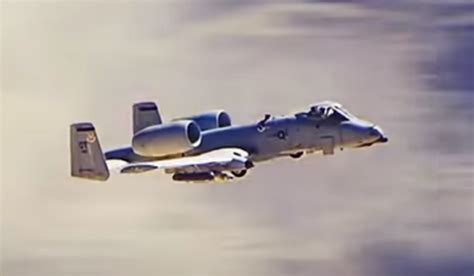
This placement serves multiple purposes. It minimizes the risk of foreign object damage during operations from rough or unprepared airstrips, and it reduces the likelihood of infrared missile lock by masking the engines’ heat signature.
Each engine operates independently, with its own fuel and oil systems. If one engine is disabled, the other can sustain flight, allowing the pilot to exit the combat zone and return safely. Firewalls and onboard suppression systems further isolate potential engine fires, preventing them from spreading to the rest of the aircraft.
The result is an aircraft that remains operational even under severe mechanical stress—another layer in its comprehensive survivability strategy.
Structural Toughness: Built to Fly While Broken
Perhaps the most astonishing aspect of the A-10 is its ability to remain airborne despite extensive structural damage. The aircraft’s design allows it to fly with significant portions of its wings, tail, or control surfaces compromised.
This resilience is achieved through a combination of structural reinforcement, distributed load paths, and conservative engineering margins. The airframe is designed to tolerate asymmetrical damage, maintaining stability even when key components are partially destroyed.
In real-world scenarios, A-10s have returned to base with hundreds of bullet holes, missing panels, and severely damaged control surfaces. These are not isolated incidents—they are a testament to a design philosophy that anticipates failure and mitigates its consequences.
The GAU-8 Avenger: Firepower That Complements Survivability
No discussion of the A-10 is complete without mentioning its iconic GAU-8 Avenger cannon. While primarily a weapon, it also contributes indirectly to survivability by allowing the aircraft to neutralize threats quickly and efficiently.
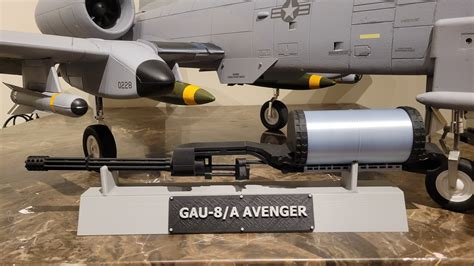
Mounted along the aircraft’s centerline, the seven-barrel Gatling gun delivers devastating firepower capable of destroying armored vehicles with precision. Its placement ensures minimal recoil disruption, preserving aircraft stability during firing.
By enabling rapid threat elimination, the GAU-8 reduces the time the aircraft spends exposed to enemy fire. In this way, offensive capability becomes a defensive asset—the faster the threat is neutralized, the safer the pilot becomes.
Operational Flexibility in Harsh Environments
The A-10’s survivability extends beyond combat damage to include its ability to operate in austere conditions. Its rugged landing gear, simple maintenance requirements, and tolerance for rough airfields make it uniquely adaptable.
Unlike more delicate aircraft, the A-10 can be deployed closer to the front lines, reducing response times and increasing mission effectiveness. Its engines are designed to resist debris ingestion, further enhancing reliability in challenging environments.
This operational flexibility ensures that the A-10 remains a dependable asset even in scenarios where infrastructure is limited or compromised.
A Future in Question, A Legacy Secured
Despite its proven capabilities, the A-10 faces an uncertain future. Modern military strategy increasingly emphasizes stealth and multi-role platforms, leading to plans for its gradual retirement. Yet the qualities that define the A-10—durability, reliability, and pilot protection—remain unmatched.
Its potential replacement by advanced fighters raises important questions about the future of close air support. While newer aircraft offer technological advantages, few can replicate the A-10’s uncompromising focus on survivability.
The aircraft’s enduring presence in modern conflicts serves as a powerful reminder that sometimes, the most effective solutions are not the most advanced, but the most purpose-built.
Conclusion: The Ultimate Expression of Battlefield Survivability
The Fairchild Republic A-10 Warthog is more than an aircraft—it is a philosophy made tangible. Every design choice, from its armored cockpit to its redundant systems and resilient structure, reflects a singular commitment: protect the pilot and complete the mission.
In a world of evolving threats and advancing technology, the A-10 remains a benchmark for survivability. It does not rely on invisibility or speed to stay alive. Instead, it embraces the reality of combat, standing firm against it with unmatched toughness.
And that is precisely why, decades after its introduction, the A-10 continues to earn the trust of those who fly it—and the gratitude of those it protects on the ground.