Qatar Airways’ Airbus A380 first class has become an unusually scarce luxury product in 2026. The airline operates only eight of the superjumbos, and their deployment has changed repeatedly as Qatar Airways adjusts capacity to match demand and changing network conditions. That matters because first class on the A380 is already a tiny proposition: just eight seats sit at the front of the upper deck. When the aircraft appears only on selected routes and during limited periods, finding an available seat can be considerably harder than simply finding a premium cabin on another Qatar Airways flight.
For travelers trying to understand the price, there is no single 2026 fare that tells the whole story. A one-way first class ticket can begin at around $4,500 on a shorter long-haul journey, while return itineraries involving two lengthy sectors can reach $10,000 to $15,000. During periods of exceptionally strong demand, especially when only a small number of A380 flights are operating, last-minute round-trip fares can climb beyond $20,000. The result is a pricing range shaped by route, season, booking date, availability, and the unusual scarcity of the aircraft itself. For premium travelers, the key is recognizing that the published fare is only a snapshot of a constantly changing airline market.
The A380’s return-and-retreat pattern also gives the product an interesting position within Qatar Airways’ premium strategy. The airline is particularly famous for Qsuite business class, while its A380 first class has traditionally received less attention than Emirates’ highly publicized first class suites. Yet the Qatar product offers something different: a small cabin, generous personal space, attentive service, fine dining, and access to the distinctive upper-deck lounge. For passengers who value a quieter form of luxury, that combination can be compelling, although the fare requires careful consideration.
Qatar Airways A380 First Class Operations In 2026
Qatar Airways’ relationship with the Airbus A380 has been more complicated than the aircraft’s impressive size might suggest. During the pandemic era, the airline grounded its A380 fleet and questioned the economics and environmental performance of such a large four-engine aircraft. As international travel recovered and demand returned, however, the superjumbo came back to selected routes where additional capacity could be useful. In 2026, that strategy shifted again, with all eight aircraft grounded during April and May as the carrier adjusted its capacity plans.
This stop-start deployment has a direct effect on first class. A product available every day on a large fleet gives travelers many opportunities to find an acceptable fare. A product attached to a small fleet with changing schedules behaves differently. Even when a route has historically been associated with the A380, travelers cannot assume that every flight will offer the eight-seat first class cabin. Aircraft assignments can change, and a booking that appears attractive months ahead may ultimately operate with a different aircraft.
How Much Does Qatar Airways A380 First Class Cost In 2026?
For a relatively straightforward benchmark, travelers can expect Qatar Airways A380 first class to start at roughly $4,500 one way on shorter long-haul routes such as London to Doha. Return fares on the same city pair can generally fall around $6,000 to $9,000, although the exact price depends heavily on travel dates, booking timing, fare inventory, and how many premium seats remain for sale.
That range should be treated as a practical guide rather than a fixed price list. Airline fares are dynamic, and first class is especially sensitive to limited inventory. With only eight seats available, a few bookings can materially change the remaining inventory and therefore the fare displayed to the next customer. Two passengers searching for the same route a few days apart can see substantially different prices even when the aircraft and scheduled flight are identical.
Longer journeys produce a much higher ceiling. A London-to-Sydney itinerary via Doha can involve roughly 10,600 miles of total travel and two major long-haul sectors. When both portions are booked in first class, return fares can reach approximately $10,000 to $15,000, with peak holiday dates capable of pushing the total higher. In the most expensive circumstances, last-minute travel or unusually strong demand can send a round-trip fare above $20,000.
That figure sounds extraordinary, but it is important to understand what drives it. The passenger is not necessarily paying a fixed premium simply because the A380 is expensive to operate. Instead, the fare reflects the combination of distance, premium-cabin demand, limited first class inventory, available fare buckets, seasonality, and the airline’s revenue-management system. The A380’s scarcity can amplify those factors because travelers specifically seeking its first class cabin have fewer alternatives.
Why Route And Distance Make Such A Big Difference
The route is one of the clearest influences on the price of a Qatar Airways first class ticket. London-Doha, for example, is a major international market with frequent Qatar Airways service and substantial premium demand. A return fare around the middle of the $6,000-to-$9,000 range can therefore provide a useful reference point for the product, even though actual prices can move outside that range.
Limited-frequency routes can be even more unpredictable. When an A380 appears on a route only during certain periods, travelers who specifically want the superjumbo may concentrate their bookings around those dates. If supply is small while demand is strong, fares can rise rapidly. In that situation, a shorter journey can become surprisingly expensive because scarcity of first class seats matters as much as the number of miles flown.
What Qatar Airways A380 First Class Gives You
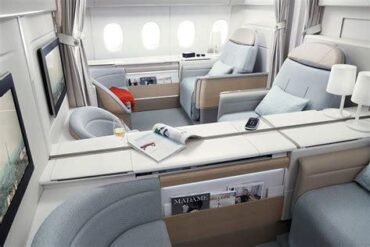
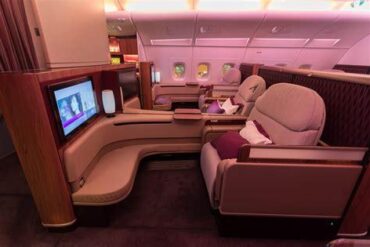
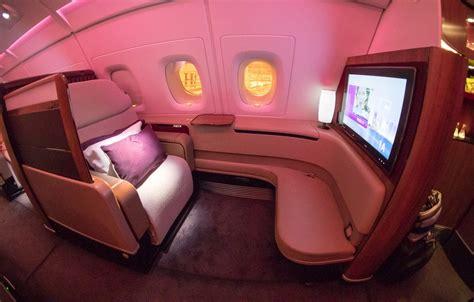
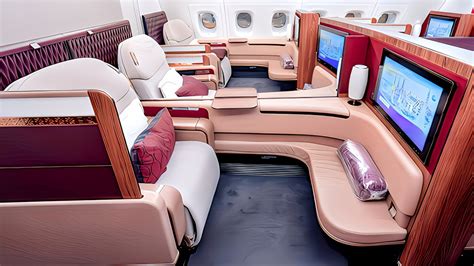
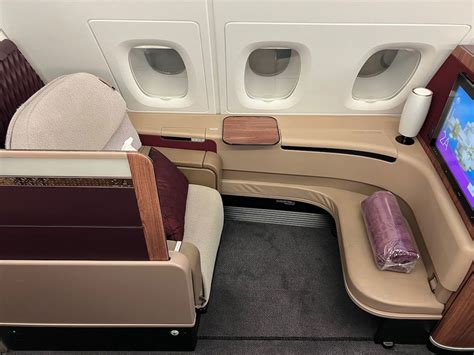
The price becomes easier to understand when the physical product is considered. Qatar Airways places just eight first class seats at the front of the A380’s upper deck. The small cabin creates a distinctly private atmosphere, particularly compared with the much larger business class cabin elsewhere on the aircraft. The spacious layout gives passengers more room to settle in, work, dine, or sleep without the busy feeling often associated with a large premium cabin.
The seats are exceptionally wide and can convert into fully flat beds measuring about 83 inches, or 210 centimeters, in length. High seat shells and generous spacing provide a degree of separation, while individual storage areas, large entertainment displays, and adjustable lighting allow passengers to control their surroundings. On a long-haul flight, those seemingly small details can make a meaningful difference because the cabin is designed around sustained comfort rather than simply providing a wider seat.
On board, the small cabin allows the crew to provide highly attentive service. Dining is flexible, with meals available on demand rather than being tied rigidly to a single schedule. Menus can include caviar, premium meats, refined desserts, and high-end beverages, while the emphasis is on presentation and consistency rather than theatrical excess. The experience is luxurious without relying entirely on visual spectacle.
The A380 also has a feature that differentiates it from many other aircraft: an upper-deck onboard lounge shared by first and business class passengers. It gives travelers a place to stand, stretch, have a drink, or briefly leave the seat environment during a long flight. It is not an exclusive first class lounge, but its presence adds another dimension to the journey and is one reason aviation enthusiasts continue to seek out the A380 specifically.
Qatar Airways also provides premium bedding, amenity kits, spacious lavatories, and upscale toiletries. Unlike some Emirates A380 configurations, however, Qatar Airways does not offer onboard shower spas. That distinction helps explain the character of the product. The airline focuses heavily on seat comfort, dining, privacy, and service rather than attempting to turn every element into a conspicuous luxury feature.
Qatar Airways A380 First Class Versus Emirates And Singapore Airlines
The pricing becomes more meaningful when placed alongside other A380 first class products. Emirates has built its A380 first class identity around highly visible luxury, including enclosed private suites and onboard shower spas on relevant aircraft. Similar long-haul return journeys can reach roughly $8,000 to more than $20,000, depending on route, season, and availability. Qatar Airways generally takes a less theatrical approach, although its fares can overlap with Emirates during periods of strong demand.
Qatar Airways occupies a distinctive position because its first class product competes not only with rival first class cabins but also with its own business class offering. Qsuite provides privacy and a high level of comfort at a lower fare on many routes, potentially reducing the number of travelers willing to pay a very large premium for first class. For someone whose priority is a private space and a high-quality long-haul experience, the difference between the cabins can therefore matter as much as the difference between Qatar Airways and another airline.
Why Qatar Airways A380 First Class Prices Could Stay Volatile
The future of A380 first class pricing is closely tied to the aircraft’s limited role in Qatar Airways’ fleet. As the airline continues to favor more fuel-efficient twin-engine aircraft for much of its network, there is less reason to expect the A380 to become a widely available daily product across numerous destinations. If deployments remain selective, the eight-seat first class cabin will naturally remain a scarce commodity.
Scarcity does not guarantee a high fare on every flight, however. Airlines still need to fill seats, and premium travelers have alternatives. A discounted first class fare may appear when demand is weaker, while a holiday departure with only a handful of seats remaining can become extremely expensive. The same aircraft can therefore produce dramatically different prices across the year.
Is A Qatar Airways A380 First Class Ticket Worth The Price?
The answer depends heavily on what a traveler wants from the journey. A fare of $4,500 one way or $10,000-plus for a complex round trip represents a substantial expenditure, and the price should be considered against the alternatives available on the same route. Qatar Airways’ business class, particularly Qsuite on equipped aircraft, can provide many premium features for considerably less.
For travelers specifically seeking the A380 experience, however, the first class cabin offers a combination that is difficult to reproduce on another Qatar Airways aircraft. The eight-seat upper-deck cabin, fully flat bed, flexible dining, attentive service, and onboard lounge create a distinctive experience that goes beyond simply having more legroom.
In 2026, the biggest challenge may not be finding a ticket that costs a certain amount, but finding the right aircraft, route, date, and fare at the same time. With Qatar Airways continuing to deploy its A380 fleet selectively, prices can change quickly as supply and demand move in opposite directions. Travelers who are flexible about dates and monitor aircraft assignments have more opportunity to find a reasonable fare, while those locked into peak dates may encounter prices well above the usual range.
Ultimately, Qatar Airways A380 first class in 2026 is a scarce luxury product with a wide pricing envelope. A shorter journey may begin around $4,500 one way, conventional return trips can fall between $6,000 and $9,000, longer Europe-to-Australia itineraries can reach $10,000 to $15,000, and exceptional last-minute or peak-demand bookings can exceed $20,000. The aircraft’s limited deployment makes every available seat more consequential, ensuring that the price remains dynamic—and that catching the A380 at the right moment can be almost as important as choosing the cabin itself.