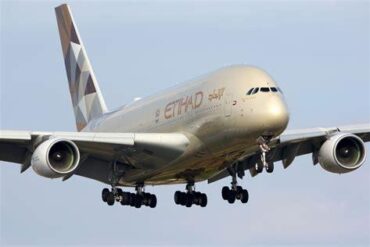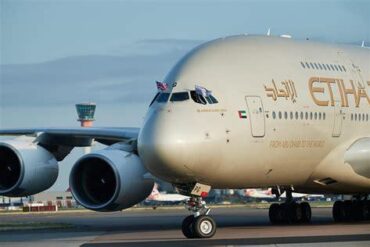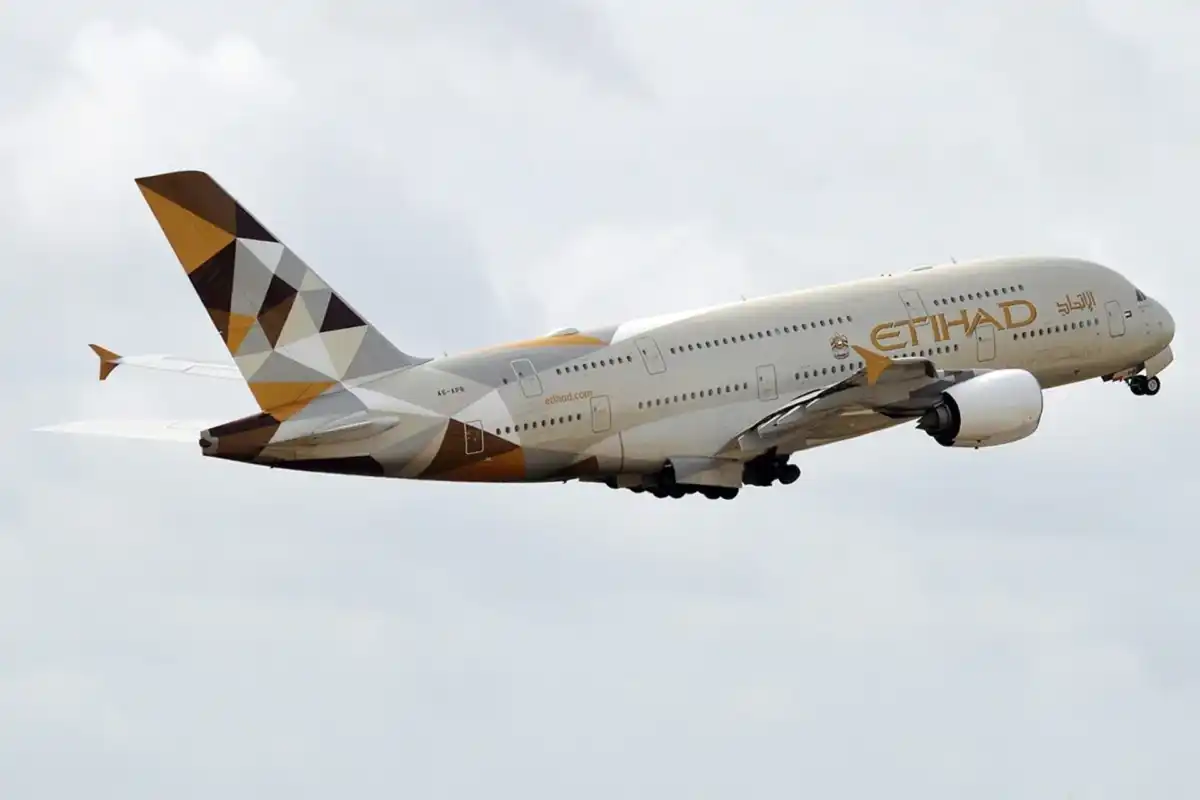
Etihad Airways’ last remaining Airbus A380 in long-term storage, registered A6-APB, is finally returning to Abu Dhabi after spending approximately six and a half years grounded. The superjumbo was one of the carrier’s A380s sidelined when the COVID-19 pandemic brought international aviation to an abrupt halt in 2020. While most of Etihad’s surviving A380 fleet has already returned to operation, A6-APB remained in storage considerably longer.
The aircraft’s journey home marks another notable chapter in the revival of Etihad’s A380 fleet. The Abu Dhabi-based airline originally operated 10 Airbus A380s, but the pandemic created uncertainty over whether the enormous four-engine aircraft would ever return. Etihad eventually brought the type back as passenger demand recovered, restoring the aircraft to a role in which its unusually spacious premium cabins could once again become a commercial asset.
A6-APB’s return is particularly significant because it has spent almost its entire post-pandemic existence away from normal airline operations. Its long-term home was Tarbes–Lourdes–Pyrénées Airport (LDE) in southwest France, a location that became closely associated with the storage of large commercial aircraft during the aviation downturn. The airport offers the runway length and space required for widebody aircraft, making it a practical destination for jets awaiting uncertain futures.
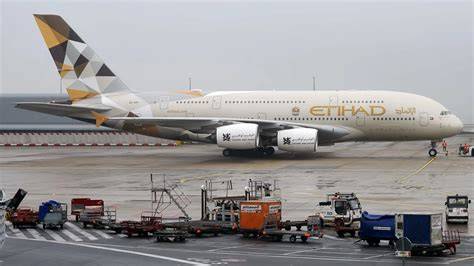
Airbus A380 A6-APB Flies From Tarbes to Abu Dhabi
According to Flightradar24 data cited in the reference material, A6-APB departed Tarbes–Lourdes–Pyrénées Airport at 9:36 AM local time, later than its originally planned 9:00 AM departure. Despite the delayed takeoff, the aircraft was projected to reach Abu Dhabi International Airport (AUH) slightly ahead of its scheduled 6:30 PM local arrival time.
Its ferry flight provided a striking route across several regions. After leaving southern France, the giant Airbus headed southeast over the Mediterranean Sea, then continued across Egypt and Saudi Arabia before reaching the United Arab Emirates. For aviation enthusiasts tracking the aircraft, the journey represented much more than an ordinary repositioning flight: it was the end of one of the longest storage periods experienced by an aircraft that Etihad still intends to use.
The return also demonstrates the unusual operational history of Etihad’s A380 fleet. These aircraft were designed for high-capacity international routes, but their size and four-engine configuration made them especially vulnerable when global demand collapsed. Returning one after years of inactivity requires extensive preparation, inspections, maintenance, and operational work before it can safely resume scheduled passenger service.
A6-APB Has Been Stored Since March 2020
A6-APB initially entered storage at Abu Dhabi International Airport in March 2020, as the COVID-19 crisis rapidly disrupted international aviation. The aircraft was grounded on March 23, 2020, but Abu Dhabi was only a temporary stop in its long storage story.
On December 3, 2020, the A380 flew to Tarbes for longer-term storage. It remained there for roughly five years and nine months, making its eventual return to Abu Dhabi a remarkable conclusion to a period in which its operational future was far from certain.
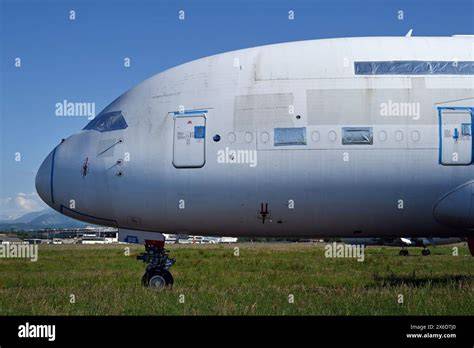
The aircraft reportedly showed only limited recent transponder activity, including activations in January 2024 and August 2026, before its latest flight home. That unusual pattern illustrates just how dormant the aircraft had been compared with the rest of Etihad’s surviving A380 fleet.
A6-APB was not, however, the last Etihad A380 to leave the airline’s fleet. That distinction belongs to A6-APA, which was also sent to Tarbes after being grounded. Rather than returning to service, A6-APA was ultimately scrapped in July 2025, confirming that not every Etihad superjumbo would receive a second chance.
Etihad’s A380 Fleet Returns With 496 Seats
With A6-APB returning, Etihad’s surviving A380 fleet consists of nine aircraft. The aircraft are approximately 11 years old on average, making the type one of the older passenger-aircraft families in the carrier’s fleet.
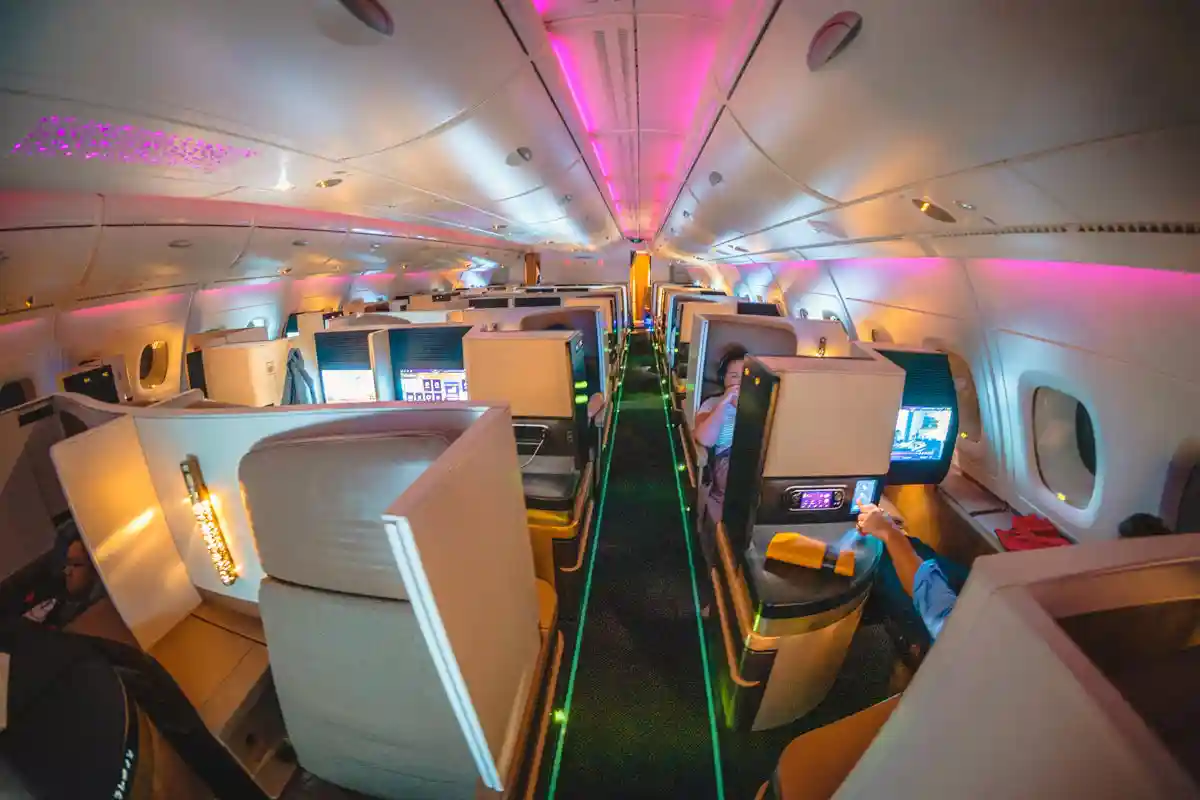
The current A380 configuration has 496 seats, up from the 486-seat layout used when the aircraft originally entered service. The lower deck is dedicated entirely to economy seating, while the upper deck contains 70 business-class seats and 11 first-class seats.
The first-class cabin remains one of the aircraft’s defining features. Two passengers can occupy The Residence, Etihad’s distinctive three-room private accommodation. It includes a living area with a sofa, a separate bathroom with a shower, and a sleeping area featuring a double bed.
That premium configuration gives the A380 an important role beyond simply carrying hundreds of passengers. Its enormous upper deck allows Etihad to combine high passenger capacity with an unusually extensive premium offering, helping differentiate the superjumbo from smaller widebody aircraft.
A Six-Year Storage Story Comes to an End
Etihad’s decision to reactivate its A380s followed a recovery in international travel demand. The airline stated in 2022 that stronger demand across its network and customer feedback supporting the return of one of commercial aviation’s most distinctive experiences were behind the decision.
A6-APB simply took longer than its sister aircraft to make that comeback. Its flight from Tarbes to Abu Dhabi therefore closes a remarkable chapter that began during aviation’s deepest crisis in decades. After approximately 6.5 years in storage, one of Etihad’s most recognizable aircraft is once again on its way home, bringing the airline’s surviving A380 fleet another step closer to its post-pandemic configuration.