Air traffic controllers rarely receive the same attention as pilots, cabin crews, or aircraft manufacturers, yet their decisions sit at the center of modern aviation. Every departure, arrival, runway crossing, altitude change, and aircraft separation depends on controllers maintaining an extraordinarily precise picture of moving traffic. At the world’s busiest airports, where hundreds of aircraft can be moving through interconnected airspace, that responsibility becomes even more demanding.
In 2026, the financial rewards attached to that responsibility are substantial, particularly in the United States. Federal air traffic controllers can earn well into six figures, while experienced personnel at the most complex facilities can approach the government’s $228,000 annual compensation ceiling. But the headline salary does not tell the whole story. Facility level, locality pay, overtime, night work, Sundays, holidays, experience, and staffing shortages can dramatically change the final amount.
The biggest question is therefore not simply how much an air traffic controller earns. It is where they work, how experienced they are, and how many difficult shifts they have to cover. At high-volume facilities, those factors can transform an already strong base salary into an exceptionally large annual compensation package.

Air Traffic Controller Salaries Reach Six Figures at Major US Airports
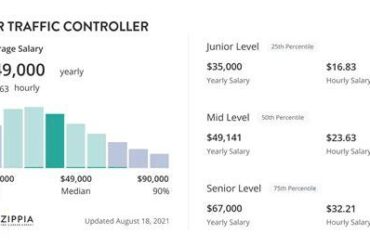
Federal data for 2026 puts the median annual wage for air traffic controllers across the workforce at approximately $144,580. That figure covers controllers working across different facilities and experience levels, so it does not necessarily represent what someone working at a major international hub can expect to earn.
The FAA organizes facilities according to operational complexity, with facilities ranging from lower-level operations to Level 12, the highest classification. The classification reflects factors such as traffic volume, aircraft movements, airspace complexity, and the difficulty of coordinating different streams of traffic.
The distinction matters because an experienced controller at a high-level facility is operating in a fundamentally different environment from someone working at a smaller tower. At the busiest locations, controllers may simultaneously manage large numbers of arrivals and departures, closely spaced aircraft, multiple runways, weather disruptions, restricted airspace, and constantly changing traffic flows.
The compensation system reflects that complexity. The FAA’s highest-paying operational environments include major terminal radar facilities and towers serving some of the country’s largest aviation markets. In these locations, senior controllers can have base salaries approaching or exceeding $150,000, before premium pay and overtime are considered.
New York TRACON Sits at the Top of the Pay Scale
Among the facilities highlighted in 2026 compensation data, New York TRACON represents one of the most demanding assignments in American air traffic control. The facility manages traffic associated with the enormous aviation market surrounding John F. Kennedy International Airport, LaGuardia Airport, and Newark Liberty International Airport.
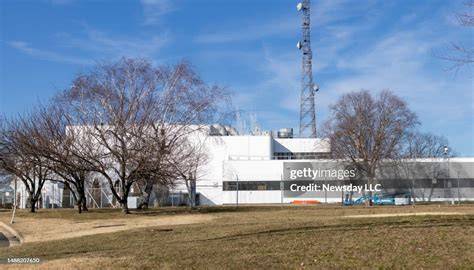
Senior controllers at New York TRACON can reportedly earn approximately $145,000 to $185,000 in base salary, depending on experience and position. Those figures are particularly notable because they exclude many of the additional payments that can accumulate during a year of demanding shift work.
New York’s airspace presents a combination of extremely high traffic volumes and geographic constraints. Controllers must coordinate aircraft arriving at and departing from several major airports while maintaining separation through some of the most heavily traveled airspace in the United States.
Los Angeles is another major earning location. Controllers responsible for the Southern California region can reportedly receive base salaries ranging from approximately $140,000 to $175,000 at senior levels. The region combines enormous passenger demand with complex coastal, inland, and mountainous airspace, creating another environment where experience carries considerable financial value.
Chicago also produces substantial controller salaries. Experienced personnel at the Chicago O’Hare TRACON can reportedly earn approximately $135,000 to $165,000 in base pay. Atlanta, meanwhile, remains one of the world’s busiest airports by passenger and aircraft activity, and senior controllers serving the area can earn approximately $130,000 to $155,000 before premium compensation.
Experience Can Change an Air Traffic Controller’s Salary Dramatically
One of the clearest examples of the career progression comes from the Dallas/Fort Worth facility. Data collected in May 2026 showed an entry-level salary around $102,549, while the highest experienced positions could reach approximately $167,550.
That enormous spread illustrates why simply quoting an average salary can be misleading. A newly qualified controller and a veteran controller working in the same operational environment can have very different earning profiles.
Controllers must complete extensive training before they can independently handle increasingly complicated traffic. They also need facility-specific certifications, meaning that experience accumulated at one location does not necessarily translate instantly into qualification at another.
The result is a profession in which earning power generally develops alongside operational expertise. The people earning the largest salaries are often those who have spent years building the knowledge required to manage complex traffic patterns under intense time pressure.
For workers who reach the upper levels, however, base salary is only one part of the compensation equation.
Premium Pay Makes Busy Airport Controller Salaries Even Higher
Air traffic control operates around the clock, and major airports do not close simply because it is nighttime, Sunday, or a federal holiday. Controllers therefore work rotating schedules that can include overnight shifts, weekends, and holidays.
That schedule brings additional compensation.
Night work between approximately 6 p.m. and 6 a.m. can qualify for a 10% night differential, while Sunday work can receive a 25% premium under applicable federal rules. Across a full year, these payments can add a meaningful amount to a controller’s compensation.

The largest potential earnings boost, however, comes from overtime. Staffing shortages have forced many busy facilities to rely heavily on additional shifts to keep operations running.
At some Level 12 facilities, controllers can face mandatory six-day work weeks. Overtime paid at time-and-a-half can rapidly increase annual compensation, particularly for experienced employees whose ordinary salaries are already near the upper end of the federal pay scale.
This creates an unusual situation. A controller does not necessarily need to hold the highest possible base salary to approach the government’s compensation ceiling. A mid-career employee working substantial overtime and receiving shift premiums can potentially reach the limit much faster.
The $228,000 Federal Compensation Ceiling
For FAA controllers, one of the most important numbers in the 2026 pay discussion is $228,000. This represents the maximum total allowable compensation under the applicable federal limit, including locality adjustments.
That ceiling creates a hard boundary for some of the highest-earning controllers. A person can work additional hours, but once compensation reaches the statutory maximum, additional payable earnings can become restricted.
It is an unusual paradox created by the staffing shortage. The system needs experienced controllers to work additional shifts because there are not enough qualified personnel. Yet the same workers can eventually encounter a compensation ceiling that limits the financial benefit of continuing to accumulate additional overtime.
The situation also demonstrates why the headline salary figure should not be interpreted as a guaranteed annual income. $228,000 is a maximum compensation figure, not the standard salary for every controller working at a busy airport.
Why US Controller Pay Increased in 2026
The extraordinary earning potential is closely connected to a serious staffing problem. The FAA entered 2026 with a reported shortage of approximately 3,500 controllers compared with its operational staffing targets.
That shortage has consequences beyond individual paychecks. When facilities are understaffed, controllers can face heavier workloads, additional overtime, and more complicated scheduling. Airlines and passengers can also experience delays when the air traffic control system lacks sufficient personnel to handle demand efficiently.
The FAA’s response has included targeted financial measures designed to retain experienced employees and attract new applicants.
A 3.8% targeted pay increase for the air traffic control workforce was part of the 2026 strategy. The agency also introduced retention incentives aimed at controllers who are already eligible for retirement, offering a bonus equivalent to 20% of basic pay for each additional year they remain in service under the described program.
The strategy is not limited to experienced controllers. The FAA also authorized a 30% increase in starting salaries for academy trainees, addressing one of the biggest challenges in the recruitment pipeline.
Switzerland Offers a Different High-Pay Model
The United States is not the only country where air traffic controllers can earn substantial salaries. Switzerland’s Skyguide is one of the strongest international examples.
Controllers at Skyguide can earn around $268,830, equivalent to approximately €228,225, according to the figures provided. That level is substantially above the US federal compensation ceiling, although direct comparisons require caution because taxes, benefits, living costs, working conditions, currencies, and employment structures differ between countries.
Swiss controllers also operate within a different social and employment environment. Benefits can include substantial vacation allowances and healthcare arrangements, meaning salary alone does not fully describe the overall compensation package.
The contrast illustrates an important point: the highest gross salary is not necessarily the same thing as the highest disposable income or best overall employment package.
How Air Traffic Controller Pay Looks Across Europe and Australia
Other major aviation markets also provide strong compensation.
Controllers working for the UK’s NATS have average salaries around $108,000, while German DFS controllers average approximately $110,000 in the figures provided. Experienced controllers at complex facilities can earn more than these averages as they progress through their careers.
Australia’s Airservices Australia provides another significant benchmark, with controllers averaging approximately $122,000 under the 2024–2027 enterprise agreement.
These figures reflect different national labor markets and should not be treated as direct equivalents to FAA salaries. Taxation, pensions, vacation, healthcare, housing costs, and overtime structures can all change the practical value of a salary.
The Middle East presents an especially interesting case because tax treatment can dramatically change take-home income.
Dubai Controller Salaries Benefit From UAE Tax Structure
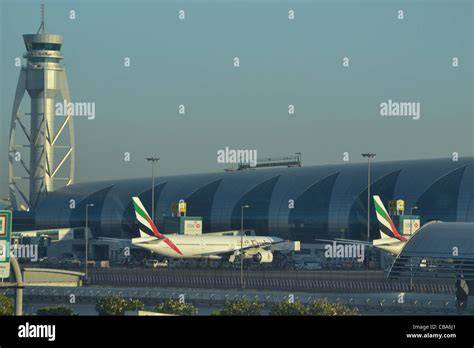
Air traffic controllers managing the enormous international traffic flow through Dubai International Airport (DXB) can earn around $110,000 in base pay, according to the supplied data.
That number looks considerably lower than the highest US salaries. However, the United Arab Emirates does not impose personal income tax on individuals in the same way as the United States, and expatriate employment packages can include substantial benefits such as housing and education allowances.
Consequently, a controller’s effective financial position cannot be determined simply by comparing $110,000 with a US salary of $180,000 or $220,000. The amount ultimately available after taxation and major living expenses can be very different.
For internationally mobile aviation professionals, compensation therefore involves considerably more than the number printed beside “annual salary.”
The Hidden Cost Behind Six-Figure Air Traffic Control Pay
High salaries come with an equally important qualification: the job can be exceptionally demanding.
Controllers working at the busiest facilities must maintain concentration for long periods while making rapid decisions involving aircraft separation and traffic sequencing. The work becomes even more difficult when weather, equipment issues, runway closures, delays, diversions, or unexpected aircraft situations disrupt an established traffic plan.
Rotating schedules add another layer of difficulty. Moving repeatedly between morning, afternoon, evening, and overnight shifts can disrupt normal sleep patterns. Mandatory overtime can compound the problem by reducing the amount of recovery time between demanding shifts.
The result is that the highest salaries often reflect more than professional skill. They also reflect the difficulty of finding enough qualified personnel willing and able to cover the operational schedule.
That is why the $228,000 compensation ceiling should not be viewed simply as a prize at the top of a career ladder. Reaching it can require years of experience and a willingness to work schedules that would be difficult for many people to sustain.
What Air Traffic Controllers Could Earn in the Years Ahead
The staffing crisis has changed the economics of the profession in 2026. Higher starting salaries are intended to strengthen the recruitment pipeline, while retention incentives are designed to keep experienced controllers from leaving just as they reach peak proficiency.
The long-term objective is to reduce dependence on mandatory overtime by increasing the number of fully qualified controllers. If successful, that could eventually change the relationship between salary and workload. Controllers might retain strong compensation while working more sustainable schedules.
For now, however, the numbers reveal why air traffic control remains one of aviation’s most financially significant careers. Senior controllers at America’s busiest facilities can earn $150,000 or more in base pay, while premium shifts and overtime can push total compensation toward $228,000. Internationally, Switzerland demonstrates that even higher gross salaries are possible, while locations such as Dubai show how taxation and expatriate benefits can reshape the value of a lower headline salary.
Ultimately, air traffic controller compensation in 2026 reflects a simple reality: the more complex the airspace, the greater the experience required, and the more difficult the staffing challenge, the more valuable qualified controllers become. The paycheck may be impressive, but behind every six-figure salary is a job where precision, concentration, and consistency are not optional—they are the foundation of the entire aviation system.