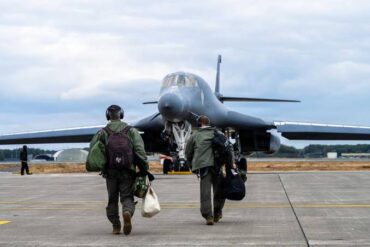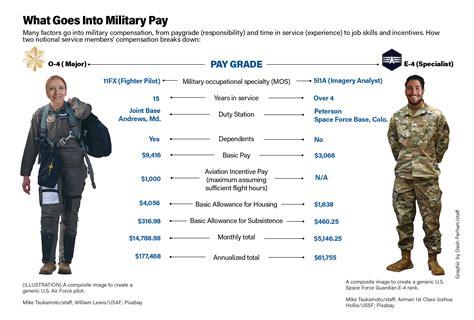
Military aviation remains one of the most demanding and prestigious professions in the United States armed forces. From flying fifth-generation stealth fighters and strategic bombers to conducting helicopter rescue missions in hostile environments, military pilots perform responsibilities that require years of training, exceptional discipline, and constant operational readiness. In 2026, compensation for military aviators has become an increasingly important topic as the Department of Defense faces growing competition from commercial airlines, aerospace firms, and defense contractors eager to recruit experienced pilots.
While military pilots rarely match the salaries earned by senior airline captains during the early stages of their careers, the overall compensation package available to service members is far more complex than a simple paycheck. Housing allowances, flight pay, tax advantages, healthcare coverage, retirement benefits, deployment incentives, and retention bonuses can substantially increase total earnings. As a result, many military aviators reach six-figure compensation levels relatively early in their careers.
The compensation structure also varies significantly among the different branches. The United States Air Force, United States Navy, United States Marine Corps, and United States Army all operate unique aviation organizations with different missions, aircraft, deployment patterns, and career progression systems. These differences directly influence how pilots are paid and how much they can earn over time.
Understanding military pilot salaries in 2026 requires looking beyond base pay alone. The true financial picture emerges when allowances, bonuses, operational incentives, and career opportunities are considered alongside the extraordinary training and responsibilities that define military aviation.
Why Military Pilot Compensation Continues To Receive National Attention
The military pilot shortage remains a significant concern throughout the United States armed forces. Airlines continue expanding their fleets and hiring aggressively, creating a highly competitive labor market for experienced aviators. Commercial carriers frequently offer compensation packages that exceed military salaries, especially for pilots with thousands of flight hours and leadership experience.
Replacing military aviators is not a simple process. Training a fighter pilot, bomber pilot, or naval aviator requires years of instruction and can cost taxpayers millions of dollars. The financial investment includes undergraduate flight training, aircraft-specific qualification programs, simulator sessions, operational conversion training, and recurring proficiency requirements.
Because of these costs, military leadership increasingly views retention as a critical financial strategy. Keeping experienced pilots often proves less expensive than training entirely new aviators. This reality has driven the expansion of aviation continuation pay, retention bonuses, and other incentive programs designed to encourage pilots to remain in uniform longer.
Beyond compensation, military pilots receive benefits that many civilian employers cannot easily replicate. Government-funded healthcare, retirement systems, housing assistance, education programs, tax-free allowances, and opportunities to fly some of the world’s most advanced aircraft all contribute to the overall value of military service.
The Different Aviation Missions Across The US Military
Each branch of the US military operates aviation assets designed to support its specific mission requirements. These differing responsibilities influence career paths, deployment schedules, operational tempo, and ultimately compensation structures.
The United States Air Force serves as the nation’s primary provider of air superiority, strategic strike capability, intelligence gathering, aerial refueling, and global air mobility. Air Force pilots operate some of the most sophisticated aircraft ever built, including the F-22 Raptor, F-35A Lightning II, B-2 Spirit, B-21 Raider, KC-46 Pegasus, and C-17 Globemaster III.
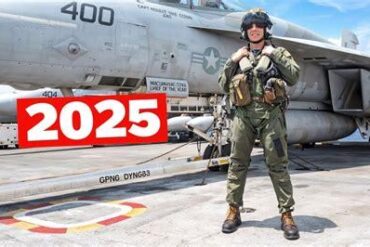
The United States Navy focuses on projecting military power across the world’s oceans. Naval aviators routinely launch and recover aircraft from moving aircraft carriers, performing one of the most technically challenging tasks in aviation. Their fleet includes the F/A-18 Super Hornet, F-35C Lightning II, EA-18G Growler, P-8 Poseidon, and numerous helicopter platforms.
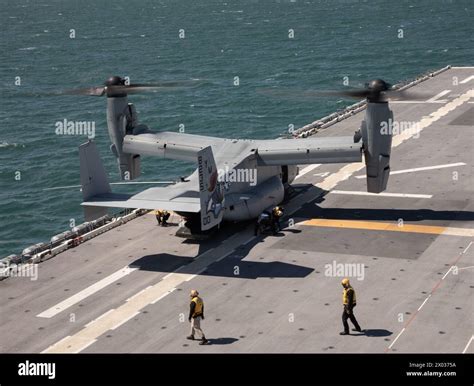
The United States Marine Corps integrates aviation directly into expeditionary warfare operations. Marine pilots provide close air support, troop transport, reconnaissance, and assault capabilities using aircraft such as the F-35B Lightning II, MV-22 Osprey, CH-53K King Stallion, and AH-1Z Viper.
Meanwhile, the United States Army operates the largest helicopter force in the world. Army aviators fly aircraft including the AH-64 Apache, UH-60 Black Hawk, and CH-47 Chinook, supporting battlefield operations, medical evacuation missions, logistics, and reconnaissance.
Air Force Pilot Salaries In 2026
Among all military branches, the Air Force remains the largest employer of pilots and aircrew personnel. Consequently, it also faces some of the strongest retention pressures from commercial aviation employers.
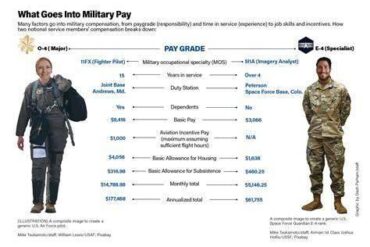
A newly commissioned Air Force pilot entering operational service typically receives base compensation that translates into approximately $50,000 to $60,000 annually before additional benefits are applied. However, once housing allowances, aviation incentive pay, healthcare benefits, and tax-free allowances are included, total compensation generally rises to between $75,000 and $95,000 annually.
The exact amount depends on duty location, deployment frequency, rank progression, and family status. Pilots stationed overseas or assigned to frequent deployments often earn additional compensation through special duty programs and operational incentives.
As Air Force pilots progress through their careers and advance into officer ranks such as Captain and Major, compensation increases substantially. Mid-career aviators commonly earn total annual compensation ranging from $120,000 to $160,000. This figure often includes aviation incentive pay, housing benefits, and retention programs.
Senior Air Force aviators command some of the highest salaries in military aviation. Squadron commanders, experienced fighter pilots, bomber pilots, and specialized mission commanders frequently exceed $180,000 annually in total compensation. Retention bonuses play a major role in pushing earnings beyond this threshold.
Air Force leadership continues investing heavily in pilot retention because replacing experienced aviators is extraordinarily expensive. Every veteran pilot who remains in service preserves years of accumulated expertise and reduces the need for costly training pipelines.
Why Air Force Retention Bonuses Remain So Important
The Air Force faces a unique challenge because its pilots possess skills that are highly transferable to civilian aviation. Airline recruiters actively target military aviators due to their extensive training, operational discipline, leadership experience, and safety records.
A pilot with years of experience operating complex aircraft under demanding conditions represents a valuable asset for commercial airlines. Consequently, the Air Force has expanded bonus programs to encourage experienced personnel to extend their military careers.
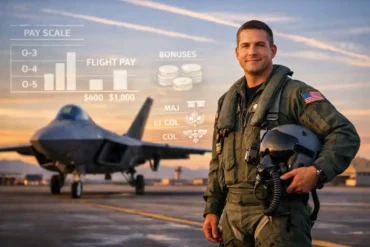
Aviation incentive pay can vary significantly depending on years of aviation service, qualification status, and operational assignments. Monthly payments ranging from approximately $125 to $1,000 or more can add substantial value to annual earnings.
These incentives have become a central component of military personnel strategy, especially as pilot shortages continue affecting both military and civilian aviation sectors.
US Navy Pilot Salaries And Carrier Aviation Pay
Naval aviation occupies a unique position within military aviation because carrier operations demand specialized training that few pilots anywhere in the world possess.
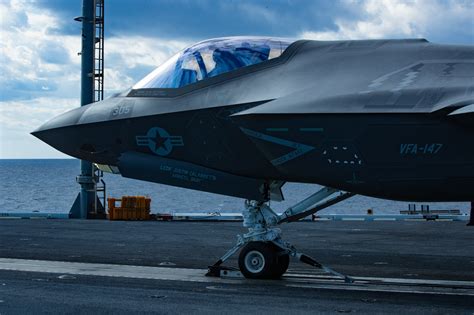
Launching from a moving aircraft carrier using catapults and landing via arresting cables requires exceptional skill and precision. Naval aviators spend years developing these capabilities, making them among the most highly trained military pilots.
Entry-level Navy pilots generally receive total compensation ranging from $80,000 to $100,000 annually. This figure includes base pay, housing allowances, flight pay, and various forms of sea-duty compensation.
Carrier deployments introduce additional financial considerations. Depending on operational requirements and deployment locations, naval aviators may receive extra compensation through sea pay, tax advantages, and mission-specific incentives.
Mid-career naval aviators flying aircraft such as the F/A-18 Super Hornet, EA-18G Growler, P-8 Poseidon, or F-35C commonly earn between $130,000 and $170,000 annually in total compensation.
Senior officers responsible for carrier air wings, aviation squadrons, and major operational commands can exceed $190,000 annually, particularly when continuation bonuses and command-related compensation are included.
How Carrier Qualifications Increase Long-Term Earning Potential
One of the most valuable aspects of a Navy aviation career is the experience gained through carrier operations. Carrier-qualified pilots possess highly specialized credentials that are respected throughout the aviation industry.
Beyond military service, these qualifications often create opportunities within commercial airlines, aerospace manufacturers, defense contractors, consulting firms, and executive leadership roles. The combination of operational experience and leadership training frequently translates into strong post-military career prospects.
As a result, many naval aviators view their military service not only as a professional calling but also as a foundation for long-term career growth.
Marine Corps Pilot Salaries In 2026
Marine aviation combines elements of both naval aviation and ground combat support, creating one of the most operationally intense flying environments in the US military.
Marine aviators routinely support amphibious assaults, expeditionary operations, rapid-response deployments, humanitarian missions, and close air support activities. Their aircraft frequently operate in austere environments where adaptability is essential.
Junior Marine pilots generally earn total annual compensation between $75,000 and $95,000 after accounting for flight pay, housing allowances, healthcare benefits, and deployment incentives.
Marine aviation’s operational demands often result in frequent deployments and challenging mission profiles. These factors contribute to additional compensation opportunities throughout a pilot’s career.
Mid-career Marine aviators commonly earn between $120,000 and $160,000 annually, while senior squadron leaders and aviation commanders frequently exceed $180,000 annually when bonuses and incentives are included.
Aircraft such as the F-35B Lightning II, MV-22 Osprey, AH-1Z Viper, and CH-53K King Stallion support a wide range of missions that require pilots to operate under demanding conditions.
Marine aviation’s close relationship with ground combat forces also creates a distinctive professional culture that attracts pilots seeking direct involvement in expeditionary operations.
Army Helicopter Pilot Salaries And Warrant Officer Careers
Army aviation differs significantly from the aviation structures found in the Air Force, Navy, and Marine Corps. Rather than focusing primarily on fixed-wing aircraft, Army aviation centers on rotary-wing operations.
Army helicopter pilots perform missions that include troop transport, battlefield assault, reconnaissance, logistics support, search and rescue, and medical evacuation. These missions place aviators in direct support of ground operations across diverse environments.
A unique feature of Army aviation is its extensive use of the warrant officer system. Unlike commissioned officers, warrant officers often spend more of their careers actively flying aircraft rather than moving into administrative leadership positions.
Newly qualified Army helicopter pilots generally earn between $65,000 and $85,000 annually, making them the lowest-paid military aviators during the early stages of their careers. However, this difference narrows as experience and rank increase.
Mid-career Army aviators commonly receive total compensation ranging from $100,000 to $140,000 annually. Senior warrant officers and aviation leaders frequently surpass $160,000 annually through a combination of flight pay, deployment incentives, and leadership compensation.
Army helicopter pilots also enjoy strong civilian employment opportunities after military service. Industries such as emergency medical transport, offshore energy support, utility aviation, law enforcement aviation, aerial firefighting, and corporate helicopter operations actively recruit former military helicopter pilots.
2026 US Military Pilot Salary Comparison
| Branch | Entry-Level Pilot | Mid-Career Pilot | Senior Pilot / Commander |
|---|---|---|---|
| US Air Force | $75,000–$95,000 | $120,000–$160,000 | $180,000+ |
| US Navy | $80,000–$100,000 | $130,000–$170,000 | $190,000+ |
| US Marine Corps | $75,000–$95,000 | $120,000–$160,000 | $180,000+ |
| US Army Aviation | $65,000–$85,000 | $100,000–$140,000 | $160,000+ |
The Real Value Of Military Pilot Compensation
Evaluating military pilot salaries solely through annual pay figures can be misleading. Compensation includes multiple financial and non-financial components that significantly increase overall value.
Housing allowances alone can represent tens of thousands of dollars annually depending on location. Healthcare coverage reduces expenses that many civilian workers pay out of pocket. Retirement programs provide long-term financial security, while educational benefits support future career development.
Many military allowances are also tax-advantaged, increasing effective take-home pay compared to equivalent taxable income in civilian employment.
When these benefits are combined with flight pay, retention bonuses, deployment incentives, and career advancement opportunities, total compensation often becomes far more competitive than headline salary figures suggest.
Why Military Aviation Remains Attractive In 2026
Despite intense competition from airlines and private-sector employers, military aviation continues to attract talented individuals seeking unique experiences unavailable elsewhere in aviation.
Few careers offer opportunities to fly stealth fighters, conduct carrier operations, command strategic bombers, support special operations forces, or perform combat rescue missions. These experiences provide a level of professional challenge and responsibility unmatched in most civilian aviation roles.
In 2026, military pilot compensation ranges from approximately $65,000 annually for junior Army helicopter pilots to well above $190,000 annually for senior Navy and Air Force aviation leaders. As retention pressures continue shaping defense policy, compensation programs will likely remain a critical tool for maintaining the highly skilled pilot force required to support America’s global military commitments.
For aspiring aviators, military service continues to offer a compelling combination of advanced flight training, leadership development, operational prestige, and competitive long-term financial rewards.