The salary of a United States Air Force fighter pilot in 2026 resists being boiled down to a single, tidy number. It behaves more like a layered system, built from rank-based pay tables, aviation incentives, housing allowances, tax advantages, and retention programs that evolve over time. Two pilots wearing the same wings can fly the same jet and still see meaningfully different numbers on their monthly statements. Understanding what fighter pilots truly earn requires stepping inside that system and watching how it grows over a career.
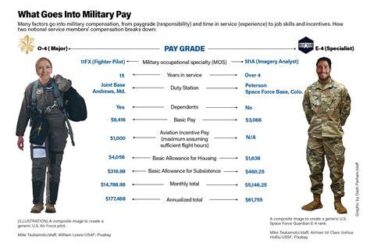
At its core, USAF pilot compensation begins with the same foundation as every commissioned officer. Base pay is published, predictable, and tied to rank and years of service. What transforms that foundation into a competitive and often six-figure income is everything layered on top: flight pay, housing allowances that adjust to local costs, food allowances, deployment-related income, and long-term incentives meant to keep experienced pilots in uniform.
In 2026, fighter pilots sit at the intersection of elite military skill and market pressure from civilian aviation. Airlines are paying aggressively for cockpit experience, and the Air Force has responded by refining how it rewards those who choose to stay. The result is a compensation structure that is far more robust than many assume, especially once tax advantages are factored in.
Before examining specific numbers, it matters to understand how rare the job itself is. Fighter pilot pay only makes sense when viewed alongside the difficulty of earning the right to sit in that cockpit in the first place.
Why Becoming a USAF Fighter Pilot Is Exceptionally Difficult
The path to becoming a fighter pilot is deliberately narrow. Every pilot must first earn a commission through the United States Air Force Academy, Air Force ROTC, or Officer Training School. That alone filters candidates down to a highly competitive pool. From there, aspiring aviators compete for pilot slots using standardized testing and flight aptitude scores that feed into the Pilot Candidate Selection Method, a system designed to predict success in high-performance aircraft.
Medical screening is equally unforgiving. Neurological evaluations, vision standards, psychological assessments, and body-measurement requirements go far beyond a civilian physical. These exams are designed to identify even minor risks that could become catastrophic at nine times the force of gravity.
Training itself unfolds in stages, beginning with introductory flight screening and culminating in Undergraduate Pilot Training. Students learn basic airmanship in the T-6 trainer before advancing to faster, more demanding aircraft. Only a subset will be tracked into the fighter and bomber pipeline, where the margin for error narrows dramatically.
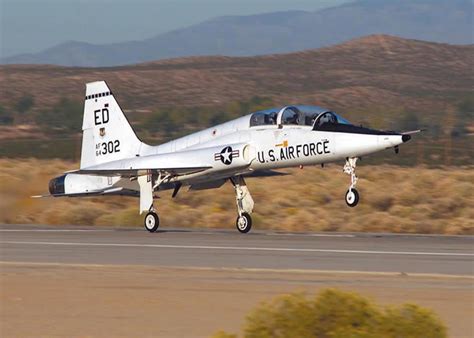
Those selected for fighters move on to the T-38 Talon, mastering formation flying, high-speed maneuvers, and tactical decision-making. After earning wings, they attend Introduction to Fighter Fundamentals, an intense course that teaches the language and logic of air combat. Only then do they transition to a specific aircraft, such as the F-16 or F-35, where months of additional training await before they are considered combat-ready.
This long and selective process frames every dollar a fighter pilot earns. Compensation reflects not only skill, but scarcity.
Entry-Level Fighter Pilot Pay in 2026
Most newly minted fighter pilots spend their first several years in training or early operational assignments. During this phase, they are typically Second Lieutenants or First Lieutenants, and their pay resembles that of other junior officers, augmented by aviation-specific incentives.
In 2026, a newly commissioned Second Lieutenant earns a basic monthly salary of about $4,150, translating to just under $50,000 annually before allowances. Promotion to First Lieutenant usually occurs around the two-year mark, raising base pay to roughly $4,780 per month, with incremental increases tied to time in service.
Base pay alone, however, tells only part of the story. Once on aviation status, pilots receive Aviation Incentive Pay, often called flight pay. For new pilots, this starts around $150 per month, a modest figure that grows significantly over time.
Housing is where compensation begins to diverge sharply between individuals. The Basic Allowance for Housing adjusts to local rental markets and family status. A young pilot stationed in a high-cost area can receive around $1,800 to $2,200 per month, and this allowance is generally tax-free, a detail that meaningfully boosts take-home pay.
Add to that the Basic Allowance for Subsistence, roughly $328 per month, and early-career fighter pilots often see real monthly compensation far higher than base pay suggests. While no large bonuses appear immediately, the structure quietly builds a stable financial foundation during the most demanding training years.
Mid-Career Pay Growth for USAF Fighter Pilots
As pilots gain experience and move fully into operational squadrons, compensation accelerates. Promotion to Captain marks a major financial turning point. Captains represent the backbone of fighter squadrons, flying the bulk of missions while taking on leadership responsibilities.
In 2026, a Captain with several years of service can earn base pay approaching $7,380 per month, or roughly $88,500 annually. With additional longevity increases, base pay alone soon pushes toward six figures.
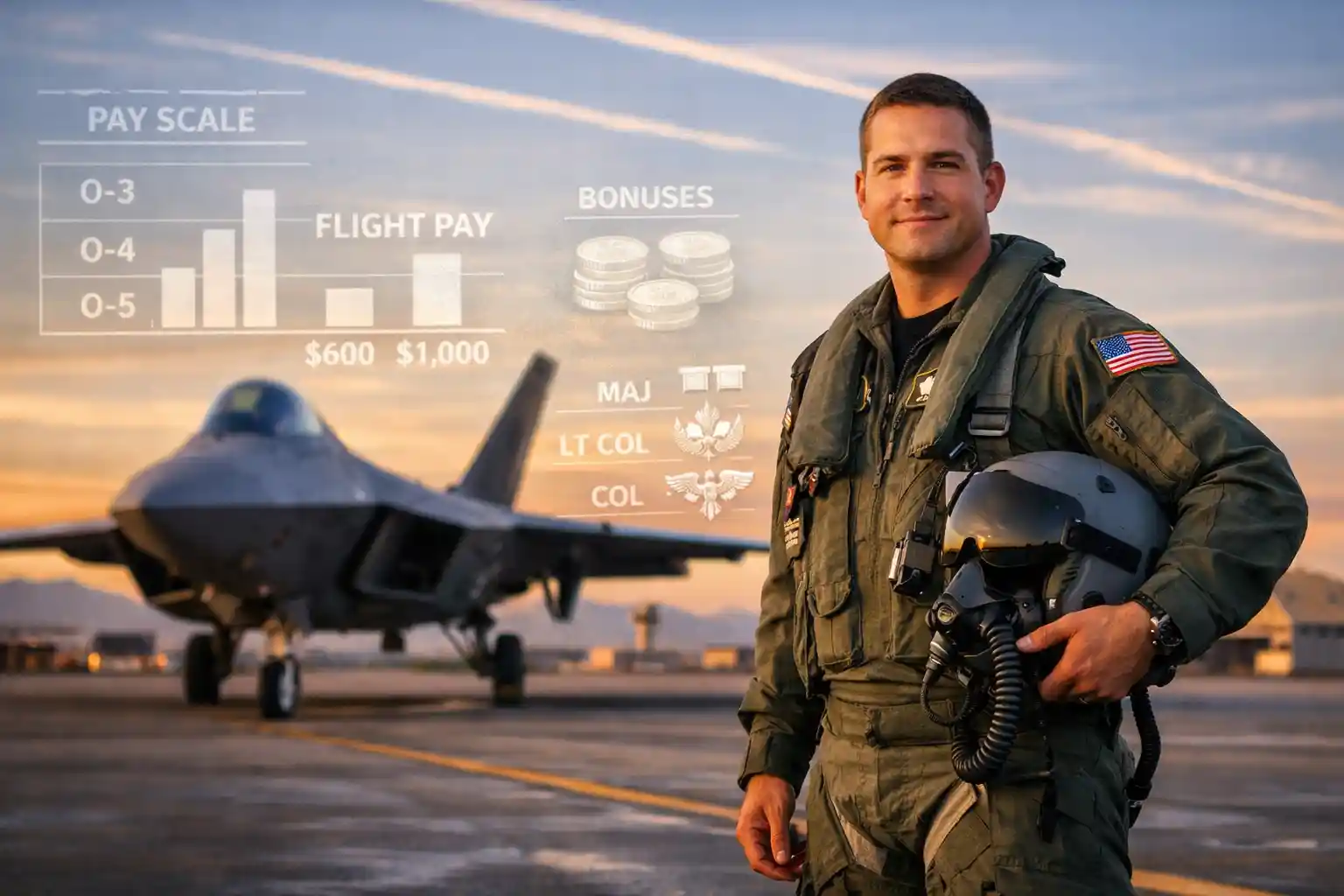
Flight pay also climbs during this phase. After two years of aviation service, pilots typically receive about $250 per month, rising steadily as experience accumulates. Once past six years of aviation service, flight pay can reach approximately $700 per month, reflecting increased proficiency and responsibility.
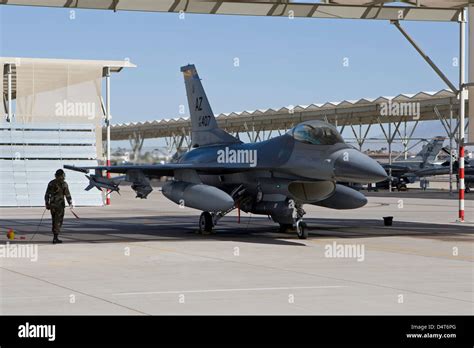
Housing and subsistence allowances continue unchanged in structure but often grow in absolute value as pilots move to new bases or start families. Because these allowances remain largely tax-advantaged, they amplify effective income in a way civilian salaries rarely do.
Operational factors can further influence take-home pay. Deployments, temporary duty assignments, and mission-specific per diem payments introduce variability, sometimes adding thousands of dollars over a year. Benefits such as 30 days of paid leave, retirement contributions, and education programs quietly add long-term value that does not appear on a pay stub but matters deeply over a career.
Senior Fighter Pilot Salaries and Retention Incentives
For senior fighter pilots, compensation becomes both simpler and more substantial. Majors, Lieutenant Colonels, and Colonels typically see base pay that comfortably exceeds six figures before any allowances are added. At this stage, the Air Force’s challenge is not training pilots, but keeping them.
Flight pay remains part of the package and continues to scale with years of aviation service. Housing allowances often grow as senior officers move into larger homes or higher-cost regions, adding thousands of dollars per month in tax-advantaged income.
Retention incentives become increasingly important. When the Air Force faces shortages of experienced aviators, it offers bonuses designed to compete with civilian opportunities. These programs can significantly enhance total compensation over multi-year commitments, especially for pilots qualified in high-demand aircraft.
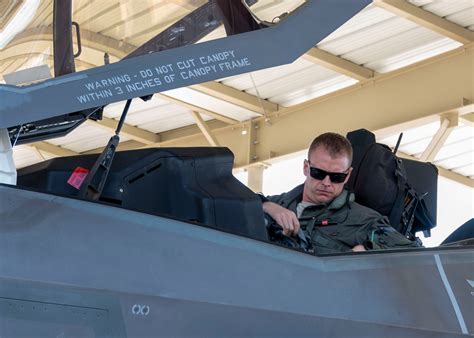
The role itself evolves as well. Senior pilots often balance flying with duties as instructors, evaluators, or mission commanders. While cockpit hours may decrease, responsibility and influence increase, and compensation reflects that progression.
How USAF Fighter Pilot Pay Compares to Civilian Aviation
Comparisons with civilian aviation are inevitable. According to federal labor data, the median airline pilot salary in the United States sits around $226,000, blending entry-level first officers with senior captains. At first glance, this dwarfs military pay.
Reality is more nuanced. A first-year first officer at a major airline may earn in the low to mid $100,000s, while senior captains on widebody aircraft can exceed $400,000 annually. Cargo carriers like FedEx and UPS offer similarly high ceilings, particularly for long-haul operations.
What military pay lacks in raw top-end numbers, it partially offsets through stability, benefits, and early-career income. Civilian pilots often spend years building flight time with modest earnings before reaching lucrative positions. Fighter pilots, by contrast, receive consistent compensation from the start, along with housing, healthcare, and retirement benefits that reduce personal expenses.
For many aviators, the choice is not purely financial. The experience of flying frontline combat aircraft, leading missions, and serving in a national defense role carries its own weight.
The Bigger Picture of Fighter Pilot Compensation in 2026
By 2026, USAF fighter pilot pay reflects a balancing act between tradition and market reality. The Air Force cannot match the highest airline salaries dollar for dollar, but it has structured compensation to reward commitment, expertise, and longevity.
From the first tentative flights in training aircraft to senior leadership roles in operational wings, pay grows steadily and predictably. Allowances and incentives quietly elevate real income, while benefits provide long-term security that many civilian careers struggle to match.
For those whose lifelong ambition is to fly aircraft like the F-16 Fighting Falcon or F-35 Lightning II, compensation is only one piece of a much larger equation. The salary is solid, the benefits substantial, and the career uniquely demanding. In that combination lies the enduring appeal of being a fighter pilot in the United States Air Force.