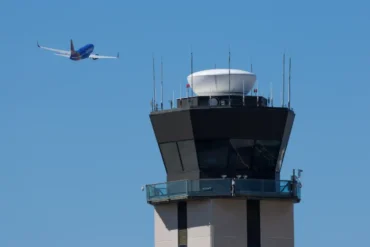
The Federal Aviation Administration is undertaking one of the most ambitious hiring campaigns in its modern history, targeting nearly 9,000 new air traffic controllers over the next three years. The push follows a historic 43-day government shutdown that exposed the fragility of the nation’s air traffic control system, highlighting persistent staffing gaps and operational vulnerabilities across the country’s busiest airfields.
FAA Accelerates Hiring To Stabilize America’s ATC System
The FAA’s plan to onboard at least 8,900 controllers by 2028 represents a direct response to years of understaffing that have strained the national airspace system. Air traffic control remains one of the most demanding professions in transportation, requiring rigorous training, medical clearance, and on-the-job certification. But the stakes have become too high to maintain the status quo. Chronic personnel shortages, mandatory overtime, and six-day workweeks have left facilities operating with razor-thin margins, where a single sick call can ripple into widespread delays.
The deficiencies became impossible to ignore during the government shutdown from October 1 to November 12, the longest in U.S. history. Air traffic controllers, classified as essential federal employees, were required to work without pay, pushing many to the breaking point. As more controllers called out, airlines experienced mounting delays, cancellations, and even an FAA-mandated reduction in flight activity to preserve safety. The shutdown laid bare an uncomfortable truth: America’s air traffic control system was already stretched thin, and any shock could bring the system close to paralysis.
Enhanced AT-CTI Program Becomes Cornerstone Of FAA Recruitment
A major lever in the FAA’s hiring strategy is the Enhanced Air Traffic-Collegiate Training Initiative (AT-CTI) program. This new pathway allows students at nine participating colleges to complete coursework equivalent to foundational FAA Academy training. Graduates who pass the Air Traffic Skills Assessment and obtain required medical and security clearances can move directly into facility-specific qualification training.
This streamlined pipeline accomplishes two critical objectives: it widens the pool of qualified candidates and shortens the time it takes for trainees to progress into operational roles. Although currently limited to a small group of schools, the AT-CTI pathway is gaining momentum. If early results continue to show strong hiring and certification outcomes, expansion to more institutions appears likely.
Shutdown Fallout Exposes Systemic Weaknesses
The aftermath of the shutdown demonstrated how precarious the ATC workforce has become. Controllers eventually received retroactive pay, but many simply could not afford weeks of unpaid service. The resulting absences struck at an already understaffed infrastructure, showing how even a temporary disruption could force national-scale slowdowns.
Facilities that were already coping with shortages were suddenly operating with skeleton crews. In some of the country’s busiest airspaces—New York, Atlanta, Southern California—the effects were immediate. Airlines were instructed to cut flight volume, and thousands of passengers faced prolonged delays. While those restrictions have since been lifted, the incident accelerated public awareness of staffing issues that had, until then, remained largely behind the scenes.
The U.S. Air Traffic Control Shortage Reaches Critical Levels
The United States currently faces an estimated 3,000 open air traffic controller positions, a gap that has taken years to form and cannot be closed quickly. Veteran controllers are retiring faster than replacements can be trained, and those who remain are spending more hours handling more traffic with often-outdated technology. Delta Air Lines CEO Ed Bastian recently noted that flights between New York and Atlanta now take longer than they did 75 years ago—a stark illustration of modern congestion colliding with limited tower capacity.

Solving the crisis will require more than new hiring pathways. Air traffic control training demands years of preparation, and the job’s high-stress environment is not suited to everyone. Still, the FAA’s aggressive hiring plan and the expansion of the AT-CTI program represent a major reset in strategy. If executed effectively, the agency may finally begin rebuilding a workforce that has been shrinking for more than a decade.
A Three-Year Race To Rebuild The Backbone Of U.S. Aviation
The drive to hire nearly 9,000 new controllers is not just a staffing update—it is an overhaul of a critical layer of national infrastructure. The shutdown revealed how essential controllers are to maintaining the flow of commerce and travel across the country. Strengthening the workforce is now a matter of national urgency, safety, and reliability.
The next three years will determine whether the FAA can turn momentum into meaningful recovery, stabilize tower operations nationwide, and ensure that the U.S. aviation system remains resilient in the face of growing demand and unexpected future shocks.