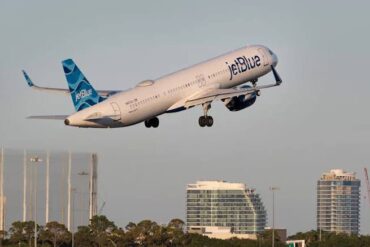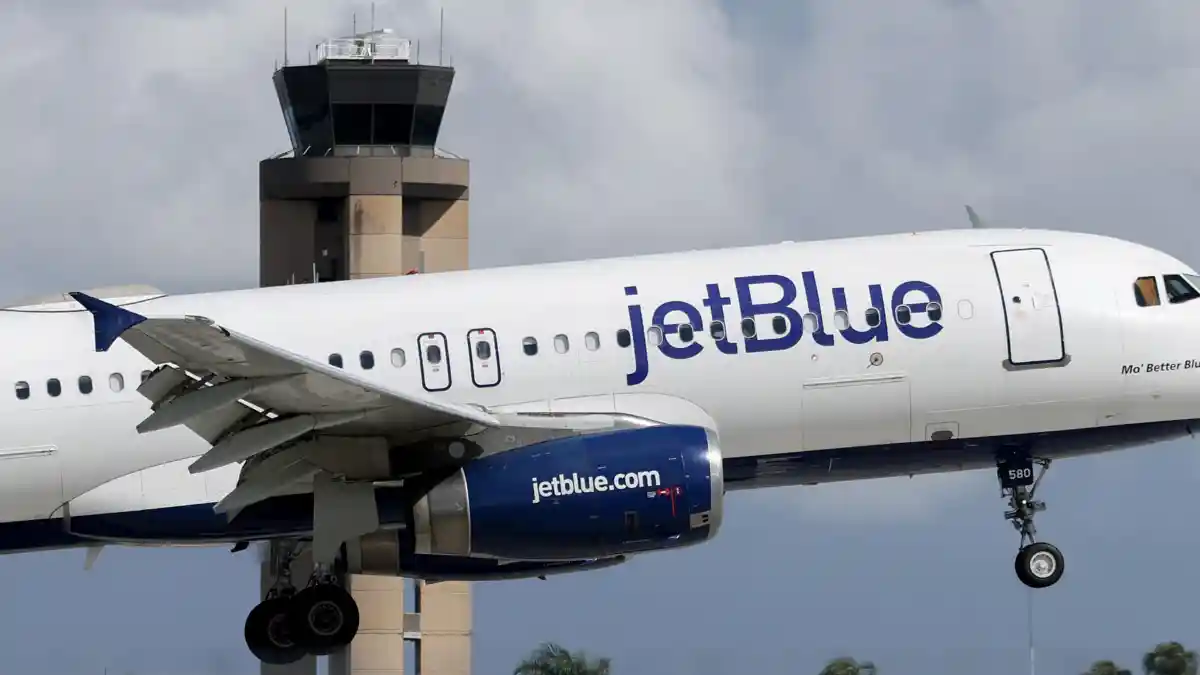
JetBlue Airways is facing an increasingly awkward infrastructure problem at Fort Lauderdale-Hollywood International Airport (FLL), where the five-gate Terminal 5 expansion is now not expected to reach substantial completion until 2030. The delay is particularly significant because JetBlue is not merely waiting for an airport authority to deliver additional capacity. The airline is managing the project on behalf of Broward County while simultaneously building one of its largest operations at the airport.
The situation creates a striking mismatch between JetBlue’s current growth and the infrastructure intended to support it. The airline is already operating more than 125 daily departures from Fort Lauderdale and expects that figure to approach 150 during the winter. Yet the five additional gates that were supposed to provide breathing room remain years away from entering service.
Terminal 5 was originally positioned as a relatively near-term solution to rising demand. When Broward County approved the project in 2021, the agreement carried a $306 million not-to-exceed amount, and substantial completion was expected within 890 calendar days after the relevant notice to proceed. By the groundbreaking in October 2023, the project had already climbed to approximately $404 million, with completion then anticipated around the middle of 2026.
Instead of opening around that timeframe, the terminal has become a much larger and longer-running infrastructure project. The latest figures put the broader program estimate at approximately $829 million, while a proposed amendment would increase JetBlue’s contractual ceiling under its agreement with Broward County from roughly $403 million to $802 million.
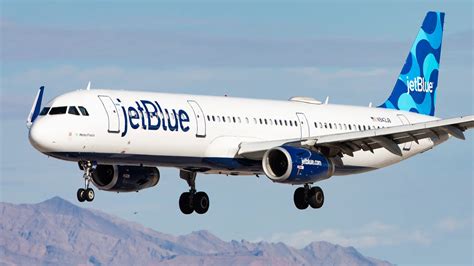
Fort Lauderdale Terminal 5 Has Become a Moving Target
The original concept for Terminal 5 was straightforward. The project would add roughly 230,000 square feet of terminal space and five domestic gates east of Terminal 4, giving JetBlue additional room to handle a growing schedule at one of its most important Florida airports.
The planned facility is considerably more than a row of aircraft gates. It includes ticketing facilities, baggage processing, security screening, concessions and pedestrian connections. Its aircraft-handling design is intended primarily for narrowbody aircraft such as the Boeing 737 MAX and Airbus A321neo, while also providing space for one widebody aircraft.
That design matters because JetBlue’s Fort Lauderdale operation has evolved substantially since the project was approved. The airline had originally expected its South Florida operation to become considerably larger as part of its proposed merger with Spirit Airlines. In 2023, JetBlue said the expanded operation could eventually reach more than 250 daily departures at Fort Lauderdale following the planned merger.
The merger ultimately collapsed, but the infrastructure challenge did not disappear with it. JetBlue continued expanding at Fort Lauderdale, meaning Terminal 5 remains strategically important even though the assumptions surrounding the airline’s future growth have changed.
The project’s financial trajectory tells another part of the story. After reaching approximately $404 million around the groundbreaking, the estimated cost increased to $654 million at the 60% design stage in 2024. Additional contingencies subsequently pushed the estimate to approximately $699 million, before negotiations in June 2026 resulted in a final guaranteed maximum construction price exceeding $702 million.
The approximately $829 million overall program estimate should not be confused with JetBlue’s contractual ceiling. The two figures represent different parts of the project structure. The proposed amendment would raise the amount available under the specific Broward County-JetBlue agreement to approximately $802 million, while the broader Terminal 5 program is estimated at approximately $829 million.
Why Is JetBlue’s Terminal 5 Project So Expensive?
The increase in cost is not simply the result of one dramatic construction problem. Broward County has identified several factors behind the escalating price, including additional program definition, design changes, previously unidentified utility infrastructure and broader increases in the cost of materials and services.
That distinction is important when looking at the original $306 million figure. It represented an early project authorization rather than a final construction price for a completely defined building. As engineers developed the project in greater detail, additional requirements and costs became visible.
The move from conceptual planning to a more mature construction package naturally provided a more detailed understanding of what would be required. Utility infrastructure that had not been included in the original scope added another layer of expense, while economic conditions increased the price of labor, materials and services.
The result is a project whose financial profile has changed dramatically over five years. A terminal that began with a $306 million authorization is now associated with an overall program estimate of approximately $829 million.
That does not automatically mean every dollar of the increase represents unnecessary spending or construction inefficiency. Airport projects can change considerably as designs mature and previously unknown infrastructure requirements are identified. Nevertheless, the scale of the increase makes Terminal 5 a very different proposition from the project JetBlue and Broward County were discussing in 2021.
JetBlue Is Both Terminal Customer and Construction Manager
JetBlue’s relationship with Terminal 5 makes the delay particularly unusual. At many airports, an airline is essentially a customer waiting for an airport authority to complete an expansion. In this case, JetBlue is managing construction on Broward County’s behalf.
The airline hired Parsons to provide project-management services, while the Broward County Aviation Department continues to oversee the work through reviews and approvals of designs, invoices and other elements of the agreement. JetBlue is also required to comply with applicable county contracting requirements and programs.
This structure gives JetBlue a much closer connection to the project’s progress than a conventional airport tenant would have. It also creates an unusual strategic tension. The airline needs additional gates to support its own operation, yet it is simultaneously responsible for helping deliver the infrastructure that has been delayed.
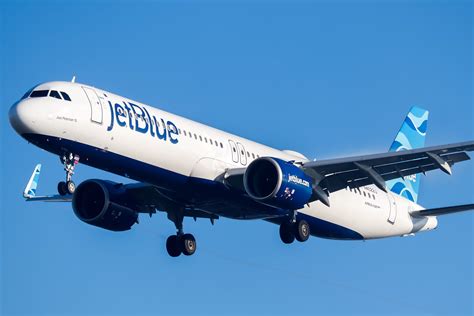
The timing is especially difficult because JetBlue’s Fort Lauderdale strategy has continued moving forward even as Terminal 5 has fallen further behind its original schedule. The airline has expanded routes, increased frequencies and continued treating the airport as a major part of its Florida network.
The collapse of the Spirit merger changed the scale of the original plan, but it did not eliminate the need for additional capacity. JetBlue’s current operation is already large enough for the missing gates to matter.
JetBlue Has Already Filled Much of the Available Capacity
In July 2026, JetBlue said it was operating more than 125 daily departures from Fort Lauderdale, with approximately 150 daily flights expected during the winter. That is a substantial operation for a single carrier and leaves relatively little room for growth if the physical infrastructure does not expand at the same pace.
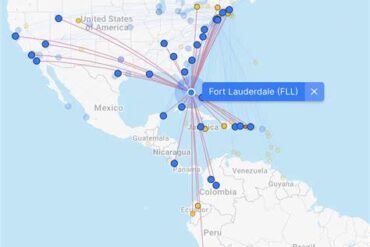
JetBlue has continued adding destinations from Fort Lauderdale, including Barranquilla, Cali, Indianapolis and San Diego. Those additions demonstrate that the airline is still using the airport as an important platform for network growth despite the delayed terminal.
The problem is therefore not simply that Terminal 5 is late. The deeper issue is that the airline’s schedule is expanding while the infrastructure designed to accommodate that expansion remains unavailable.
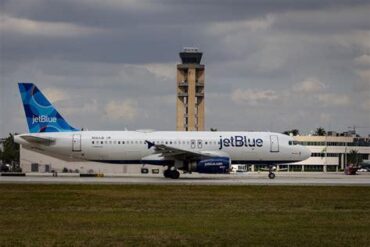
JetBlue currently operates from Terminals 3 and 4 at Fort Lauderdale. Until Terminal 5 becomes available, additional flying has to be accommodated within the existing terminal footprint. Every additional flight therefore competes for gates, aircraft-handling capacity and other airport resources that are already supporting a large schedule.
This creates a narrower operating margin. A gate can handle multiple flights during a day, but increasing utilization leaves less flexibility when an aircraft arrives late, a crew is delayed, maintenance takes longer than expected or weather disrupts the schedule.
Recent operational data illustrates the pressure surrounding the station, although it does not establish that Terminal 5’s delay caused those performance figures. JetBlue’s Fort Lauderdale flights recorded approximately a 70% on-time rate during the three months through September 13, 2026, with 14% classified as major delays and an average delay of 26 minutes.
Those numbers need to be viewed carefully because airline punctuality is affected by many factors, including weather, air-traffic constraints, aircraft availability and network disruptions. Still, a highly utilized station has less room to absorb unexpected events, which makes additional gates valuable even when they do not directly determine on-time performance.
Fort Lauderdale Remains Central to JetBlue’s Florida Network
Fort Lauderdale’s importance to JetBlue is also tied to the airport’s position within South Florida. The airline can serve the broader Miami metropolitan market from FLL without concentrating its entire operation at Miami International Airport (MIA).
That gives Fort Lauderdale a role that cannot be reduced to a simple calculation of available gates. JetBlue has an established customer base at FLL, an existing route network and a recognizable presence that has been built over many years.
The airport’s traffic mix also demonstrates the scale of the market. Recent US Bureau of Transportation Statistics data identified Atlanta as the airport’s largest domestic destination, followed by Newark, New York LaGuardia, New York JFK and Chicago O’Hare. Those markets reflect the breadth of demand flowing through Fort Lauderdale and help explain why airlines continue competing for capacity there.
JetBlue’s position has also changed as competitors adjust their own networks. Before Spirit’s restructuring, Spirit held the largest market share at Fort Lauderdale, followed by JetBlue, Delta Air Lines, Southwest Airlines and United Airlines. The subsequent changes in the competitive landscape have created additional opportunities for JetBlue, but they have also increased the importance of having enough physical infrastructure to capitalize on those opportunities.
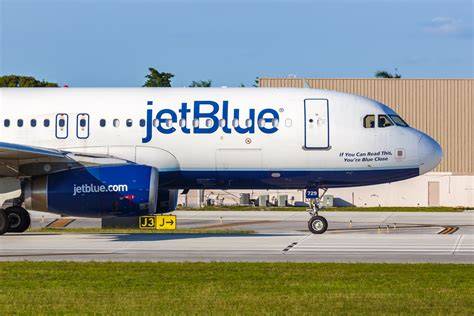
What Can JetBlue Do Before Terminal 5 Opens?
The most obvious response is to slow the pace of additional growth at Fort Lauderdale until Terminal 5 becomes available. That would protect existing infrastructure and give the airline more operational flexibility, but it would also limit the benefits of the network expansion JetBlue has pursued during 2026.
Another possibility is to make greater use of existing gates through more precise scheduling and faster aircraft turns. Higher gate utilization can create additional effective capacity without constructing another building, particularly when schedules are carefully coordinated around aircraft arrivals and departures.
There is, however, a trade-off. A schedule designed around very high utilization leaves less room for disruption. If an arriving aircraft is late, the next departure can quickly be affected. One delay can then propagate through the day’s schedule, particularly when the same aircraft is scheduled to operate several sectors.
JetBlue could also redirect some incremental growth toward other airports in South Florida. That would allow the airline to continue pursuing regional market opportunities without placing every additional flight at Fort Lauderdale.
But shifting capacity away from FLL would not be a direct substitute for Terminal 5. Fort Lauderdale serves a specific customer base and provides a different operating proposition from Miami International Airport. Moving a flight to another airport changes where the airline competes and where passengers must travel, rather than simply replacing one gate with another.
Terminal 5 Could Still Transform Fort Lauderdale by 2030
The four-year gap between the originally expected 2026 completion and the current 2030 target changes the strategic meaning of Terminal 5. What was supposed to be a near-term expansion tool has become a long-term infrastructure project that JetBlue must work around.
When the terminal eventually becomes operational, however, the additional five gates should still provide meaningful capacity. Broward County continues to view the facility as part of the airport’s response to rising passenger demand, and the terminal’s additional space should give JetBlue greater flexibility in handling its Fort Lauderdale schedule.
The question is therefore no longer whether Terminal 5 can help JetBlue. The more immediate question is how the airline manages the four-year capacity gap between the infrastructure it has today and the infrastructure it expected to have several years earlier.
JetBlue’s Fort Lauderdale operation has already grown substantially without those gates. That growth demonstrates the strength of the airport within the airline’s network, but it also highlights the problem created by the delayed expansion. Every additional route and frequency increases the importance of efficient use of the existing terminals.
For JetBlue, Terminal 5 was supposed to make future growth easier. Instead, the airline now has to manage growth around a facility that will not be substantially complete until 2030. Because JetBlue is simultaneously the terminal’s principal intended user and the entity managing its construction for Broward County, the delay is unusually close to the airline’s own strategic plans.
The project may eventually deliver the capacity that Fort Lauderdale needs, but until then, JetBlue faces a less glamorous challenge: doing more with the gates it already has. At an airport where the airline is already approaching 150 daily departures, that may prove just as important as the terminal itself.