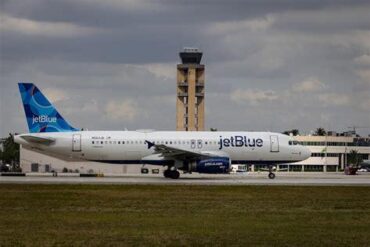
JetBlue Airways is making a major adjustment to its flight network as the airline redirects aircraft capacity toward one of its most important growth markets. The carrier will eliminate four routes, close operations in two cities, and convert one international service into seasonal flying as it accelerates its expansion at Fort Lauderdale-Hollywood International Airport (FLL). The changes represent another significant step in JetBlue’s broader effort to reshape its network under the JetForward strategy.
The airline’s latest schedule changes highlight a growing industry trend: carriers are increasingly moving aircraft away from weaker-performing markets and placing them where customer demand, profitability, and strategic opportunities are stronger. For JetBlue, Fort Lauderdale has emerged as a centerpiece of its future plans, with the South Florida airport becoming a critical hub for domestic, Caribbean, and Latin American growth.
JetBlue Expands Fort Lauderdale Operations With Major Capacity Increase
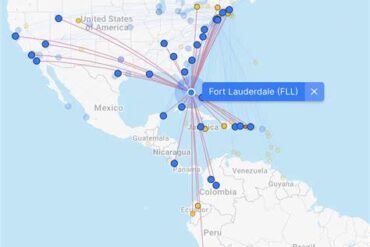
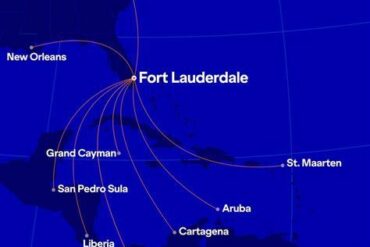
JetBlue recently announced its largest-ever schedule at Fort Lauderdale, building on the airport’s role as one of its largest focus cities. The airline currently connects FLL with more than 80 nonstop destinations across the United States, the Caribbean, and Latin America. With customer demand exceeding expectations, JetBlue plans to increase daily departures from approximately 130 flights to more than 150 flights during the upcoming winter schedule.
The expansion requires aircraft to be reassigned from other parts of the network. According to internal company communication, JetBlue management said the demand response in Fort Lauderdale was “exactly what we hoped for,” describing the airport as one of the biggest opportunities in the airline’s history.
This approach reflects JetBlue’s attempt to become more efficient rather than simply larger. Instead of spreading limited aircraft resources across too many markets, the airline is focusing its fleet on routes where it believes aircraft can generate stronger financial returns and deliver better customer value.
Which JetBlue Routes Are Being Eliminated?
The network restructuring will remove several routes that have struggled to achieve the performance expected by the airline. Starting September 9, JetBlue will discontinue New York John F. Kennedy International Airport (JFK) to Vero Beach Regional Airport (VRB) service and will not restart its seasonal Providence-T.F. Green International Airport (PVD) to Southwest Florida International Airport (RSW) route for the winter period.
The airline will also end two additional JFK routes beginning October 25: JFK-Chicago O’Hare International Airport (ORD) and JFK-Nashville International Airport (BNA). These changes represent a broader evaluation of network performance, allowing JetBlue to move aircraft toward markets with stronger long-term potential.
In addition, JetBlue will close its BlueCity operations in Daytona Beach and Antigua. The Daytona Beach station currently supports flights to Boston and New York, while Antigua’s service to JFK will end later in the schedule transition.
The Boston Logan International Airport (BOS) to Amsterdam Airport Schiphol (AMS) route will also change. Rather than operating year-round, the transatlantic service will become a summer seasonal route beginning with the Winter 2026/27 schedule.
Why JetBlue Chose Fort Lauderdale Over Struggling Markets
Route decisions are among the most difficult choices airlines make because every market represents years of planning, airport relationships, and customer investment. However, JetBlue explained that continuous evaluation is necessary to maintain a competitive network.
The airline said some recently launched routes did not develop enough demand to become sustainable. Management specifically identified the JFK-Vero Beach route and Daytona Beach operations as markets where performance remained below expectations.
JetBlue noted that airlines often give new routes time to mature, but the opportunity available in Fort Lauderdale required faster action. With strong customer response and immediate growth potential, the company decided that reallocating aircraft would provide a greater benefit.
The decision also reflects wider challenges facing airlines. Aircraft deliveries from manufacturers such as Airbus and Boeing continue to face delays, limiting how quickly carriers can expand their fleets. As a result, airlines are placing greater importance on maximizing the productivity of aircraft they already operate.
JetForward Strategy Reshapes JetBlue’s Future Network
The latest route changes are part of JetBlue’s ongoing JetForward transformation plan, which focuses on improving profitability through smarter network planning, cost control, and better fleet utilization.
Unlike traditional expansion strategies that prioritize adding destinations everywhere, JetBlue is concentrating resources on markets where it sees stronger customer demand. Fort Lauderdale fits that strategy because of its large leisure travel base, international connections, and proximity to growing Caribbean markets.
The airport also provides JetBlue with an opportunity to capture additional demand following the restructuring of the former Spirit Airlines network. As competitors adjust their operations in Florida, JetBlue is positioning itself to strengthen its presence in one of the most important aviation markets in the United States.
The airline’s strategy mirrors actions taken by larger competitors. American Airlines, Delta Air Lines, Southwest Airlines, and United Airlines regularly adjust routes based on seasonal demand, economic conditions, competition, and profitability. In today’s aviation environment, flexibility has become essential.
No Workforce Reductions Expected From JetBlue Changes
Despite the station closures and route cancellations, JetBlue confirmed that the adjustments will not result in workforce reductions. The airline stated that Crew Relations teams and local leadership are working with affected airport employees to manage the operational changes.
The company emphasized that the network adjustments are focused on aircraft deployment rather than reducing staffing levels. This allows JetBlue to maintain operational capability while shifting resources toward higher-priority markets.
For passengers affected by the discontinued routes, the changes may create fewer travel options in certain cities. However, JetBlue believes the larger Fort Lauderdale expansion will provide more opportunities for customers across its network.
Fort Lauderdale Becomes a Key Test for JetBlue’s Recovery Plan
JetBlue’s decision to cut routes while expanding elsewhere shows the airline is entering a new phase of strategic discipline. The company is no longer pursuing growth at every cost but is instead focusing on markets that can support long-term success.
The increase from around 130 daily departures to more than 150 at Fort Lauderdale represents a significant commitment. Whether the expansion delivers the financial improvements JetBlue expects will be closely watched by industry analysts and passengers alike.
The first changes will begin on September 9, with additional route exits following in October. As JetBlue continues implementing JetForward, Fort Lauderdale will serve as one of the clearest examples of how the airline plans to rebuild its network around stronger demand, improved efficiency, and sustainable growth.