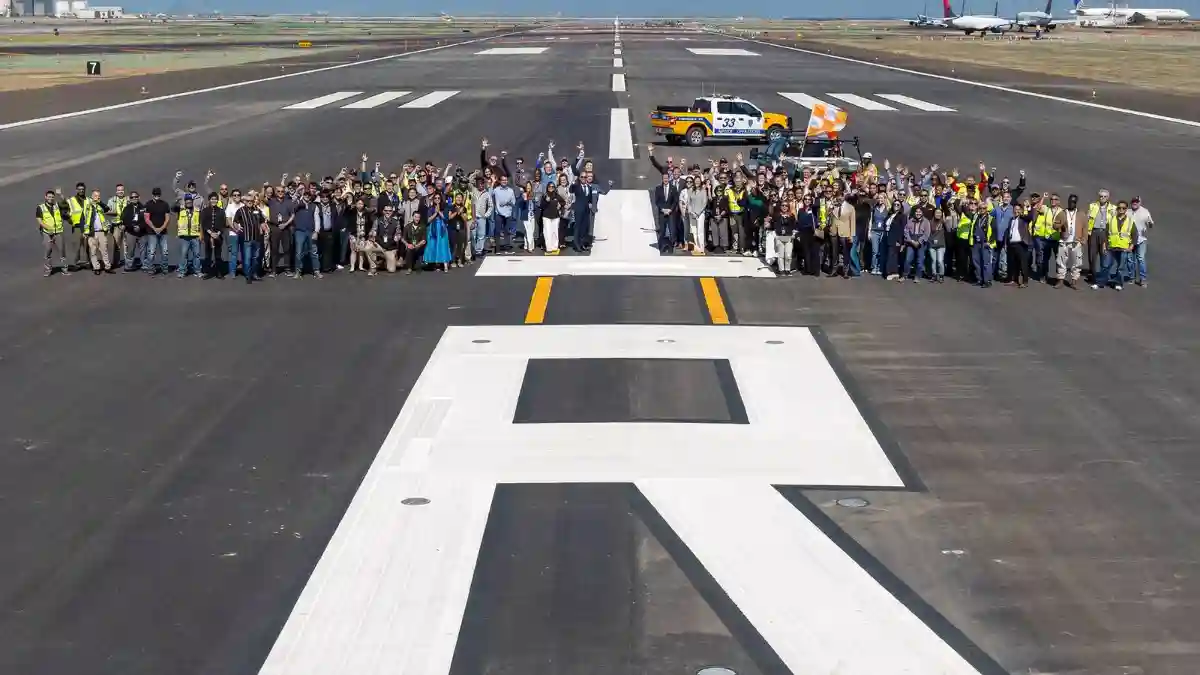
San Francisco International Airport (SFO) has reopened Runway 1R after more than six months of closure, restoring a major piece of the airport’s operating capacity and bringing an end to a $215 million rehabilitation project. The runway closed on March 30 for a complete reconstruction, requiring airport traffic to operate with fewer available runway surfaces while workers carried out an extensive overhaul.
The project involved far more than resurfacing. More than 200,000 tons of asphalt were used to repave the runway, while the rehabilitation also included 64 miles (103 kilometers) of new electrical cable and the installation of 2,440 new light fixtures. Adjacent taxiways were upgraded as part of the work, with new pavement markings and signage added to improve aircraft and ground-vehicle movement across the airport.
SFO Runway 1R Closure Reduced Airport Capacity
The closure created a significant operational challenge for one of the busiest airports on the US West Coast. SFO is also a major international gateway and the largest West Coast hub for United Airlines, meaning sustained runway restrictions affected a large volume of domestic and international traffic.
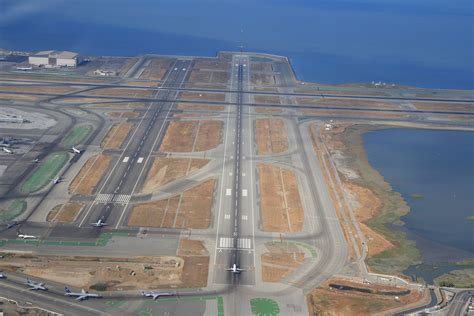
During the closure, arrivals and departures were concentrated on Runways 28L and 28R, while Runway 1L was temporarily used as an additional taxiway to help reduce ground congestion. Because fewer runway resources were available, the Federal Aviation Administration (FAA) imposed temporary restrictions on airport arrival rates.
The reopening of Runway 1R changes that operating picture. SFO can now increase its capacity to as many as 48 arrivals per hour, giving air traffic controllers and airlines considerably more flexibility when managing busy periods. The restoration of runway capacity is particularly important at an airport where demand remains high throughout much of the day.
$215 Million Runway Rehabilitation Adds New Infrastructure
The six-month project was partly funded by the FAA, which contributed $92.1 million toward the improvements. Granite Construction served as the primary contractor for the runway repaving and taxiway work, supported by subcontractors including Royal Electric Company and Bass Electric.
The extensive electrical work is an important part of the upgrade. Installing 64 miles of new cable and thousands of new runway lights modernizes infrastructure that is essential for safe aircraft operations, particularly during nighttime and reduced-visibility conditions. New markings and signs also help maintain clear movement patterns for aircraft and ground crews.
More Runway Capacity Could Improve SFO On-Time Performance
The additional runway capacity should help smooth airport operations and reduce delays caused by congestion. It does not mean that flight delays will disappear, because weather, air traffic restrictions, aircraft availability and other operational issues can still affect schedules.
However, restoring the airport’s previous runway configuration removes a major capacity constraint that existed throughout the construction period. For passengers, that could mean fewer ground delays and greater flexibility for airlines when scheduling arrivals and departures during busy operating periods.
SFO’s airline network makes the improvement especially significant. United accounts for more than half of the airport’s market share, followed by Alaska Airlines at about 8%, Delta Air Lines at 7.8%, and American Airlines at 7%.
SFO Connects Major US and International Markets
The airport serves a broad network of domestic and international destinations, making runway capacity particularly important. Between July 2025 and June 2026, its busiest domestic routes included Los Angeles, Chicago, and New York-JFK, while other major markets included Newark, Denver, Las Vegas, Seattle, San Diego, Boston and Dallas/Fort Worth.
Internationally, Taipei, London Heathrow and Hong Kong ranked among SFO’s busiest routes during the same period. The airport also has major connections to Vancouver, Seoul, Frankfurt, Tokyo Narita, Manila, Singapore and Toronto.
With Runway 1R now back in service, SFO can handle these high-volume operations with greater runway capacity. After six months of restrictions, the reopening represents not simply the completion of a construction project, but a return to a more flexible operating environment for one of America’s most important aviation gateways.