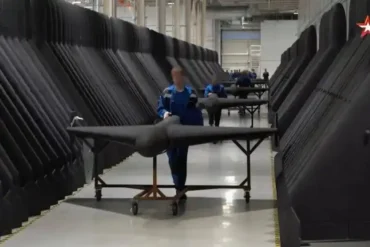
Ukraine has unveiled a formidable advancement in its growing drone arsenal with the UAC FP-1, a strike drone capable of flying 1,000 miles while delivering a 250-pound warhead. This development represents a significant step forward in Ukraine’s ongoing efforts to extend the reach and lethality of its unmanned aerial systems, outpacing earlier models such as the UkrSpecSystems PD-1.
The FP-1’s capabilities are not merely incremental improvements; they signify a transformative approach in design and deployment strategy. While the PD-1, introduced years earlier, offers a range of approximately 600 miles, the FP-1 stretches operational boundaries with a substantial increase in both range and payload. The drone’s performance metrics place it firmly in a superior class, marking a new era in Ukraine’s drone warfare tactics.
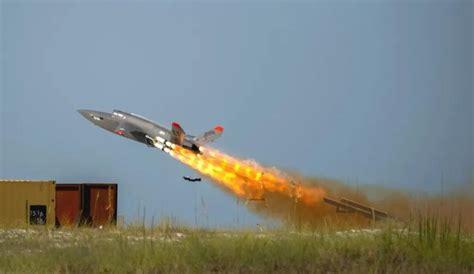
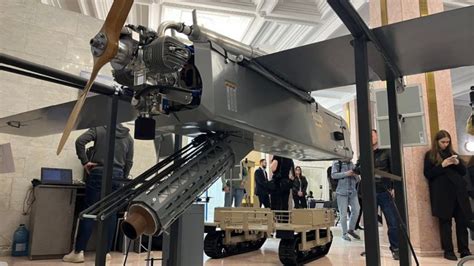
The key to the FP-1’s extended capabilities lies in meticulous engineering refinements. One of the most striking innovations is the elimination of traditional landing gear. Unlike its predecessor, which relies on self-propelled takeoff using wheels, the FP-1 is launched from an angled ramp with the aid of a fuselage-mounted rocket. This method not only reduces the drone’s structural weight—freeing up capacity for fuel and payload—but also enhances aerodynamic efficiency by eliminating bulky retraction systems that occupy valuable internal space.
The impact of removing landing gear is more profound than it might initially appear. In conventional aircraft, landing gear can constitute up to 5% of the aircraft’s overall weight. Moreover, even retractable systems designed to minimize drag still occupy significant internal volume, potentially limiting both fuel capacity and payload options. By discarding these systems altogether, UAC has maximized the FP-1’s performance envelope, ensuring that the drone’s entire design serves its singular purpose: delivering powerful strikes deep into enemy territory.
Ukraine’s push to develop and deploy the FP-1 stems from the limitations of earlier stopgap measures, notably the conversion of Aeroprakt A-22 sport planes into long-range drones. These converted aircraft, while effective to an extent, were never optimized for unmanned missions. Their large cockpits and manned flight systems resulted in an overbuilt structure that added unnecessary weight and reduced efficiency. Despite their high cost—around $80,000 per unit before modification—these drones typically delivered 220-pound warheads at ranges of up to 800 miles. While useful, these metrics fell short of the demands posed by modern conflict scenarios.
In contrast, the FP-1—estimated at over $100,000 per unit—offers a purpose-built solution. It not only delivers a comparable or heavier warhead but does so with greater range and precision. This positions it as a far more cost-effective and strategically viable tool for Ukraine’s military planners, enabling more frequent and deeper strikes into contested or hostile territories.
Technological Innovations Behind the FP-1
The FP-1’s success is attributed to several design choices that synergistically enhance its performance:
- Rocket-Assisted Takeoff: The initial thrust provided by the rocket allows for rapid acceleration and immediate climb, optimizing takeoff performance even from rudimentary launch sites.
- Streamlined Airframe: Without landing gear, the airframe benefits from a cleaner aerodynamic profile, reducing drag and conserving fuel for extended flight duration.
- Optimized Payload Integration: The design prioritizes payload accommodation, ensuring that the drone can carry the maximum warhead size without compromising flight stability or range.
- One-Way Mission Focus: Unlike reusable drones that require parachutes or landing systems, the FP-1 is designed as a one-way attack drone, maximizing its destructive capability while simplifying the overall system architecture.
Strategic Implications for Modern Warfare
Ukraine’s deployment of the FP-1 reflects a broader shift in modern conflict dynamics, where unmanned systems play an increasingly pivotal role. The ability to strike deep into enemy territory with precision-guided munitions not only disrupts adversary logistics and infrastructure but also compels significant resource allocation to defense measures. This form of asymmetric warfare levels the playing field, particularly for nations confronting adversaries with superior conventional forces.
The FP-1 is already making its presence felt on the battlefield. Though its public debut occurred recently at a defense exhibition in Kyiv, production began in earnest last year, and the drone has seen combat deployment in various operations. Its combat-proven status underscores both its reliability and its utility in Ukraine’s ongoing defense strategy.
Furthermore, by leveraging domestic production capabilities in collaboration with Czech partners, Ukraine reinforces its industrial autonomy, reducing reliance on foreign suppliers and ensuring a resilient supply chain for critical defense technologies.
Comparisons with Global Counterparts
The FP-1’s design philosophy aligns with similar trends seen internationally. For example, the U.S. firm Kratos developed the Valkyrie drone, which also utilizes a ramp-launched system for rapid deployment. However, when Kratos introduced a landing gear-equipped variant of the Valkyrie, payload capacity was halved—from four 250-pound bombs to two—demonstrating the clear trade-offs involved when integrating landing systems. The FP-1 avoids these compromises by committing fully to a single-use mission profile, prioritizing payload and range over reusability.
Moreover, alternative launch methods such as the rolling trolley—used for some reusable drone types—offer different benefits but require more complex recovery systems. The FP-1’s one-way model eliminates this complexity, focusing purely on offensive capability.
Future Outlook and Tactical Evolution
As Ukraine continues to innovate within the unmanned aerial combat space, the FP-1 serves as both a template and a stepping stone. Its success will likely inform future iterations of long-range drones, potentially integrating advanced guidance systems, enhanced stealth features, or modular payload options. In the near term, however, its immediate value lies in its ability to project power across extended distances with high precision.
Ukraine’s defense posture benefits from the FP-1’s capabilities by offering a scalable solution to long-range strike requirements. As production scales and operational experience deepens, it is anticipated that the FP-1 and its successors will remain at the forefront of Ukraine’s strategic deterrence and offensive capabilities.
In sum, the UAC FP-1 exemplifies a calculated, intelligent evolution of drone warfare technology, embodying lessons learned from earlier systems while pushing the boundaries of range, payload, and efficiency. Its operational deployment marks a pivotal moment in the unfolding narrative of Ukraine’s defense innovation.